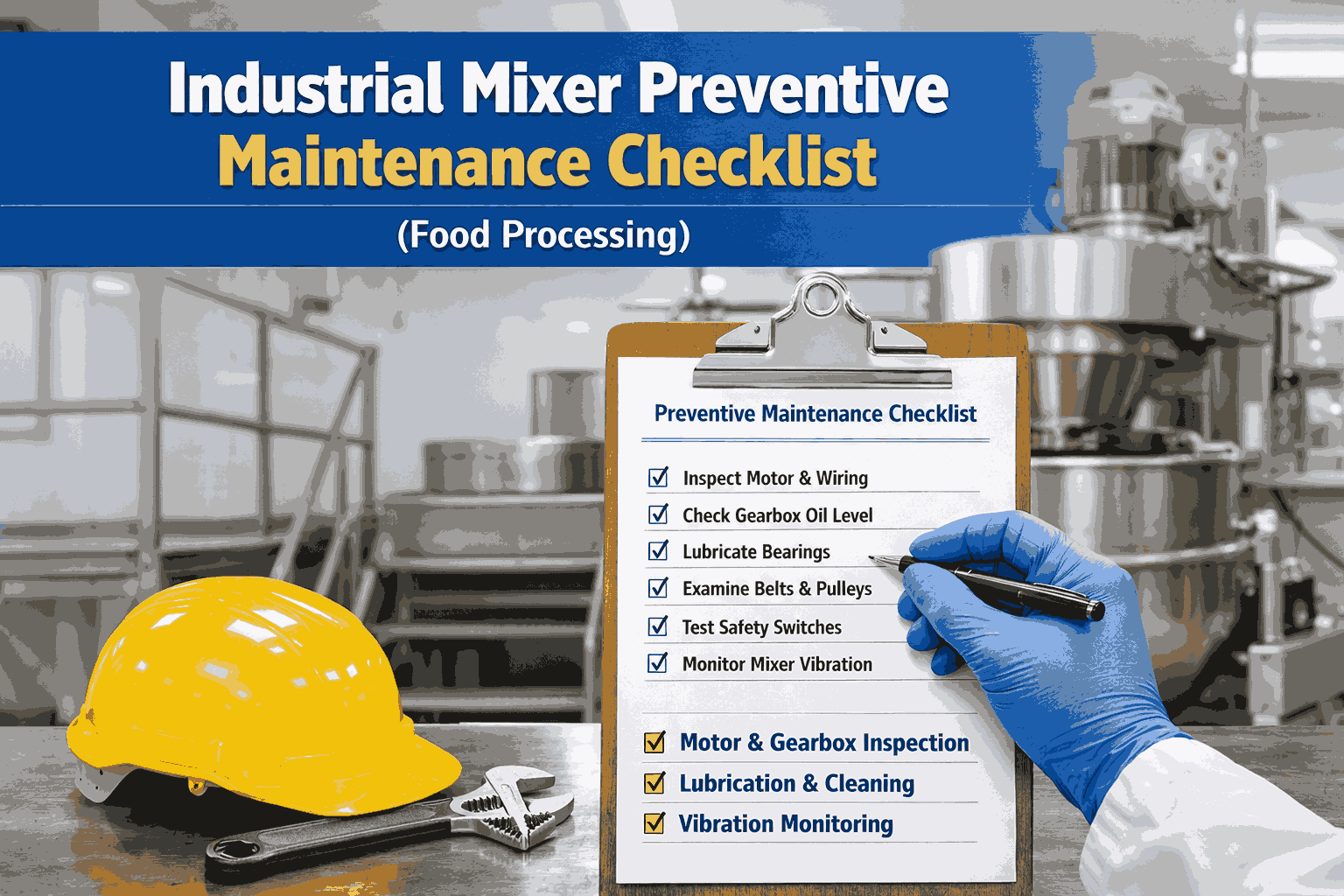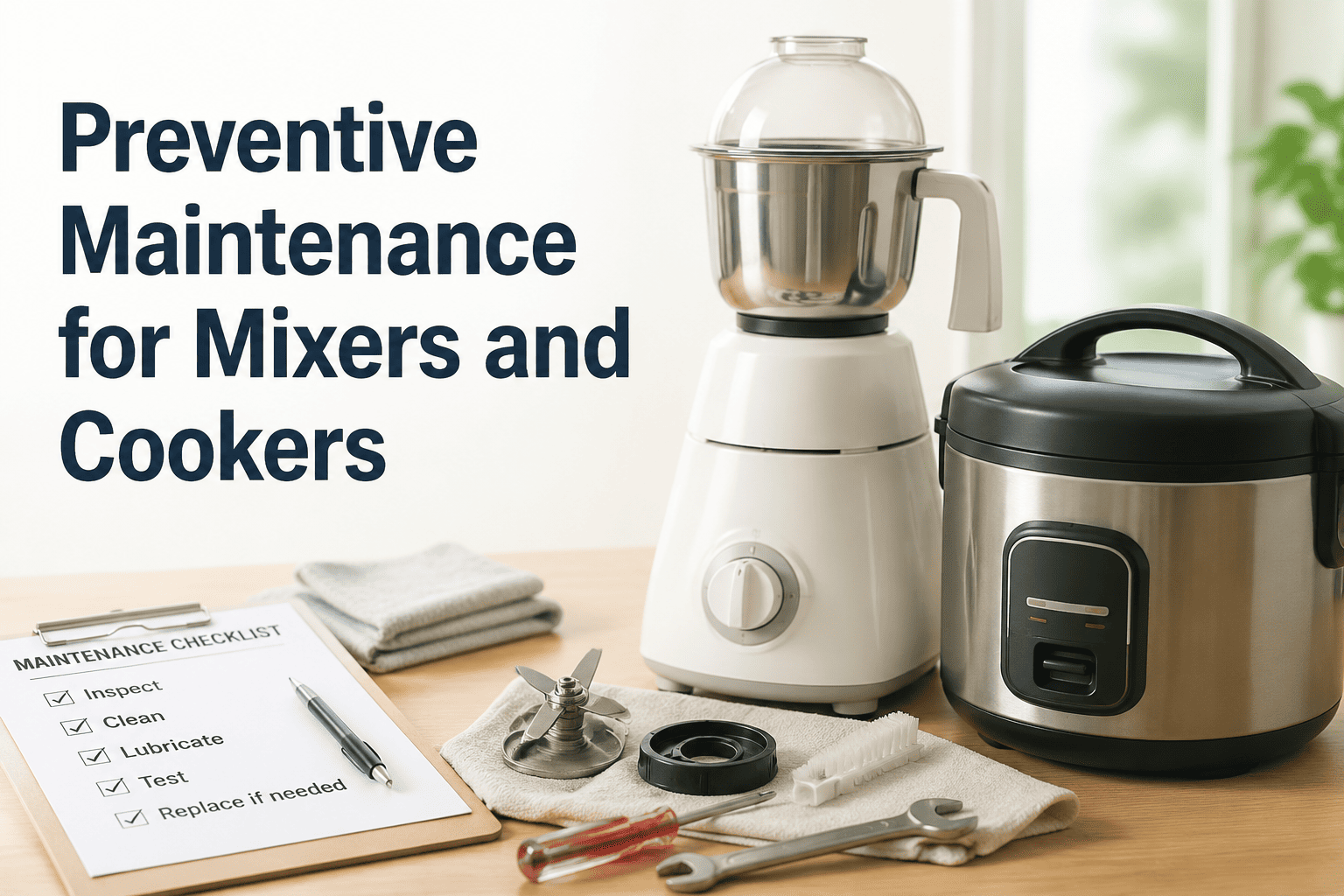
A mixer or cooker failure mid-batch does not just stop one machine, it stops the entire line, risks product contamination, and turns a routine service task into a regulatory incident. Agitator seals weep long before they fail outright, heating elements drift out of calibration for weeks before anyone notices the temperature swings, and gearboxes run hot until they seize without warning. Food processors that build preventive maintenance around these components avoid the batch losses, failed audits, and emergency callouts that come from reactive repair. This guide breaks down what to inspect, at what interval, and how a CMMS turns each inspection into a scheduled, documented task instead of something a busy shift forgets. See how it works with a free trial on your own mixer and cooker fleet.
Preventive Maintenance For Industrial Mixers And Cookers
Seals weep, elements drift, gearboxes run hot, all before a single alarm fires. Here is the exact PM program that catches batch equipment failure before it reaches the line.
The Components That Fail First On A Mixer Or Cooker
Batch equipment does not fail all at once. It fails one system at a time, and each one sends a different signal long before it breaks. These are the four systems worth watching closest, and what early wear actually looks like on each.
Weeping or product residue around the seal housing is the first sign of failure. Left unchecked, a leaking seal becomes a documented contamination event, not just a repair.
Cook times stretching and temperature swings that were not there last month point to a heating element or jacket losing its ability to hold a set point under load.
A gearbox running warmer than its baseline, or oil that looks discolored, is the leading edge of a bearing failure that accounts for over half of unplanned mixer downtime.
Temperature sensors drifting out of calibration and a rising vibration trend at the motor housing both signal a fault building before output or safety is affected.
What To Inspect, And How Often
A PM program only works if the interval matches the failure speed of the component. Seals get checked more often than gearboxes because a leak is a same-shift contamination risk, while a gearbox trend takes weeks to build into a failure.
No-load startup listen for grinding or squealing, visual seal check for weeping, and a quick read on heating element temperature against the prior day's baseline.
Full shaft seal and lid gasket inspection, impeller and blade check for chips or fatigue, and a cooling hose inspection on jacketed cookers for cracking.
Functional seal testing, gearbox oil level and condition check, NSF H1-rated lubrication per manufacturer spec, and heating element output validated against a set temperature target.
Vibration measurement and trending at motor and gearbox housings, shaft alignment verification, full sensor recalibration, and a documented review against the previous quarter's readings.
Every Task Above, Scheduled Automatically
Oxmaint maps every seal, heating element, and gearbox task to the specific asset, generates the work order on the correct frequency, and timestamps every completion for audit. No spreadsheet, no missed interval, no forgotten shift handoff.
What Each Signal Is Actually Telling You
A worn part rarely announces itself with a shutdown. It sends a signal first, a sound, a temperature drift, a discoloration, and the signal tells you exactly what to do next if you know how to read it.
| What You Notice | What It Means | What To Do |
|---|---|---|
| Weeping around the shaft seal | Seal wear beginning, contamination risk rising | Log and correct before the next production run |
| Gearbox running warmer than baseline | Bearing wear or oil breakdown starting | Check oil condition, schedule a service window |
| Cook times drifting longer | Heating element or jacket losing output | Validate temperature control against set point |
| New noise on no-load startup | Mechanical fault forming before load is applied | Investigate before the mixer is loaded with product |
| Rising vibration trend | Shaft misalignment or coupling wear | Verify alignment, rebalance impeller if needed |
Reactive Repair Versus A Scheduled PM Task
The gap between catching a signal early and waiting for a breakdown is not small. A single skipped gearbox inspection has escalated into thousands of kilograms of contaminated product and days of line downtime, all traceable back to one missed weekly check.
A gearbox left unchecked runs hot for weeks with no thermal baseline logged. It fails mid-batch, the agitator locks, and the product in the vessel is contaminated. The line sits down for over a day while a technician sources parts and rebuilds the unit.
The same gearbox is logged weekly against a thermal and oil-condition baseline. A rising trend triggers a work order days ahead of failure. The oil is changed, the bearing is inspected, and the batch schedule never moves.
A CMMS Built Around Batch Equipment, Not Generic Assets
Oxmaint maps every mixer and cooker to its own PM schedule, tracks thermal and lubrication baselines automatically, and produces the audit-ready records that FSMA, SQF, and BRC evidence requirements expect, without a single spreadsheet in the process.
Every seal, element, and gearbox task is mapped to the exact asset and generated as a work order at the correct interval automatically.
Thermal, oil-condition, and vibration readings are logged against a rolling baseline so a drift gets flagged before it becomes a failure.
Every completed task is timestamped with the responsible operator, ready to hand to an FDA, SQF, or BRC auditor on request.
NSF H1-rated lubricant grades and correct seal specifications are attached to each asset so the right part is used every time.
Frequently Asked Questions
How often should a mixer's shaft seal be inspected?
What causes most unplanned mixer downtime?
Can a CMMS track heating element performance on a cooker?
What records does FSMA require for this kind of PM program?
How fast does a structured mixer PM program pay back?
Stop Finding Out About Failures Mid-Batch
Seals, heating elements, and gearboxes all send a signal before they fail. A CMMS built around your mixers and cookers catches that signal, schedules the fix, and keeps the record an auditor will actually accept.