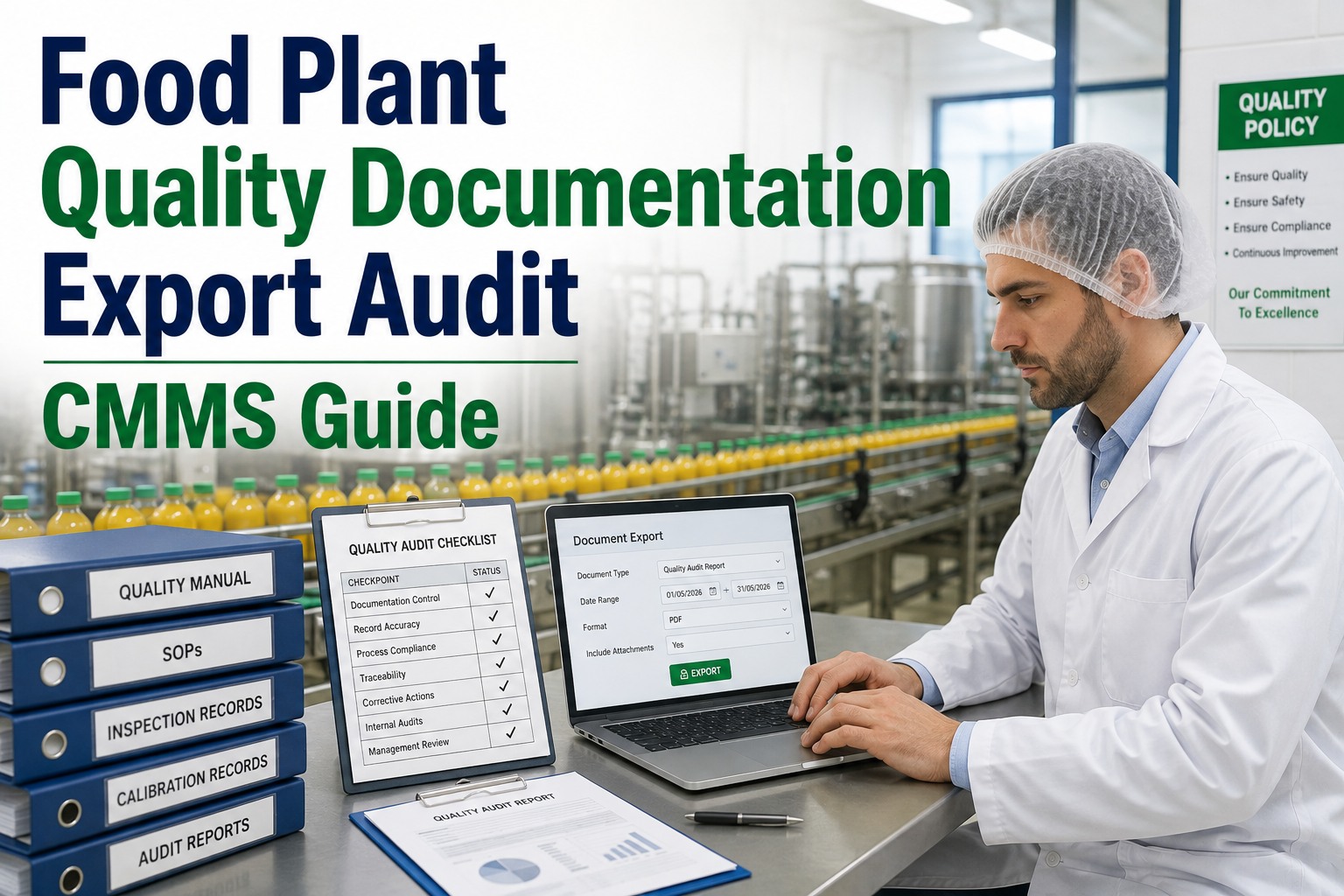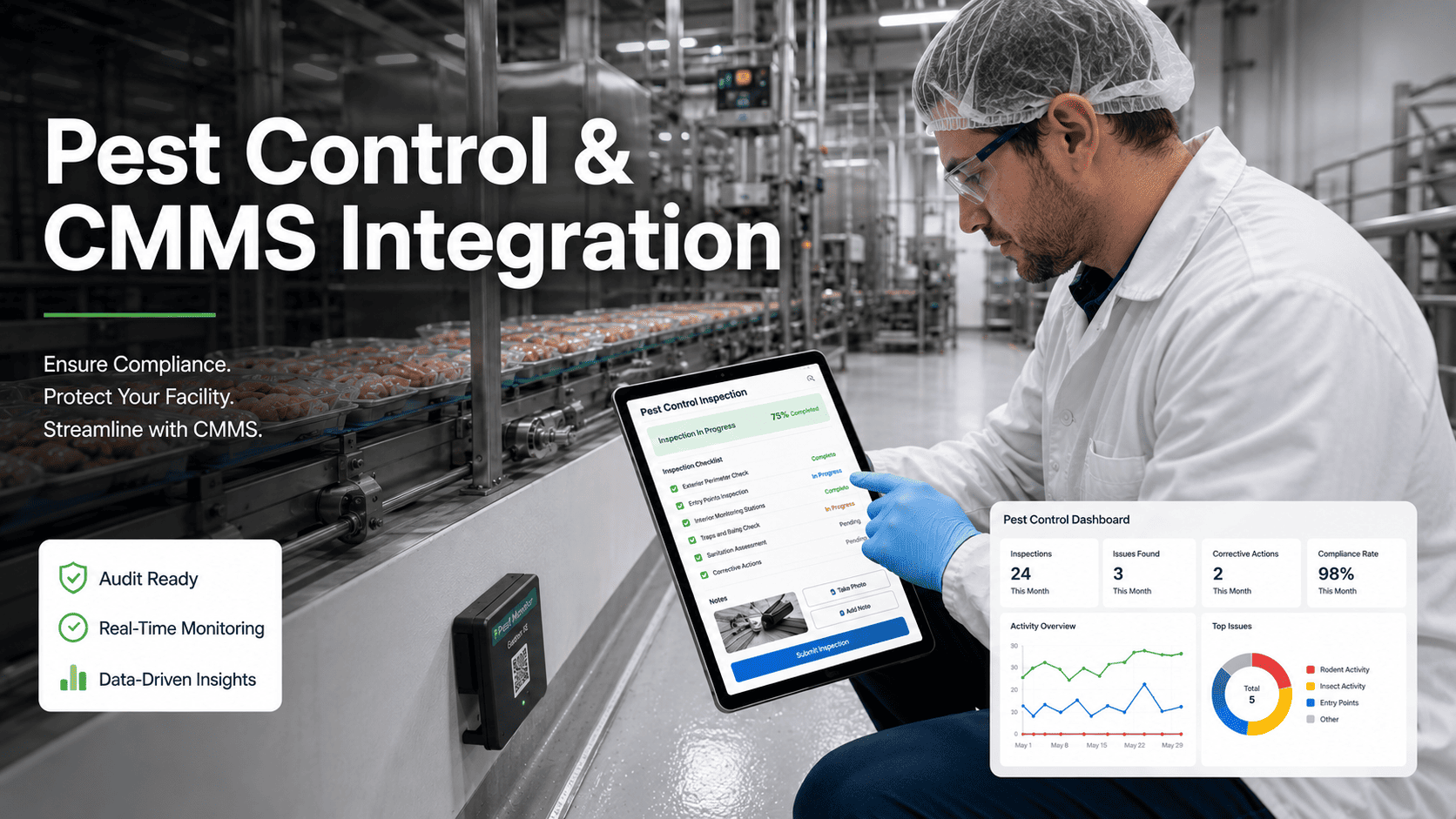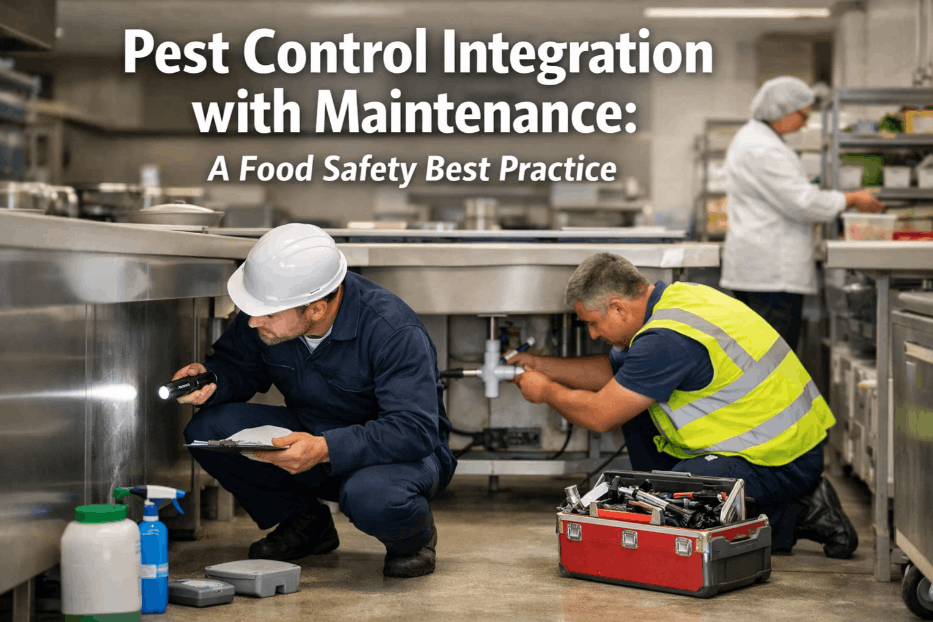
In food manufacturing, pest control and facility maintenance are rarely managed as a unified system — yet the structural gaps, equipment failures, and documentation blind spots that invite pest activity are almost always maintenance issues at their root. Integrating pest control with maintenance in food plants transforms reactive extermination into a proactive, audit-ready food safety program. Facilities that align their integrated pest management (IPM) program with their CMMS-driven maintenance workflows consistently outperform those that treat pest control as a standalone contractor function. Sign up for OxMaint to unify your pest device inspections, structural exclusion tasks, and pest audit documentation in one compliance-ready platform.
Why Pest Control Is a Maintenance Responsibility in Food Plants
Most food plant pest programs treat pest control as an outsourced function — a licensed pest control operator (PCO) visits on a scheduled frequency, inspects bait stations and monitoring devices, and files a service report. But the underlying drivers of pest pressure — gaps in building envelope, failed door seals, standing water from drain issues, deteriorated wall panels, and clutter accumulation from deferred maintenance — are facility conditions that only a structured maintenance program can address. Sign up free to start managing structural pest exclusion tasks alongside your equipment PM in one system.
Integrated pest management in food manufacturing is explicitly recognized by GFSI-benchmarked standards including SQF, BRC Global Standards, and FSSC 22000 as a food safety control requiring documented preventive measures, not just reactive treatment. Auditors evaluate whether the facility has a systematic program linking pest device inspections, structural deficiency findings, corrective actions, and trend analysis — all of which require maintenance workflow integration to function at audit-ready quality.
Pest exclusion is a maintenance outcome. Sealed penetrations, functioning door closers, intact drain covers, and well-maintained exterior perimeters are structural conditions — and maintaining them requires the same PM scheduling, work order tracking, and corrective action documentation as any other facility asset.
Core Elements of an Integrated Pest Control Maintenance Program
A food plant pest control maintenance program that satisfies GFSI audit requirements and genuinely reduces pest risk requires five integrated components — each with distinct ownership, scheduling, and documentation requirements that CMMS software is uniquely suited to manage. Book a demo to see how OxMaint structures these components into a single audit-ready workflow.
Every bait station, glue board, electronic fly killer (EFK), pheromone trap, and rodent monitoring device must be recorded as an individual asset with a unique identifier, installed location, device type, and assigned inspection frequency. Pest device maps — physical and digital — must be current and cross-referenced with the CMMS asset register to ensure no device is skipped during inspections. Facilities engineers own the device asset register; the PCO owns the inspection execution.
Pest device inspection frequency must align with food safety risk: interior rodent bait stations in production zones typically require weekly inspection; exterior bait stations may follow a bi-weekly or monthly cycle; insect light traps in high-risk zones need weekly catch log documentation. Inspection findings — catch counts, device condition, evidence of activity — must be logged at the device level and retained as part of the food safety management system record. CMMS-generated work orders ensure no inspection window is missed and no device record goes undocumented.
Structural pest exclusion is the highest-leverage pest prevention activity available to facilities teams — and the one most frequently neglected in deferred maintenance backlogs. Exclusion PM tasks include inspection and sealing of all utility penetrations (pipe, conduit, cable), door seal and door closer inspection and replacement, dock leveler pit and dock door seal condition, floor drain cover integrity, wall panel gap inspection in refrigerated and processing areas, and roof edge and fascia condition. Each task must be logged with findings and corrective action status.
Raw pest device inspection data is only valuable if it is analyzed for activity trends that trigger corrective action. A single rodent catch in an interior station should generate an immediate corrective action work order — inspection of the surrounding zone for structural gaps, harborage conditions, or sanitation issues. Trend tracking must be documented at a sufficient level of detail that an SQF or BRC auditor can trace a pest activity spike to the root cause investigation and corrective actions taken in response.
GFSI certification bodies require documented evidence that the pest program is being actively managed — not just executed by a contractor. Facilities engineers must maintain PCO service records, pesticide application logs (with chemical, concentration, location, and applicator credentials), pest activity trend reports, corrective action records, and annual pest program review documentation. When all pest-related records live in a CMMS linked to the relevant facility assets, audit evidence retrieval takes minutes rather than days.
Pest Device Inspection Frequency: Recommended Scheduling by Device Type
Establishing the correct pest device inspection schedule for food manufacturing requires mapping device type and location to the food safety risk level of the surrounding zone. The following frequency guidance reflects best practice for GFSI-compliant food plants — actual frequencies should be validated against PCO recommendations, pest pressure history, and your facility's HACCP-based risk assessment.
| Device Type | High-Risk Zone (Production) | Medium-Risk Zone (Storage/Packing) | Low-Risk Zone (Perimeter/Exterior) | Key Documentation Requirement |
|---|---|---|---|---|
| Rodent bait stations | Weekly | Bi-weekly | Monthly | Bait consumption, device condition, catch evidence log |
| Glue boards / snap traps | Weekly | Weekly | Bi-weekly | Catch count, board condition, replacement record |
| Insect light traps (EFK) | Weekly catch log | Weekly catch log | Monthly | Species ID, catch count trend, bulb replacement log |
| Pheromone traps | Weekly | Bi-weekly | Monthly | Catch count, lure replacement date, species trend |
| Fly bait stations | Weekly | Bi-weekly | Bi-weekly | Bait level, device placement, activity log |
| Bird deterrent devices | Monthly | Monthly | Quarterly | Device integrity, effectiveness observation, reposition log |
Structural Exclusion PM: Key Maintenance Tasks That Prevent Pest Entry
Structural pest exclusion is not a pest control activity — it is a maintenance activity. The following PM tasks represent the highest-impact structural interventions that facilities engineers can schedule and track to eliminate pest entry pathways. Each task requires documented inspection findings and corrective action records to satisfy GFSI audit requirements for preventive pest management.
- Exterior door seal and automatic door closer inspection and lubrication
- Dock door seal, dock leveler seal, and bumper condition inspection
- Floor drain and trench drain cover integrity check
- Exterior perimeter inspection for harborage conditions and debris
- Utility penetration seal inspection in production and storage zones
- Wall panel and coved base integrity inspection in wet processing areas
- Roof edge, eave, and fascia inspection for gaps and bird entry points
- Ventilation screen and louvre condition check
- Window frame and glazing seal inspection in production zones
- External vegetation clearance audit (3-metre exclusion zone verification)
- Full building envelope pest exclusion audit with photographic evidence
- Pest device map review and update to reflect facility layout changes
- PCO program review meeting with documented findings and recommendations
- Pesticide chemical register review and SDS currency check
- Annual pest activity trend report generation and HACCP review update
- Corrective action within 24 hours of any interior rodent activity finding
- Immediate structural inspection following any PCO recommendation
- Re-inspection of exclusion repairs within 5 working days of completion
- Additional pest device inspection after any flood, renovation, or construction
- Full zone sweep following any product contamination or pest-related complaint
How CMMS Software Strengthens Pest Control Compliance in Food Plants
Managing a food plant pest management program that satisfies SQF, BRC, and FSSC 22000 audit requirements demands documentation discipline that paper-based systems and disconnected spreadsheets cannot reliably sustain. When pest device inspection records, structural exclusion PM tasks, PCO service reports, pesticide application logs, and corrective action findings are managed in separate systems — or worse, in paper binders — the audit trail has gaps that auditors will find and cite. Try OxMaint free and connect your entire pest program into one audit-ready record system.
A CMMS connects every pest-related asset and activity to a unified, timestamped record system. Pest monitoring devices are registered as assets with individual inspection work orders. Structural exclusion tasks are scheduled as preventive maintenance alongside equipment PM. Corrective actions from pest findings are tracked through structured CAPA workflows to documented closure. When a BRC auditor requests the pest activity history for your primary production zone over the past 12 months, the complete record is retrievable in one report. Explore OxMaint's CMMS for food plants and see how pest-maintenance integration works in practice.
Register every bait station, trap, and EFK as an individual asset with location, type, and inspection schedule — so no device is ever skipped or undocumented.
Generate inspection work orders at the correct frequency for each device and zone — weekly for high-risk interiors, monthly for exterior perimeters — automatically, without manual scheduling.
Schedule door seal, drain cover, penetration seal, and perimeter inspection tasks alongside equipment PM — creating one unified preventive maintenance calendar for the facility.
Aggregate device inspection findings into trend reports by zone, device type, and time period — giving food safety teams the data they need to identify hotspots before they escalate.
Every pest finding that requires a corrective action — from an interior rodent catch to a structural gap — is assigned an owner, a deadline, and a documented root cause and closure record.
Generate complete pest program evidence packages — inspection records, PCO service logs, corrective actions, pesticide registers, and structural PM history — in minutes for SQF, BRC, or FSSC audits.
Common Pest Program Failures in Food Plants — and How to Prevent Them
Understanding the failure modes most likely to generate pest-related audit findings and food safety incidents allows facilities engineers and food safety teams to target PM investment where it delivers the highest risk reduction. The following failure patterns are the most frequently identified in food plant pest program audits. Book a demo to see how OxMaint tracks these patterns through CAPA workflows and prevents repeat non-conformances.
Device maps are created at facility commissioning and rarely updated as layouts change, devices are relocated, or new units are added.
Dock door seals, floor drain covers, and utility penetration gaps identified in pest inspections frequently sit in maintenance request queues for weeks without escalation.
PCO service reports arrive by email and are filed in a folder on a shared drive — disconnected from the facility asset records they document.
Interior pest activity — particularly any rodent evidence in a production zone — requires an immediate, documented corrective action response. Facilities that lack a defined CAPA protocol generate audit non-conformances even when the activity is quickly controlled.
Pesticide application logs frequently record the chemical used and the location, but omit the applicator license number and expiry — a common audit finding under SQF Code and BRC Food Safety.
Frequently Asked Questions
What does integrated pest management (IPM) mean in food manufacturing?
Integrated pest management in food manufacturing is a systematic, preventive approach that prioritizes structural exclusion, sanitation, and monitoring over reactive chemical treatment. An IPM program combines structural maintenance to eliminate pest entry points, scheduled pest device inspections to detect activity early, trend analysis to identify recurring pressure sources, and targeted, documented pesticide use when necessary. GFSI-benchmarked standards including SQF, BRC, and FSSC 22000 require a documented IPM program as part of food safety management system certification.
How often should pest device inspections be conducted in a food plant?
Pest device inspection frequency should be risk-based, aligned to the food safety risk level of the zone in which the device is located. Interior rodent monitoring devices in production and high-care zones typically require weekly inspection. Exterior bait stations may be inspected bi-weekly or monthly. Insect light traps in production zones generally require weekly catch documentation. Inspection records must be retained at the device level for GFSI audit compliance.
What documentation do SQF and BRC auditors require for pest control programs?
SQF and BRC auditors typically require: current pest device maps matching physical device locations; pest device inspection records with findings and catch data; PCO service reports and visit logs; pesticide application records including chemical identity, concentration, location, applicator name, and license number; corrective action records for all pest activity findings; and evidence of an annual pest program review conducted by a qualified person.
How does a CMMS improve pest control compliance in food manufacturing?
A CMMS improves pest control compliance by connecting pest device assets, inspection work orders, structural exclusion PM tasks, PCO service records, and corrective actions in a single documented system. Automated scheduling ensures inspection intervals are never missed. Digital inspection forms capture catch counts, device condition, and findings at the asset level. CAPA workflows assign and track corrective actions from pest findings to verified closure. Audit evidence is retrievable in minutes rather than assembled from binders.
What are the most important structural pest exclusion maintenance tasks in a food plant?
The highest-impact structural pest exclusion tasks include: inspection and replacement of exterior door seals and automatic door closers; dock door and dock leveler seal condition; floor drain and trench drain cover integrity; utility penetration sealing throughout the building envelope; wall panel and coved base integrity in wet processing zones; and maintenance of a minimum three-metre vegetation clearance around the facility perimeter. Each task must be scheduled at a defined PM frequency with documented findings and tracked corrective actions.