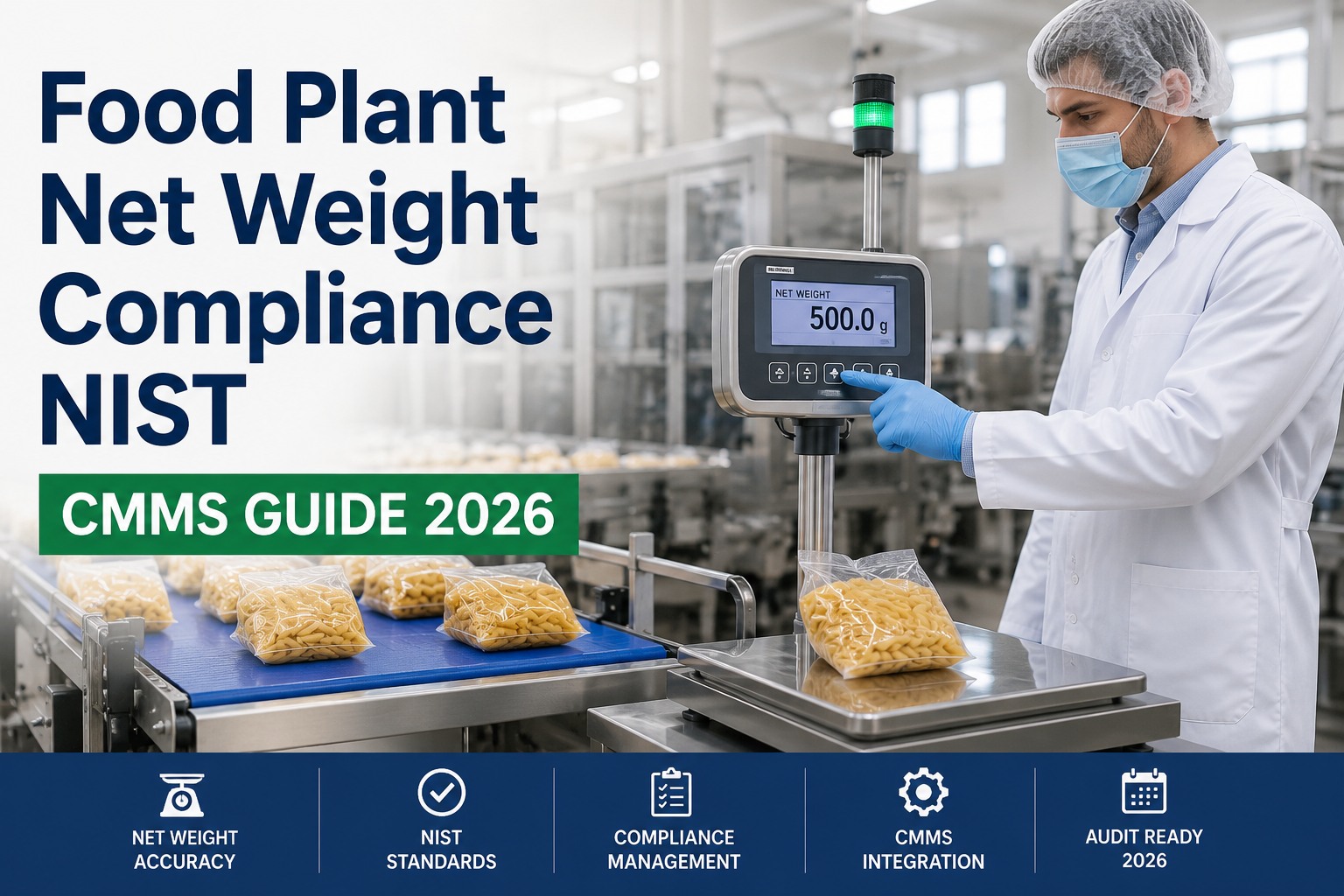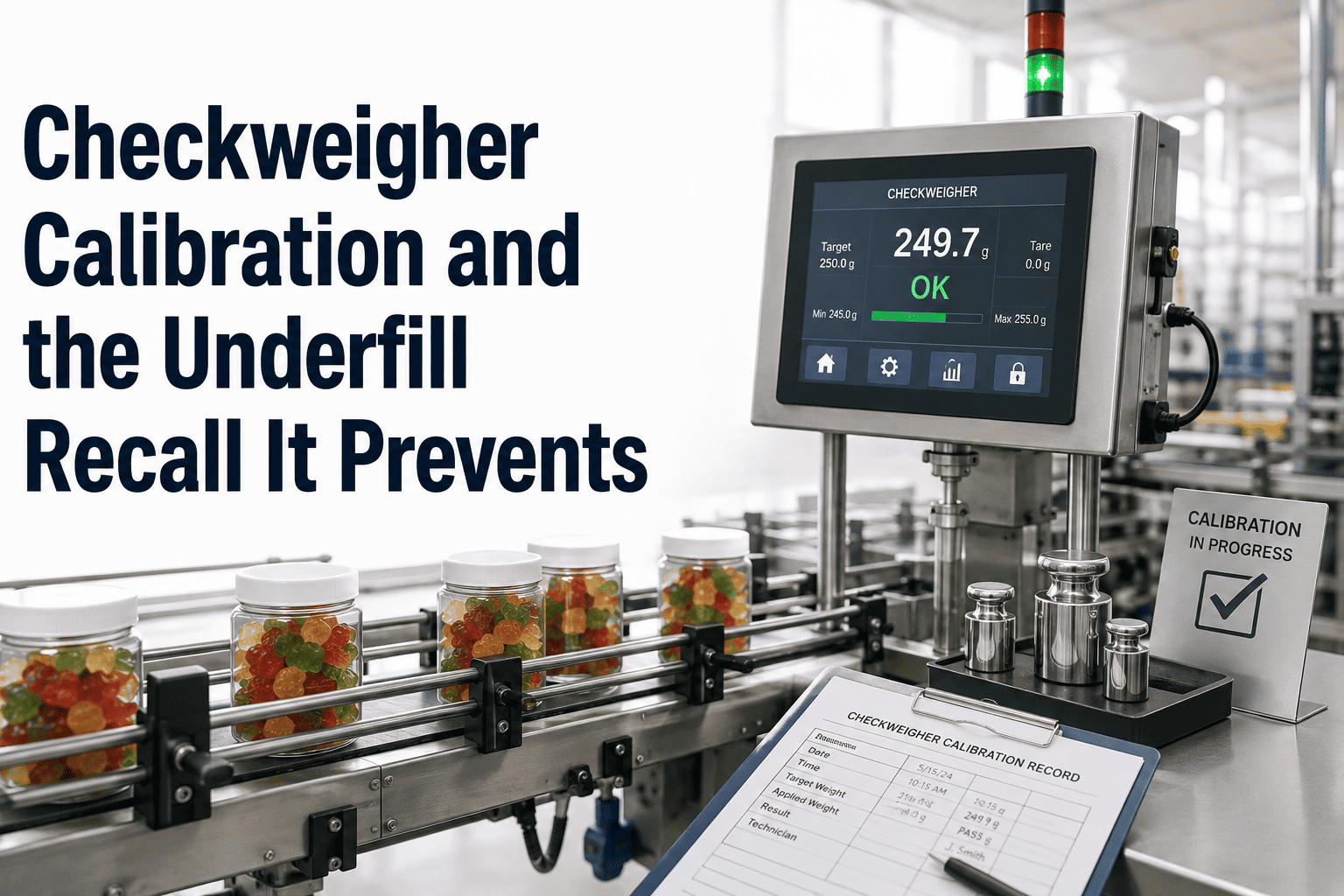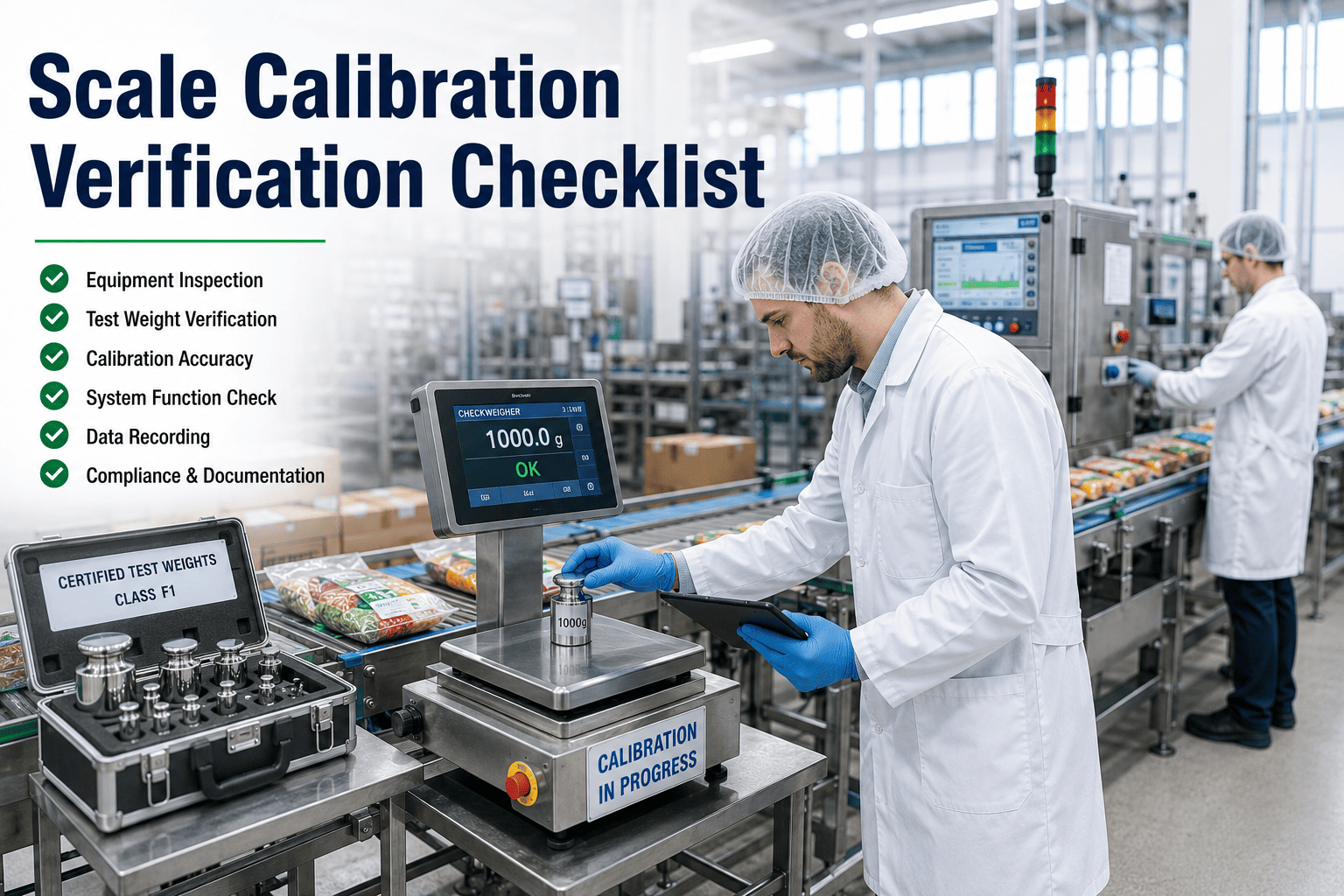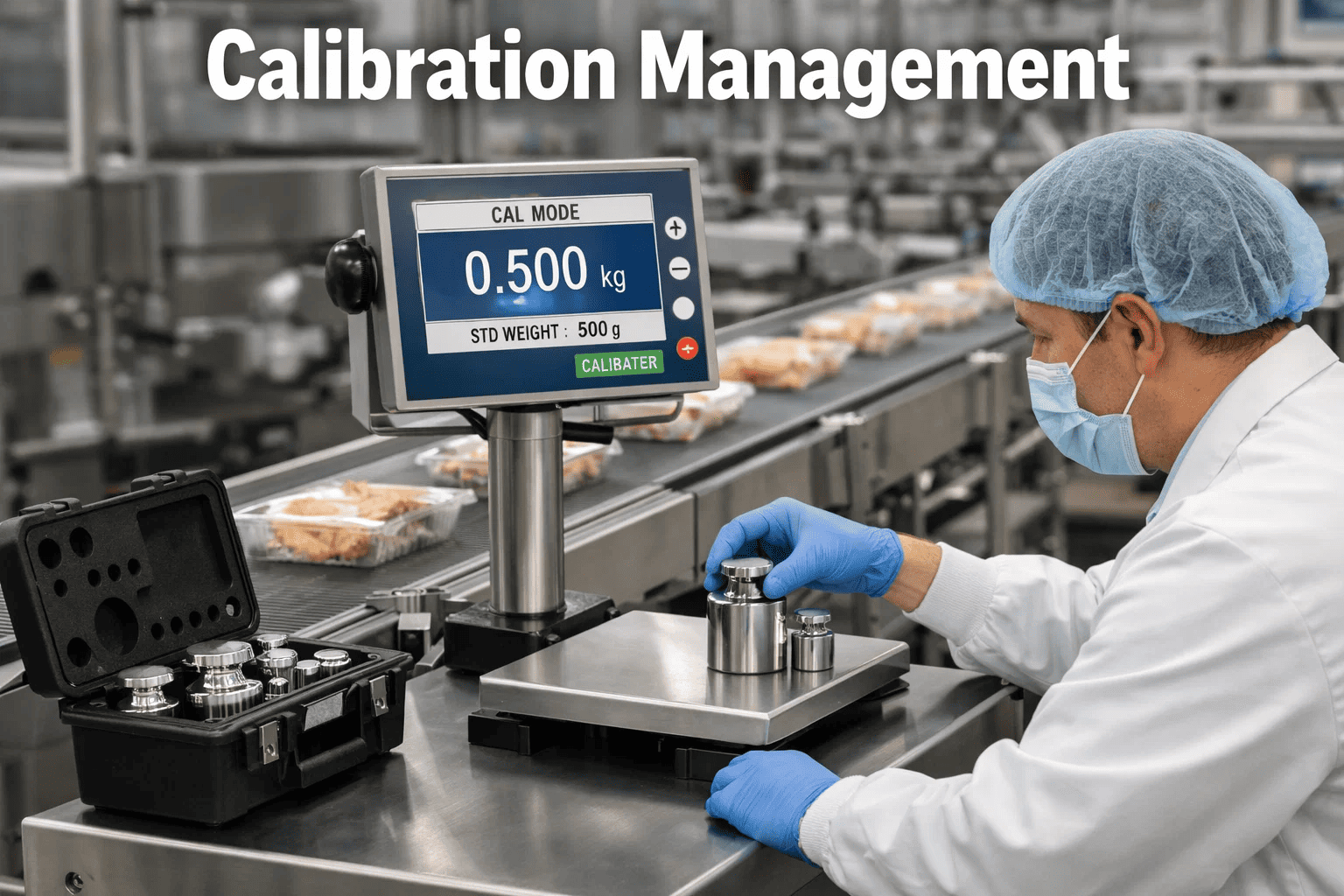
Every packaged food product that leaves your plant carries an implicit weight promise to the consumer and a legal obligation to the regulator. When a checkweigher drifts 1.5% over its calibration tolerance, the consequences split two ways: underfilling triggers FDA enforcement action, GFSI non-conformance, and consumer complaints, while overfilling silently bleeds product at a rate that can exceed $180,000 per production line per year in giveaway losses alone. Yet 62% of food plants still manage calibration schedules on paper calendars or spreadsheets — systems that cannot alert you when a calibration is overdue, cannot prove compliance history during an audit, and cannot connect a weight deviation to the specific production run it affected. OxMaint's calibration management module schedules every scale and checkweigher calibration event, documents tolerance verification results digitally, and generates audit-ready compliance records that satisfy FDA, GFSI, and legal metrology requirements automatically.
Checkweigher and Scale Calibration Management in Food Manufacturing
CMMS-driven calibration tracking with NIST-traceable verification, automated scheduling, and audit-ready documentation that keeps every weighing instrument in tolerance and every audit clean.
What Makes Calibration Critical in Food Manufacturing
Calibration in food manufacturing is not a maintenance task — it is a regulatory obligation and a financial control mechanism. Every scale, checkweigher, flow meter, and batching system that affects product weight, ingredient ratio, or label accuracy must be calibrated at documented intervals with NIST-traceable standards. Failure to maintain calibration records is one of the top 5 citations in FDA food facility inspections and a major non-conformance trigger during GFSI certification audits. If your calibration records live in filing cabinets, you are one audit away from a serious finding. See how digital records change everything — start a free trial and book a demo to review OxMaint's calibration tracking in action.
Calibration Types Every Food Plant Must Track
Food plants operate multiple categories of weighing and measurement equipment, each with different calibration requirements, tolerances, and regulatory obligations. A single missed calibration on a batching scale can affect an entire production run — potentially requiring product hold, rework, or disposal. Here is the calibration matrix that every compliant food plant should maintain.
Every Overdue Calibration Is an Audit Finding Waiting to Happen. OxMaint Prevents Them All.
OxMaint schedules every calibration event, sends alerts before due dates, records pass/fail results with tolerance data, and generates the compliance history that auditors need — automatically, from your maintenance workflow.
Paper Calibration Logs vs. CMMS-Managed Calibration
The gap between paper-based and digitally managed calibration programmes is not just efficiency — it is audit survivability. During a GFSI surveillance audit, the average paper-based plant needs 4–8 hours to compile calibration history for all CCP instruments. A CMMS-managed plant retrieves the same data in under 60 seconds. More critically, paper systems cannot prevent overdue calibrations — they can only document them after the fact.
How OxMaint Manages the Complete Calibration Lifecycle
Calibration management is not a single event — it is a continuous cycle of scheduling, executing, documenting, trending, and acting on results. OxMaint manages every step of this cycle from a single platform, so nothing falls through the cracks and every calibration event creates audit-ready evidence automatically. Ready to replace paper logs with digital calibration management? Start a free trial and book a demo to walk through the calibration workflow for your instruments.
The Financial Impact of Calibration Precision
Calibration is not a cost centre — it is a profit protection mechanism. Every percentage point of fill accuracy recovered goes directly to the bottom line, and every prevented audit non-conformance avoids the cascading costs of corrective action, re-audit fees, and potential certification suspension.
Frequently Asked Questions
How does OxMaint handle calibration for instruments used at Critical Control Points?
CCP instruments receive enhanced calibration protocols in OxMaint — tighter tolerance limits, higher verification frequencies, mandatory digital sign-off by quality personnel, and automatic escalation if a CCP instrument is found out of tolerance. When a CCP calibration fails, OxMaint generates an immediate corrective action work order and flags all production between the last passing calibration and the current failure for quality review. This closed-loop process is exactly what GFSI auditors look for during certification assessments.
Can OxMaint generate calibration certificates and compliance reports for auditors?
Yes. OxMaint generates calibration history reports per instrument, per area, or plant-wide — showing every calibration event with as-found readings, as-left readings, pass/fail determination, technician identity, date/time stamps, and reference standard traceability. These reports export directly in PDF format suitable for auditor review. During GFSI, FDA, or weights and measures inspections, the entire calibration history is retrievable in under 60 seconds — compared to the 4–8 hours typical for paper-based systems.
What happens in OxMaint when a calibration check finds an instrument out of tolerance?
When a technician records an out-of-tolerance finding, OxMaint triggers a structured response: the instrument is flagged as non-conforming, a corrective action work order generates automatically, production records between the last passing calibration and the current failure are identified for quality review, and the quality manager receives an immediate notification. The instrument cannot be returned to service until a successful re-calibration is documented and digitally signed off — preventing premature return to production while out of specification.
How long does it take to implement calibration management in OxMaint?
Most food plants complete calibration module setup within 1–2 weeks. The process involves registering each instrument with its calibration profile (tolerance limits, frequency, reference standards), assigning responsible technicians, and setting up the initial schedule. OxMaint supports bulk import from existing spreadsheets, so your current instrument list transfers directly. Once set up, the system runs autonomously — generating calibration work orders, sending alerts, and building the compliance history that auditors require.
Every Scale. Every Checkweigher. Every Calibration Event. Documented, Scheduled, and Audit-Ready.
OxMaint automates your entire calibration programme — from scheduling and tolerance verification to drift trending and audit reporting — so you never face an overdue calibration finding or an undocumented instrument again.