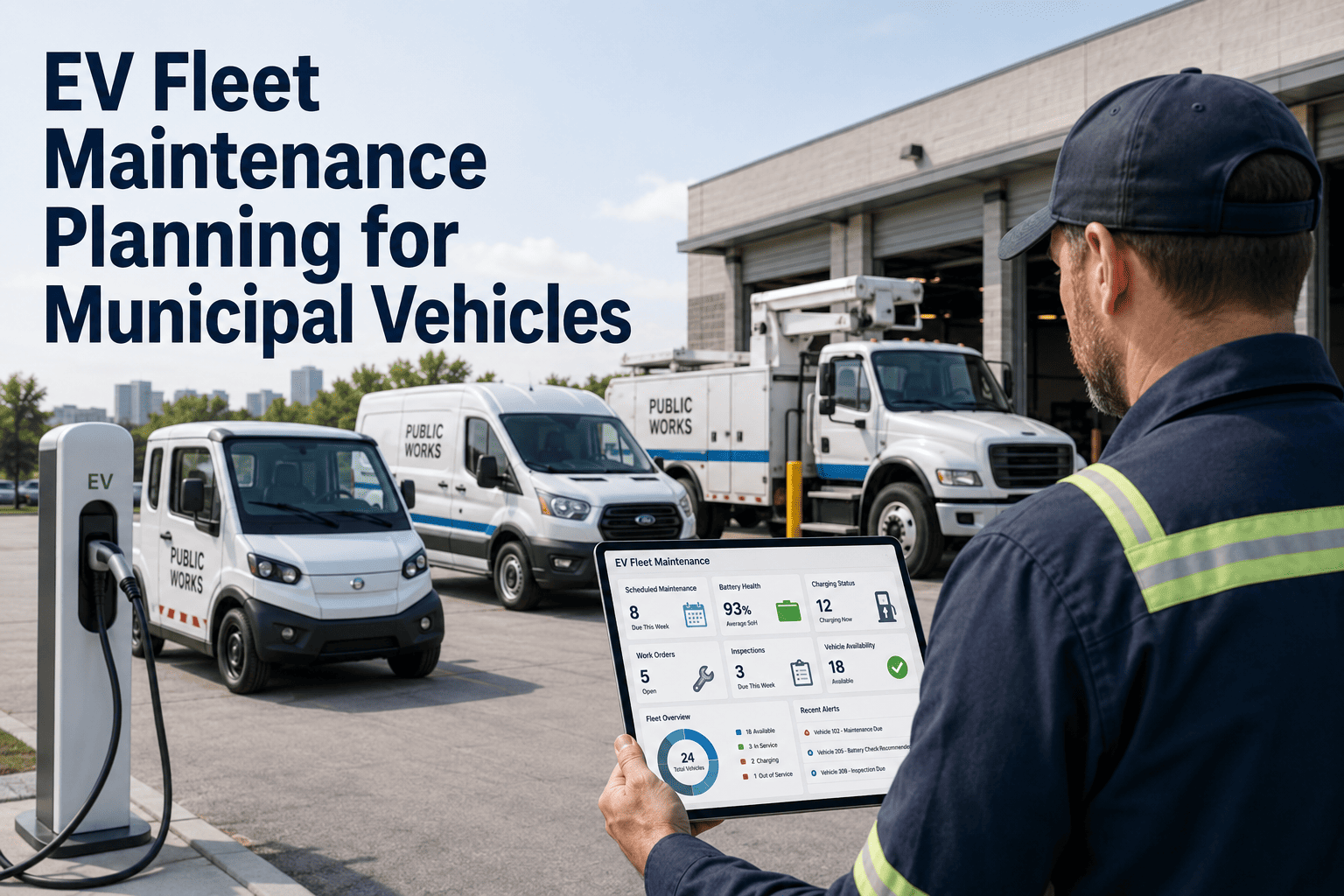
City Public Works Department faced a growing crisis in fleet reliability: annual maintenance costs had surged 22% due to reactive repairs, while vehicle downtime averaged 14 days per incident. With no centralized scheduling system, preventive maintenance (PM) was ad-hoc, leading to missed oil changes, ignored tire rotations, and catastrophic engine failures on critical sanitation trucks. The turning point came when a key street sweeper failed mid-route due to a skipped hydraulic service, costing $12,000 in repairs and weeks of service disruption. By implementing Oxmaint CMMS to automate PM scheduling, track usage-based maintenance triggers, and streamline parts inventory, the department reduced breakdown rates by 68%, cut maintenance spend by 18%, and extended the average vehicle lifecycle by 2.5 years. This case study illustrates how fleet managers can transition from chaos to control using digital PM workflows.
Client Profile: City Public Works Department
Fleet Size
240 vehicles (light & heavy)
Maintenance Team
14 technicians, 1 manager
Annual Budget
$4.2M fleet operations
Service Area
85 sq miles municipality
The Challenge: Spiraling Costs from Missed Maintenance
Before implementing a structured PM workflow, the City Public Works fleet operated on a "break-fix" mentality. Preventive maintenance was tracked on whiteboards and spreadsheets that were rarely updated, leading to severe operational inefficiencies.
✗
Missed PM Services: Without automated alerts, 40% of scheduled services were missed. Oil changes were skipped until engines showed symptoms, and brake inspections were forgotten until drivers reported grinding noises.
✗
Reactive Repair Costs: Emergency repairs accounted for 65% of total maintenance labor. Technicians spent hours diagnosing avoidable failures rather than performing routine upkeep, driving overtime costs up by 30%.
✗
Inventory Stockouts: Lack of forecasting meant critical filters, belts, and brake pads were often out of stock when needed, extending vehicle downtime while parts were expedited at premium rates.
✗
Compliance Risks: DOT inspections and safety certifications were manually tracked, leading to several near-misses with expired registrations and potential liability from operating non-compliant heavy machinery.
"We were bleeding money on repairs that a $50 filter change could have prevented. Our technicians were frustrated, our drivers didn't trust the equipment, and I couldn't tell the City Council why our budget was blown by August. We needed a system that told us what to do before things broke, not after."
— David Chen
Fleet Superintendent, City Public Works
If your fleet is struggling with missed services and high repair bills, schedule a 30-minute consultation to learn how automated PM scheduling can restore reliability and budget control.
Modernize fleet reliability using automated PM workflows
The department deployed Oxmaint CMMS to digitize their entire maintenance operation, focusing on automating PM schedules based on real-time usage data, standardizing inspection checklists, and integrating inventory management with work orders.
✓
Usage-Based PM Triggers: Integrated GPS telematics to push odometer and engine hour readings directly to Oxmaint. PMs for oil changes, tire rotations, and hydraulic services are now triggered automatically based on actual usage, not arbitrary calendar dates, ensuring optimal servicing intervals.
✓
Standardized Digital Checklists: Technicians use mobile tablets to complete PM checklists. Mandatory fields ensure no step is skipped—from checking tire tread depth to inspecting hydraulic lines. Photos are required for any flagged defects, creating a digital audit trail.
✓
Automated Scheduling & Routing: When a PM trigger is hit, the system auto-generates a work order, assigns it to the appropriate technician based on skill set, and notifies the fleet coordinator to schedule vehicle downtime. This eliminated the "I didn't know it was due" excuse.
✓
Inventory Integration: Spare parts are linked to PM tasks. When a "Service A" work order generates, the system reserves the oil filter and 5 quarts of oil. If stock hits a minimum level, a purchase request is auto-drafted, preventing stockouts during routine service.
✓
Lifecycle Analytics: The system tracks total cost of ownership (TCO) for each asset. Managers can now see exactly when a vehicle's maintenance cost exceeds its replacement value, making data-driven cases for fleet renewal budgets.
Fleet managers ready to automate their maintenance schedules can start with a free 30-day trial, gaining access to fleet-specific PM templates, telematics integration tools, and mobile inspection apps.
Designing a data-driven program — a fleet maintenance framework with integrations
The City's new workflow is a closed-loop system: (1) Telematics update mileage/hours daily → (2) System checks against PM intervals (e.g., every 5,000 miles) → (3) PM Work Order auto-generated 500 miles before due date → (4) Parts auto-reserved → (5) Technician completes digital checklist → (6) Asset record updated with service history and next due date.
Example impact: Sanitation Truck #104 hit its 500-hour hydraulic service trigger. The system generated a WO, reserved the hydraulic filter, and alerted the shop foreman. During the digital inspection, the technician noted a worn hose (captured via photo). The hose was replaced during the PM service. Cost: $280 for service + hose. Avoided cost: $8,500 pump failure + environmental cleanup fees + missed trash collection route. This proactive approach is now standard across the 240-vehicle fleet.
To set up automated PM triggers for your vehicles, schedule a technical consultation. Our experts will help you map your PM intervals, configure telematics integrations, and build custom checklists for your specific asset types.
Results: Measurable Fleet Operations Transformation
68%
Breakdown Reduction
Emergency road calls dropped from 14/month to 4/month within the first year of automated PMs
18%
Maintenance Cost Savings
Total annual maintenance spend reduced by $760k through avoided major repairs and overtime
100%
PM Compliance
Missed services eliminated; every vehicle is serviced within 5% variance of schedule
2.5 yrs
Extended Lifecycle
Average vehicle useful life increased, deferring $1.2M in capital replacement costs annually
94%
Technician Productivity
Wrench time increased significantly as admin time and parts hunting were eliminated
415%
ROI in Year 1
Software investment paid for itself in 3 months through reduced parts waste and labor efficiency
"The difference is night and day. We used to chase breakdowns; now we plan our work weeks in advance. The automated schedules mean nothing falls through the cracks. My technicians are happier because they're maintaining equipment, not constantly fighting fires. And the City Council loves the reports showing exactly where every dollar goes and how vehicle reliability has improved."
— David Chen
Fleet Superintendent, City Public Works
Fleets of any size can achieve these results. Start your free 30-day trial to begin building your automated PM program today—complete with mobile apps, inventory tracking, and robust reporting tools.
Key Takeaways for Fleet Managers
→
Usage-based triggers > Calendar scheduling: Servicing vehicles based on actual mileage/hours prevents over-maintenance on low-use assets and dangerous under-maintenance on high-use equipment.
→
Digital checklists enforce accountability: Mandatory fields and photo requirements ensure inspections are thorough, capturing minor issues before they become major failures.
→
Parts-to-PM integration is critical: Ensuring parts availability for scheduled work eliminates "waiting on parts" downtime and improves technician wrench time.
→
Data justifies budgets: Tracking TCO and breakdown trends provides the hard data needed to defend maintenance budgets and capital replacement requests.
→
Automated alerts save compliance: Never missing a safety inspection or registration renewal protects the agency from liability and fines.
Ready to Optimize Your Fleet Maintenance?
See how municipal fleets reduce costs and improve reliability using Oxmaint CMMS—automated PM scheduling, telematics integration, and mobile work orders in one platform.