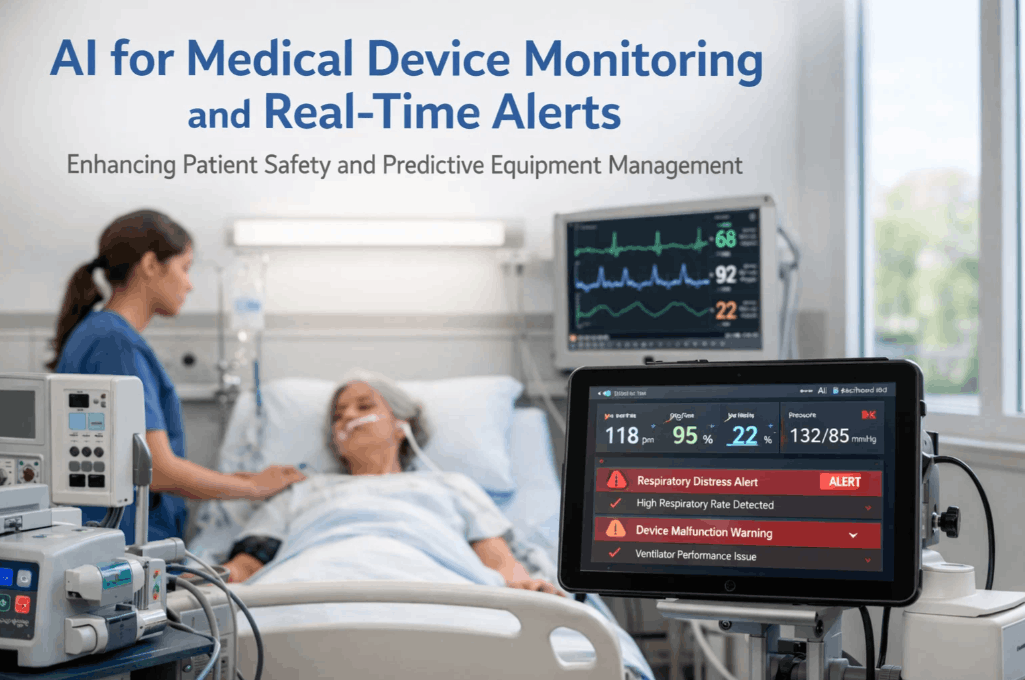
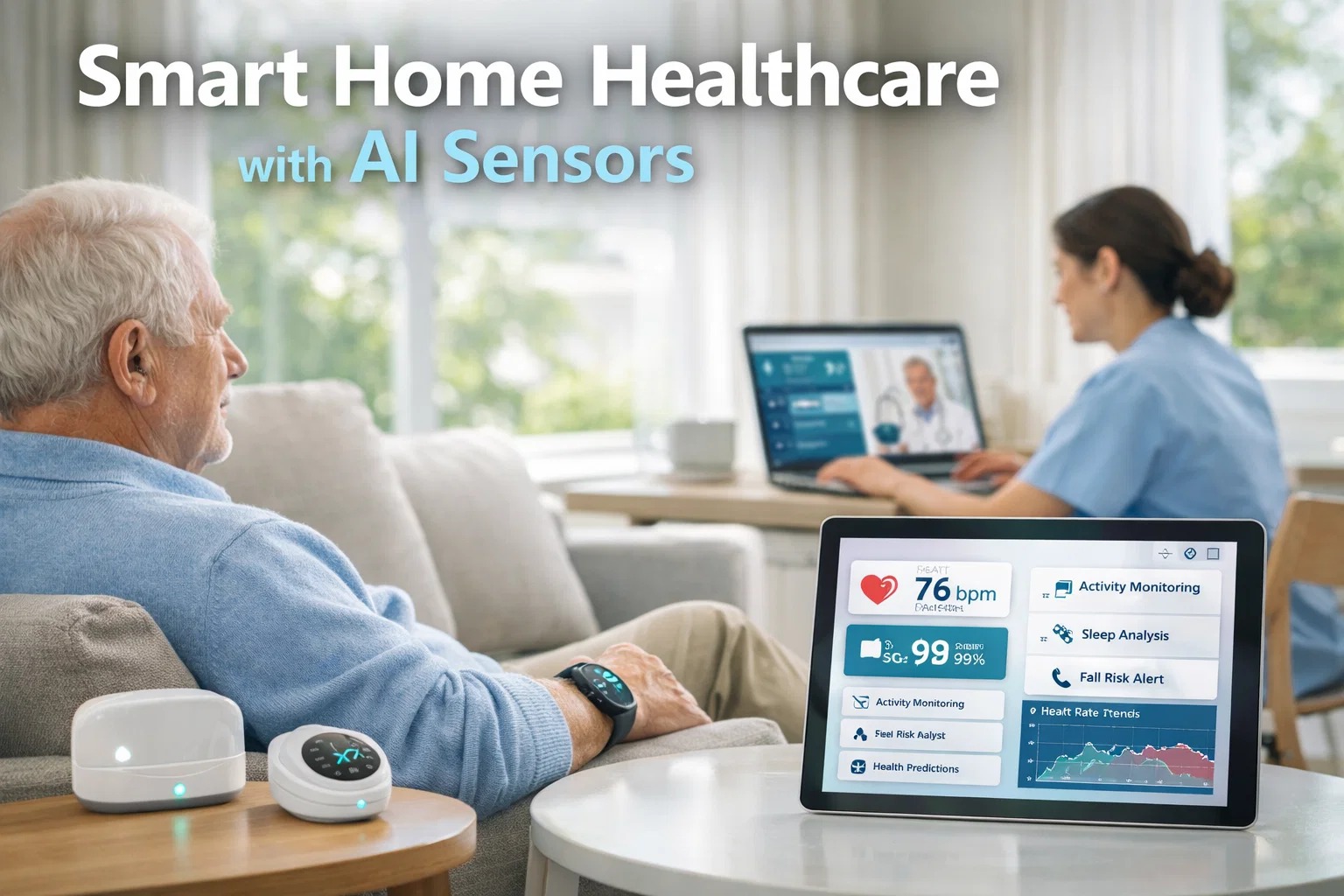
Every year, hospitals worldwide lose millions of dollars and put patient lives at risk because of unexpected biomedical equipment failures. The World Health Organization estimates that 50% to 80% of medical equipment in healthcare facilities becomes non-functional at some point due to poor maintenance practices. What if your facility could detect alarm faults in ventilators, MRI scanners, infusion pumps, and patient monitors before they ever cause a disruption? Artificial intelligence is making this possible right now, and it is fundamentally changing how healthcare organizations manage their most critical assets. In this blog, we explore how AI-driven predictive maintenance identifies alarm faults in biomedical equipment, why it matters for your facility, and how you can implement it today. Ready to transform your maintenance operations? Sign up for OxMaint and experience the future of healthcare equipment management.
Predictive Maintenance for Biomedical Equipment: AI Detection of Alarm Fault
What Are Alarm Faults in Biomedical Equipment
Alarm faults in biomedical equipment refer to abnormal signals or warnings generated by medical devices when their operational parameters deviate from expected ranges. These faults can manifest in patient monitors that fail to detect critical vital sign changes, ventilators that produce false high-pressure alerts or miss genuine airflow obstructions, infusion pumps that trigger repeated occlusion warnings without cause, and imaging systems like MRI or CT scanners that signal cooling failures or calibration drift. In traditional hospital environments, these alarm faults are often addressed reactively, meaning the equipment has already malfunctioned or produced inaccurate readings before anyone notices. This reactive approach leads to diagnostic delays, treatment interruptions, and in severe cases, direct patient harm. The financial toll is equally staggering as total downtime costs typically exceed visible repair expenses by five to ten times when accounting for revenue loss, clinical disruption, and the cascading effects on hospital operations. Every 1% improvement in critical equipment uptime can deliver $150,000 to $300,000 in annual value for a typical hospital.
The Hidden Cost of Alarm Faults
How AI Detects Alarm Faults Before They Become Failures
The breakthrough of AI-powered predictive maintenance lies in its ability to continuously monitor biomedical equipment and recognize subtle patterns that human technicians simply cannot detect in real time. Unlike traditional preventive maintenance that follows rigid schedules regardless of actual equipment condition, AI-driven systems analyze live data streams from IoT sensors embedded in medical devices. These sensors track parameters such as temperature fluctuations, vibration frequencies, power consumption anomalies, pressure variations, and signal quality degradation. Machine learning algorithms including Random Forest, Support Vector Machines, and neural networks are trained on historical failure data to classify the risk of malfunction with remarkable accuracy. Studies show that Support Vector Machine classifiers can achieve up to 96.9% accuracy in predicting first failure events in biomedical equipment. When the AI detects a deviation pattern that historically precedes an alarm fault, it triggers a proactive maintenance alert, giving your biomedical engineering team the time to intervene before any clinical impact occurs.
AI Alarm Fault Detection: How It Works
IoT Sensor Monitoring
Sensors capture temperature, vibration, power, pressure, and signal data from biomedical devices 24/7
Data Aggregation
CMMS platform collects and normalizes real-time and historical maintenance data into a unified dataset
ML Pattern Analysis
AI algorithms detect anomalies, classify risk levels, and predict remaining useful life of components
Proactive Alert
Maintenance team receives actionable alerts with priority level, recommended actions, and timeline
The real power of this approach is its continuous learning capability. As more data is collected from your equipment fleet, the algorithms become increasingly accurate at distinguishing genuine alarm fault precursors from normal operational variations. This dramatically reduces false alarm rates while ensuring that no critical warning goes unnoticed. If you want to see how this technology works for your facility, book a demo with OxMaint and let our team walk you through a live predictive maintenance scenario.
Biomedical Equipment Most Vulnerable to Alarm Faults
Not all medical devices carry the same risk profile when it comes to alarm faults. Understanding which equipment categories are most susceptible helps healthcare facilities prioritize their AI monitoring investments. Based on published research and industry data, the following biomedical equipment types represent the highest-risk categories for alarm fault events and benefit the most from AI-powered condition monitoring.
Ventilators & Life-Support
AI monitors airflow, pressure, and sensor performance to predict faults that could compromise critical care patients. Alarm failures in ventilators can be immediately life-threatening.
MRI & CT Scanners
AI analyzes cooling system temperatures, magnet stability, and component wear patterns to prevent diagnostic imaging downtime that cascades into extended patient stays.
Patient Monitors & ECGs
Signal quality degradation and electrode drift are detected early, ensuring continuous availability of accurate cardiac and vital sign data for reliable diagnosis.
Infusion Pumps
Occlusion sensor drift, motor wear, and flow rate inaccuracies are predicted before they trigger false alarms or deliver incorrect medication dosages.
Blood Analyzers
Real-time monitoring of calibration drift and reagent system parameters prevents diagnostic accuracy failures that compromise lab results and clinical decisions.
Defibrillators
Battery degradation, capacitor performance, and electrode integrity are continuously assessed to ensure these life-saving devices perform when every second counts.
Protect Your Patients. Protect Your Budget.
Join thousands of healthcare facilities using OxMaint to transform their biomedical equipment maintenance from reactive to predictive. Reduce alarm fault incidents, cut downtime by up to 40%, and achieve 99% equipment uptime.
Why AI-Driven Alarm Fault Detection Matters for Your Facility
Implementing AI-powered predictive maintenance is not just about technology adoption; it is about fundamentally rethinking how your facility protects patients and manages resources. Healthcare organizations that have deployed predictive maintenance strategies report transformative results within the first 12 months. These include downtime reductions of 40 to 50 percent, maintenance cost savings of 25 to 35 percent, equipment lifespan extensions of up to 35 percent, and device-related incident reductions of 50 to 70 percent. The return on investment typically reaches 300 to 600 percent within 18 to 24 months, making this one of the most financially compelling upgrades a hospital can make.
Enhanced Patient Safety
Early detection of alarm faults prevents equipment-related adverse events. When a ventilator sensor begins drifting or a patient monitor's alarm threshold becomes unreliable, AI catches it days or weeks before it could affect care delivery. This proactive shield is the single most important reason to invest in predictive maintenance.
Dramatic Cost Reduction
Emergency repairs on biomedical equipment cost three to five times more than planned maintenance. By shifting from reactive to predictive operations, facilities reallocate budgets from crisis response to strategic equipment investments. The savings compound as AI models improve and prevent increasingly subtle fault patterns.
Regulatory Compliance
FDA, Joint Commission, and CMS requirements demand documented maintenance programs. AI-driven CMMS platforms automatically generate compliance records, audit trails, and performance reports. This reduces administrative burden while ensuring your facility is always inspection-ready.
Reduced Staff Burnout
Biomedical technicians spend less time on emergency firefighting and more time on strategic maintenance activities. AI handles the constant vigilance that would be impossible for any human team to maintain across hundreds of devices simultaneously, leading to better working conditions and reduced turnover.
The benefits are clear, and getting started does not require a massive infrastructure overhaul. Modern cloud-based CMMS platforms like OxMaint integrate with your existing equipment and workflows to deliver AI-powered insights from day one. Sign up today to see how quickly your facility can start benefiting from intelligent alarm fault detection.
Implementing AI-Based Alarm Fault Detection: A Practical Roadmap
Transitioning from traditional maintenance to AI-powered predictive maintenance may seem complex, but with the right platform and approach, healthcare facilities of any size can begin seeing results within weeks. The implementation follows a structured path that builds capability progressively without disrupting existing operations.
Asset Inventory & Baseline
Catalog all biomedical equipment with complete maintenance histories, manufacturer specifications, and criticality rankings. OxMaint's digital asset management system makes this process seamless with barcode scanning and mobile data entry.
Sensor Integration & Data Collection
Connect IoT monitoring sensors to high-priority equipment. Begin collecting real-time operational data including temperature, vibration, power draw, and performance metrics. The CMMS platform normalizes this data automatically.
AI Model Training & Calibration
Machine learning models are trained on your facility's historical maintenance records and incoming sensor data. The system learns what normal operation looks like for each device type and begins identifying anomaly patterns.
Predictive Alerts & Optimization
The system begins generating proactive maintenance alerts with confidence scores, recommended actions, and priority levels. Continuous feedback loops refine predictions over time, delivering increasingly accurate fault detection.
Healthcare facilities that follow this roadmap consistently achieve measurable improvements within the first quarter of deployment. The key is starting with your highest-risk equipment and expanding coverage as the system proves its value. Want to see a customized implementation plan for your facility? Book a demo and our healthcare maintenance specialists will assess your current setup and show you exactly where AI can make the biggest impact.
Frequently Asked Questions
What is predictive maintenance for biomedical equipment
Predictive maintenance for biomedical equipment uses IoT sensors, real-time data analytics, and AI algorithms to monitor the health of medical devices continuously. Instead of following fixed maintenance schedules or waiting for equipment to break down, predictive systems identify early warning signs of component degradation, alarm faults, and performance drift. This allows biomedical engineering teams to perform targeted maintenance exactly when needed, preventing failures while avoiding unnecessary service interruptions.
How does AI detect alarm faults in medical devices
AI detects alarm faults by analyzing continuous streams of sensor data from biomedical equipment. Machine learning models are trained on historical patterns of normal operation and known fault conditions. When the AI identifies deviations such as unusual vibration frequencies, temperature spikes, irregular power consumption, or signal quality degradation that match pre-failure patterns, it generates proactive alerts. Advanced models can predict the remaining useful life of components, enabling maintenance to be scheduled at the optimal time.
Which biomedical equipment benefits most from predictive maintenance
High-value and life-critical equipment benefits the most, including ventilators, MRI and CT scanners, patient monitors, infusion pumps, defibrillators, blood analyzers, and anesthesia machines. These devices carry the highest patient safety risk when they fail and generate the most significant financial impact through downtime. Facilities should prioritize AI monitoring for equipment where an undetected alarm fault could directly endanger patient outcomes.
What ROI can hospitals expect from AI-powered predictive maintenance
Healthcare facilities implementing comprehensive predictive maintenance typically see a 40 to 50 percent reduction in equipment downtime, 25 to 40 percent reduction in maintenance costs, and equipment lifespan extensions of up to 35 percent. Most organizations achieve ROI of 300 to 600 percent within 18 to 24 months. For a typical hospital, every 1% improvement in critical equipment uptime translates to $150,000 to $300,000 in annual value.
How does a CMMS platform support alarm fault detection
A Computerized Maintenance Management System (CMMS) like OxMaint serves as the central hub for all equipment data, maintenance records, sensor feeds, and AI-generated insights. It consolidates information from multiple sources into a single platform where biomedical engineers can view equipment health dashboards, receive predictive alerts, manage work orders, track compliance documentation, and analyze trends. The CMMS enables the structured data collection that AI algorithms need to make accurate predictions.
Can small hospitals implement AI predictive maintenance
Yes. Cloud-based CMMS platforms have made predictive maintenance accessible to facilities of all sizes. Small hospitals can start by monitoring their highest-risk equipment and expand coverage over time. The cloud model eliminates the need for expensive on-premise infrastructure, and subscription pricing makes the technology financially viable even for community hospitals and clinics. The key is starting with a focused implementation on critical equipment where the impact is greatest.
Stop Reacting. Start Predicting.
Your biomedical equipment is generating data right now that could prevent the next alarm fault, the next unplanned downtime, the next patient safety incident. OxMaint turns that data into actionable intelligence. Join healthcare facilities worldwide that have already made the shift to AI-powered predictive maintenance.