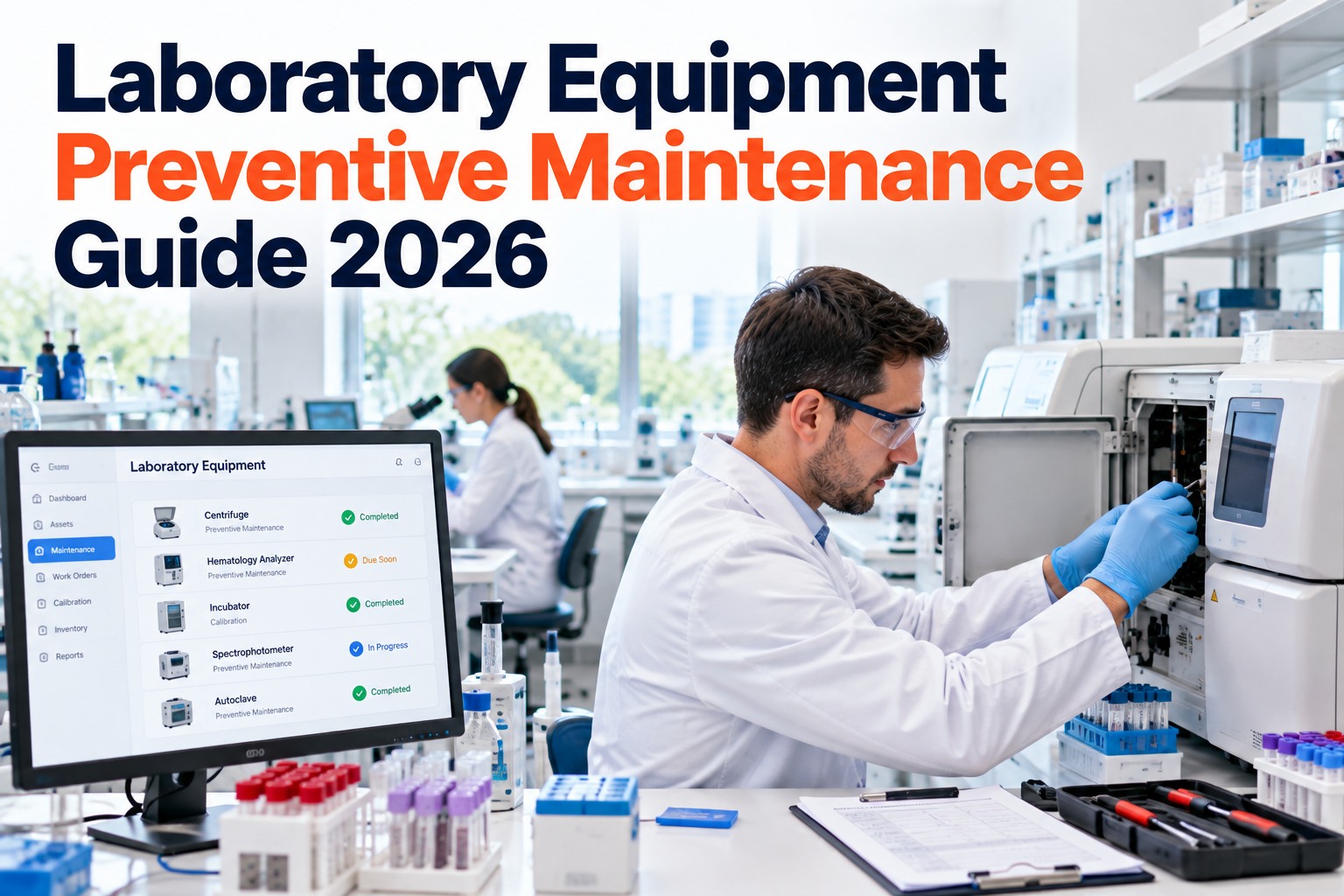
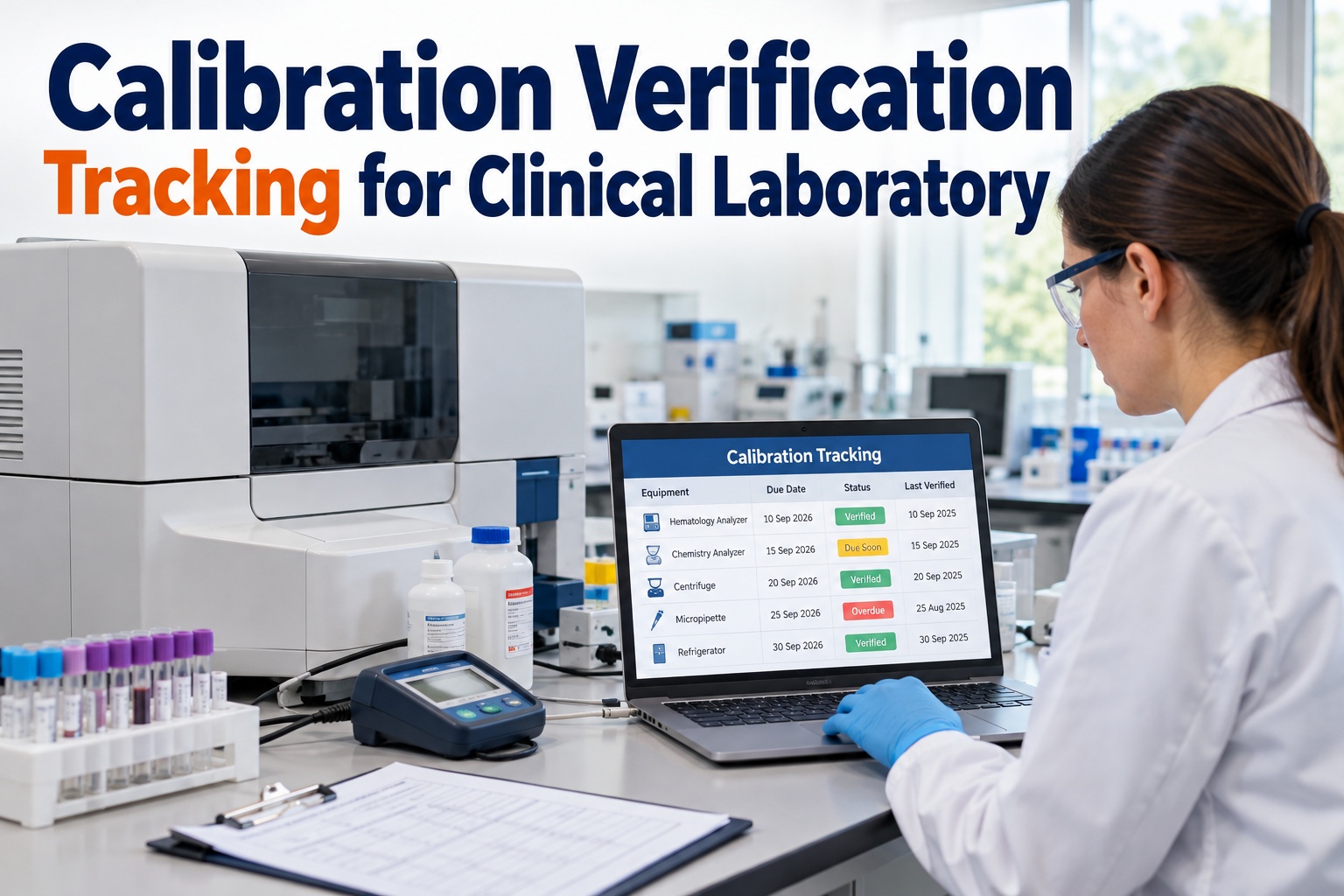
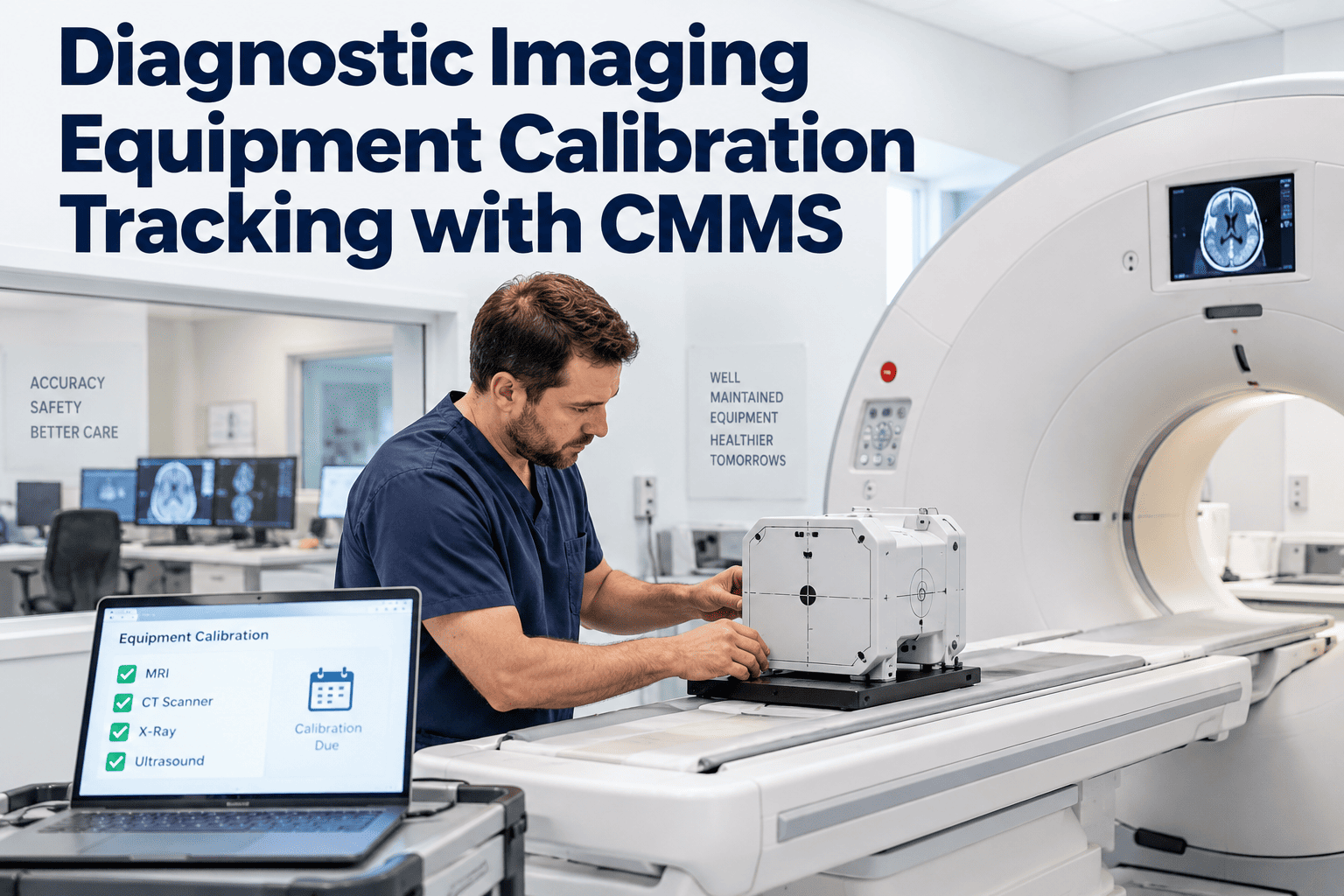
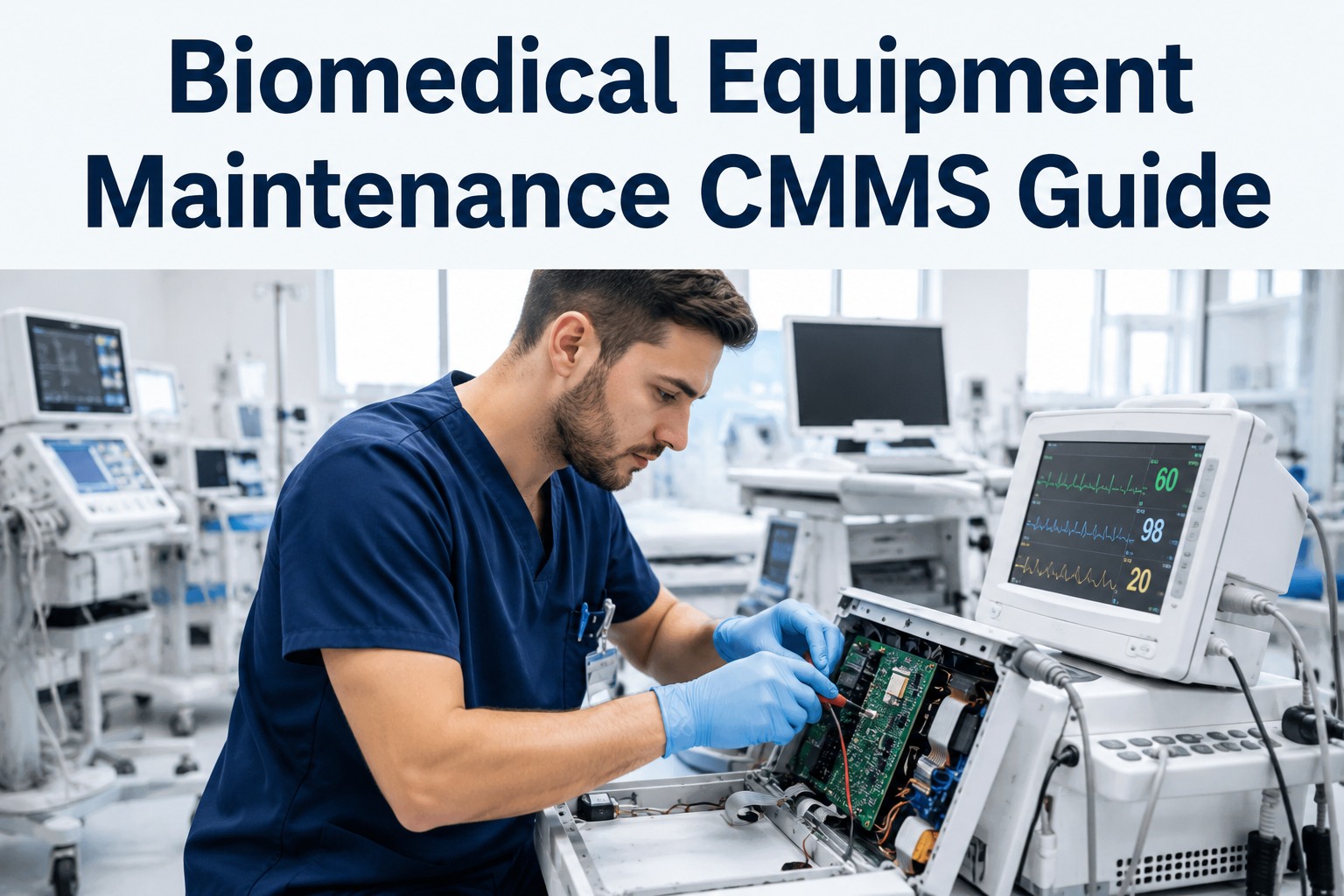
In a clinical lab, a missed analyzer maintenance isn't just downtime — it's a drifting electrode reporting a potassium that's wrong, a photometric error skewing a chemistry panel, a centrifuge imbalance corrupting a separation. The result reaches a clinician who acts on it. And when the CLIA inspector arrives, the finding usually isn't the instrument — it's the missing maintenance record. OXMAINT AI is AI-powered maintenance management software (CMMS) that schedules every PM, calibration and QC task, captures the CLIA-grade record, and turns an out-of-spec result into a corrective work order. Book a demo to see lab compliance run itself.
Healthcare · Laboratory Equipment PM
A Missed PM Doesn't Just Stop the Analyzer — It Falsifies the Result
Lab equipment maintenance is patient safety and compliance at once: an uncalibrated analyzer reports a wrong value, and a missing record fails an inspection. OXMAINT AI keeps every daily QC, calibration verification and PM task on schedule, holds the CLIA-grade documentation, and flags an out-of-spec reading as a corrective work order — before it reaches a patient chart.
- 1Schedule PM & QC
- 2Calibrate & verify
- 3Record to CLIA
- 4Correct out-of-spec
The compliance reality
72%
of CLIA inspection deficiencies trace to missing or inadequate maintenance documentation
Calibration verificationevery 6 months
Record retentionmin. 2 years
Sources: OxMaint clinical-lab CLIA guide; 42 CFR 493.1251/1255/1256.
Four Words People Mix Up — and CLIA Doesn't
Maintenance, calibration, calibration verification and QC are four different activities with four different records. Confusing them is how a lab thinks it's covered when it isn't. Start a free trial to track all four.
Maintenance
Keeping the instrument physically sound — cleaning, fluidics, part replacement, function checks.
Calibration
Establishing the relationship between instrument response and known analyte concentration.
Calibration verification
Confirming that calibration still holds across the full reportable range — every 6 months or on a trigger.
Quality control
Daily liquid controls monitoring day-to-day performance; a failure triggers corrective action.
Distinctions per CLIA guidance: QC monitors performance, calibration sets the curve, verification confirms it holds, maintenance keeps the hardware sound. Each has its own required record. Source: OxMaint clinical-lab CLIA checklist.
The Analyzer PM Calendar
Lab equipment runs on stacked frequencies — some tasks every eight hours, some annually. Miss a layer and either the result drifts or the record has a gap. Book a demo to put it all on one schedule.
Daily / per shift
Two-level QC per analyte, startup/shutdown, probe inspection, reagent levels; blood gas QC every 8 hours.
Weekly
Fluidics cleaning, optical and exterior cleaning, tubing checks, QC trend review for Westgard violations.
Monthly / 6-mo
Calibration verification across five points of the reportable range, linearity, deep-clean, QC statistics export.
Quarterly / annual
Centrifuge RPM check to ±5%, rotor inspection, full performance validation, fluidics overhaul.
Task cadence per clinical-lab maintenance practice; calibration verification every 6 months or on trigger events (42 CFR 493.1255). Follow each analyzer's manufacturer protocol and your accreditation body. Source: OxMaint clinical-lab CLIA guide.
Catch the Drift Before It Reaches a Patient Chart
See how OXMAINT AI schedules each QC and calibration, flags an out-of-range result as a corrective work order, and holds the record an inspector will ask for.
When Maintenance Slips, the Result Lies
The reason lab PM is non-negotiable isn't the instrument — it's the patient at the end of the result. Each failure mode produces a specific, dangerous error. Start a free trial to prevent them.
Hematology drift
Inadequate separation can falsely elevate potassium or lower LDH — a result a clinician may act on.
Chemistry optical error
A contaminated photometric path skews the whole panel toward inaccurate values.
Blood-gas electrode drift
Shifted pH or pO2 readings can trigger an inappropriate clinical intervention.
Centrifuge imbalance
Off-spec RPM produces incorrect analyte separation and unreliable downstream results.
The Record an Inspector Actually Checks
CLIA is specific about what each record must contain. A digital CMMS captures it as the work is done, so an audit is an export, not an archaeology dig. Book a demo to see the record.
CLIA record requirements by type
| Record | Reg | Must capture |
|---|
| Maintenance | 493.1251 | Task, date, performer, outcome, corrective action |
|---|
| Quality control | 493.1256 | Control lot, expiry, expected range, result, corrective action on failure |
|---|
| Calibration | 493.1255 | Analyte, materials, points tested, results, pass/fail |
|---|
| Temperature | Storage logs | Fridge/freezer temps at defined intervals, in range for reagents in use |
|---|
Record contents per 42 CFR 493.1251/1255/1256 with a minimum 2-year retention. A CMMS timestamps and stores each automatically. Confirm specifics with your accreditation body (CLIA, CAP). Source: OxMaint clinical-lab CLIA guide.
How OXMAINT AI Runs Laboratory Maintenance
OXMAINT AI is maintenance management software that keeps every analyzer's PM, calibration and QC schedule, captures the CLIA record, and turns an out-of-spec finding into a corrective work order — so compliance and result validity are managed together. Start a free trial to load your instruments.
1
Schedule
Auto-issue daily QC, weekly cleaning, calibration-verification and annual PM per instrument.
2
Record
Capture task, performer, lot numbers, results and pass/fail to CLIA-grade standards.
3
Correct
Turn a QC failure or out-of-spec reading into a ranked corrective work order.
4
Prove
Export an audit-ready maintenance, calibration and temperature history in minutes.
Frequently Asked Questions
What does CLIA require for equipment maintenance?
Documented maintenance (task, date, performer, outcome), QC records, calibration and calibration-verification records, and temperature logs — retained at least two years per 42 CFR 493.
Start a free trial to capture it.
How often is calibration verification needed?
Every six months, or after a defined trigger event such as major maintenance, a reagent-lot change or a QC shift — confirming the calibration still holds across the reportable range.
Book a demo to schedule it.
What's the difference between QC and calibration?
QC monitors day-to-day performance with liquid controls; calibration establishes the response curve; verification confirms that curve still holds. They're separate records, not interchangeable.
Start a free trial to track each.
Why is a missed PM a patient-safety issue?
A drifting or dirty analyzer reports inaccurate values — a wrong potassium or blood-gas reading a clinician may act on — so maintenance directly protects result validity.
Book a demo to see the safeguards.
Can OXMAINT AI produce a CLIA-ready audit trail?
Yes — every task, calibration and temperature reading is timestamped and stored, so an inspection becomes an export instead of a scramble through paper logs.
Start a free trial to build it.
Protect the Result, Pass the Inspection
Schedule every PM, calibration and QC, correct every out-of-spec finding, and hold the CLIA record — for every analyzer on one platform.