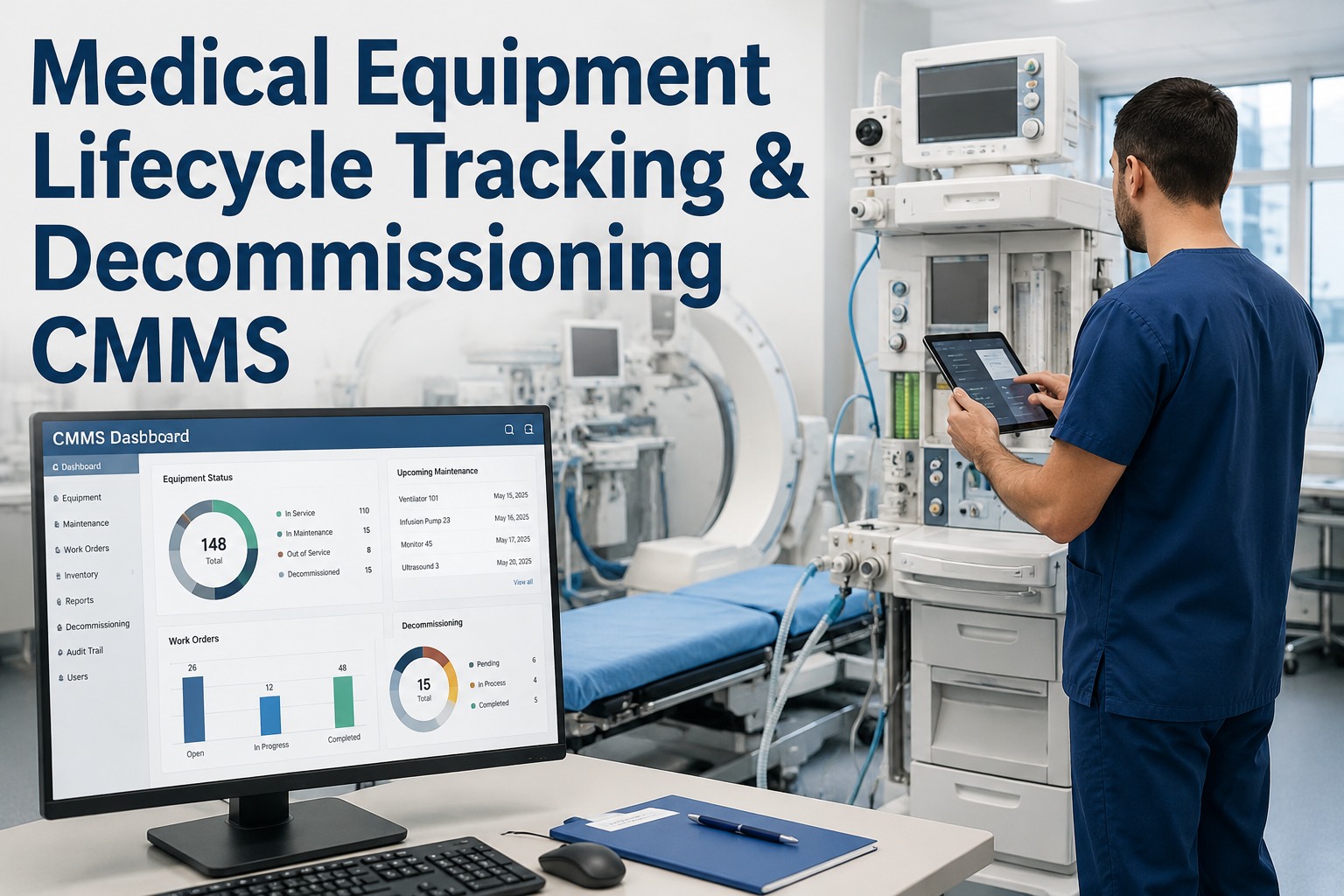
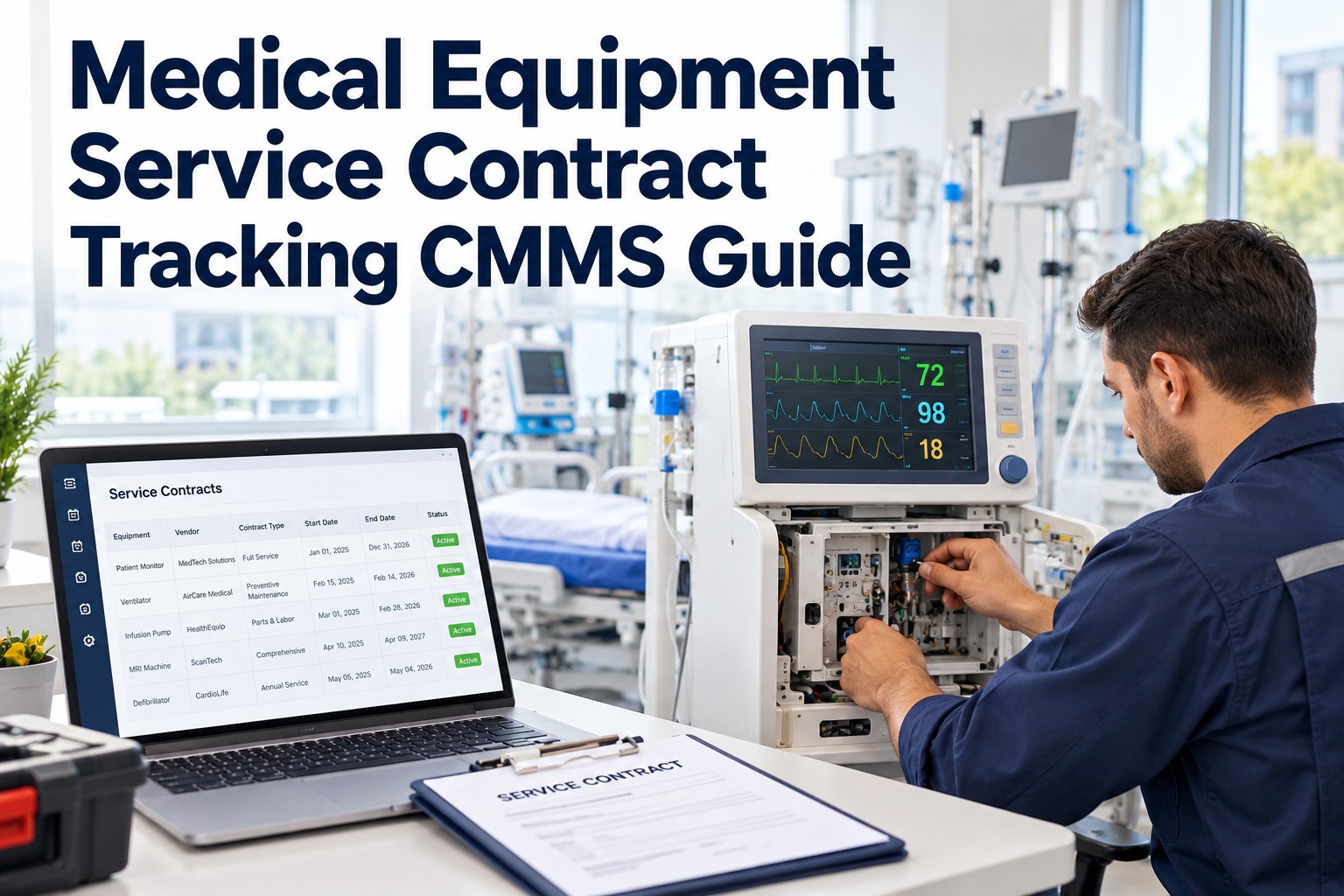
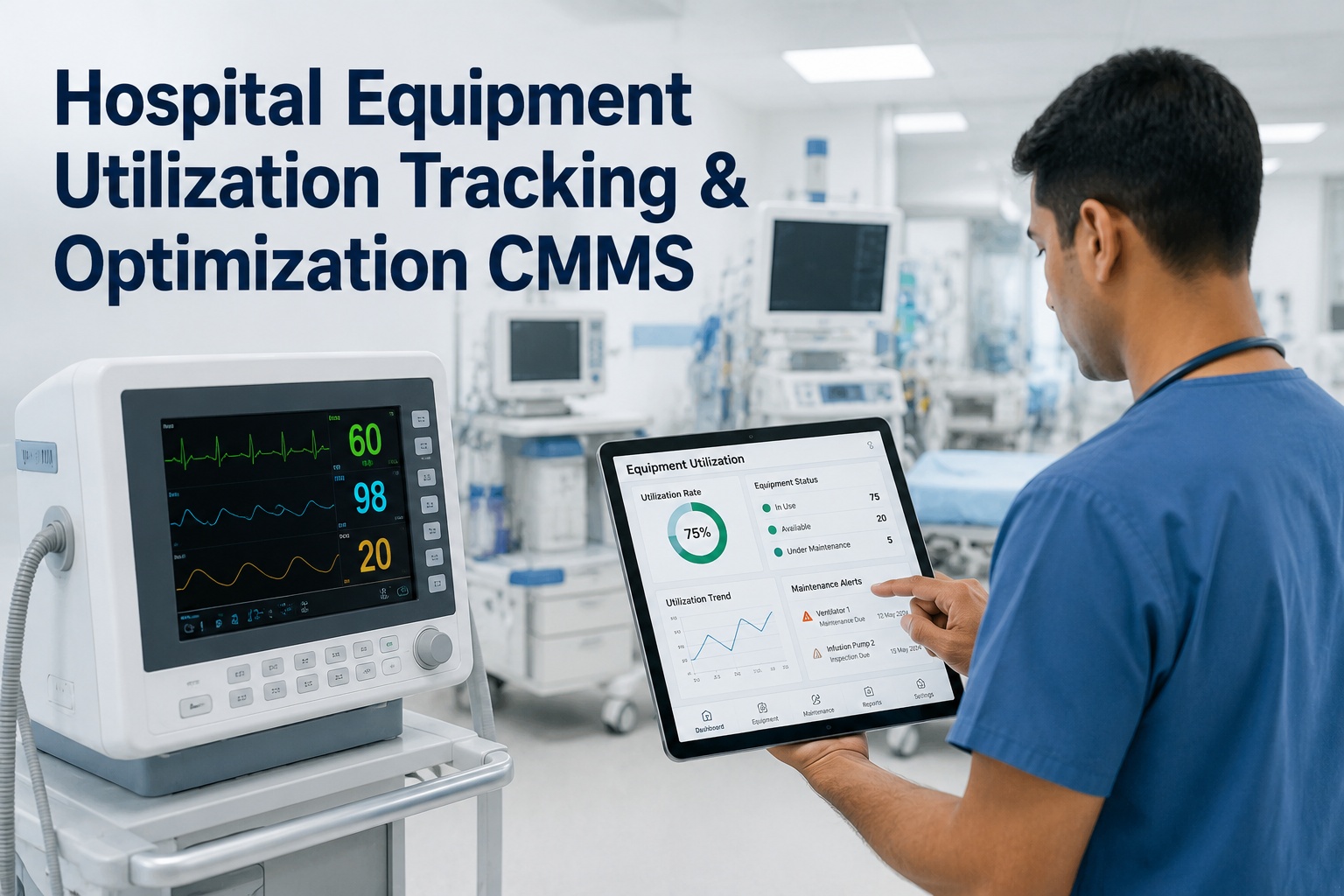
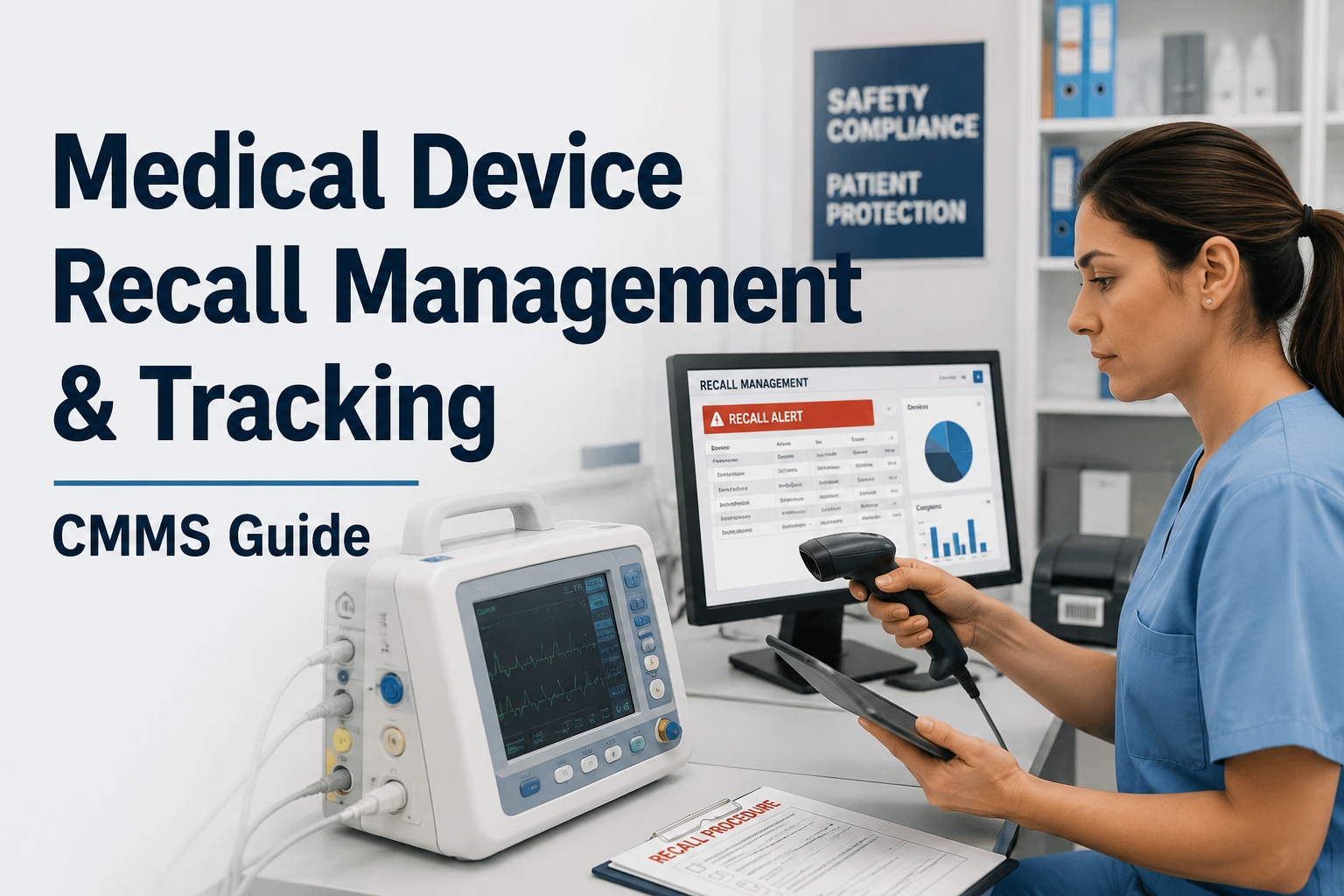
Medical equipment lifecycle tracking — from acquisition through preventive maintenance compliance, condition scoring, and final decommissioning — is what separates a defensible capital and compliance function from a spreadsheet exercise. A purpose-built equipment decommissioning CMMS gives clinical engineering teams a single system of record for every device's history, recall status, AEM program eligibility, and replacement triggers, closing the loop when equipment leaves service. Hospitals that manage lifecycles in fragmented spreadsheets lose an average of 15–20% of their capital equipment value to premature replacement, missed recalls, and undocumented PM compliance. This guide walks through the full healthcare lifecycle from cradle to retirement — and shows how an AI-powered platform like OxMaint turns it into a measurable, audit-ready advantage. Ready to modernize? Start Free Trial or read on for the complete framework.
Healthcare Lifecycle Guide 2026
Can you trace every device from acquisition to decommissioning — without opening a spreadsheet?
Medical equipment lifecycle tracking is the backbone of Joint Commission readiness, AEM program defensibility, and capital replacement planning. When a CMMS owns the full record, compliance audits take hours instead of weeks, recalls never slip through, and decommissioning closes the loop cleanly.
7,400+
medical devices a typical 300-bed hospital tracks across their lifecycle — most still on paper or siloed spreadsheets
The Full Lifecycle
What is the medical equipment lifecycle — and why tracking every stage matters
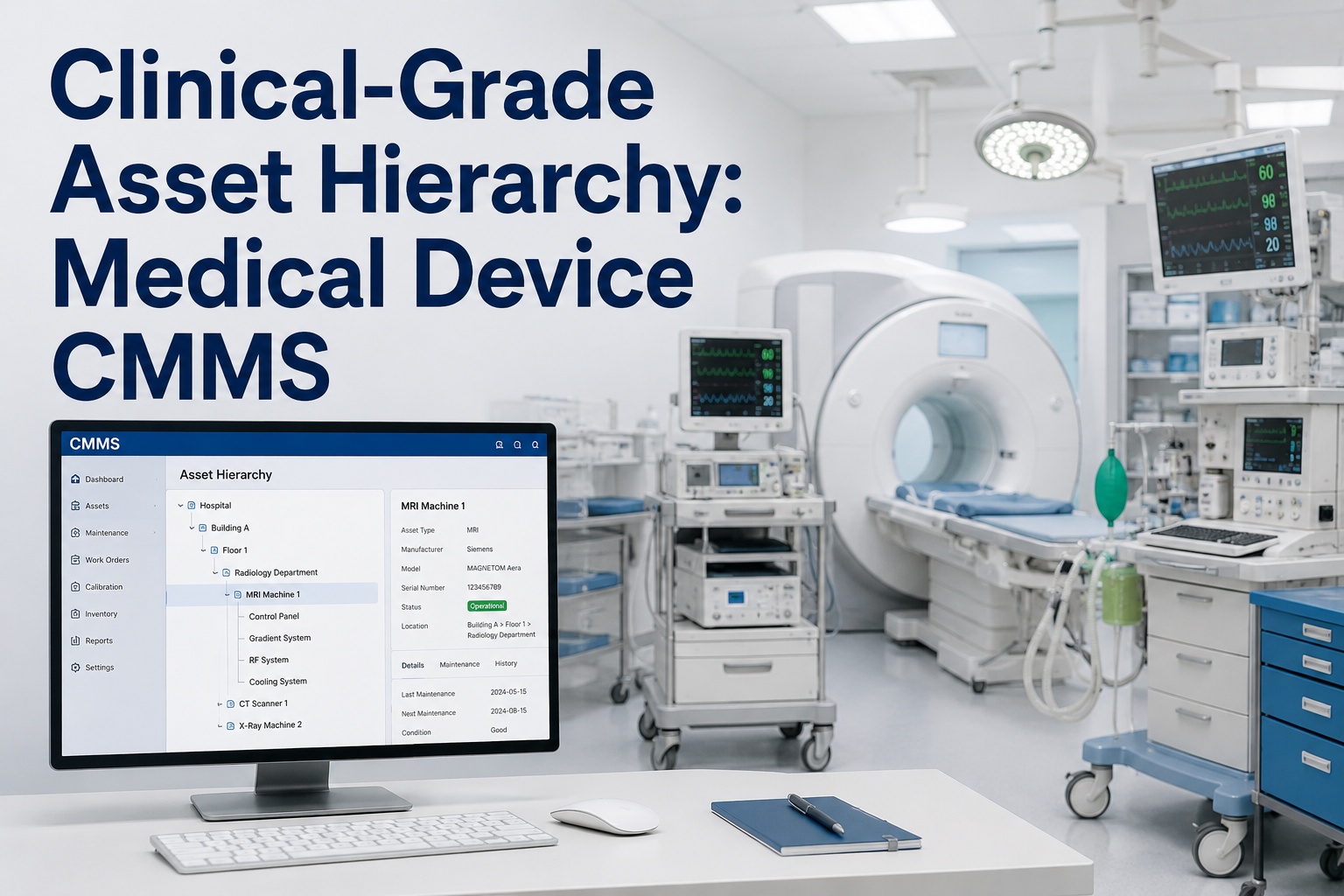
The medical device lifecycle spans seven critical stages: acquisition, inventory and acceptance, preventive maintenance (PM) scheduling, performance and condition monitoring, AEM program eligibility, replacement planning, and decommissioning. A CMMS medical lifecycle platform stitches these stages into one continuous record, so that a Joint Commission auditor can trace any infusion pump, MRI, or ventilator from the day it was purchased to the day it was removed — with every PM, repair, recall check, and parts order documented along the way.
01
Acquisition & Acceptance
PO received, asset tagged, baseline inspection, warranty and service contract loaded into the CMMS.
02
Inventory & PM Scheduling
Equipment categorized by risk level; PM frequencies set per manufacturer specs and Joint Commission standards.
03
Condition & Performance Monitoring
Repair history, downtime events, and condition data feed a rolling health score for each device.
04
AEM Program Eligibility
Devices meeting reliability thresholds are flagged for Alternative Equipment Management — reducing PM burden by 30–50%.
05
Replacement Planning
Lifecycle cost, downtime trends, and condition scores trigger capital replacement recommendations before failure.
06
Decommissioning
Asset removed from service, data sanitized, parts harvested, disposal documented — lifecycle closed and auditable.
Decommissioning Workflow
Equipment decommissioning guide: closing the loop when devices leave service
Decommissioning is the most overlooked stage in equipment lifecycle healthcare programs — yet it carries the heaviest compliance and data-security risk. A single decommissioned CT scanner can hold PHI on its internal drive, contain recoverable parts worth $12,000+, and require EPA-compliant disposal documentation. A CMMS decommissioning healthcare workflow ensures none of these steps are missed by enforcing a structured, sign-off-driven checklist on every retirement.
Decommissioning Request & Approval
Technician submits retirement request with justification (end-of-life, uneconomical repair, safety recall). Department head approves in-system — no paper trails, no lost forms.
PHI & Data Sanitization
Mandatory data-wipe verification for any device with storage (MRI, CT, ultrasound, monitors). CMMS records wipe method, technician, and verification timestamp.
Parts Harvesting & Recovery
Recoverable components (power supplies, sensors, modules) are checked back into spare-parts inventory with origin asset ID, remaining lifecycle, and value recorded.
Compliant Disposal & Documentation
EPA-compliant disposal vendor logged, chain-of-custody recorded, disposal certificate attached to the retired asset record. Lifecycle status set to "Closed."
AEM Program Eligibility
How a CMMS AEM program cuts PM workload by 30–50% without losing compliance
Alternative Equipment Management (AEM) allows clinical engineering teams to reduce PM frequency on devices that have proven reliable — but only if the data backs it up. A CMMS AEM program automatically evaluates each device against eligibility thresholds: if a device has zero failures, 100% PM compliance, and fewer than two corrective work orders over 12 months, it qualifies for extended PM intervals. The Joint Commission expects documented, data-driven justification — and that's exactly what the CMMS produces on demand.
35%
Average PM hour reduction after AEM implementation on qualifying devices
0.85
Minimum AEM score threshold for extended-interval eligibility
12 mo
Re-evaluation cycle the Joint Commission expects for every AEM-classified device
Replacement Triggers
When to replace medical equipment: data-driven lifecycle cost analysis
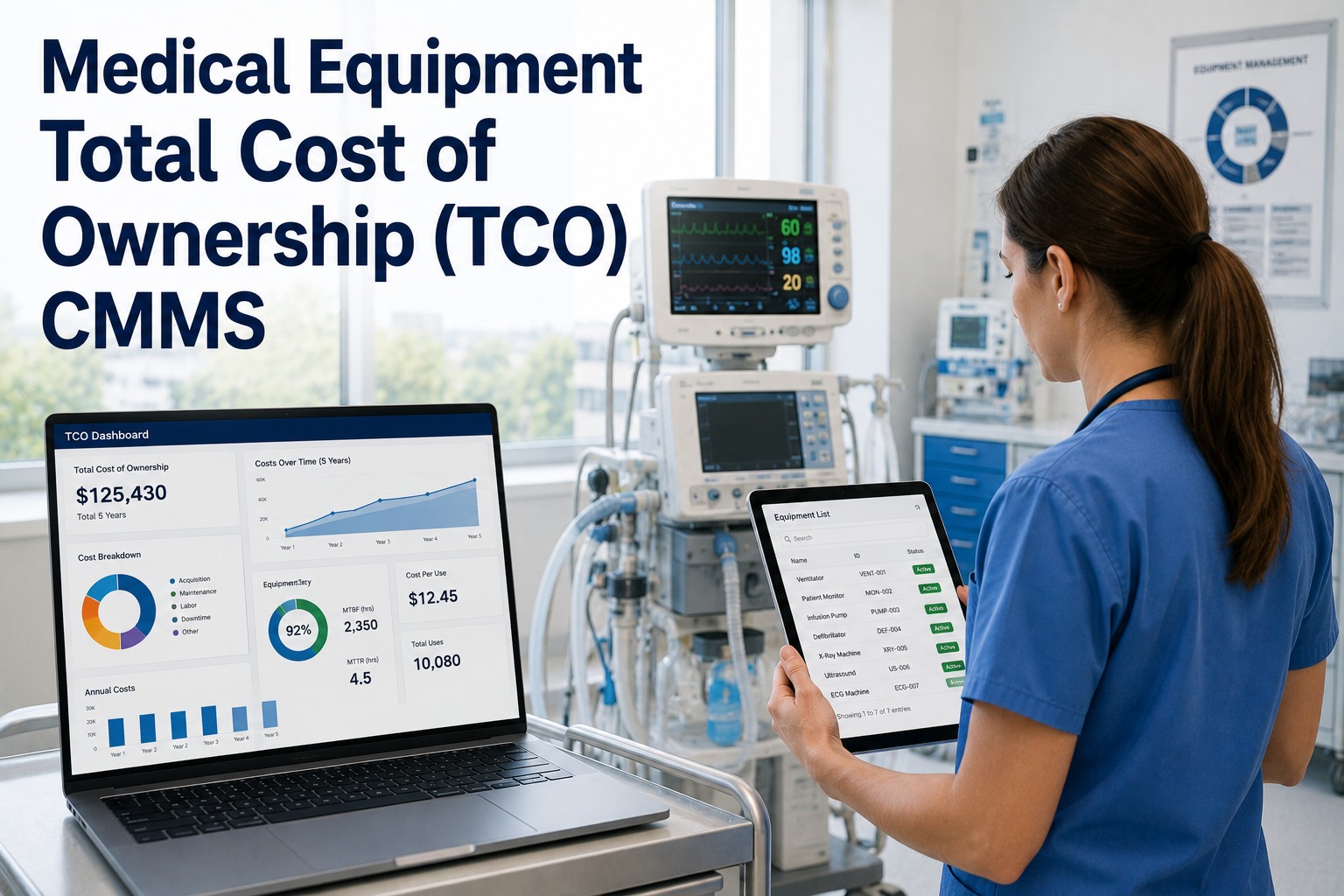
Most hospitals replace equipment reactively — after a catastrophic failure or when a vendor pushes a sale. A CMMS equipment lifecycle guide replaces guesswork with a rolling total cost of ownership (TCO) and condition score that flags replacement candidates 6–18 months before failure. The formula is straightforward: when annual repair cost exceeds 50% of replacement cost, or the device's condition score drops below 60 for two consecutive quarters, it enters the replacement queue.
| Equipment Type |
Avg. Useful Life |
Replacement Trigger |
Annual Repair Cost Threshold |
Condition Score Cut-off |
| Infusion Pumps |
7–9 years |
Repair cost > 50% replacement |
$450–$600 |
Below 60 |
| Ventilators |
8–10 years |
2+ critical failures in 12 months |
$2,500–$3,500 |
Below 65 |
| Ultrasound Systems |
8–10 years |
Probe failure + OEM support ending |
$5,000–$8,000 |
Below 55 |
| CT Scanners |
10–12 years |
X-ray tube on 3rd replacement |
$35,000–$50,000 |
Below 50 |
| Defibrillators |
6–8 years |
Battery system degradation + recall |
$700–$1,200 |
Below 60 |
| Patient Monitors |
8–10 years |
Display + sensor cascade failures |
$800–$1,500 |
Below 55 |
Real-World Scenario
A 300-bed hospital: from spreadsheet chaos to audit-ready in 90 days
Worked Example
A regional 300-bed hospital was managing 7,400+ medical devices across three facilities using a combination of Excel spreadsheets, paper work orders, and a legacy CMMS that hadn't been updated in four years. Their last Joint Commission audit took three weeks of manual record reconstruction, and two recalled infusion pumps were still in active patient use when the recall notice was found buried in a shared inbox.
After implementing OxMaint's medical device lifecycle CMMS, the clinical engineering team completed a full asset inventory reconciliation in 11 days using barcode scanning and the mobile app. Every device was tagged with its lifecycle stage, PM schedule, and AEM eligibility score. Within 90 days, PM compliance rose from 78% to 97%, 1,200 devices qualified for AEM (cutting 340 PM hours per quarter), and the decommissioning workflow caught three devices with PHI still on internal storage before disposal.
$180K
Annual savings from AEM PM reduction and avoided premature replacements
97%
PM compliance achieved within 90 days (up from 78%)
2 days
Audit preparation time (down from 3 weeks of manual record pulling)
See OxMaint on your assets — book a 30-min demo
Watch how OxMaint's AI-powered lifecycle tracking, AEM automation, and decommissioning workflows transform your clinical engineering operation into an audit-ready, cost-optimized function.
How OxMaint Helps
OxMaint capabilities mapped to medical equipment lifecycle management
OxMaint is built for the full cradle-to-decommissioning journey — not just work orders. Each capability below maps directly to a lifecycle stage and produces a measurable outcome for clinical engineering teams.
Full Lifecycle Asset Registry
Every device tracked from acquisition through decommissioning with auto-generated lifecycle stage, condition score, and TCO. Barcodes and QR codes link physical devices to digital records instantly.
Outcome: 100% asset visibility, 90% faster audit preparation, zero ghost assets
Automated AEM Program Engine
AI-driven AEM scoring evaluates every device quarterly against eligibility thresholds, auto-generates justification reports, and adjusts PM schedules for qualifying devices — all documented for Joint Commission review.
Outcome: 30–50% PM hour reduction on qualifying devices, full audit defensibility
Recall & Compliance Tracking
Real-time recall alerts matched against your active asset registry by manufacturer, model, and serial number. Affected devices are flagged instantly with action workflows for inspection, removal, or remediation.
Outcome: Zero recalled devices in active patient use, 100% recall response within 24 hours
Predictive Replacement Analytics
Machine learning models analyze repair frequency, parts costs, downtime events, and condition trends to predict device failure 6–18 months out — and auto-populate the capital replacement queue with ranked priorities.
Outcome: 25% reduction in unplanned downtime, 15% savings on capital replacement through planned procurement
FAQ
Medical equipment lifecycle tracking & decommissioning — your questions answered
What is medical equipment lifecycle tracking and why does a healthcare facility need it?
Medical equipment lifecycle tracking is the continuous management of every device from acquisition through decommissioning — including PM scheduling, condition monitoring, recall status, AEM eligibility, and replacement planning. Healthcare facilities need it because fragmented spreadsheet tracking leads to missed recalls, failed audits, premature replacements, and compliance violations. A CMMS like OxMaint centralizes the entire record so every device is traceable, every PM is documented, and every decommissioning is closed-loop — see it in action when you
Book a Demo.
How does a CMMS support an AEM (Alternative Equipment Management) program?
A CMMS AEM program automatically evaluates each device against eligibility criteria — PM compliance, mean time between failures, corrective work order frequency, and age — and assigns a quantitative AEM score. Devices scoring above the threshold (typically 0.85) qualify for extended PM intervals, reducing maintenance workload by 30–50%. The CMMS generates the data-driven justification reports that Joint Commission auditors expect, re-evaluates eligibility every 12 months, and maintains a full audit trail of every AEM decision.
What should be included in an equipment decommissioning workflow?
A complete decommissioning workflow includes: formal retirement request and approval, PHI and data sanitization verification, parts harvesting and inventory return, EPA-compliant disposal with chain-of-custody documentation, and lifecycle status closure in the CMMS. Each step should require sign-off within the system so nothing is skipped — especially data wiping, which carries the highest regulatory risk if a device with stored PHI reaches a secondary market without sanitization.
When should medical equipment be replaced vs. repaired?
The general rule is to replace when annual repair costs exceed 50% of replacement cost, when a device's condition score drops below 60 for two consecutive quarters, or when OEM support is ending and parts availability becomes unreliable. A CMMS tracks total cost of ownership and condition trends automatically, so replacement decisions are proactive rather than reactive — typically flagging candidates 6–18 months before failure to allow planned capital budgeting.
How long does it take to implement a medical equipment lifecycle CMMS?
A typical 300-bed hospital with 5,000–8,000 devices can complete a full implementation in 60–90 days. The process includes asset inventory reconciliation (often the longest phase, accelerated by barcode scanning), PM schedule migration, AEM scoring, and staff training. OxMaint's onboarding team handles data migration from spreadsheets or legacy systems, and most teams see PM compliance improvements within the first 30 days. You can
Start Free Trial today to begin the transition.
Ready to take control of your medical equipment lifecycle?
Join clinical engineering teams using OxMaint to track every device from acquisition to decommissioning — with AI-powered AEM scoring, recall alerts, and predictive replacement analytics built in.
Free 14-day trial · No credit card