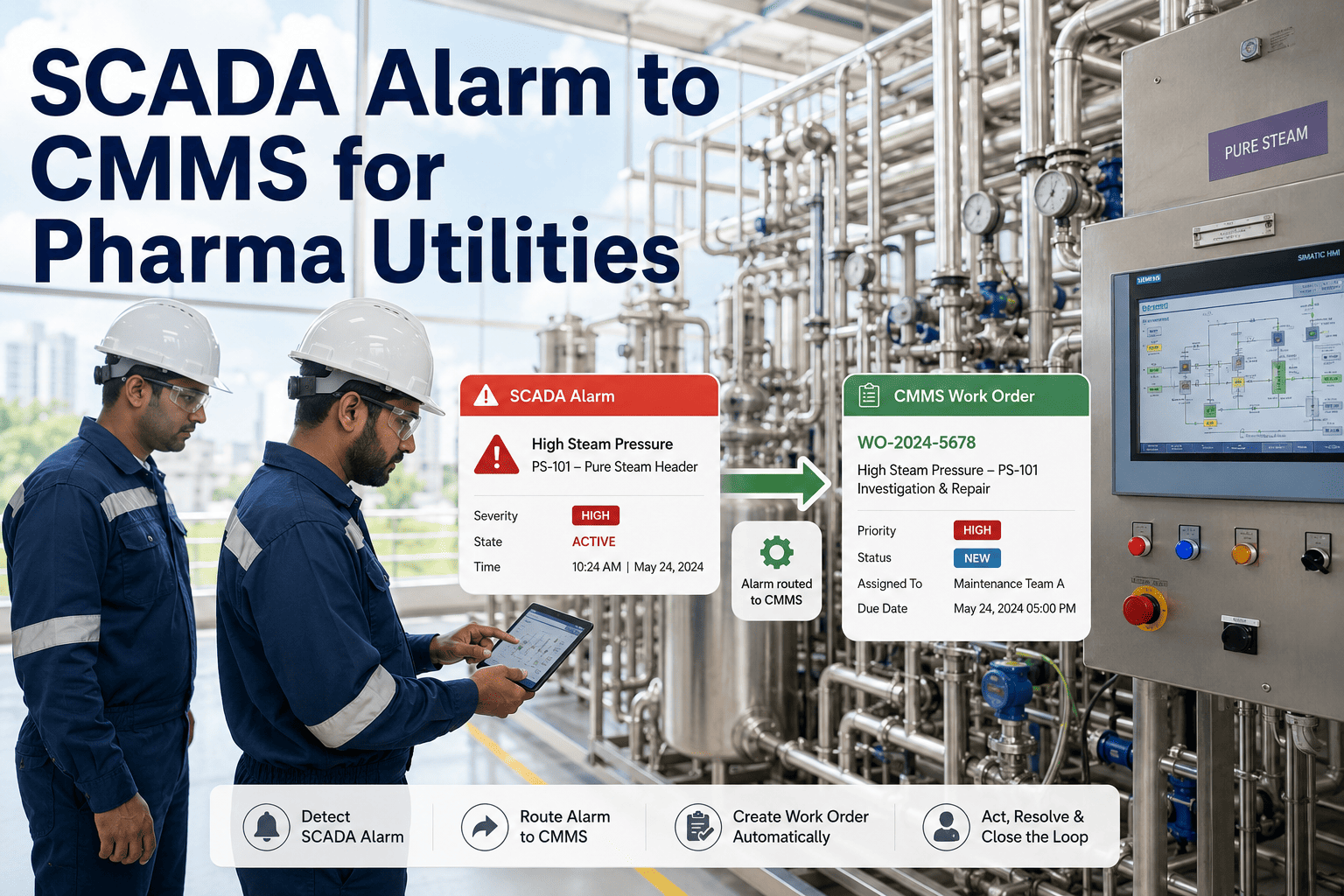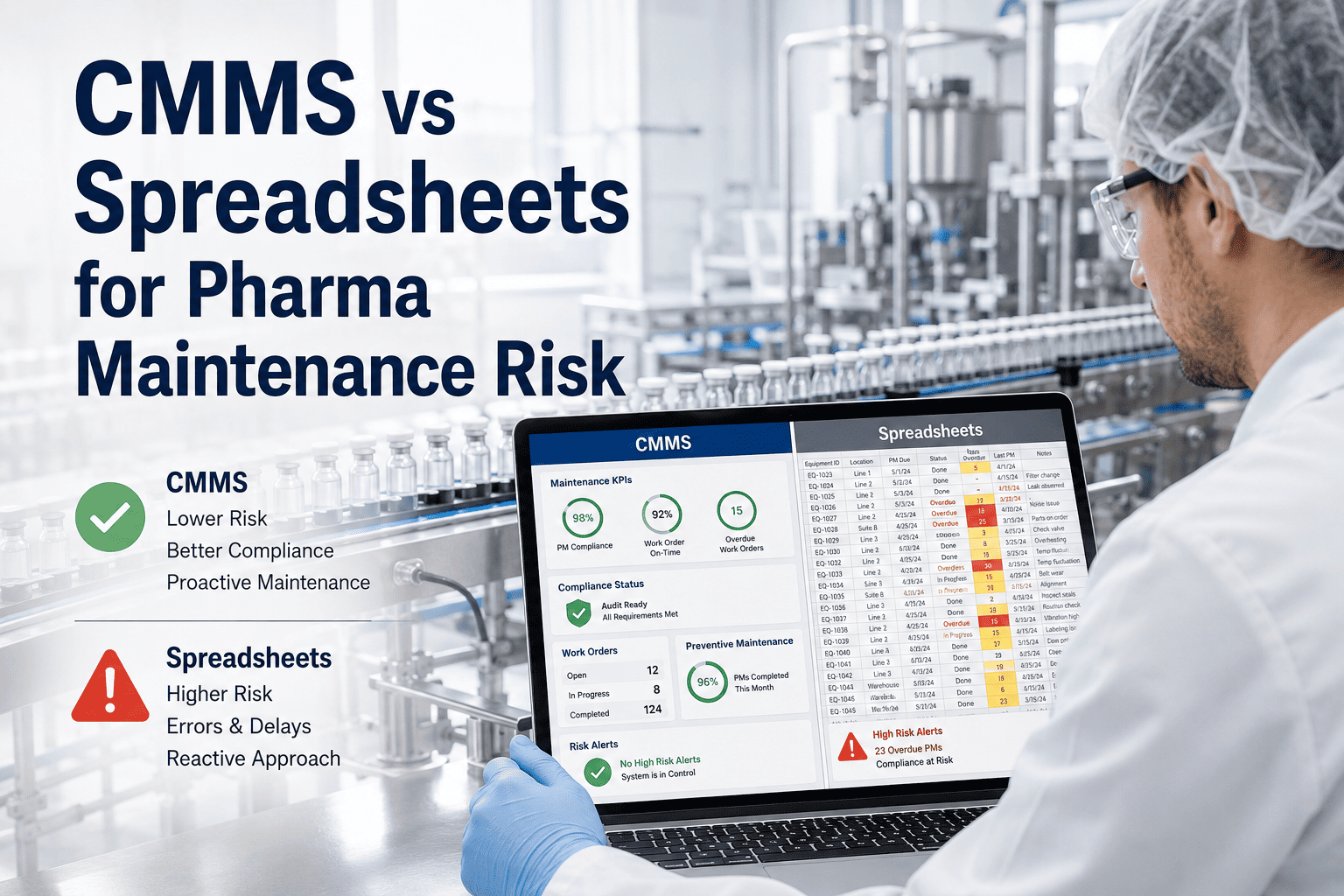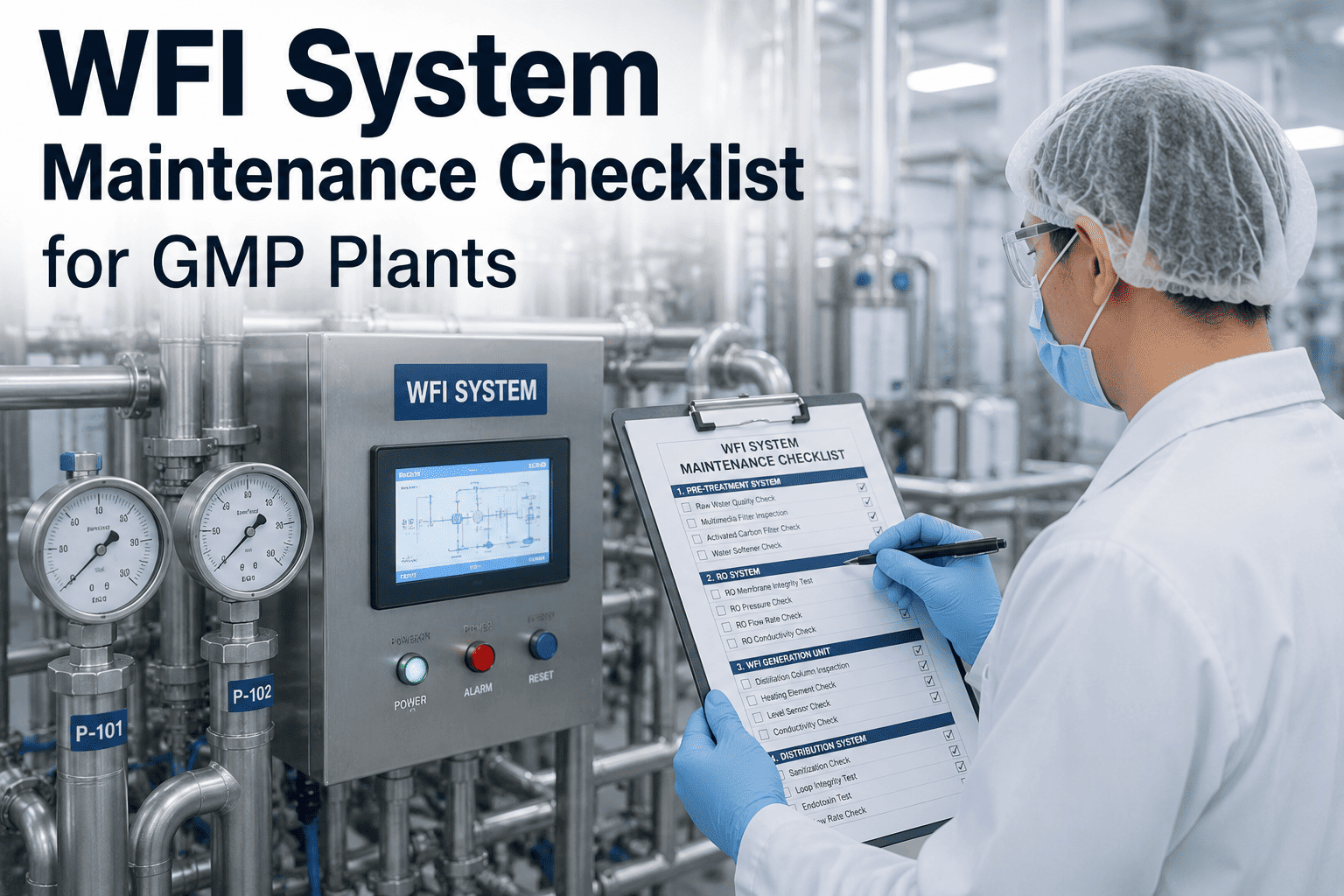
Water for Injection systems are the circulatory system of any sterile pharma plant — and when they excursion, the impact is immediate and cascading. A single out-of-specification TOC or conductivity reading can halt filling operations, quarantine stored WFI, trigger a multi-day investigation, and place every batch produced during the window under assessment. Under 21 CFR 211.72, pharmaceutical water systems must be designed, maintained, and controlled to ensure consistent production of water meeting specified chemical and microbiological quality standards. The challenge for maintenance teams is not knowing what to do — it is ensuring every sanitization, loop check, pump PM, and corrective action happens on schedule, with documented evidence, without relying on memory or spreadsheets. OxMaint converts this WFI maintenance checklist into a scheduled, tracked, and evidence-backed workflow — so nothing is missed and everything is audit-ready. Book a demo to see the WFI checklist configured for your plant.
WFI System Maintenance Checklist for GMP Plants
Every sanitization, loop check, pump PM, and corrective action — scheduled, tracked, and documented against 21 CFR 211.72 requirements.
WFI Daily Operational Verification
WFI Weekly Preventive Maintenance
WFI Sanitization and Component Maintenance
| Task | Frequency | CFR Reference | OxMaint Action |
|---|---|---|---|
| Hot sanitization cycle (80 degrees C+ hold) | Weekly / As needed | 211.72 | Auto-scheduled WO with temperature hold log template |
| Ozone sanitization (if applicable) | Per SOP cycle | 211.72 | WO with ozone concentration and contact time fields |
| Filter cartridge replacement (pre-filter, final filter) | Per differential pressure or calendar | 211.72 | Auto-triggered by dP threshold or calendar PM schedule |
| Storage tank internal inspection | Quarterly | 211.72, 211.68 | Scheduled WO with inspection checklist and photo evidence |
| Loop distribution valve exercise | Monthly | 211.72 | PM WO with valve-by-valve exercise log and seal inspection |
| Chemical sanitization (peroxide or acid) | Quarterly / Annual | 211.72 | WO with concentration, contact time, and rinse verification fields |
| Control valve and actuator calibration | Quarterly | 211.68 | Calibration WO linked to instrument asset with as-found/as-left data |
| Dead leg assessment and velocity verification | Semi-Annual | 211.72 | Assessment WO with loop diagram annotation and velocity calculations |
WFI System Annual Maintenance and Validation Support
What Happens When WFI Checklist Items Are Missed
| Missed Task | Likely Consequence | Regulatory Exposure | Production Impact |
|---|---|---|---|
| Daily conductivity / TOC review | Undetected trend toward excursion | Data integrity question on batch records | Potential batch quarantine if excursion discovered late |
| Weekly pump seal inspection | Seal failure during production | Particulate excursion in distribution loop | Immediate system shutdown and investigation |
| Sanitization cycle | Biofilm establishment in loop | Systemic microbiological excursion | Extended production halt, potential system drain and repassivation |
| Filter cartridge replacement | Reduced flow, bypass risk | Questionable water quality at use points | Filtered WFI may not meet spec for sensitive processes |
| Dead leg assessment | Stagnant zones supporting microbial growth | System design non-compliance finding | Potential system modification required before production resume |
| Annual instrument calibration | Inaccurate monitoring readings | All data during uncalibrated period questionable | Batch records from calibration gap period under assessment |
What Pharma Utility Teams Report
We had a WFI sanitization cycle get deferred by three days during a staffing shortage. Nobody escalated it because the deviation wasn't caught until the next weekly TOC trend showed an upward shift. By then we had a full excursion on our hands — 11 batches under investigation, a two-week production halt, and an FDA 483 citation for failure to maintain the water system per validated conditions. We moved to OxMaint specifically to make that impossible. Now sanitization WOs are scheduled, assigned, and escalated automatically. If it doesn't get done on time, quality knows before the shift ends.
The most underestimated item on any WFI checklist is the dead leg assessment. We found a modified loop connection during a semi-annual assessment that had created a 6-inch dead leg nobody documented. It was the source of intermittent low-level bioburden excursions we had been chasing for eight months. OxMaint now schedules the dead leg assessment as a tracked WO with the loop diagram attached, and the technician has to annotate each branch on the digital drawing. It turns a task that used to be a formality into an actual inspection.
Frequently Asked Questions
Can OxMaint auto-schedule all WFI maintenance tasks from this checklist?
Yes — every task on this checklist can be imported as a recurring PM schedule in OxMaint with configurable frequencies, assigned technicians, and required evidence fields. Sanitization cycles, loop checks, pump PMs, and annual tasks all generate work orders automatically per your validated schedule. Book a demo to see the full WFI PM program configured.
How does OxMaint handle WFI excursions that require investigation?
When a WFI excursion is logged, OxMaint creates a linked investigation work order tied to the original excursion event, the affected system components, and any batches produced during the excursion window. All corrective actions are tracked against the investigation record. Start free to set up your excursion workflow.
Can sanitization records be linked to batch production records?
OxMaint maintains a timestamped, evidence-backed record of every sanitization cycle including temperature hold logs, duration, and operator verification. These records are exportable and linkable to batch production periods for regulatory review. Book a demo to see the batch-sanitization linkage.
Does OxMaint support both hot and ozone sanitization tracking?
Yes — OxMaint supports multiple sanitization methods with configurable work order templates. Hot sanitization WOs include temperature hold verification fields, while ozone sanitization WOs include concentration, contact time, and destruct verification. Start free to configure your sanitization templates.
Your WFI System Does Not Forgive a Missed Checklist Item. Neither Should Your Maintenance System.
OxMaint turns this checklist into scheduled, tracked, evidence-backed work orders — so your WFI maintenance is never assumed, always proven.