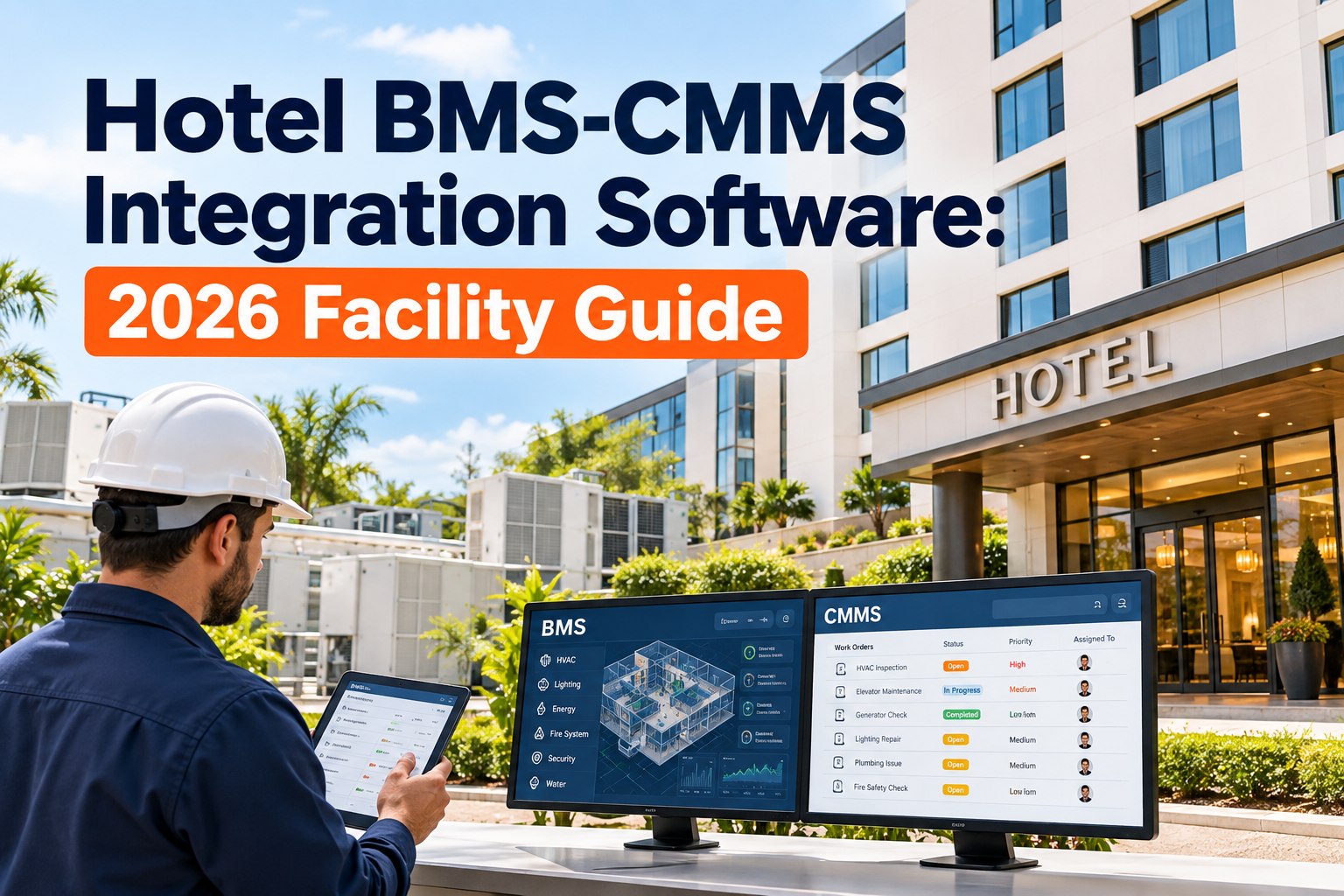
The hospitality industry loses an estimated $1.3 billion annually to unplanned equipment downtime — preventable failures in HVAC systems, elevators, kitchen equipment, and utility infrastructure that disrupt guest experience and generate emergency repair costs running 4 to 5 times higher than planned maintenance. AI automation is fundamentally changing this equation. By continuously monitoring asset health, detecting degradation patterns weeks before failure, and automatically generating maintenance workflows aligned to planned outage windows, Oxmaint's AI-powered maintenance platform transforms hospitality operations from a reactive cost center into a proactive, data-driven function that protects asset value, extends equipment life, and eliminates the midnight emergency calls that define reactive operations. Ready to see it in your property? Book a demo or start a free trial today.
60% of Hotel Equipment Failures Are Preventable With AI-Driven Maintenance
Hotels operating reactive maintenance strategies spend 3 to 5 times more per repair event than those using AI automation. The difference is not better technicians — it is better data, acted on automatically before failures occur.
Predictive AlertsAuto Work OrdersAsset Lifecycle TrackingMulti-Property Dashboards
60%
Preventable Failures
With AI monitoring in place
4-5x
Reactive Cost Multiplier
Emergency vs. planned repair
38%
Downtime Reduction
Avg. Oxmaint hotel result
$41K
Annual Savings
Per property on average
What Is AI Automation for Hospitality Operations?
AI automation in hospitality operations refers to the use of machine learning, sensor data integration, and intelligent workflow engines to replace manual, reactive maintenance processes with automated, condition-driven systems. Instead of waiting for equipment to fail or relying on fixed-interval schedules that may over- or under-maintain assets, AI automation continuously monitors the real-time health of every asset on property and triggers the right maintenance action at the right time — without requiring a technician to manually assess, schedule, or escalate.
Condition-Based Monitoring
AI reads live data from sensors, IoT devices, and SCADA feeds to track asset condition 24/7 — not just during scheduled inspections.
Automated Work Order Generation
When anomalies are detected, work orders are created automatically — complete with parts lists, labor estimates, and optimal scheduling tied to planned outage windows.
Predictive Failure Forecasting
AI models learn each asset's normal operating profile and detect deviation patterns that precede failure by weeks — giving teams time to intervene during low-impact windows.
Portfolio-Level Intelligence
Multi-property hotel groups get a single pane of glass across every site — asset health, compliance status, open work orders, and CapEx forecasts consolidated in real time.
85%of equipment failures produce detectable signals weeks before breakdown
$7-13per HP/year for predictive maintenance vs. $17-18 for reactive
45%maintenance cost reduction reported by hotels using AI-driven workflows
90 daystypical time to shift from reactive to planned maintenance with Oxmaint
6 Hospitality Operations Areas Where AI Automation Delivers the Most Value
Not every hotel process benefits equally from AI automation. The areas below represent the intersection of highest operational cost, greatest guest experience impact, and strongest data signal for AI-driven improvement. Hotels targeting these six areas first consistently achieve measurable ROI within 90 days. Book a consultation to identify which areas apply to your property portfolio.
01
Highest Guest Impact
HVAC and Climate Control
HVAC failures account for up to 35% of guest complaints in full-service hotels. AI monitors refrigerant pressure, compressor vibration, airflow anomalies, and filter differential pressure — triggering work orders weeks before guest-facing failures occur.
Typical detection lead time: 3-8 weeks
02
Regulatory Critical
Elevators and Vertical Transport
Elevator downtime in full-occupancy hotels generates immediate guest escalations and regulatory liability. AI tracks drive motor health, brake pad wear, cable tension trends, and door cycle anomalies — with auto-generated inspection records for compliance.
Compliance docs: instantly retrievable for audits
03
Revenue-Critical
Food and Beverage Equipment
Kitchen equipment failures during peak service directly impact F&B revenue. AI monitors walk-in cooler temperatures, commercial dishwasher cycle anomalies, exhaust fan performance, and refrigeration compressor health — preventing the failures that close outlets.
F&B downtime cost: $2K-$15K per incident
04
Safety Priority
Fire and Life Safety Systems
Sprinkler systems, fire panel communication, emergency lighting, and suppression systems require documented inspection cycles with digital sign-off. AI automation schedules, assigns, and records every inspection — keeping hotels audit-ready with zero manual filing.
100% digital audit trail with technician signatures
05
Guest Experience
Pool, Spa, and Leisure Facilities
Chemical dosing equipment, circulation pump health, and filtration system performance directly affect compliance and guest experience. AI tracks pump bearing wear, flow rate deviation, and chemical feed anomalies — preventing health code violations and closures.
Pool closure cost: $5K-$25K per day
06
CapEx Driver
Building Systems and Utilities
Electrical distribution, boilers, chillers, cooling towers, and BMS infrastructure represent the largest CapEx line items in any hotel. AI builds rolling 5-10 year replacement cost forecasts from live condition data — converting CapEx planning from guesswork to data-backed decisions.
CapEx forecast accuracy: 5-10 year rolling projections
How Oxmaint AI Automation Works in Hospitality Operations
Oxmaint's AI does not just collect data — it converts raw asset health signals into specific, actionable maintenance decisions. Here is the four-stage intelligence pipeline that operates continuously across your entire hotel asset fleet. Want to understand how this maps to your specific operation? Start a free trial and see it with your own assets.
Oxmaint AI Pipeline: From Sensor Data to Maintenance Action
01
Continuous Asset Monitoring
IoT sensors, BMS feeds, and mobile inspection data ingested in real time
Temperature, vibration, pressure, runtime hours, and cycle counts tracked per asset
Existing SCADA and DCS systems integrated via OPC-UA, Modbus, BACnet
Sampling: Every 30 Seconds
02
AI Anomaly Detection
AI learns each asset's healthy operating baseline within 2-4 weeks of deployment
Deviation patterns compared against failure mode libraries for 200+ asset types
Cross-contextual analysis: load, occupancy, season, and usage pattern correlation
Accuracy: 85-92% for Major Failure Modes
03
Predictive Risk Scoring
Remaining useful life estimated per component with failure timeline projection
CapEx alerts generated when asset condition score drops below defined thresholds
Lead Time: 2-12 Weeks Before Failure
04
Automated Maintenance Action
Work orders auto-generated with parts, labor specs, and optimal repair timing
Technician assigned based on skill, shift, and proximity to asset location
Cost avoidance documented per event for ownership group and investor reporting
Outcome: Planned Repair, Not Emergency Response
Reactive Operations vs. AI-Automated Operations: The Real Difference
The financial gap between reactive and AI-automated hotel maintenance is not marginal — it is structural. Every category of operational cost shifts when AI replaces manual, reactive processes. Here is the full comparison across the metrics that matter to hotel GMs, asset managers, and ownership groups.
Metric
Reactive Operations
AI-Automated with Oxmaint
Failure Detection
After equipment trips or guest complaint received
2-12 weeks before failure via continuous AI monitoring
Work Order Creation
Manual, by technician or front desk escalation
Automatically generated from anomaly detection with parts and timing
Maintenance Cost
$17-18 per HP annually — reactive premium applies to every repair
$7-13 per HP annually — planned repairs eliminate emergency premiums
Downtime Volume
Unplanned downtime during peak occupancy — highest guest impact
38% reduction in unplanned downtime — repairs timed to low-impact windows
Compliance Readiness
Manual document gathering — hours per audit, frequent gaps
Audit-ready documentation retrievable in seconds with digital signatures
CapEx Planning
GM estimates from memory or single vendor quote
5-10 year rolling forecast from live asset condition scores
Multi-Property Visibility
Manual consolidation — days of effort, still incomplete
Real-time portfolio dashboard — all properties, all assets, one view
Staff Turnover Impact
Institutional knowledge lost when technicians leave
Full asset history preserved — new hire productive from day one
See AI Automation in Action
Stop Reacting. Start Predicting. Protect Your Property Revenue.
Oxmaint connects AI-powered asset monitoring directly to maintenance workflows — turning sensor data into automated work orders, compliance records, and CapEx forecasts that hotel teams and ownership groups can act on immediately. Hotels using Oxmaint reduce emergency repairs by 38% and save an average of $41,000 per property annually.
Whether you manage a single boutique property or a portfolio of 100+ hotels, Oxmaint delivers measurable results within 90 days — with no heavy implementation fees and no multi-month rollouts.
The financial case for AI-automated maintenance in hospitality is direct arithmetic. Every prevented emergency failure eliminates the 4-5x cost multiplier from overtime labor, expedited parts, replacement equipment, and guest compensation. Hotels that present this data to ownership groups consistently secure funding that reactive-mode budget requests never achieve. Curious what the ROI looks like for your property? Book a demo and we will model it using your actual data.
Annual ROI Model: AI Automation Program
Full-service hotel with 300 rooms and 180+ maintained assets
Avoided 40 room compensation events at avg $350/night plus loyalty point erosion
$68,000
Maintenance Cost Reduction
Shift from reactive to planned maintenance across 180-asset fleet — 25-45% cost reduction
$94,000
Compliance Penalty Avoidance
2 prevented health and safety violations at avg $18K fine plus operational disruption
$36,000
Asset Life Extension
Optimal maintenance timing extends HVAC, elevator, and kitchen equipment life 15-20%, deferring $1.2M in capital
$120,000
Total Annual Value
$450,000
Platform investment: $8,000-$18,000/year per property. Net first-year ROI: $432,000-$442,000. Typical payback: under 60 days. 95% of adopters report positive ROI within the first year.
Oxmaint AI Automation Features Built for Hospitality
Oxmaint is not a generic CMMS with AI bolted on. Every feature in the platform is designed around the operational realities of hospitality — multi-property portfolios, 24/7 guest-facing operations, strict compliance requirements, and ownership groups demanding investor-grade reporting. Start a free trial to explore every feature for your property.
Full Asset Registry
Complete asset hierarchy: Portfolio to Property to System to Asset to Component. Every item tracked with full condition history, warranty data, and service records.
AI Predictive Alerts
Machine learning models trained on 200+ hospitality asset failure modes. Alerts fire 2-12 weeks before failure with confidence score, impact assessment, and recommended action.
Automated Work Orders
Work orders generated automatically from AI alerts — with parts, labor estimates, technician assignment, and scheduling optimized around occupancy and planned downtime windows.
Mobile-First Field Tools
Technicians access full asset records, complete inspections, attach photos, and capture digital signatures from any mobile device — with offline mode for basement and plant rooms.
Digital Compliance Vault
All inspection records, service certificates, regulatory filings, and maintenance history stored digitally per asset. Audit-ready documentation retrieved in seconds — not hours.
CapEx Forecasting Engine
Rolling 5-10 year CapEx projections built from live asset condition scores. Ownership groups receive data-backed replacement schedules — no more budget surprises from aging infrastructure.
Multi-Property Dashboard
Portfolio-level view across every property — asset condition scores, open work orders, compliance status, and maintenance KPIs visible in real time for regional managers and investors.
IoT and SCADA Integration
Connects to existing plant sensors, BMS, SCADA, and DCS systems via OPC-UA, Modbus, and BACnet. Wireless IoT sensors fill coverage gaps at $100-500 per monitoring point.
4 Steps to Deploy AI Automation in Your Hotel Operations
You do not need to automate everything on day one. Start with the 20% of assets that cause 60-70% of your operational disruptions. Prove value fast. Scale with evidence. Book a demo to design a phased deployment plan for your specific property or portfolio.
1
Asset Audit and Priority Mapping
Catalog every maintained asset by criticality, guest impact, and failure cost exposure. Build your asset registry in Oxmaint — imported directly from spreadsheets or existing systems. Identify the top 20% of assets that warrant immediate AI monitoring priority.
Week 1-2
2
Sensor and System Integration
Connect existing BMS, SCADA, and sensor infrastructure to Oxmaint. Deploy wireless IoT sensors on priority assets not already instrumented — at $100-500 per point with no cabling required. First data flows into the platform within days.
Week 2-4
3
AI Learning and First Alerts
Oxmaint's AI models learn each asset's healthy operating baseline within 2-4 weeks. First anomaly detections and predictive alerts fire automatically. Work orders are generated with parts specs, labor estimates, and scheduling tied to your occupancy calendar.
Week 4-8
4
Measure, Report, and Scale
Track avoided failures, reduced repair costs, and extended asset life per property. Monthly optimization reviews surface data for ownership reporting. Typical payback on full program investment occurs within 60-90 days — expand coverage from there with proven ROI data.
Month 2 onwards
Frequently Asked Questions
How quickly does Oxmaint AI start detecting anomalies after deployment?
Physics-based fault detection — identifying patterns like abnormal temperature rises, vibration spikes, or pressure anomalies — begins immediately upon data connection, before AI models are fully trained. Predictive failure forecasting, which projects when and how a specific component will fail, requires 2-4 weeks for the AI to learn each asset's healthy operating baseline. By week six, most hotel teams report their first prevented failures. Full model accuracy of 85-92% for major failure modes is typically reached within 90 days. Start a free trial to see detection in action on your assets.
Does Oxmaint integrate with existing hotel BMS and building management systems?
Yes. Oxmaint connects to existing building management systems, SCADA platforms, and plant historians through standard industrial protocols including OPC-UA, Modbus, and BACnet. For hotels with existing monitoring hardware from vendors like Honeywell, Siemens, or Johnson Controls, Oxmaint ingests that data via API connections established during implementation. Standalone wireless IoT sensors at $100-500 per point fill monitoring gaps on assets without existing instrumentation. Most hotels achieve initial integration within 3-6 weeks without replacing any current systems. Book a consultation to assess your current infrastructure compatibility.
Can Oxmaint handle multiple hotel properties under a single ownership group account?
Yes — Oxmaint is specifically built for multi-site hospitality groups. The platform uses a Portfolio to Property to System to Asset hierarchy, so ownership groups and regional managers get consolidated visibility across every site while each property team manages their own operations independently. Portfolio-level reporting — asset health scores, CapEx forecasts, compliance status, and maintenance KPIs — is available out of the box with no custom development. Hotel groups managing 2 to 500+ properties operate on the same platform with the same data model.
What is the typical ROI timeline for hotel AI automation with Oxmaint?
Most hotel properties achieve positive ROI within 60-90 days. The arithmetic is direct: if your property experiences 6-12 emergency maintenance events annually averaging $12K-$25K per event when accounting for emergency labor premiums, parts expediting, guest compensation, and potential compliance fines — and AI automation prevents 50-65% of those events — you avoid $45K-$200K annually in emergency costs alone. Add the 25-45% reduction in routine maintenance costs from shifting reactive to planned maintenance, and total first-year value typically reaches $100K-$450K per property. Against a platform investment of $8K-$18K/year, this represents 10-25x first-year ROI. Book a demo and we will model ROI using your property's actual data.
Get Started with Oxmaint
Your Hotel Equipment Is Generating Health Data Right Now. Are You Acting On It?
Every hour of unmonitored operation is an hour where a detectable degradation pattern could be building toward an emergency failure. Oxmaint AI transforms that data stream into automated maintenance workflows, compliance records, and CapEx forecasts — eliminating the reactive cycle that costs hospitality operations billions annually.
Setup takes days, not months. No heavy implementation fees. No long-term lock-in. Start with your highest-priority assets and prove value in 90 days.