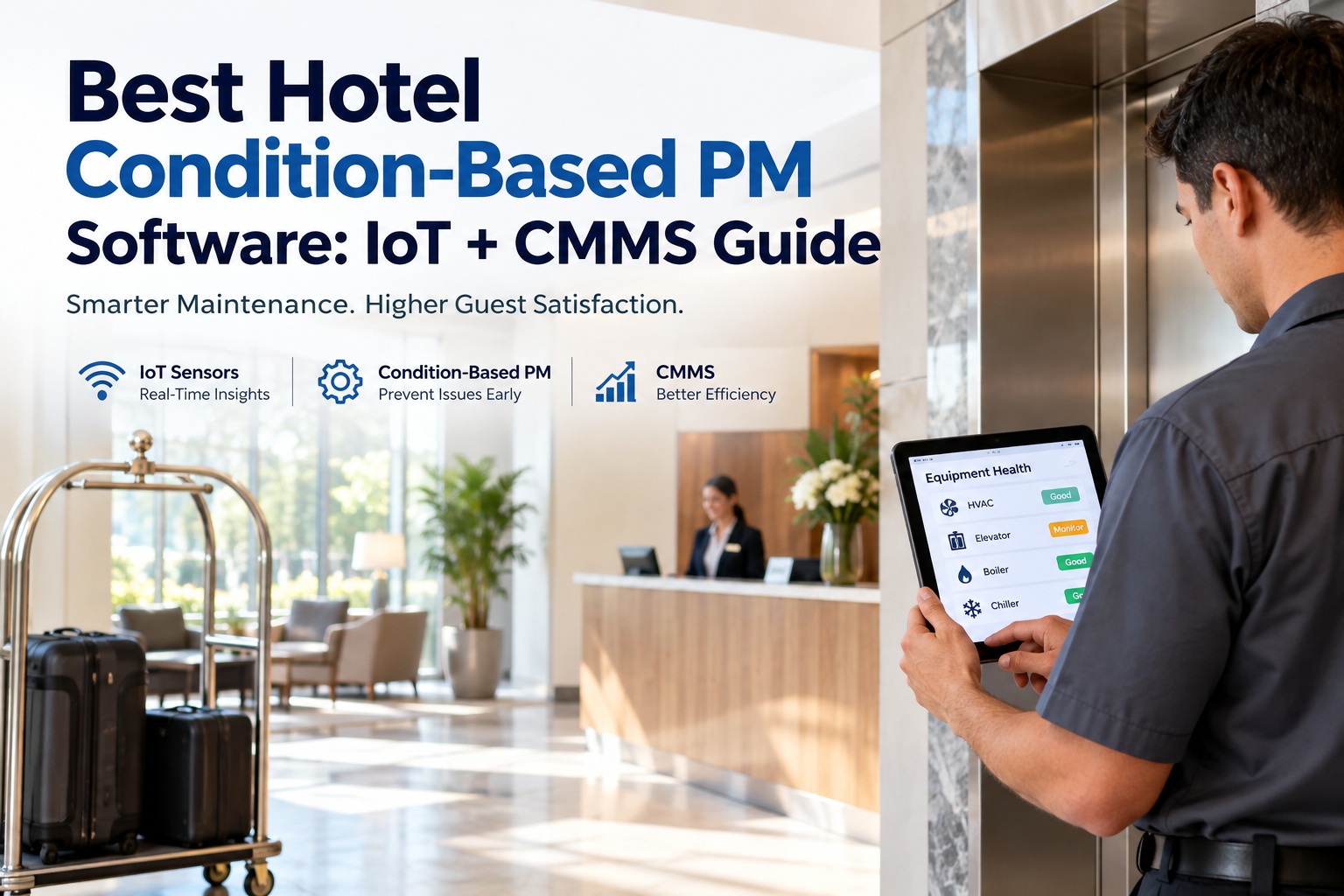
Hotels often service chillers every 90 days, even when maintenance isn't needed. Condition-based PM uses real-time sensor data to trigger work orders only when equipment shows signs of failure. Since HVAC can account for 40–60% of hotel energy use, this approach helps reduce unnecessary labor, prevent failures, and control energy waste. OXMAINT AI connects sensor data to maintenance workflows, helping teams act before equipment fails.
Hospitality · IoT + CMMS · Condition-Based Maintenance · 2026
Best Hotel Condition-Based PM Software: IoT + CMMS Guide
Servicing chillers on fixed schedules wastes labor and can miss failures between cycles. OXMAINT AI connects IoT sensor data to PM workflows, automatically creating work orders when HVAC, electrical, or plumbing assets show real condition changes.
Sensor Signal Streamed
→
Condition Deviation Detected
→
Work Order Created Only When Needed
→
PM History Updated
40–60%
of a hotel's total energy consumption comes from HVAC systems alone
20–40%
of calendar-based PM labor is typically spent on equipment that didn't need service yet
$8K–$15K
overspent annually per 30 rooms on preventable HVAC failures and energy waste
4–8 wks
typical failure detection window unlocked by condition sensor data
Calendar-Based PM vs. Condition-Based PM
The difference isn't more maintenance or less — it's maintenance triggered by what's actually happening to the asset instead of what date it is. Sign up free and see the difference on your own HVAC fleet.
Calendar-Based PM
Every asset serviced on the same fixed interval
Healthy equipment gets serviced unnecessarily
A failure between cycles goes undetected until it happens
Technician time spent on schedule, not on actual risk
Condition-Based PM
Service triggers only when a sensor reading crosses threshold
Healthy equipment stays off the work order queue entirely
Degradation flagged weeks before it becomes a failure
Technician time spent where the actual risk is
Where Waste PM Actually Comes From
📅
One Interval, Every Asset
A 90-day PM interval applies the same schedule to a heavily used lobby chiller and a rarely used back-of-house unit alike.
🙈
No Visibility Between Checks
Without sensor data, a compressor degrading between scheduled visits gives no warning until it fails at guest check-in.
💧
Water Damage Discovered Late
Without leak sensors, a slow plumbing leak can run 6 to 48 hours before discovery — versus roughly 14 minutes with monitoring in place.
😤
Guest Complaints as the Trigger
A large share of HVAC failures are caught only after a guest reports discomfort — the most expensive and reputation-damaging way to find out.
How Condition-Based PM Actually Works
1
Sensor streams data
Temperature, vibration, current draw or flow rate reads continuously from the asset.
→
2
Reading compared to baseline
The value checks against that specific asset's normal operating envelope, not a generic threshold.
→
3
Deviation scored
A meaningful deviation gets a fault probability score and an estimated time-to-failure range.
→
4
Work order created
Only when the score crosses a configured threshold does a scoped work order actually generate.
→
5
Technician resolves
Repair logs against the asset, refining its baseline for the next deviation check.
IoT Sensor Categories Every Hotel Should Track
HVAC Systems
Temperature, humidity, airflow and compressor cycle data — the highest-ROI monitoring category, given HVAC's share of both energy spend and guest complaints.
Electrical Panels
Real-time current monitoring at panel and equipment level, surfacing power anomalies instantly instead of at the next manual inspection round.
Plumbing & Water
Leak sensors and flow monitors catch water events early — property damage incidents from undetected leaks routinely run into tens of thousands of dollars.
Elevators & Guest Room Tech
Motor and door cycle data on elevators, plus smart thermostats and locks in guest rooms, feeding the same condition-based queue.
A PM Task Nobody Needed Isn't Preventive. It's Just Labor Spent on the Wrong Asset.
OXMAINT AI only generates a work order when a sensor reading actually says an asset needs it — no more servicing equipment on a fixed date regardless of condition.
What OXMAINT AI Gives Hotel Engineering Teams
Sensor-Agnostic Integration
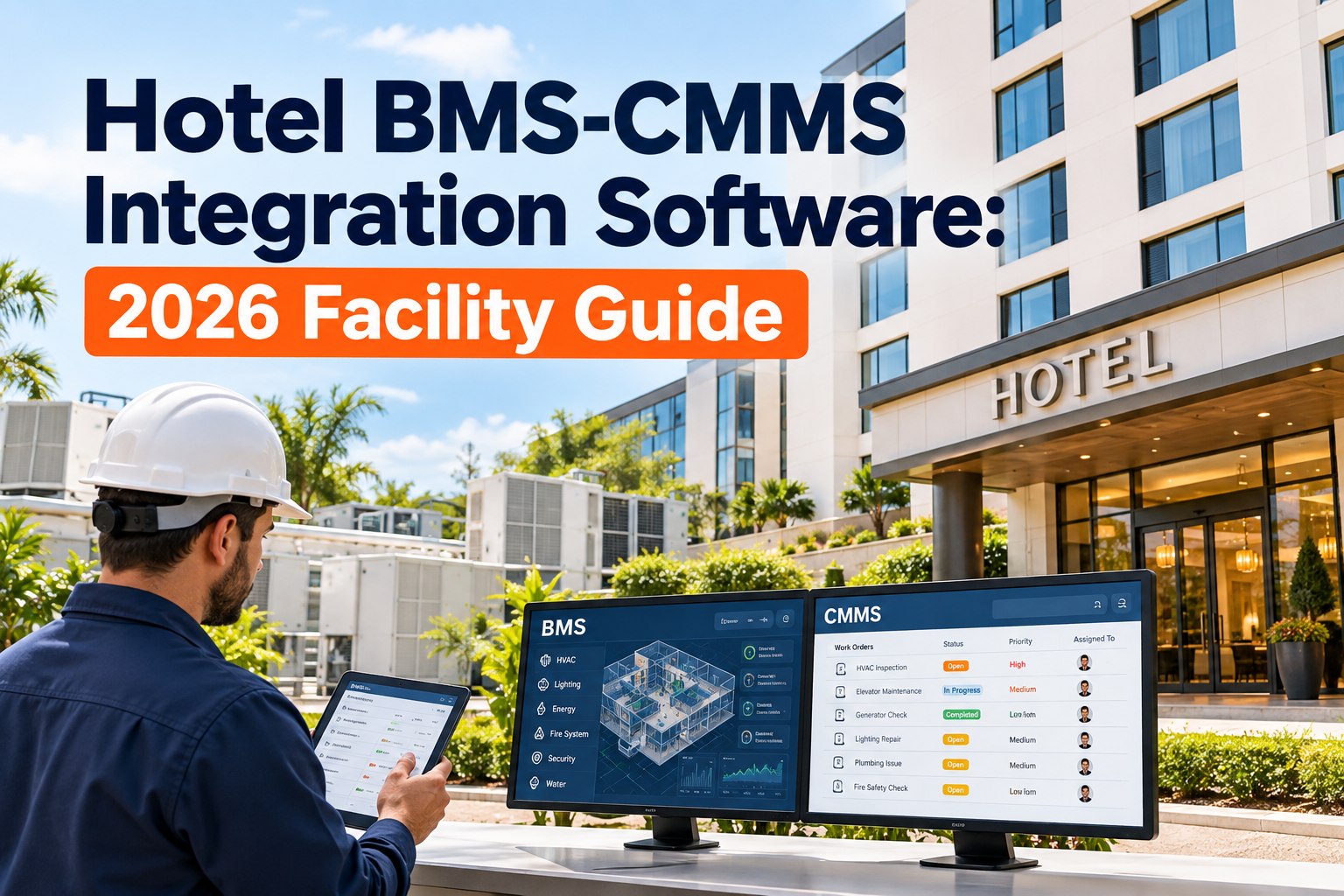
Connects via API, MQTT, Modbus or BACnet — including sensors already installed in your existing BMS, no new hardware required where they exist.
Asset-Specific Baselines
Each asset's normal operating envelope is learned individually, so a threshold reflects that specific unit's real behavior.
Fault Probability Scoring
Deviations score against a hospitality equipment failure-pattern library, with an estimated time-to-failure range attached.
Threshold-Triggered Work Orders
Work orders generate automatically only when a deviation crosses a configured threshold — not on a fixed calendar date.
Cross-System Sensor Hub
HVAC, electrical, plumbing, elevators and guest room technology monitored in one platform instead of separate systems.
Compliance-Ready Reporting
Digital inspection checklists and maintenance records support audit needs for health-department, brand-standard and safety inspections.
"
We were servicing every rooftop unit on the same 90-day cycle regardless of how hard it was actually running, and we still had a chiller fail during a sold-out weekend with zero warning. Since moving to condition-based triggers, our team isn't spending time on units that don't need attention, and we've caught two compressor issues weeks before they would have hit guest rooms. The engineering team finally spends its time on the asset that's actually at risk, not the one whose number happened to come up on the calendar.
Director of Engineering · 300-Room Resort Property
Frequently Asked Questions
What's the difference between condition-based and predictive maintenance?
Condition-based maintenance triggers work when a live sensor reading crosses a defined threshold. Predictive maintenance goes further, using trend analysis and failure-pattern modeling to estimate time-to-failure before the threshold is even reached — the two work together, with condition data feeding the predictive model.
Do we need to replace our existing HVAC sensors or BMS to use OXMAINT AI?
No. OXMAINT AI connects to sensors already installed in your building management system via API, MQTT, Modbus or BACnet. New hardware is only needed where a given asset currently has no monitoring at all.
Does switching to condition-based PM mean less maintenance overall?
Not necessarily less — more accurately targeted. Assets that are running well get serviced less often, freeing up technician time that gets redirected to the equipment actually showing signs of degradation, which is where unplanned failures are prevented.
Which hotel systems benefit most from condition-based monitoring first?
HVAC is typically the highest-ROI starting point, given its share of both energy consumption and guest-facing failures. Plumbing and water leak sensors are a close second, given how quickly an undetected leak can turn into significant property damage.
Stop Servicing Equipment by the Calendar. Start Servicing It by Condition.
Connect your HVAC, electrical and plumbing sensors, and let a work order fire only when an asset actually needs one. That's the workflow OXMAINT AI runs.