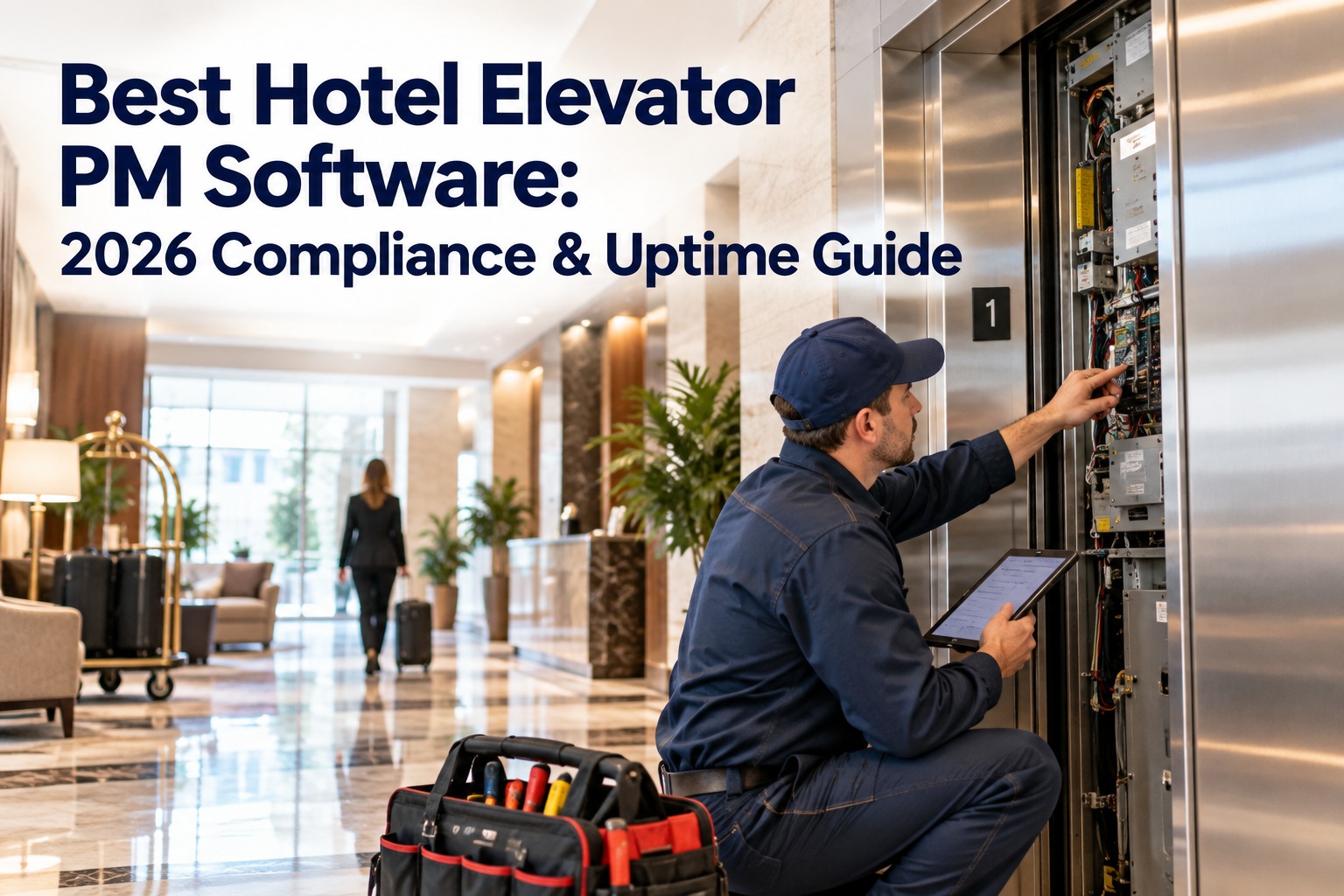
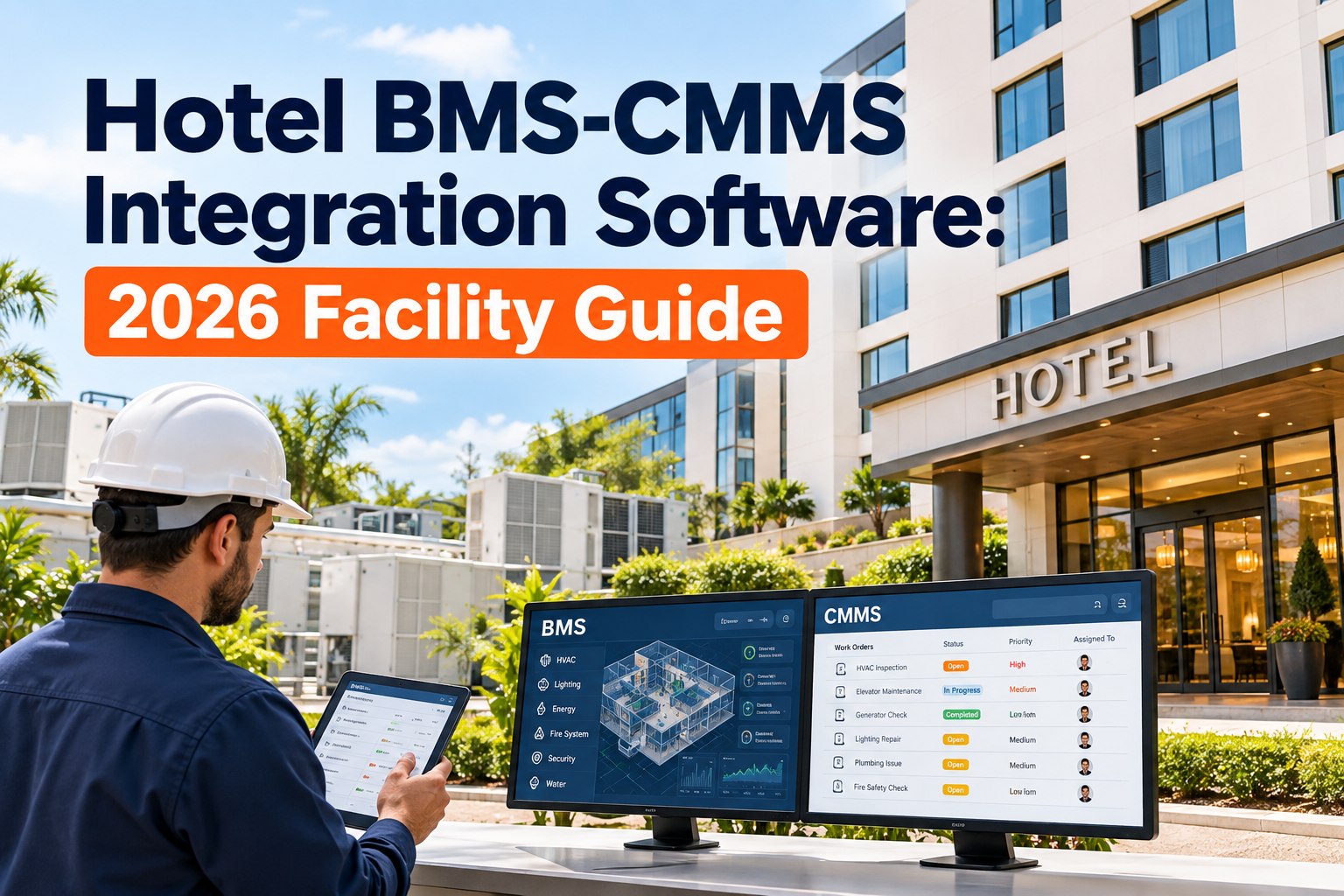
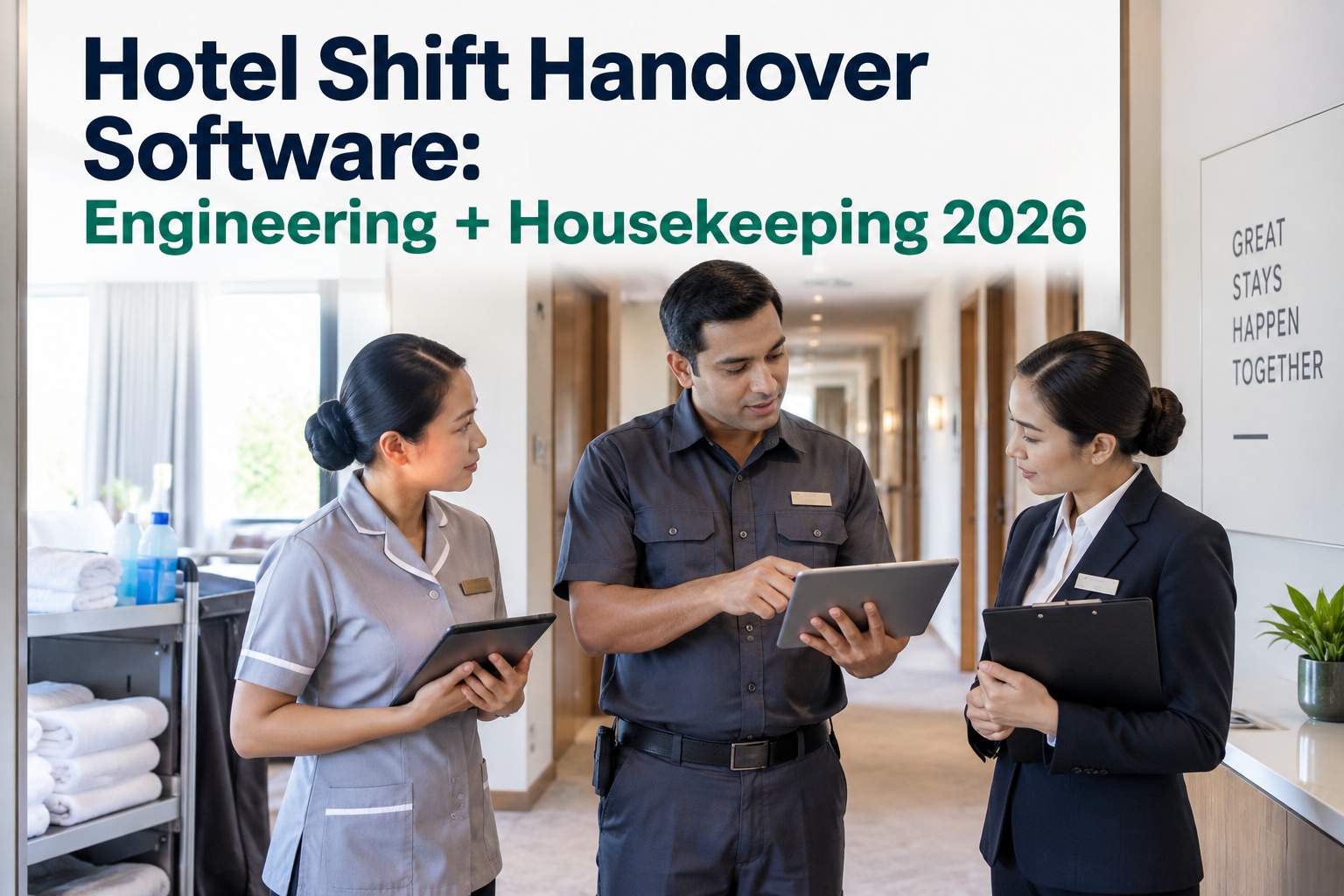
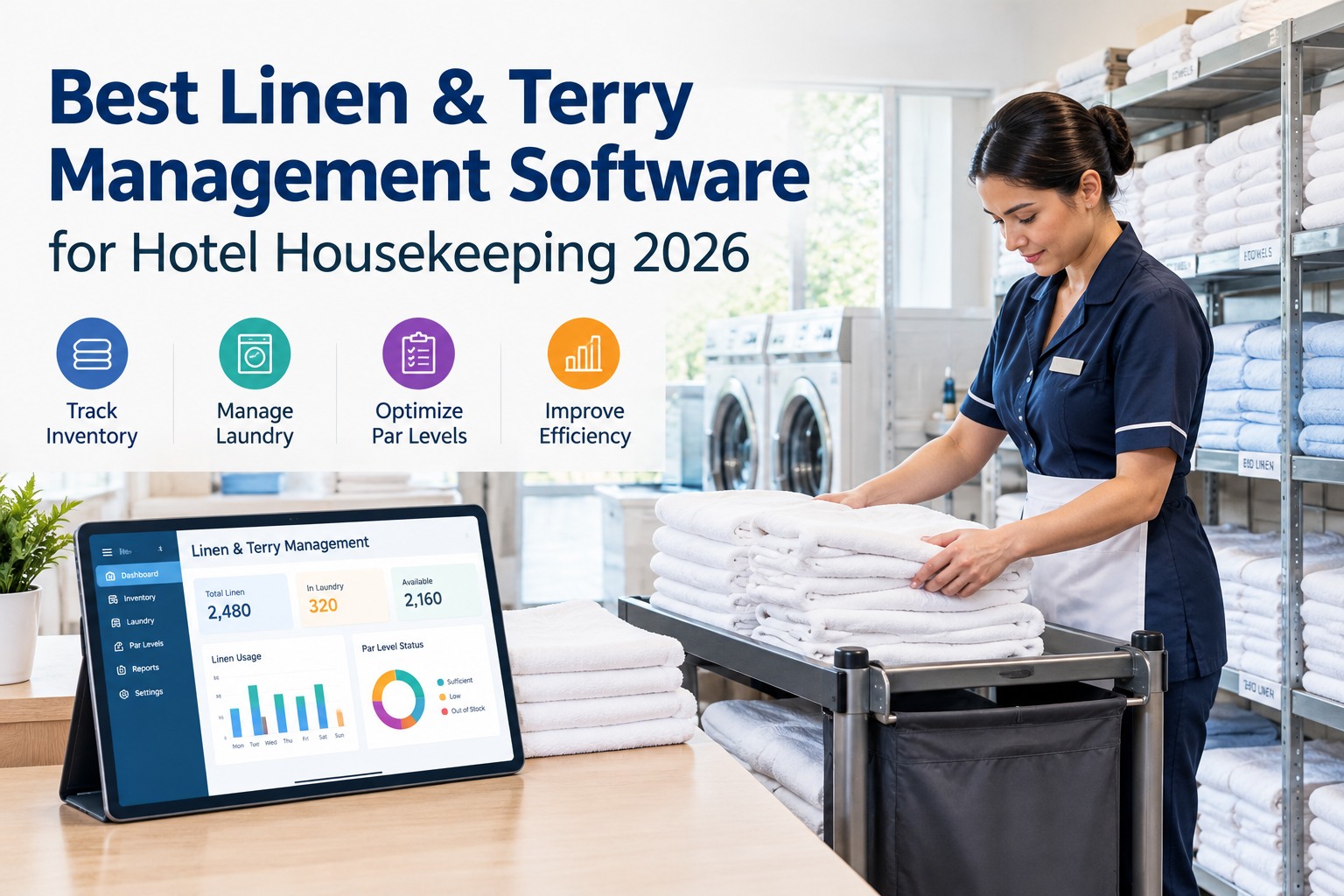
A Director of Engineering with eleven engineers running three shifts across a 450-room full-service hotel has one fundamental management problem that no whiteboard or radio system solves: she cannot see, in real time, what every engineer is working on, what is waiting in the queue, how long each task has been open, and which tasks are overdue against their SLA target. She manages by walking the floor and asking. On a quiet Tuesday that works. On a Saturday at peak occupancy during a HVAC system event, it does not. A genuine hotel engineering task management platform gives her the operational visibility she needs without the floor walk — and gives her engineers a prioritised job list, not a radio channel to compete on.
Best Hotel Engineering Task Management Platform 2026
What separates a genuine hotel engineering task management platform from a generic work order tool — and the seven capabilities that hotel engineering directors, GMs, and VP Operations should require from any platform in 2026.
Why Hotel Engineering Teams Spend Only 24.5% of Their Time Repairing Things
The 24.5% figure comes from industry analysis of maintenance worker time allocation across facility management environments. For hotel engineering specifically, the number is frequently lower — because hotels add layers of coordination overhead that manufacturing environments do not have. Engineers receive tasks through radio, walk to the engineering office to review the whiteboard, return to their area, discover the room is occupied and they cannot enter, radio the front desk to check availability, wait for a response, and then begin the actual repair. Each of these steps is coordination — not maintenance.
A hotel engineering task management system eliminates coordination overhead structurally. Engineers receive tasks as push notifications on mobile with all the information they need: room number, asset ID, fault description, occupancy status (occupied or available for access), parts likely needed based on fault type, and the SLA target. They accept the task, travel directly to the asset, and begin work — without a radio call, without a whiteboard check, and without a trip to the front desk. The coordination overhead collapses from four to six steps down to one. Sign up to see Oxmaint's mobile task dispatch — free to start.
of a hotel engineer's working time is consumed by non-repair activities in systems relying on radio dispatch and verbal coordination — walking to find parts, waiting for room access confirmation, filling in paper forms, and figuring out which task has the highest priority. A task management platform with mobile dispatch, occupancy integration, and a prioritised queue converts that 75.5% into productive time systematically, not by asking engineers to work harder.
Seven Capabilities That Define the Best Hotel Engineering Task Management Platform in 2026
These seven capabilities are ordered by operational impact. The first two deliver measurable improvement within the first two weeks of adoption. Each subsequent capability compounds on the previous ones. A platform that provides all seven through a unified interface — rather than as separate modules with separate logins — is the architecture that produces the highest engineer adoption rate, because adoption is the prerequisite for data quality. Book a demo to see all seven in Oxmaint.
Prioritised Task Queue — Not First-In, First-Out
The single most important architectural difference between a genuine hotel engineering task management platform and a generic to-do list is the queue logic. A radio channel dispatches tasks in the order they are called — the lobby plant request at 8:02 AM gets actioned before the critical HVAC fault at 8:04 AM because the first radio call reached an engineer first. A prioritised task queue classifies every task at creation, assigns it to the correct tier (Critical, High, Standard, Planned), and presents engineers with jobs ordered by urgency — not arrival sequence. Engineers always work the highest-urgency available task without a supervisor telling them to. Guest-impacting faults reach the top of every engineer's queue automatically, regardless of when they were created relative to other open tasks.
This single change — from arrival-order dispatch to priority-ordered queue — is responsible for the largest single improvement in response time metrics that hotels report in the first 30 days of task management platform adoption. It requires no additional training and no change in how engineers perform their work. It changes only the sequence in which work is presented to them.
Skill-Matched Mobile Dispatch with Full Task Context
When a task enters the system, the platform assigns it to the engineer whose skill profile matches the fault type, whose current workload is lowest, and whose location is closest to the asset — not the engineer who happened to answer the radio. The dispatch notification arrives as a mobile push with everything the engineer needs before they move: room number, asset ID, fault description, occupancy status from the PMS, asset maintenance history (last three repairs on this unit), and the SLA deadline. The engineer travels to the asset with context, not just a room number.
Skill-matched dispatch eliminates the most expensive category of hotel maintenance inefficiency: the task routed to the wrong engineer, producing a temporary fix, generating a callback, and requiring a qualified engineer to effectively do the job twice. For HVAC, electrical, plumbing, and elevator tasks — fault types where certification matters — skill-matched dispatch reduces resolution time by 35–45% compared to proximity-only assignment. Configure your engineering team's skill profiles in Oxmaint — free.
Live Workload Dashboard: Every Engineer, Every Task, Right Now
A Director of Engineering managing eleven engineers across three shifts needs to know, at any moment, which engineers are active on which tasks, which tasks have been accepted but not started, which tasks are within 20% of their SLA target, and which engineers are available for immediate reassignment. This information cannot be gathered by radio on a busy Saturday. It should be available in a single dashboard view on any device — updated in real time as engineers accept, start, and close tasks.
The workload dashboard is not a reporting tool — it is an operational command interface. When a Critical task is approaching its SLA limit and the assigned engineer is still 12 minutes away, the supervisor can reassign immediately from the dashboard. When a guest complaint escalates to a second call, the supervisor can see the task status without asking anyone. When shift change approaches and three tasks are still open, the outgoing supervisor can see exactly what needs handover. The dashboard converts reactive supervision into proactive management. Book a demo to see Oxmaint's live workload dashboard.
Photo-Documented Task Closure — Required, Not Optional
A task marked complete by checkbox is not a maintenance record. It is a closed entry with no evidence of what was done, no parts log, and no confirmation that the fault was actually resolved rather than deferred. When the same fault recurs three days later, there is no record to investigate, no technician to follow up with, and no asset history to reference.
A task management platform that requires photo documentation and completion notes before a task can be closed creates a maintenance record with every closure. The engineer photographs the repaired item in operational condition, logs what was found and what was done, records parts used, and signs off from mobile. The entire process adds 90 seconds to the task closure — and produces a record that supports brand audit compliance, insurance liability defence, and asset pattern analysis. Properties that mandate photo closure report a 60% reduction in callbacks on tasks that were previously closed without evidence. Sign up to enforce photo closure standards in Oxmaint.
Preventive Tasks in the Same Queue as Reactive Tasks
The most common failure mode of hotel PM programs is not scheduling — it is queue visibility. When preventive maintenance tasks live in a separate system (a paper binder, a shared calendar, an Excel sheet), they become invisible to engineers managing a reactive task queue. When reactive volume spikes — which is exactly when the property most needs its assets to be well-maintained — PMs are silently deferred because they are not competing for engineer time in the same visible queue as reactive tasks.
A hotel engineering task management system that manages PM tasks in the same prioritised queue as reactive tasks makes PMs visible, accountable, and tracked against the same SLA framework. A filter change due today has a scheduled date and appears in the queue. If it is not completed by that date, it becomes overdue and visible on the supervisor dashboard — just like an unresolved guest complaint. Hotels that consolidate PM and reactive tasks in a single queue report PM completion rates increasing from 61% to 94% within 90 days. Book a demo to see PM task integration in Oxmaint.
Asset-Linked Task History and Recurring Fault Detection
Every closed task is a data point. Thirty closed tasks on the same asset over six months is an asset intelligence report. That report tells you whether the asset is consuming engineering time disproportionately, whether the fault pattern suggests a root-cause problem, and whether the cumulative repair cost is approaching the asset's replacement value threshold. This analysis is only possible if every task was linked to the named asset at creation — not just to a room number.
Recurring fault detection watches every task closure and automatically flags assets that meet a recurrence threshold (for example: two tasks in 30 days, or three tasks in 90 days). When the flag triggers, the system creates a root-cause PM task assigned to a senior engineer — converting what would have been the third or fourth reactive repair visit into a planned PM event that addresses the underlying cause. This is the capability that transforms a hotel engineering team from a reactive repair crew into a proactive asset management operation. Sign up to enable recurring fault detection in Oxmaint — free.
Automated Compliance Reporting from Live Task Data
Brand standard engineering audits require documented evidence of PM completion rates, work order histories, and SLA performance by priority tier. In a paper-based or siloed digital system, compiling this documentation requires 3–5 engineering-supervisor days of manual record-gathering per audit cycle. In a platform where task records are structured and asset-linked from creation, the same compliance documentation is generated on demand in under 10 minutes — without manual data entry, without Excel compilation, and without a week of preparation.
Beyond brand audits, automated reporting from live task data supports two weekly operational needs: the engineering director's Monday review of the previous week's task performance (which tasks met SLA, which breached, which assets generated the most tasks), and the GM's monthly overview of engineering cost per room and reactive-to-planned task ratio. Both reports are generated automatically from the same task records — requiring zero additional data entry from the engineering team.
What a Hotel Engineering Task Management Platform Handles by Frequency
Hotel engineering tasks operate across five time horizons simultaneously. A platform that manages only reactive (on-demand) tasks misses the preventive layer. A platform that manages only scheduled PMs misses the reactive layer. The best hotel engineering task management software manages all five frequency types in a unified queue with consistent dispatch, SLA, and documentation standards. Sign up to configure all five task frequency types in Oxmaint.
Generic Task Tools vs. Hotel Engineering Task Management Platforms
Hotels frequently evaluate general-purpose task management tools alongside hotel-specific platforms. This comparison covers the operational gaps that appear when a generic tool is deployed in a hotel engineering environment — gaps that are not visible during a sales demo but become evident within the first 30 days of live operations. Book a demo to walk through Oxmaint's hotel-specific architecture live.
| Feature Area | Generic Task Tool | Oxmaint Hotel Platform |
|---|---|---|
| Asset hierarchy | Generic categories — no hotel room or unit structure | Room-level asset tree: property → floor → room → asset type → named unit |
| Guest-facing intake channel | Not available — all tasks created by staff only | In-room QR code creates tasks directly — no front desk relay |
| PMS occupancy integration | No hospitality system integration | Room occupancy status visible in task record at dispatch |
| SLA timer start point | Varies — often at assignment or acceptance, not submission | Timer starts at submission — accurate from guest report to resolution |
| Skill-matched dispatch | Manual assignment only — no skill profile logic | Multi-variable: skill certification + workload + proximity |
| Recurring fault detection | No cross-task pattern analysis | Auto-flag when same asset generates 2+ tasks in configurable window |
| Brand audit compliance report | Manual data export and compilation required | On-demand from live task data, under 10 minutes |
| PM and reactive in same queue | Separate systems — PMs invisible in reactive queue | Unified queue — PM and reactive tasks, same dispatch and SLA logic |
| Feature comparison reflects standard platform capabilities as of 2026. Individual configurations may vary. | ||
Swipe to compare all columns on mobile
We had tried two generic task management tools before Oxmaint. Both worked fine as to-do lists, but neither understood hotel operations. There was no concept of a guest-impacting fault that jumps the queue. No PMS integration so engineers could see room occupancy before walking to the floor. No asset hierarchy below the room level. We were creating tasks with no asset link, which meant after 90 days we had no idea which units were driving our repair spend. Oxmaint was built for hotels. The difference was clear in the first week.
Frequently Asked Questions
What is a hotel engineering task management platform and how is it different from a general CMMS?
How does skill-matched dispatch improve hotel engineering team productivity?
How does a hotel engineering task management platform handle preventive maintenance alongside reactive tasks?
What is the fastest way to implement a hotel engineering task management system?
How does hotel engineering task management software support shift handover?
Seven Capabilities. One Platform. More Repair Time, Less Radio Time.
Oxmaint gives hotel engineering teams the prioritised task queue, skill-matched dispatch, photo-documented closure, PM integration, and live workload visibility that converts 24.5% productive repair time into 55%+ — without adding headcount.