A hotel's ice machine has not been cleaned in 4 months. Scale buildup inside the evaporator restricts water flow. Mold grows in the bin because biofilm coats the surfaces. When health department inspectors arrive for their annual food service audit, they request ice machine sanitization logs. The hotel cannot produce records for the past three months. Inspection citation issued immediately. The hotel must close the bar and dining operations until the ice machine is professionally cleaned, sanitized, and documented. Three days of lost beverage and food service revenue exceed $25,000. The citation remains on the property's inspection record for 12 months. OxMaint prevents this scenario with automated monthly ice machine sanitization work orders, timestamped completion records, photo documentation of cleaning procedures, and a compliance dashboard visible to facility directors. When inspectors arrive, the hotel produces a complete 12-month ice machine maintenance log signed by technicians with dates and sanitization results. Ice is classified as a food product under health codes — neglecting its maintenance creates food safety violations and operational shutdowns. Hotels that automate ice machine maintenance with OxMaint report zero health code violations and 100% compliance with all food safety inspection requirements.
Why Ice Machines Are The #1 Food Safety Risk in Hotel Operations
Ice is classified as a food product under FDA and health department regulations. This simple fact transforms ice machine maintenance from a convenience issue into a mandatory food safety compliance requirement. A hotel ice machine produces 30–50 pounds of ice daily used in guest beverages, at bars, in dining operations, and for room service. If the machine is contaminated with mold, biofilm, or bacteria, every serving of ice becomes contaminated food — a direct health code violation. Health inspectors routinely test ice machine sanitization logs during food service audits. If logs show gaps of more than 30 days between documented cleanings, or if a required sanitization cycle is missing entirely, the violation is recorded as a correctable deficiency. The hotel must close the ice machine, complete a full professional cleaning, document sanitization completion, and have the inspector return to verify compliance. During closure, all bar and dining operations are limited or halted, revenue stops accumulating, and the incident damages reputation permanently. OxMaint prevents this scenario by automating ice machine sanitization scheduling, enforcing 30-day cleaning cycles, logging completion with timestamps and technician signatures, and producing inspector-ready reports on demand. Schedule automated ice machine sanitization across all hotel kitchen locations instantly.
The Monthly Ice Machine Sanitization Checklist: Five Essential Maintenance Tasks
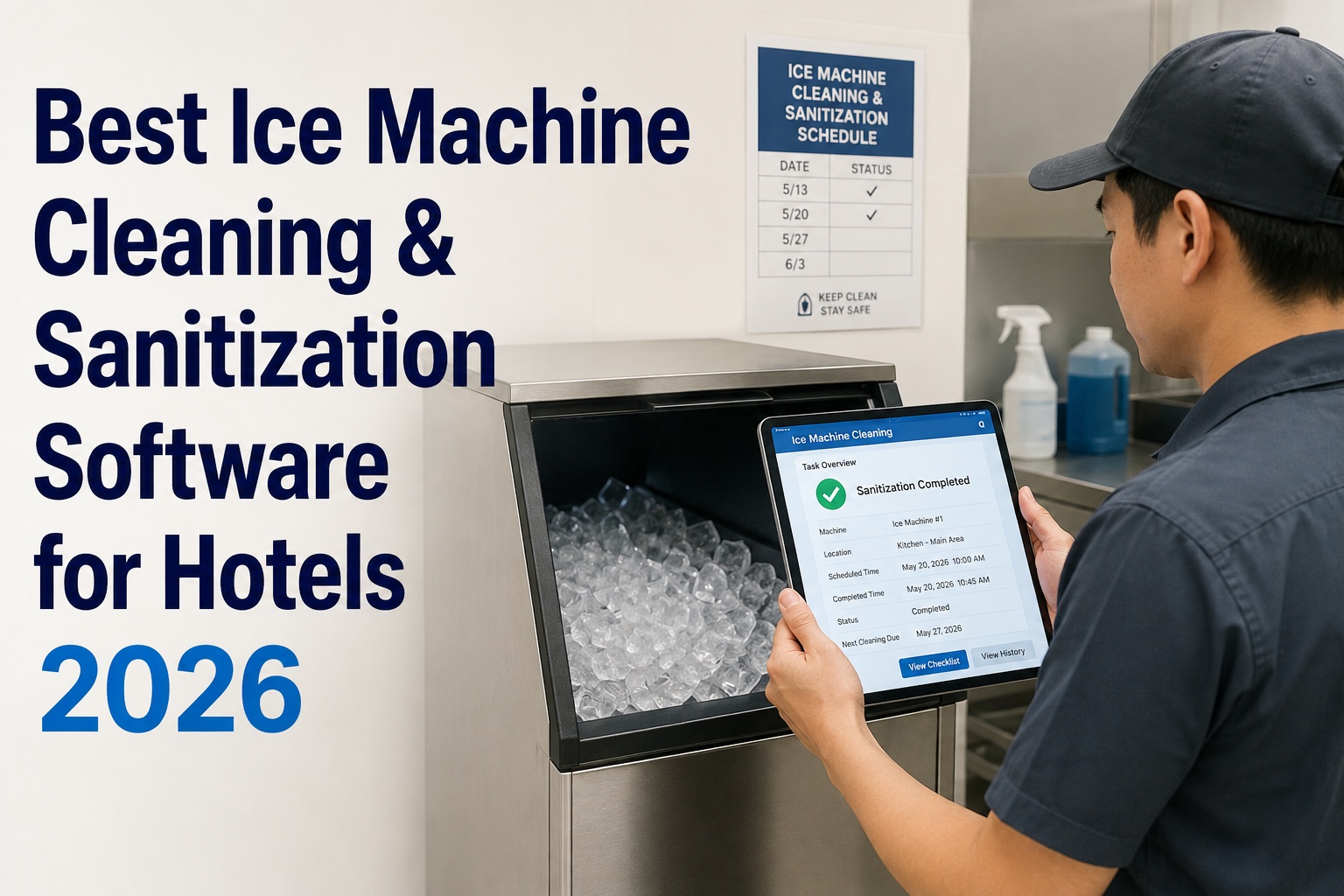
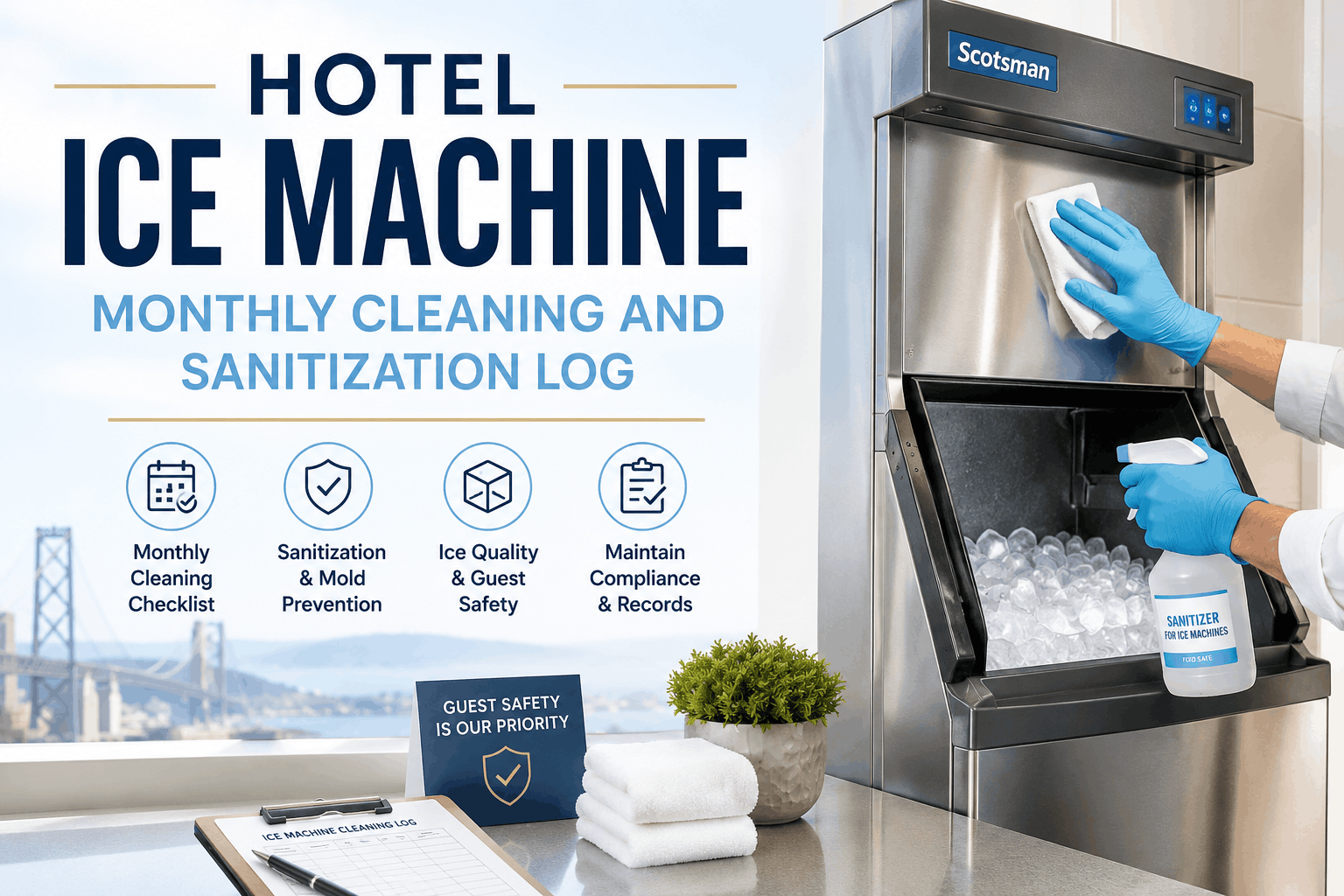
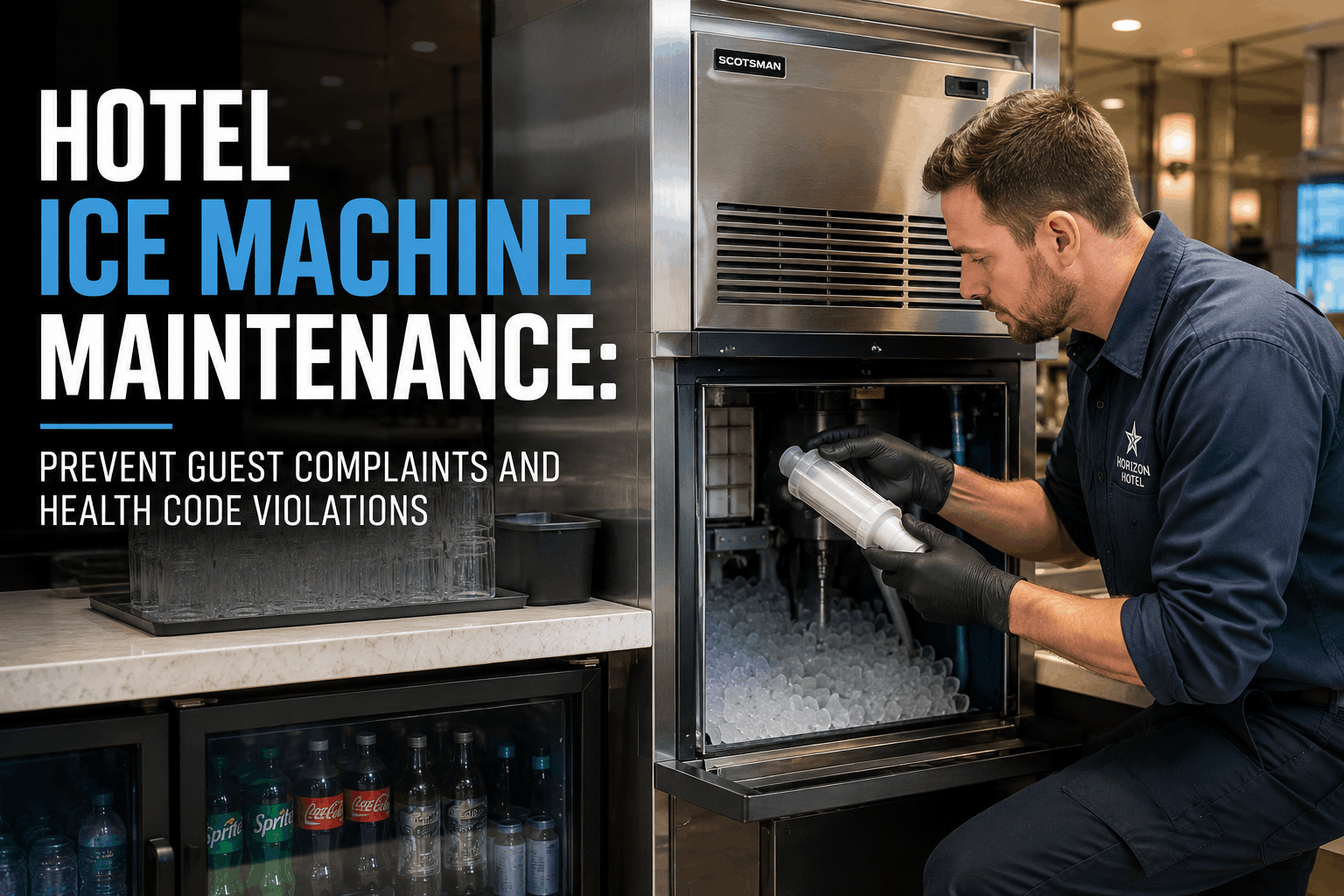
A complete ice machine sanitization involves five distinct tasks: water filter replacement, evaporator descaling, bin interior cleaning and sanitization, scoop and holder sanitization, and ice quality inspection. These tasks must be documented monthly on forms retained for at least one year for health inspector review. The challenge in most hotels is consistency — a busy month passes without sanitization being logged, causing inspection gaps that create violations. OxMaint automates this process with a 30-day work order cycle that generates tasks for every ice machine simultaneously, mobile checklists with photo upload capability, and automatic timestamp recording of completion. Facility directors receive a compliance dashboard showing all ice machine sanitization status in real time — which machines are current and which are overdue. When health inspectors request logs, the hotel exports a complete 12-month record in under two minutes with signatures, dates, and technician names. Book a demo to see how OxMaint organizes ice machine maintenance across multiple kitchen locations.
Cost of Neglected Ice Machine Maintenance: Health Violations, Closure, and Revenue Loss
A hotel ice machine shutdown due to health code violation costs far more than preventive maintenance. The direct costs include emergency professional cleaning ($400–$800), health inspector reinspection fees ($150–$300), and regulatory fines ($250–$1,000 per violation). The indirect costs are massive: ice machine closure immediately halts bar service and food service operations. For a hotel with a full-service restaurant and bar, loss of ice eliminates 40–60% of food and beverage revenue. A 150-room hotel losing ice service for 3–5 days loses $15,000–$45,000 in beverage and dining revenue. Guest satisfaction declines because room service cannot deliver cold beverages, the bar is closed, and guests associate the property with poor sanitation. Online reviews mention the health inspection and violation, suppressing future booking rates by 5–10%. The reputational cost spreads: negative reviews visible to thousands of prospective guests cost an estimated $50,000–$150,000 in suppressed bookings over 12 months. Prevent the violation with $800–$1,200 annual ice machine maintenance, and avoid the $60,000–$200,000 cost cascade. Automate ice machine maintenance across all kitchen locations for under $200 monthly.
Frequently Asked Questions: Ice Machine Maintenance, Health Code Compliance, and Sanitization Schedules
"Before OxMaint, our ice machine maintenance was inconsistent — technicians would skip schedules during busy months and we'd have to scramble to catch up. Our health inspector found a 60-day gap in sanitization logs during an unannounced visit last year and we received a violation. We implemented OxMaint's automated ice machine scheduling 14 months ago, and since then we've had 100% monthly compliance. Our most recent health inspection resulted in zero violations and the inspector specifically noted our 'exemplary sanitization documentation.'",