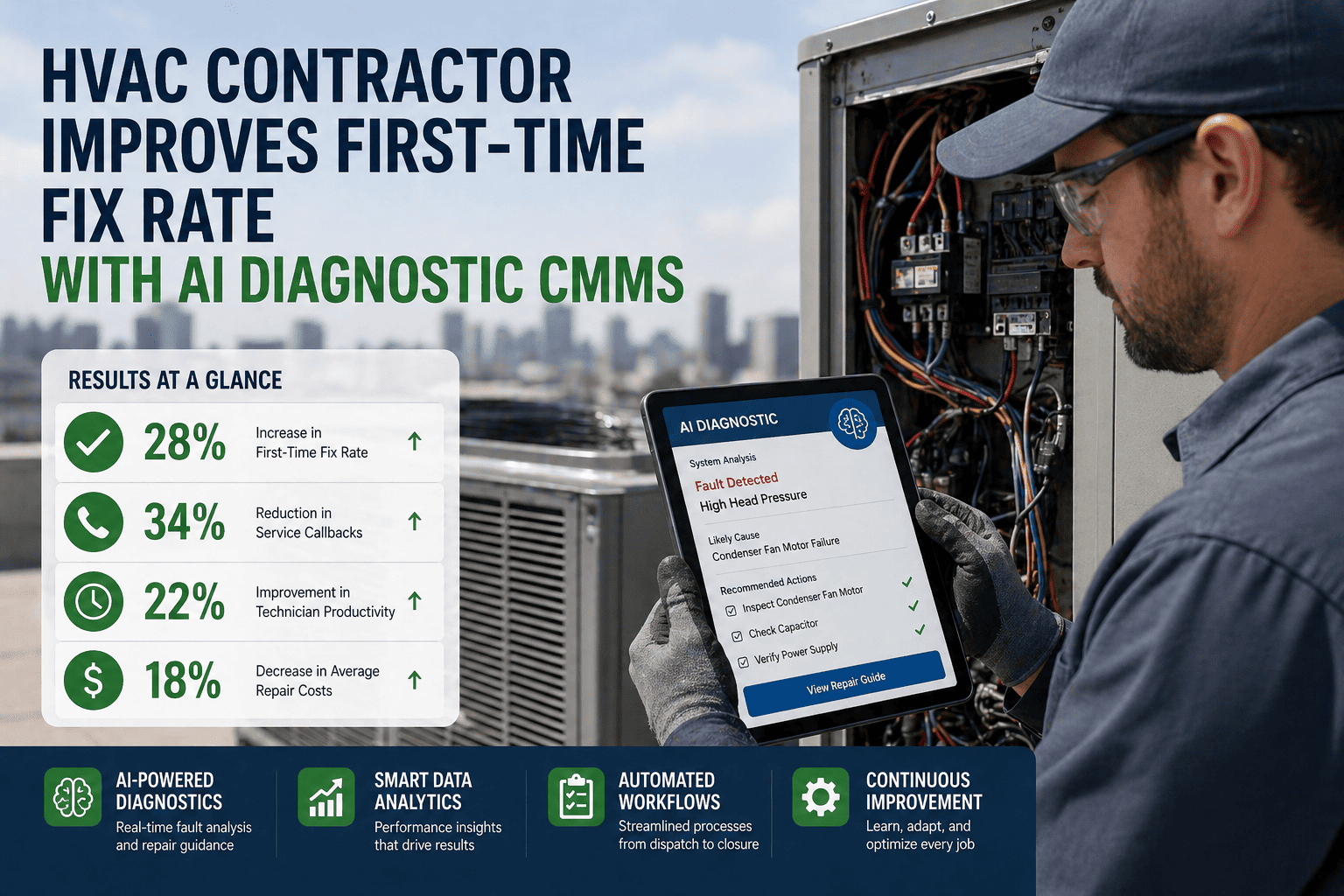
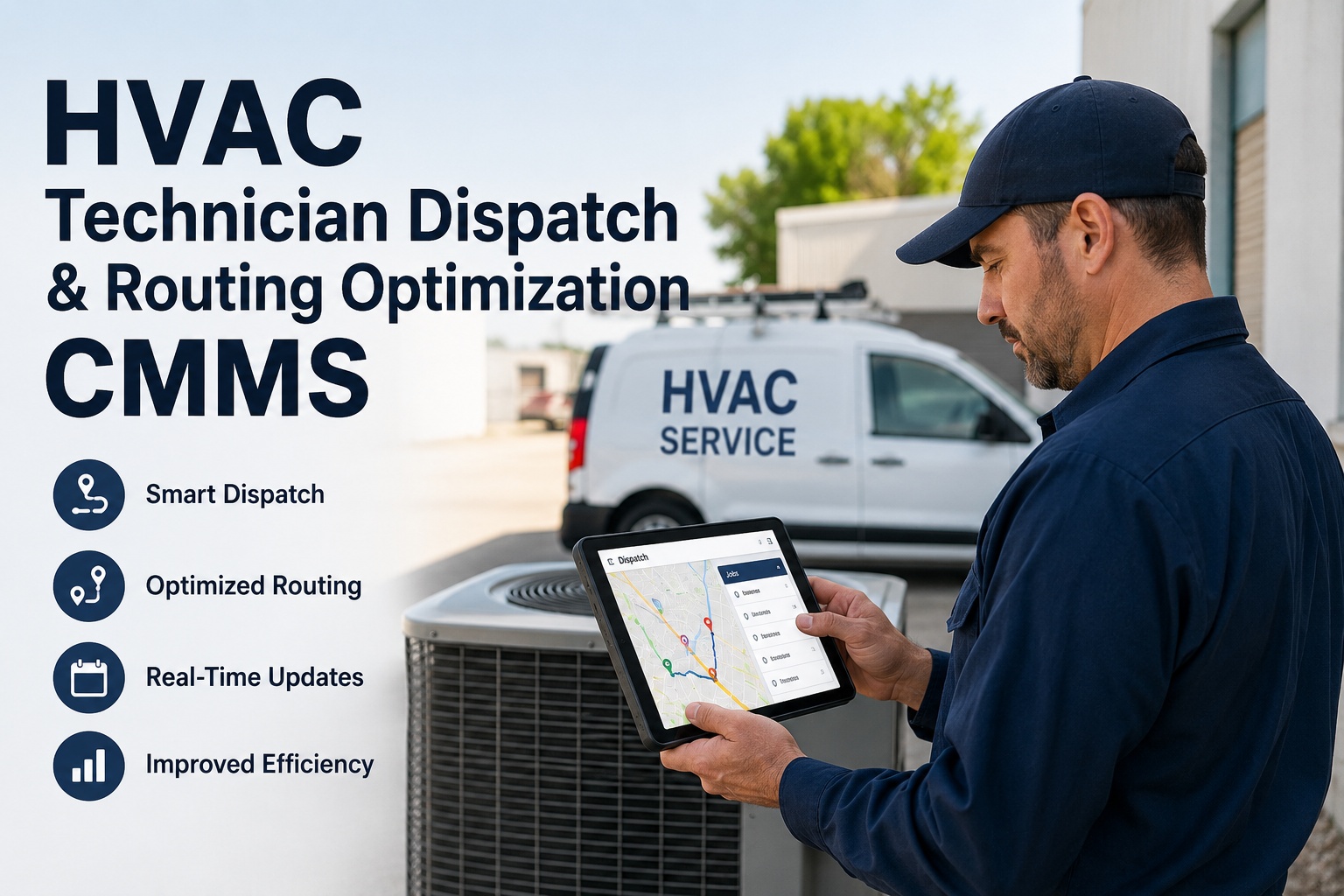
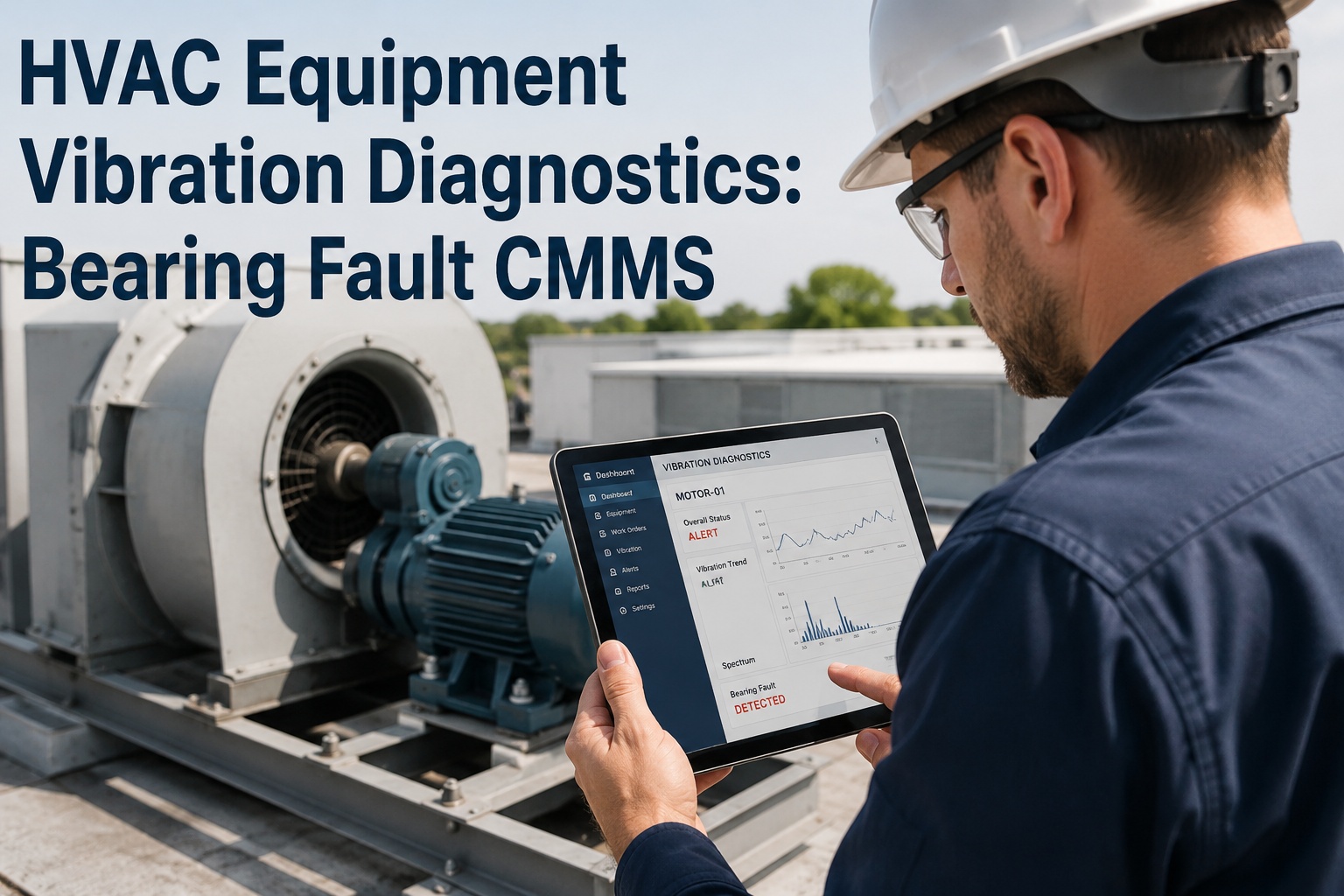
The average HVAC contractor's first-time fix rate sits between 70% and 80% — meaning one in four to one in five service calls results in a technician returning to the same system for the same problem within 30 days. At $650 per callback in combined technician time, overhead, and foregone billable revenue (Air Conditioning Contractors of America), a 20-technician operation running 400 service calls per month at a 20% callback rate is writing off $52,000 every month in avoidable return visits. The five causes of callback failures are consistent across the industry: incomplete diagnostics, missing parts, poor handoff communication, inadequate documentation, and gaps in technician knowledge — four of which are information problems, not skills problems. An AI Copilot that surfaces the probable fault before the technician leaves dispatch, confirms the parts required for the likely repair, and generates a structured diagnostic trail that every technician on every return visit can follow does not require better technicians. It requires better information reaching technicians faster. Book a demo to see how Oxmaint's AI Copilot delivers equipment-specific diagnostic guidance at dispatch — or start a free trial today.
Case Study · HVAC Service Operations · AI Copilot
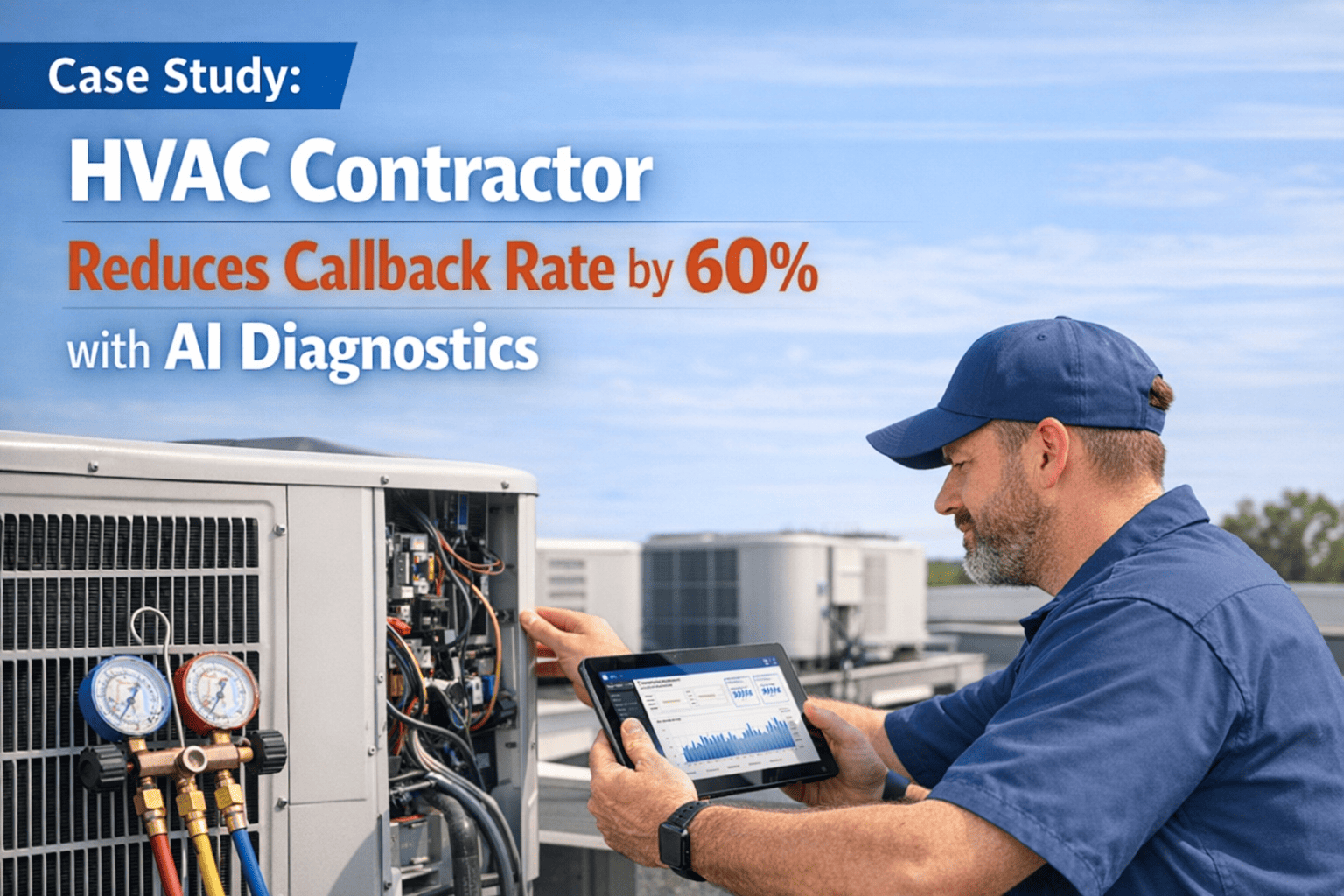
HVAC Contractor Improves First-Time Fix Rate from 74% to 91% with AI Diagnostic CMMS
How a 22-technician commercial HVAC contractor eliminated the information gaps causing repeat visits, reduced service callbacks by 64%, and freed 11 additional billable calls per technician per month using Oxmaint's AI Copilot.
91%
First-time fix rate after deployment — up from 74% baseline
64%
Reduction in service callbacks within 6 months
$38K
Monthly callback cost eliminated across the 22-tech fleet
11
Additional billable calls per technician per month recovered
Contractor Profile
The Operation: 22 Technicians, 480 Service Calls per Month, a 26% Callback Problem
Contractor Profile
RegionUS Southeast — commercial and light industrial
Fleet size22 technicians, 18 service vans
Monthly volume480 service calls, 60 preventive maintenance contracts
Equipment mixCommercial RTUs, AHUs, split systems, chilled water units — Carrier, Trane, Lennox, Daikin
Prior systemPaper dispatch, technician WhatsApp group, separate spreadsheet for parts inventory
Oxmaint featureAI Copilot + Dispatch + Parts Management + Customer History
The Problem Quantified Before Deployment
26%
Pre-deployment callback rate — 125 return visits per month at $650 average cost each
74%
First-time fix rate — 14 points below the industry top-tier threshold of 88%
$81K
Annual direct callback cost before deducting foregone billable revenue on callback days
Root Cause Analysis
Why This Contractor's Callbacks Were Happening — And Why They Were Preventable
Before deploying Oxmaint, the contractor analysed 90 days of callback work orders manually. The results matched industry research almost exactly: four of the five causes were information failures, not technical failures. Technicians were skilled. The diagnostic guidance, parts data, and equipment history were inaccessible at the moment a technician needed them most — standing in front of a system they had never serviced, with a service description that said "not cooling."
38%
Incomplete Diagnostics
Technicians identified a surface symptom (high head pressure, warm discharge) but did not have equipment-specific fault trees to confirm root cause before ordering parts or closing the job.
27%
Wrong or Missing Parts
Parts were not staged before dispatch because the work order description did not predict the probable repair. Technicians frequently left a site to collect a capacitor, contactor, or TXV that should have been on the van.
19%
No Equipment History Access
The WhatsApp-based system had no searchable history. A technician servicing a unit for the first time had no knowledge of the previous three fault codes, the capacitor replaced six months prior, or the control board known to fail in this model.
16%
Handoff Documentation Gap
When a second technician attended a callback, they started from scratch — no documented diagnosis from the first visit, no parts used record, no fault code sequence that could guide the follow-up repair in the right direction from the first minute.
What Changed
How Oxmaint AI Copilot Closed All Four Information Gaps Simultaneously
The contractor did not change its technician roster, its training programme, or its service territory. The deployment changed one thing: the quality and completeness of the information available to every technician at every job, before they left the van.
01
AI Copilot Surfaces Equipment-Specific Fault Trees at Dispatch
When a work order is created, the AI Copilot matches the symptom description and equipment model to its fault probability model — identifying the top 3 probable faults, their diagnostic confirmation steps, and the parts required for each. A technician dispatched to a Carrier 48LC rooftop "not cooling" call arrives knowing that 68% of that fault on that model at that age resolves to a failed TXV or low refrigerant charge — with the confirmation steps on their phone before they open the unit.
02
Full Equipment Service History at Every Job
Every previous work order, fault code, part replaced, and technician note for every asset in the contractor's customer base is searchable and displayed at job creation. A technician attending a callback on a Trane 4TWR3 can see that the previous technician replaced the capacitor, cleared a fault code 3, and noted "contactor contacts pitted but not yet replaced" — the diagnosis for the callback is already in the record.
03
AI-Suggested Parts List Staged Before Dispatch
The AI Copilot generates a parts staging list for each dispatch based on its fault probability model. The warehouse team stages the likely parts on the technician's van before they leave. The staging hit rate — the proportion of jobs where the staged part was the correct repair — reached 79% within 90 days, eliminating the majority of site returns for parts collection.
04
Structured Diagnostic Capture Closes Every Job With Evidence
The mobile app requires technicians to document the diagnostic pathway — measurements taken, fault codes observed, components tested — before a work order can be closed. This creates the complete handoff record that eliminates cold-start callbacks and provides the feedback loop the AI model uses to improve its fault probability accuracy over time.
See Oxmaint AI Copilot surface diagnostic guidance, parts predictions, and equipment history for your first 10 assets in a 30-minute live walkthrough.
Results at 180 Days
Six Months In: What the Numbers Look Like
91%
First-time fix rate — up from 74% at baseline (top-tier performance threshold is 90%)
64%
Reduction in service callbacks — from 125/month to 45/month
$38K
Monthly direct callback cost eliminated (80 fewer callbacks × $650/callback average)
79%
AI parts staging accuracy — probability that the staged part was the correct repair
+11
Additional billable service calls per technician per month recovered from eliminated callbacks
8× ROI
Year-one return on Oxmaint platform cost from callback savings alone, excluding revenue from recovered billable calls
| Metric |
Before Oxmaint |
6 Months After |
Change |
| First-time fix rate |
74% |
91% |
+17 points |
| Monthly callbacks |
125 |
45 |
-64% |
| Monthly callback cost |
$81,250 |
$29,250 |
-$52,000/mo |
| Avg jobs per tech per day |
3.1 |
3.8 |
+22% utilisation |
| Parts staging accuracy |
Not measured |
79% |
Baseline established |
| Diagnostic documentation rate |
~40% (paper) |
100% (digital) |
Full compliance |
Expert Review
What the HVAC Contractor Business Model Looks Like When Callbacks Are Eliminated
"Callbacks are the most expensive hidden cost in an HVAC service operation, and they're hidden precisely because they don't appear on a P&L as 'callback expense' — they appear as overtime, as low revenue days, as a technician count that doesn't seem to be keeping up with call volume. When I audit HVAC contractor operations, the first thing I do is pull the first-time fix rate and compare it to technician utilisation. Every point of first-time fix rate below 85% is roughly two fewer paying jobs per technician per week. In a 20-tech operation, that is 40 paying service calls per week — $40,000 to $60,000 in monthly revenue potential that the team has already been paid to deliver but cannot, because they're repeating jobs they should have completed the first time. An AI Copilot that gives every technician the diagnostic path, parts prediction, and equipment history that only the most experienced tech on the team previously had in their head is not a technology investment. It is a revenue recovery programme."
Carlos Mendez, ACCA Member, HVAC Business Growth Advisor
18 years HVAC service operations · Former operations director, regional commercial HVAC contractor · ACCA contractor development programme contributor · Specialist in service team productivity and first-time fix improvement
FAQs
Frequently Asked Questions
What is a good first-time fix rate for an HVAC contractor in 2026?
Industry benchmarks put the average first-time fix rate at 70–80%. Achieving
90% or above places a contractor in the top tier of field service performance. The five causes of failure below 85% are consistent across contractors: incomplete diagnostics, wrong or missing parts, no equipment history, poor handoff documentation, and technician knowledge gaps.
Book a demo to see how AI Copilot addresses all five.
How much does an HVAC service callback actually cost?
The Air Conditioning Contractors of America estimates a two-hour callback at approximately $650 per visit when technician time, overhead, and foregone billable revenue are included. A contractor completing 400 calls per month at a 20% callback rate is absorbing $52,000 per month in avoidable cost — before counting the revenue the technician could have generated on a paying call instead of the free repeat visit.
How does Oxmaint AI Copilot improve first-time fix rates?
The AI Copilot addresses four of the five causes of callbacks simultaneously: it surfaces equipment-specific fault trees before dispatch, displays full service history at job creation, generates a parts staging list based on fault probability, and requires structured diagnostic capture before work order closure.
Start a free trial to see the AI Copilot working on your equipment database within 24 hours.
How long does it take to see first-time fix rate improvements after deploying Oxmaint?
In the case study above, measurable improvement in first-time fix rate was visible within 30 days of full technician adoption — primarily from parts staging and equipment history access. The AI fault probability model's accuracy improves continuously as the platform accumulates the contractor's own diagnostic and repair data. Most contractors see full impact within 60–90 days of consistent use across the team.
Every Callback Is a Paying Job Your Team Has Already Been Paid to Do Once
Oxmaint AI Copilot gives every technician on your team the diagnostic guidance, equipment history, and parts prediction that your best technician already carries in their head — turning information gaps into first-time fixes and avoidable costs into recovered billable calls.