An HVAC technician was servicing a rooftop unit at a three-story commercial building when the unsecured access panel shifted. No fall arrest system. No anchor point. He caught himself on the parapet wall, but the near-miss triggered a full OSHA inspection. What the inspector found was not a reckless crew — it was a well-intentioned company that had never formalized its safety training. Verbal walkthroughs. No documented sign-offs. No record of who had been trained on what. The citation cost $14,500. The retraining program cost another $8,000 to implement. The entire outcome was preventable with a structured safety training system that tracked who was trained, what they covered, and when their certifications were current. This checklist covers every safety category HVAC technicians must be trained on — and shows how OxMaint's Safety and Training Management modules keep every requirement documented, tracked, and audit-ready. If you want to see how the system works in practice, schedule a 30-minute demo before your next inspection cycle.
Checklist
Workforce & Training
Safety Module
$15,625
Max OSHA fine
per serious violation — per incident — when safety training records cannot be produced on demand
#1
Cause of HVAC injuries
Electrical hazards account for the single largest category of HVAC technician injuries — most occurring on equipment that was not properly locked out
34%
of incidents occur
in the first 12 months of employment — the window where structured safety training has the highest protective impact on new technicians
60%
of OSHA citations
in HVAC and mechanical contracting involve inadequate or undocumented training — not the absence of safety procedures
How to Use This Checklist
This checklist covers six core safety training categories for HVAC technicians. Each category includes the specific competencies that must be trained and documented, the regulatory standard it aligns with, and what a compliant training record looks like inside OxMaint. Use it to audit your current training program, identify gaps, and build a digital training record that holds up under inspection. Sign up for OxMaint free to start tracking every item on this checklist digitally — training completions, sign-offs, and renewal dates all in one place.
Required by regulation
Industry best practice
Requires documented sign-off
Lockout/Tagout (LOTO) Procedures
Technician can demonstrate full LOTO sequence for equipment isolation before service. Training documented with equipment-specific procedures signed off per asset type.
Arc Flash Hazard Awareness
Technician understands arc flash boundaries, incident energy levels, and required PPE for work on or near energized equipment. Annual refresher required.
Electrical Panel and Circuit Identification
Technician can identify and label correct circuit breakers and disconnect switches for every system they service. Site-specific training required for each new location.
Voltage Testing Before Contact
Technician trained to test for live voltage before touching any conductor, terminal, or component — even after LOTO procedures are applied. No exceptions policy training documented.
Electrical PPE Selection and Inspection
Technician can select correct arc-rated PPE (gloves, face shield, FR clothing) for the hazard level, inspect for damage before each use, and document PPE condition at job start.
OxMaint tracks: LOTO sign-off per technician per equipment category, arc flash training expiry dates, and PPE inspection logs linked to work orders
EPA 608 Certification — Verified and Current
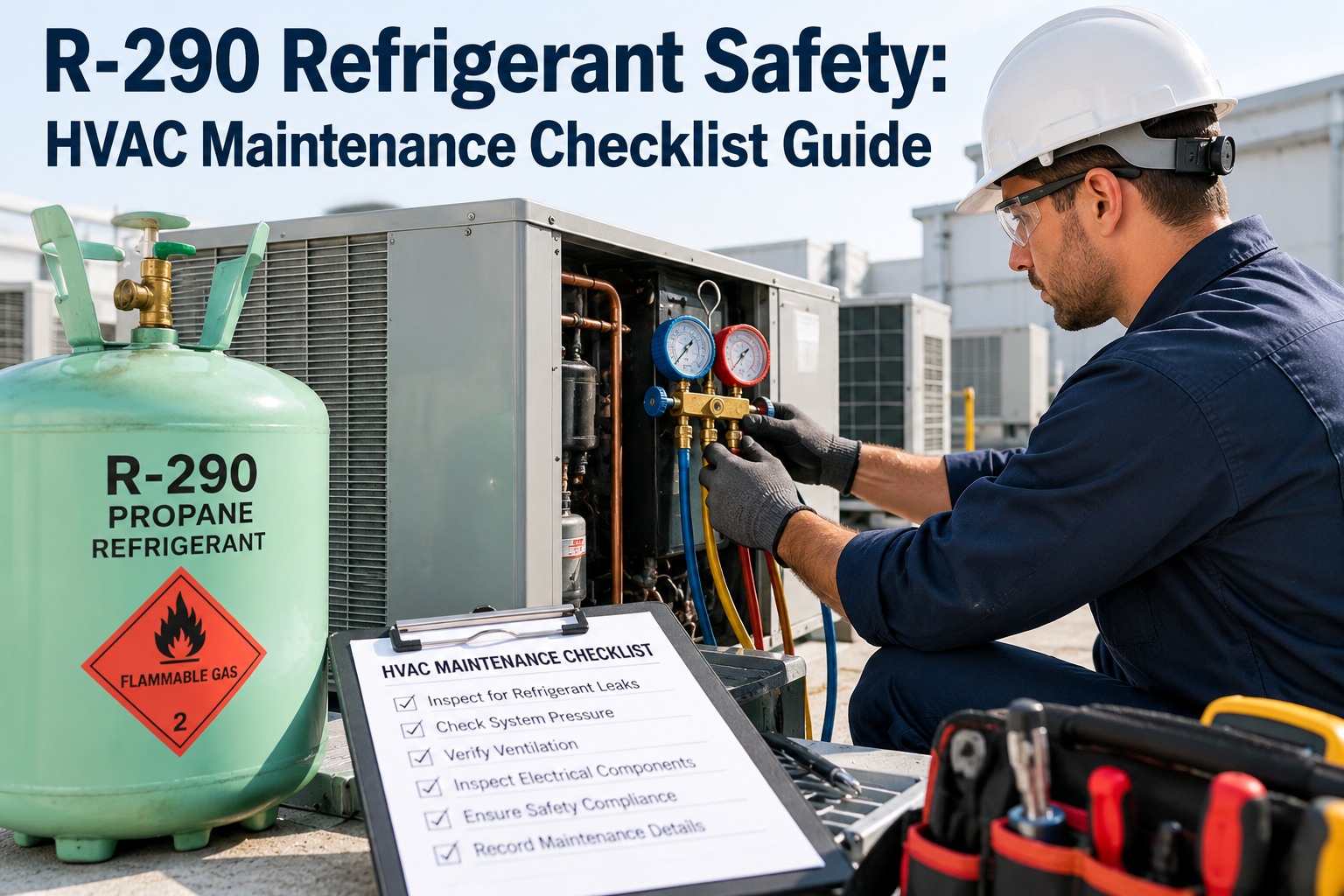
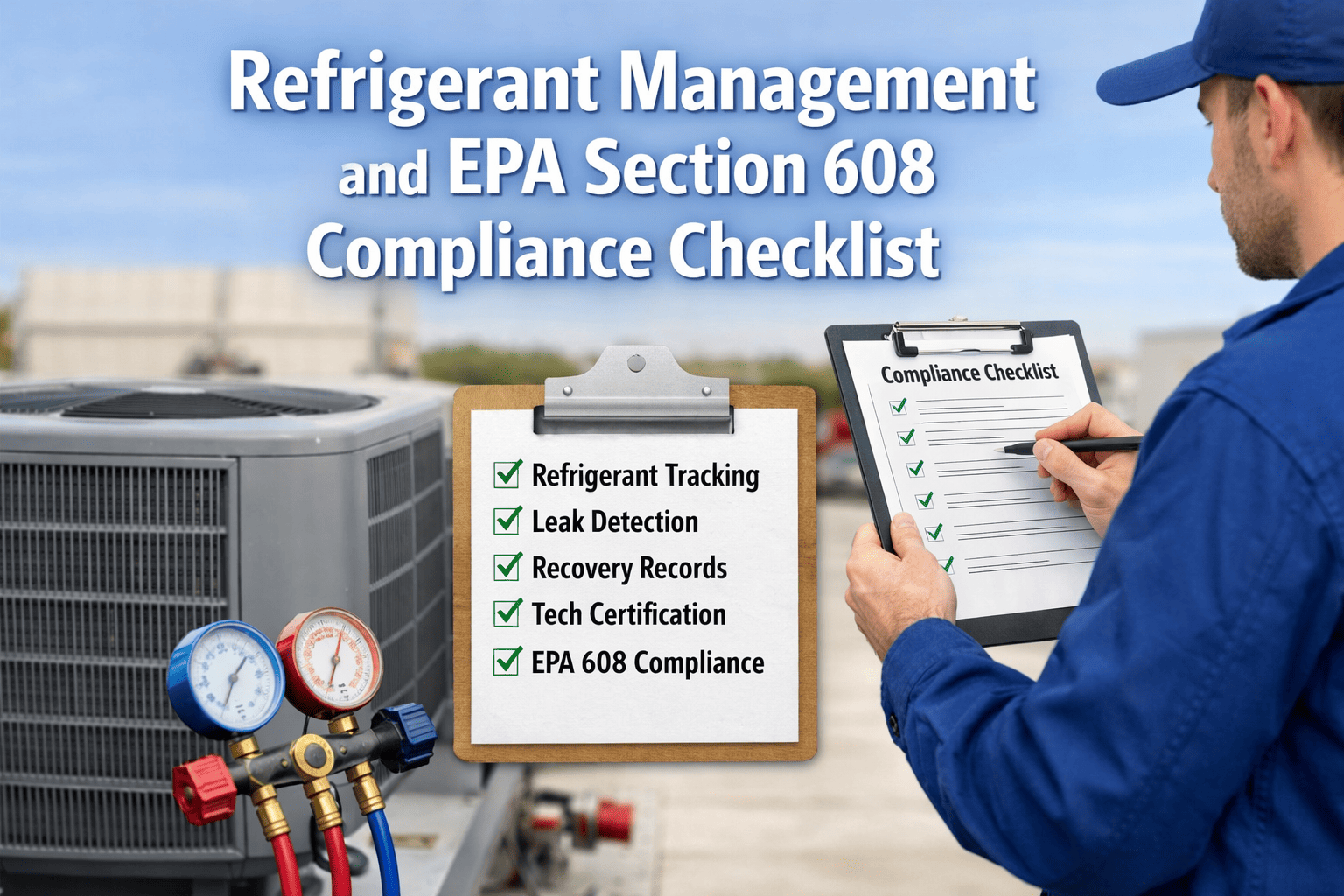
Technician holds valid EPA 608 certification for the refrigerant types they handle. Certification type (Universal, Type I/II/III) documented and linked to technician profile. A2L handling requires additional training documented separately.
Refrigerant Leak Response Procedures
Technician trained on emergency response for refrigerant release — evacuation thresholds, ventilation requirements, emergency contact procedures, and incident documentation for regulatory reporting.
Refrigerant Recovery Equipment Operation
Technician can operate recovery cylinders, recovery machines, and manifold gauges safely. Knows correct fill levels, cylinder labeling requirements, and transport regulations for recovered refrigerant.
Flammable Refrigerant (A2L) Handling — 2025 Standards
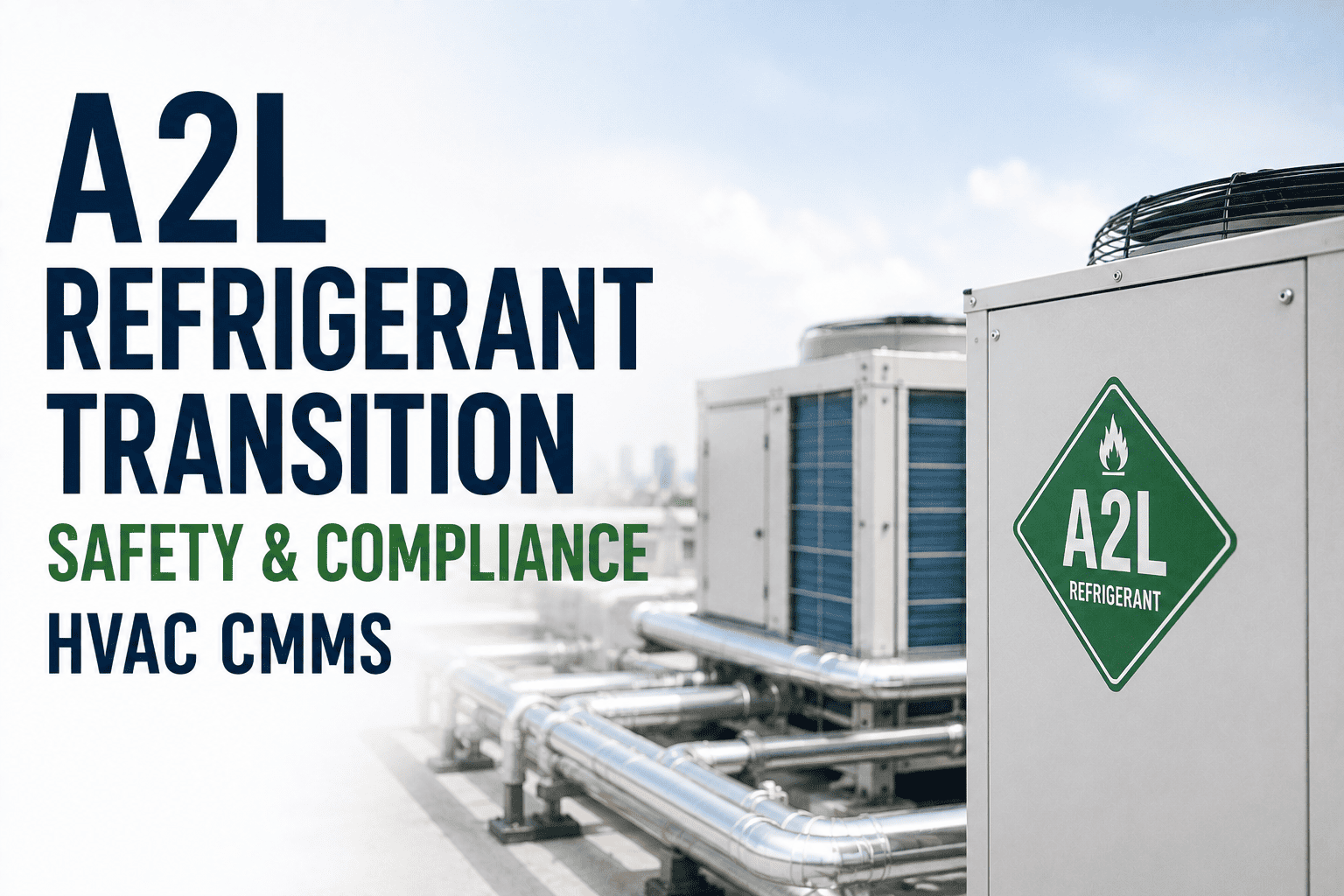
As R-32, R-454B, and R-466A become standard in new equipment, technicians must complete A2L-specific training covering ignition avoidance, ventilation requirements, and equipment compatibility verification.
OxMaint tracks: EPA 608 cert type and status per technician, A2L training completion, refrigerant incident log linked to asset records
Is every technician's EPA 608 status documented and current in one place?
OxMaint links certification records directly to technician profiles and auto-alerts managers before expiry.
Sign up free and import your team's certifications today — setup takes under 30 minutes — or
book a demo to see the certification tracking dashboard live.
Fall Arrest System Inspection and Donning
Technician trained to inspect full-body harness, self-retracting lifeline, and anchor points before each use. Can demonstrate correct donning sequence and connection to certified anchor point. Annual competency verification required.
Leading Edge and Unguarded Opening Awareness
Technician understands fall hazard identification — unguarded roof edges, skylights, equipment access hatches, and mechanical curbs. Knows minimum approach distances and when fall protection is mandatory versus recommended.
Ladder Safety and Aerial Work Platform Operation
Technician trained on ladder selection (step, extension, platform), setup angles, weight ratings, and three-point contact. AWP operation training documented where lift access is used for rooftop equipment.
Rescue Plan Familiarization
Every technician working at height must understand the site's rescue plan — how to call for help, where rescue equipment is stored, and who is the designated rescue-competent person for that job site.
OxMaint tracks: Fall protection training date per technician, harness inspection checklists attached to work orders, site-specific rescue plan acknowledgments
Permit-Required vs. Non-Permit Space Classification
Technician can identify characteristics that classify a space as permit-required (hazardous atmosphere, engulfment risk, configuration hazard, or any other recognized serious safety hazard) and understands when a permit is mandatory before entry.
Atmospheric Testing Procedures
Technician trained to operate a 4-gas monitor, interpret readings for oxygen content, LEL, H2S, and CO, and knows entry/abort thresholds for each. Calibration check documented before each confined space job.
Entrant, Attendant, and Entry Supervisor Roles
All three roles trained and documented separately. Attendant must remain outside and maintain continuous contact with entrant. Entry supervisor must verify permit conditions before authorizing entry. Role assignments documented per job.
Emergency Retrieval and Non-Entry Rescue
Retrieval system (tripod and winch) setup, use, and inspection training — so that incapacitated entrant can be extracted without requiring a second person to enter the space.
OxMaint tracks: Confined space role certifications per technician, entry permit records linked to work orders, atmospheric monitor calibration logs per asset
See how OxMaint makes safety training documentation inspection-proof.
Every checklist item above can be tracked, signed off, and reported in OxMaint — with automated renewal alerts, technician-level compliance dashboards, and OSHA-ready export in one click.
Schedule a 30-minute demo and walk through a live safety compliance report for a technician roster like yours.
PPE Hazard Assessment — Per Job Type
Documented hazard assessment conducted for each job category (rooftop unit service, chiller maintenance, ductwork, refrigerant recovery) identifying required PPE. Technician trained to reference and apply the correct assessment for each job type.
Eye and Face Protection Selection
Technician trained to select ANSI Z87.1-rated eye protection appropriate to the hazard — safety glasses for general work, chemical splash goggles for refrigerant handling, full face shield for arc flash risk areas.
Hand Protection — Glove Selection by Chemical and Thermal Hazard
Technician trained to differentiate between insulated electrical gloves (Class 00–4 by voltage), chemical-resistant gloves for refrigerant handling, and cut-resistant gloves for sheet metal work. No single glove type is correct for all HVAC tasks.
Respiratory Protection and Fit Testing
Where refrigerant vapors, mold, insulation fibers, or confined space atmospheres present inhalation risk, technicians must be fit-tested annually for the specific respirator type used. Fit test documentation required per OSHA 1910.134.
OxMaint tracks: PPE hazard assessment acknowledgments per job type, respirator fit test dates per technician, PPE inspection checklists at work order open
Heat Illness Recognition — Symptoms and Response
Technician trained to recognize early symptoms of heat exhaustion and heat stroke in themselves and colleagues. Knows cooling and hydration protocols, and when to call emergency services. Summer orientation training documented annually.
Acclimatization Schedule for New and Returning Workers
New technicians and those returning from extended absence must follow a 7–14 day heat acclimatization schedule during hot weather deployments — documented with supervisor sign-off. OSHA considers lack of acclimatization a recognized hazard.
Buddy System Protocol for Extreme Heat Rooftop Work
When wet bulb globe temperature or heat index exceeds defined thresholds (varies by state), rooftop work requires two-person teams. Protocol, thresholds, and acknowledgment training documented at crew level.
OxMaint tracks: Heat stress training completion dates, acclimatization schedules linked to technician profiles, buddy system protocol acknowledgments by crew
Safety Category
Items
Regulatory Standard
Renewal
Electrical Safety
5 items
OSHA 1910.331–335 · NFPA 70E
Annual (arc flash)
Refrigerant Handling
4 items
EPA Section 608 · ASHRAE 15
Cert-based + A2L update
Fall Protection
4 items
OSHA 1926.502 · 1910.28
Annual competency check
Confined Space
4 items
OSHA 1910.146 · 1926.1200
Annual per role
PPE Compliance
4 items
OSHA 1910.132–138
Fit test annually
Heat Stress
3 items
OSHA Heat Standard · NIOSH
Annual summer orientation
24
total training competencies
across 6 safety categories — each one trackable, documentable, and audit-ready in OxMaint.
Sign up free to start tracking all 24 items digitally for every technician on your roster.
Turn This Checklist Into a Living Compliance System.
OxMaint's Safety and Training Management modules let you track every item on this checklist — per technician, per certification type, with automated renewal alerts and one-click OSHA-ready reports. Stop managing safety training in spreadsheets and start managing it in a system built for field service teams.
LOTO Sign-Off Tracking
EPA 608 Cert Status
Fall Protection Records
PPE Inspection Logs
OSHA-Ready Reports
Already ready to act?
Sign up free and have your first technician safety records live today — or
book a demo and we will build a custom compliance plan for your team during the session.
Frequently Asked Questions
What OSHA standards apply to HVAC technician safety training?
HVAC technicians are subject to multiple OSHA standards depending on the work they perform. Core standards include 29 CFR 1910.331–335 (electrical safety), 29 CFR 1910.146 (permit-required confined spaces), 29 CFR 1910.132–138 (PPE), 29 CFR 1926.502 (fall protection for construction-classified work), and the EPA Section 608 regulation for refrigerant handling. NFPA 70E is not an OSHA standard but is widely cited as the industry standard for electrical safety in HVAC settings. Each standard has specific documentation requirements — training must be recorded, not just conducted.
How does OxMaint track safety training compliance for HVAC teams?
OxMaint's Training Management module allows managers to create digital training records for each competency category, link sign-off requirements to specific technician profiles, set renewal dates with automated alert windows (90, 60, and 30 days before expiry), and generate compliance reports showing training status across the entire team. Safety checklists can be attached to work orders so that pre-job safety acknowledgments are completed and documented at the point of task assignment — not retroactively.
How often do HVAC safety training certifications need to be renewed?
Renewal frequency varies by category. Arc flash awareness training under NFPA 70E requires annual retraining. Fall protection competency verification is required annually under OSHA standards. Confined space entry role certifications (entrant, attendant, supervisor) require annual renewal. Respirator fit testing requires annual re-testing under OSHA 1910.134. EPA 608 certification does not expire, but A2L refrigerant handling training should be updated as new equipment and refrigerant standards are adopted. Heat stress orientation is typically conducted annually at the start of warm weather season.
What documentation does OSHA require for HVAC safety training?
OSHA generally requires that training be documented with the date it was conducted, the content covered, the name of the trainer, and the names of employees trained. For specific standards, additional requirements apply: OSHA 1910.146 (confined space) requires written training records and entry permits retained for at least 1 year. OSHA 1910.134 (respiratory protection) requires medical evaluation and fit test records retained for the duration of employment plus 30 years. OSHA 1910.132 (PPE) requires written certification of hazard assessments. OxMaint stores all of these records digitally with timestamps and export capability for regulatory submissions.
Can OxMaint generate OSHA-ready safety training reports for an inspection?
Yes. OxMaint can generate compliance reports showing training completion status for any technician or group of technicians, filtered by training category, date range, or certification type. Reports include completion timestamps, trainer attribution, and sign-off records — formatted to meet OSHA documentation requirements. For companies that have previously relied on spreadsheets or paper binders, OxMaint can import existing training records during onboarding so that historical compliance data is available in the same system as current records.