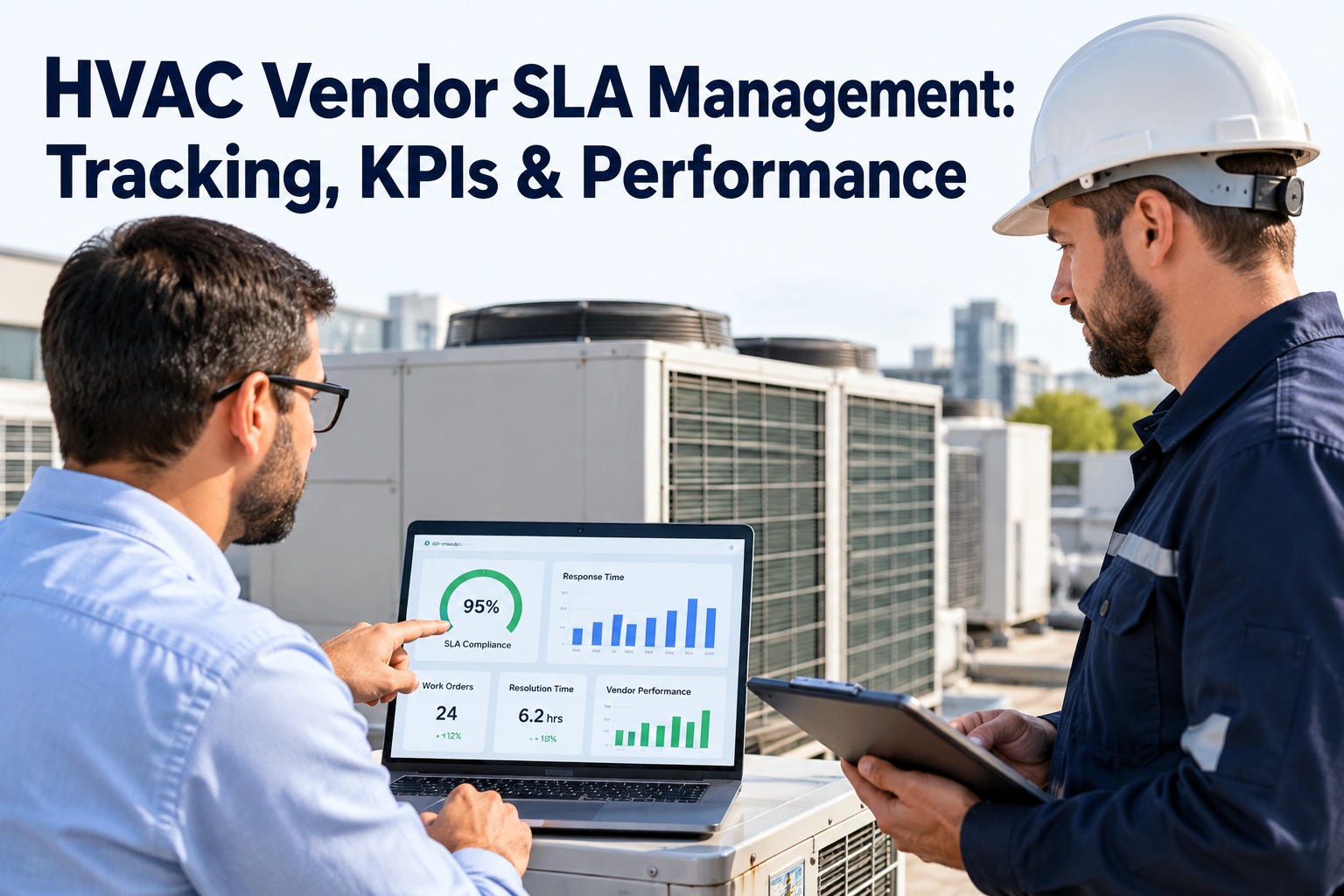
An HVAC service contract is only as good as what you can measure against it. Without tracking, an SLA is a promise in a drawer — the vendor says they respond in four hours and fix things first time, and you have no way to know whether they do. The gap between the agreement and the actual service is where overspend, downtime and finger-pointing live, and it closes only when you're holding the vendor to numbers. This article covers the KPIs that tell you how a vendor is really performing, and how to track them. OXMAINT AI — the AI-powered maintenance management software — captures the work-order data these metrics are built from and scores each vendor automatically.
Contractor Operations · HVAC Vendor SLA · Tracking, KPIs & Performance · 2026
HVAC Vendor SLA Management: Tracking, KPIs & Performance
A service level agreement you don't measure is just a hope. Track the right KPIs — response, completion, first-time fix, PM compliance, quality and cost — and vendor performance becomes a conversation about numbers, not opinions. The OXMAINT AI maintenance management software builds those numbers from your work orders.
Response
Completion
Quality
Cost
Measured
an SLA only holds the vendor if you track performance against it
Six KPIs
response, completion, first-time fix, PM, quality and cost
From work orders
the metrics come from data you're already capturing per job
Per vendor
scored vendor by vendor, so renewals rest on evidence
Why an Untracked SLA Is Just a Promise
Every HVAC contract sets targets — response windows, fix expectations, PM coverage. The targets mean nothing if nobody measures the actual service against them, and most disputes at renewal come down to neither side having the data. Tracking turns the SLA from a document into a scorecard; book a demo to see vendor SLAs scored in OXMAINT AI.
Hold response times
A four-hour promise only means something if you know how long the vendor actually took, job after job.
Spot the drift
Service quietly slips over a contract term — only a trend shows a vendor sliding before renewal comes up.
Justify the spend
When cost per job and invoice accuracy are tracked, you can see whether the contract is worth what you pay.
Renew on evidence
A renewal backed by numbers is a negotiation you win — or a vendor you replace with confidence, not a hunch.
The Six KPIs That Tell You the Truth
Vendor performance comes down to six measurable things — how fast, how complete, how well, how reliably and at what cost. Track these and you have the whole picture; start free and track all six per vendor in OXMAINT AI.
01Response Time
Time from logging a call to the vendor acknowledging or arriving, measured against the SLA target for each priority. The first and most visible promise in any contract.
Read it by priority — an emergency met in four hours is fine; a critical one missed by two isn't.
02Completion & SLA Compliance
The share of jobs resolved within the agreed window, and how long resolution actually takes. It's the difference between showing up on time and finishing on time.
A vendor can ace response and still fail here if jobs drag on for days before closing.
03First-Time Fix Rate
The share of jobs resolved on the first visit, with no return trip. A high rate means the vendor comes prepared with the right parts, skills and diagnosis.
A low rate means repeat visits — hidden cost and downtime that a raw response figure hides.
04PM Schedule Compliance
The share of contracted preventive visits done on time. The quiet KPI vendors skip first when they're stretched — and the one that costs you most later in failures.
Missed PMs are easy to ignore until the reactive calls they cause start piling up.
05Service Quality & Callbacks
Rework, callbacks and rejected jobs — how often a fix didn't hold. Quality is the KPI that response and cost figures can mask entirely.
A cheap, fast vendor whose work bounces back is neither cheap nor fast in the end.
06Cost & Invoice Accuracy
Cost per job, spend against contract, and whether invoices match the work done. The KPI that decides whether the whole agreement is worth renewing.
Invoices that don't tie back to a work order are where overspend hides.
You Can't Score What You Didn't Capture.
Every one of these KPIs is built from work-order data — times logged, visits recorded, invoices matched. If the service runs on phone calls and emails, there's nothing to score. The OXMAINT AI maintenance management software captures each job through the work order, so the metrics assemble themselves.
How to Track Vendor SLAs in Practice
Good vendor metrics come from a consistent record, not a quarterly reconstruction from inboxes. These are the steps that make SLA tracking real; start free and route all vendor work through OXMAINT AI.
1
Route all vendor work through work orders
Every call, visit and PM raised and closed as a work order — not phone calls and emails that leave no trail.
2
Timestamp each stage
Logged, acknowledged, on site, resolved — so response and resolution times are measured, not estimated.
3
Set SLA targets per priority
Define the response and resolution window for each priority, so compliance is judged against the right bar.
4
Match invoices to jobs
Tie every invoice back to its work order, so cost per job and invoice accuracy are verifiable.
5
Track callbacks and rework
Link a return visit to the original job, so first-time fix and quality show up honestly.
6
Review on a scorecard
Roll the KPIs up per vendor and review on a cadence — monthly for performance, before every renewal.
Red Flags a Vendor Is Slipping
Some patterns in the numbers warn you a vendor is sliding before it shows up as a crisis — these are the ones to watch. Catch them early and you can correct the relationship instead of ending it; book a demo to see vendor trends in OXMAINT AI.
Response creeping up
Times drifting toward the SLA limit month over month — the vendor is stretching thin before they start breaching.
PMs slipping late
Preventive visits arriving later each cycle, or bunched up at quarter-end, is the first corner a stretched vendor cuts.
Callbacks rising
More return trips on the same assets means quality is falling, whatever the response numbers say.
Invoices that don't match
Charges that don't tie to a work order, or creep above contract, are where a relationship quietly turns expensive.
How OXMAINT AI Manages Vendor SLAs
The KPIs only hold when the data behind them is complete and the scoring is automatic. Here's what the OXMAINT AI maintenance management software brings to HVAC vendor management; start free and hold every vendor to their SLA in OXMAINT AI.
Vendor work orders
Every vendor job raised, assigned and closed as a work order, so there's a complete record to measure against.
Automatic SLA timers
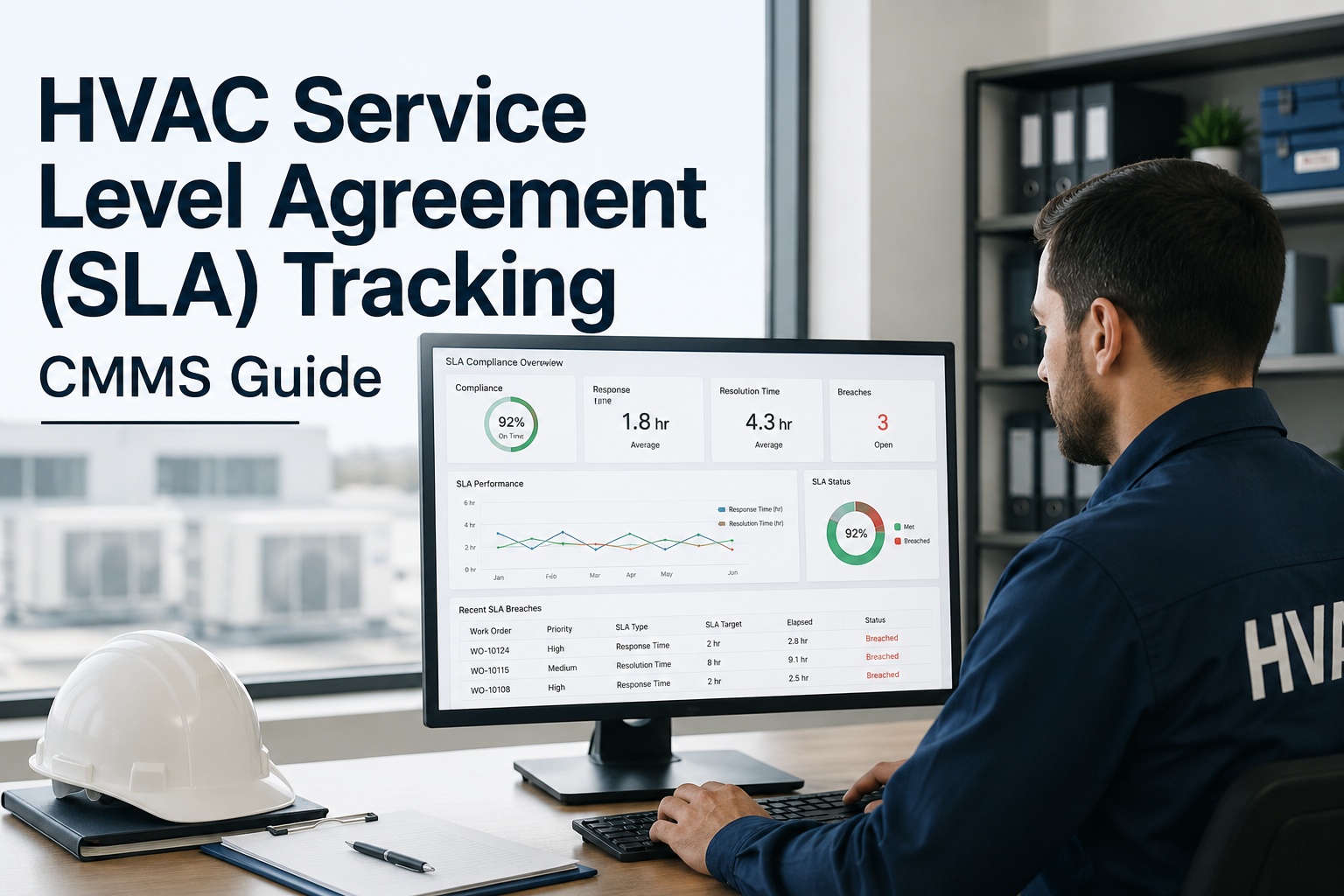
Response and resolution clocked against the target for each priority, so breaches are flagged, not missed.
Vendor scorecards
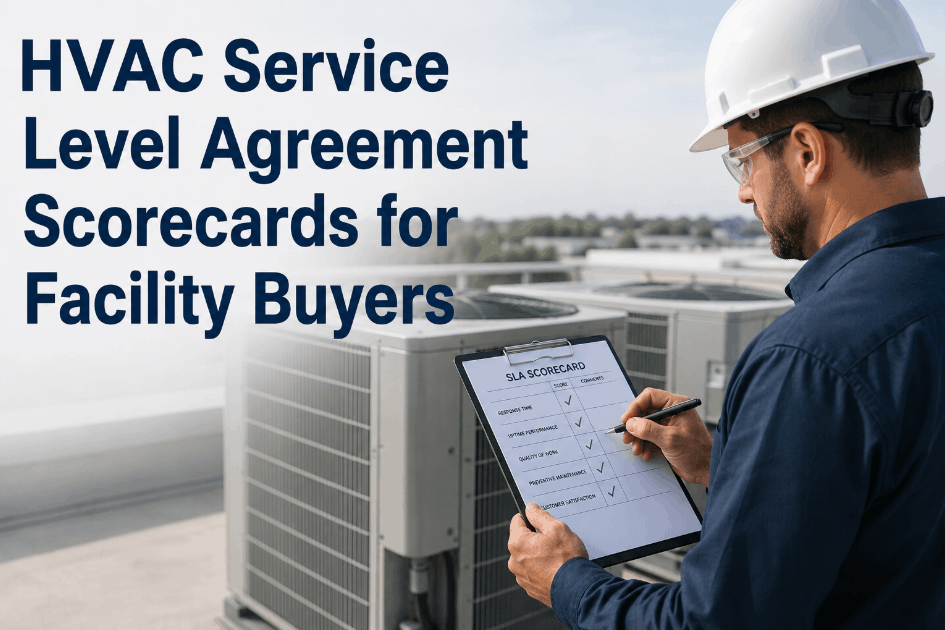
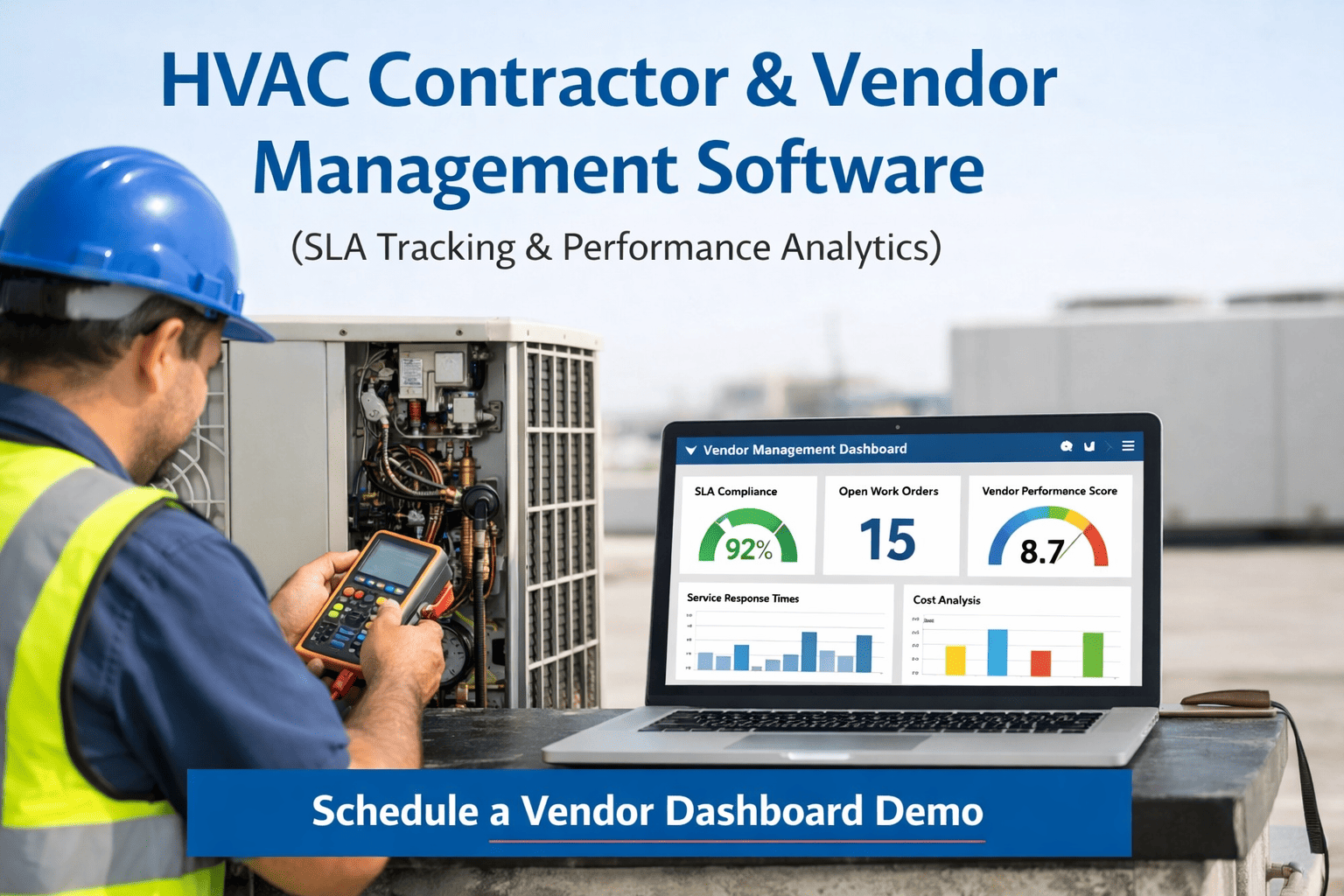
All six KPIs rolled up per vendor, so performance is a scorecard you can act on and share, not a guess.
Invoice matching
Costs tied to their work orders, so cost per job is clear and invoices that don't match get caught.
Performance trends
Each KPI trended over the contract term, so drift shows up long before a renewal decision is due.
Renewal-ready evidence
A full performance history per vendor, so every renewal or replacement rests on the record, not a hunch.
“
Our HVAC contracts ran on trust and a monthly invoice we mostly just paid. When a vendor's service got bad, we felt it long before we could prove it — and renewal talks were all opinion. Routing every job through work orders with SLA timers changed the balance. Now we walk into a review with response times, first-time fix and cost per job per vendor. One contractor tightened up overnight when they saw the scorecard; another we replaced with the numbers to back it.
Head of Facilities · Multi-Site Retail Operator
Frequently Asked Questions
What is an HVAC vendor SLA?
A service level agreement is the contract that sets what an HVAC vendor commits to — response windows by priority, resolution expectations, preventive visit coverage, and sometimes quality and cost terms. It's the standard you hold the vendor to, but only if you measure actual service against it.
Start free and track SLAs per vendor.
Which KPIs matter most for HVAC vendors?
Six cover it: response time against target, completion and SLA compliance, first-time fix rate, PM schedule compliance, service quality and callbacks, and cost with invoice accuracy. Response is the most visible, but first-time fix, PM compliance and callbacks are where hidden cost and risk show up.
How do you track vendor response times accurately?
Route every vendor job through a work order and timestamp each stage — logged, acknowledged, on site, resolved. Measuring from the moment a call is logged against the SLA target for that priority is the only way response time is real rather than reconstructed from memory or emails.
Book a demo to see SLA timers.
Why is first-time fix rate so important?
Because a fast response means little if the job isn't actually fixed. A low first-time fix rate means repeat visits — more downtime, more cost, more disruption — that a headline response figure completely hides. It's one of the truest measures of whether a vendor comes prepared and competent.
How does a CMMS help manage HVAC vendor SLAs?
It routes all vendor work through work orders, clocks response and resolution against SLA targets automatically, rolls the KPIs into a scorecard per vendor, matches invoices to jobs so cost is verifiable, trends performance over the contract term, and keeps a full history — so vendor management runs on evidence instead of trust and a monthly invoice.
Hold Every HVAC Vendor to the Agreement — With Numbers, Not Trust.
Turn your SLAs into scorecards with the OXMAINT AI maintenance management software — vendor work orders, automatic SLA timers, all six KPIs per vendor, invoice matching, and performance trends that make every renewal an evidence-based decision. Stop paying on faith and start managing on data.