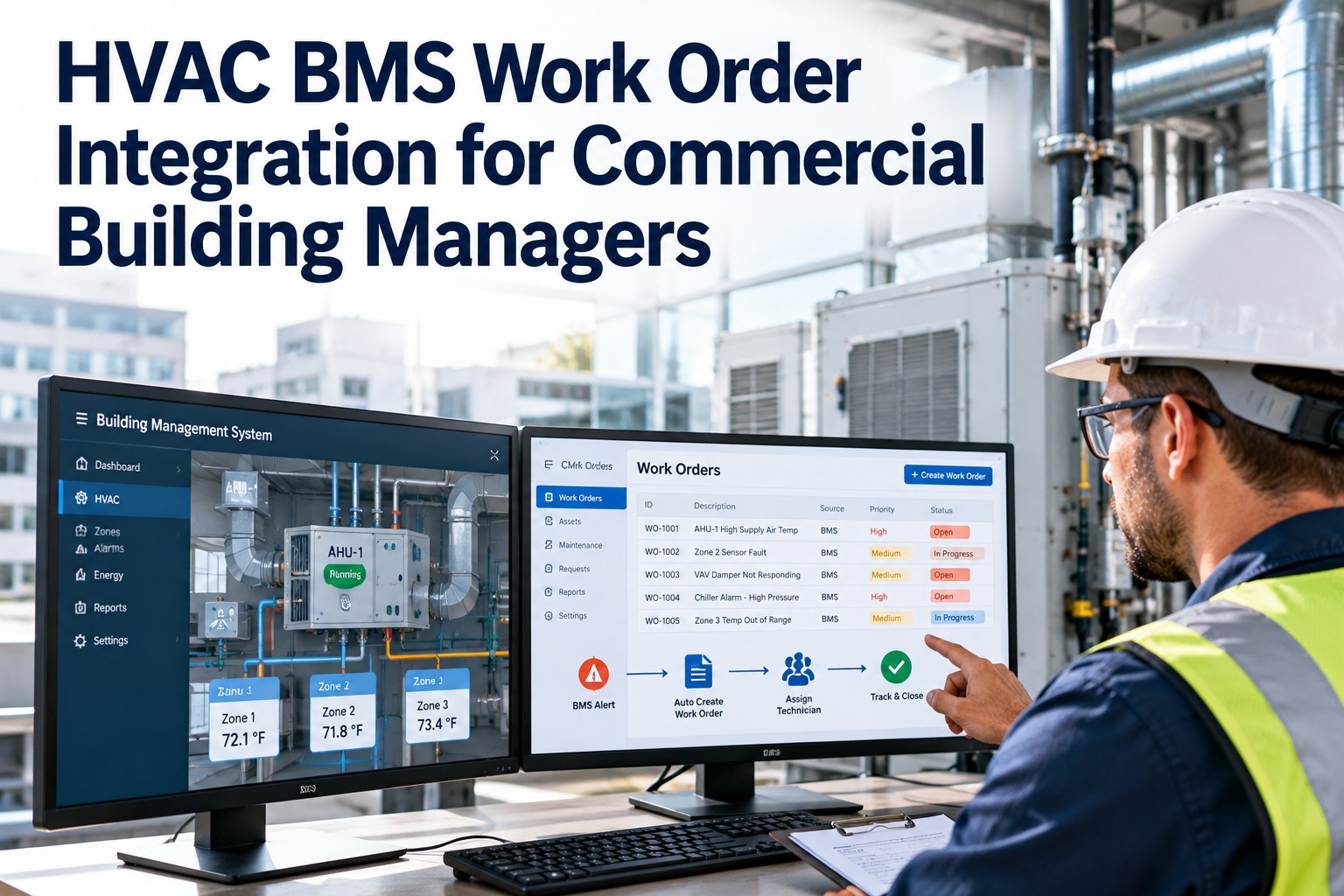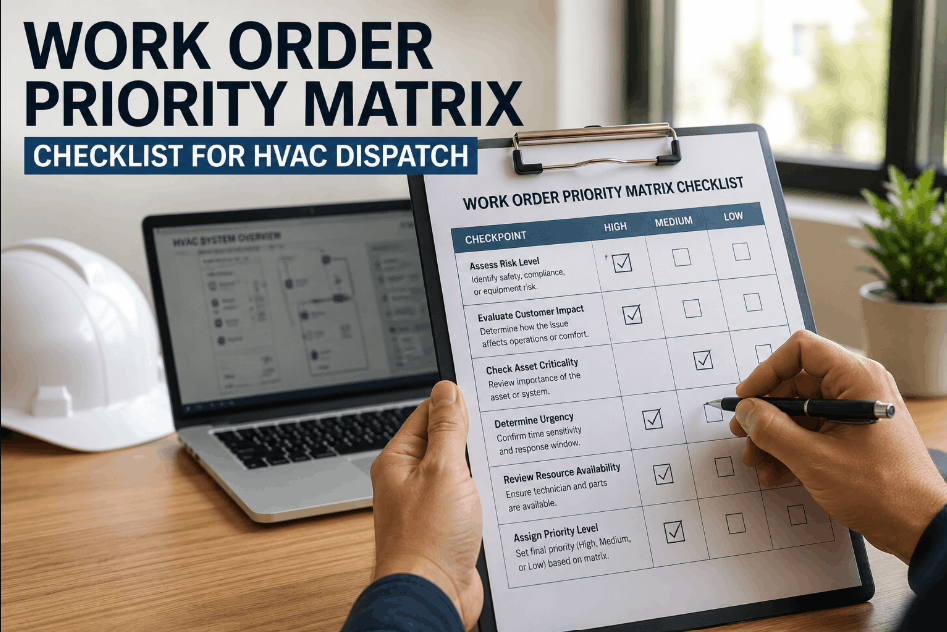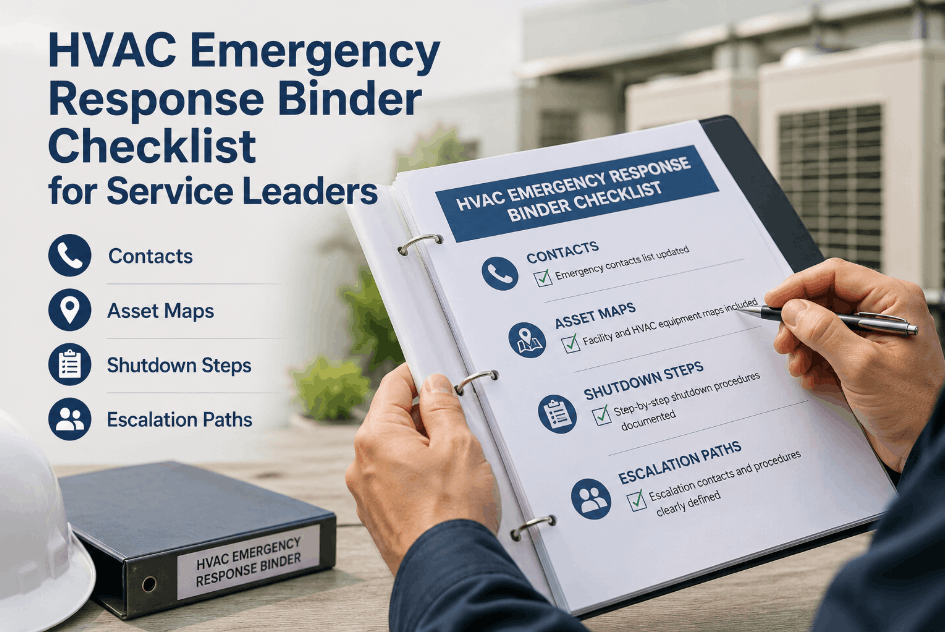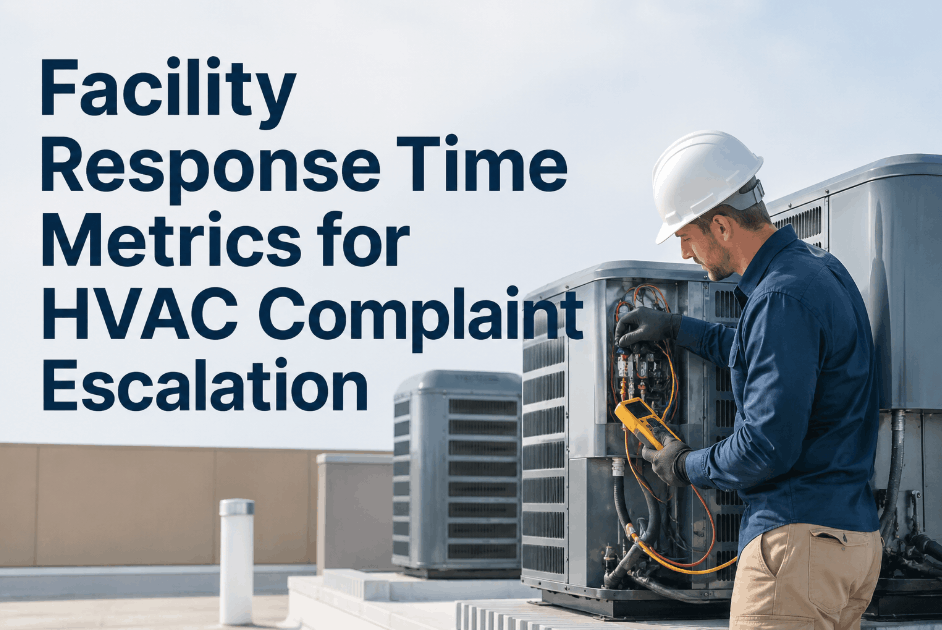
HVAC service dispatch without defined response time standards is not a scheduling problem — it is an operational liability. When technicians, dispatchers, and facility managers operate without documented service tiers and response thresholds, every urgent call becomes a negotiation instead of a protocol. In 2026, commercial facilities that cannot demonstrate asset-criticality-based dispatch standards face SLA disputes, tenant escalations, and maintenance backlog accumulation that compounds into equipment failure. Sign Up Free to configure OxMaint's work order routing with service tier rules, asset priority classifications, and dispatch SLA tracking — so every field team knows exactly what fast means before the phone rings. The difference between reactive chaos and structured dispatch is almost always a standards documentation problem, not a staffing problem.
Set Dispatch Standards That Your Team Actually Follows
OxMaint gives facility and field service teams mobile work orders, asset criticality tagging, priority-based routing, and real-time dispatch dashboards — built for HVAC operations teams defining service response standards in 2026.
Why Response Time Standards Must Be Tied to Asset Criticality
Treating every HVAC service call as equally urgent guarantees that the most critical failures wait behind routine complaints. Book a Demo to see how OxMaint's asset management module lets facility teams tag equipment by criticality tier — so dispatch rules automatically route emergency calls on life-safety AHUs differently from comfort complaints on tertiary fan coil units. Asset criticality scoring considers occupant impact, redundancy availability, regulatory exposure, and revenue dependency. A chiller serving a data center and a rooftop unit serving a storage room cannot share the same response clock. Facilities that have not segmented their HVAC asset inventory by criticality are applying the same resource intensity to failures that carry completely different operational consequences. Response time standards without asset context are just arbitrary numbers on a service contract.
HVAC Service Dispatch Response Tiers: How to Define Each Level
Emergency — Life Safety or Critical Operations
Response within 2 hours. Applies to failures affecting occupant safety, health care environments, data center cooling, refrigeration for perishables, or any asset with no backup redundancy. Dispatch protocol includes immediate technician assignment, real-time status updates, and escalation to senior engineer if resolution exceeds 4 hours.
Urgent — Significant Comfort or Compliance Impact
Response within 4–8 hours. Applies to HVAC failures causing widespread occupant discomfort, humidity exceedances above IAQ thresholds, or equipment faults that will escalate to Tier 1 if unresolved within a shift. Book a Demo to see OxMaint's escalation timer logic in work order routing.
Scheduled — Planned Corrective or Minor Service
Response within 24–72 hours. Applies to single-zone comfort complaints with available redundancy, minor performance degradation without occupant impact, and corrective work identified during PM inspections. Scheduled dispatch prevents Tier 3 volume from consuming technician capacity reserved for emergency response.
Deferred — Planned Maintenance or Low-Priority Repair
Response within 5–10 business days. Applies to cosmetic defects, minor filter replacements outside PM schedule, minor ductwork adjustments, and repairs with no operational impact. Deferred dispatch must still be logged, tracked, and aged in the CMMS to prevent backlog accumulation. Sign Up Free to track deferred work orders and prevent backlog aging.
Dispatch Response Time Standards by Asset Criticality and Site Risk
| Asset Criticality | Site Risk Level | Emergency Response | Urgent Response | Scheduled Response |
|---|---|---|---|---|
| Critical (no redundancy) | High — life safety / data | ≤ 2 hours | ≤ 4 hours | ≤ 24 hours |
| Essential (partial redundancy) | Medium — commercial tenant | ≤ 4 hours | ≤ 8 hours | ≤ 48 hours |
| Standard (full redundancy) | Low — storage / secondary | ≤ 8 hours | ≤ 24 hours | ≤ 72 hours |
| Non-critical | Minimal — seasonal / comfort | ≤ 24 hours | ≤ 48 hours | 5–10 days |
Building a Dispatch Response Program: Phase by Phase
Asset Criticality Classification
Tag every HVAC asset in OxMaint with a criticality tier based on occupant impact, redundancy, and regulatory exposure. Criticality classification is the foundation — dispatch standards without it are arbitrary. Sign Up Free to begin asset tagging today.
Define Tier Thresholds and Escalation Rules
Document response time thresholds for each tier per site. Define escalation triggers — if a Tier 2 work order is unacknowledged after 2 hours, it auto-escalates to Tier 1 priority and alerts the supervisor. OxMaint's work order rules engine enforces this without manual oversight.
Configure Work Order Routing and Technician Allocation
Route incoming service requests to the right technician based on asset location, skill match, and current workload. OxMaint's mobile dispatch interface ensures technicians receive work orders with full asset history, prior service notes, and parts availability before they arrive on site.
Measure and Report SLA Compliance
Track response time against defined thresholds in real time. OxMaint's PM dashboard generates SLA compliance reports by tier, technician, asset class, and site — providing the data needed to defend standards to facility owners, tenants, and service contractors. Book a Demo to see the dispatch analytics dashboard.
Reactive Dispatch vs. Standards-Driven Dispatch
Dispatch the Right Technician, at the Right Time, Every Time
OxMaint gives HVAC service teams mobile work orders, asset criticality tagging, dispatch routing rules, SLA tracking, and PM dashboards — purpose-built for facility teams setting and enforcing response time standards across commercial buildings.
Frequently Asked Questions: HVAC Service Dispatch Response Time Standards
What is a reasonable emergency response time standard for commercial HVAC?
For critical assets with no redundancy — data centers, healthcare, refrigeration — a 2-hour emergency response is the industry benchmark. Standard commercial buildings typically set 4 hours for emergency and 8–24 hours for urgent service tiers.
How should asset criticality affect dispatch priority?
Asset criticality — based on occupant impact, redundancy availability, and regulatory exposure — should be the primary input for dispatch priority, not caller urgency. CMMS platforms like OxMaint automate this routing based on asset tags.
How does a CMMS help enforce response time standards?
A CMMS like OxMaint timestamps work order creation, assignment, and completion — generating automatic SLA breach alerts when response clocks exceed defined thresholds, with full audit trail documentation for service reviews.
What happens to deferred work orders in a structured dispatch program?
Deferred work orders must be logged, assigned a response window, and aged in the CMMS. Without aging tracking, deferred volume accumulates into maintenance backlog that becomes unmanageable and eventually generates emergency calls.
Can preventive maintenance scheduling coexist with emergency dispatch capacity?
Yes — with tiered dispatch standards that reserve technician capacity by priority level. OxMaint's scheduling module balances PM work orders against available capacity so emergency response is never crowded out by preventive tasks.
Ready to Define Response Standards Your Team Will Actually Meet?
OxMaint gives HVAC and facility maintenance teams the asset tagging, work order routing, SLA tracking, and dispatch analytics to turn response time standards from a contract clause into an operational reality.