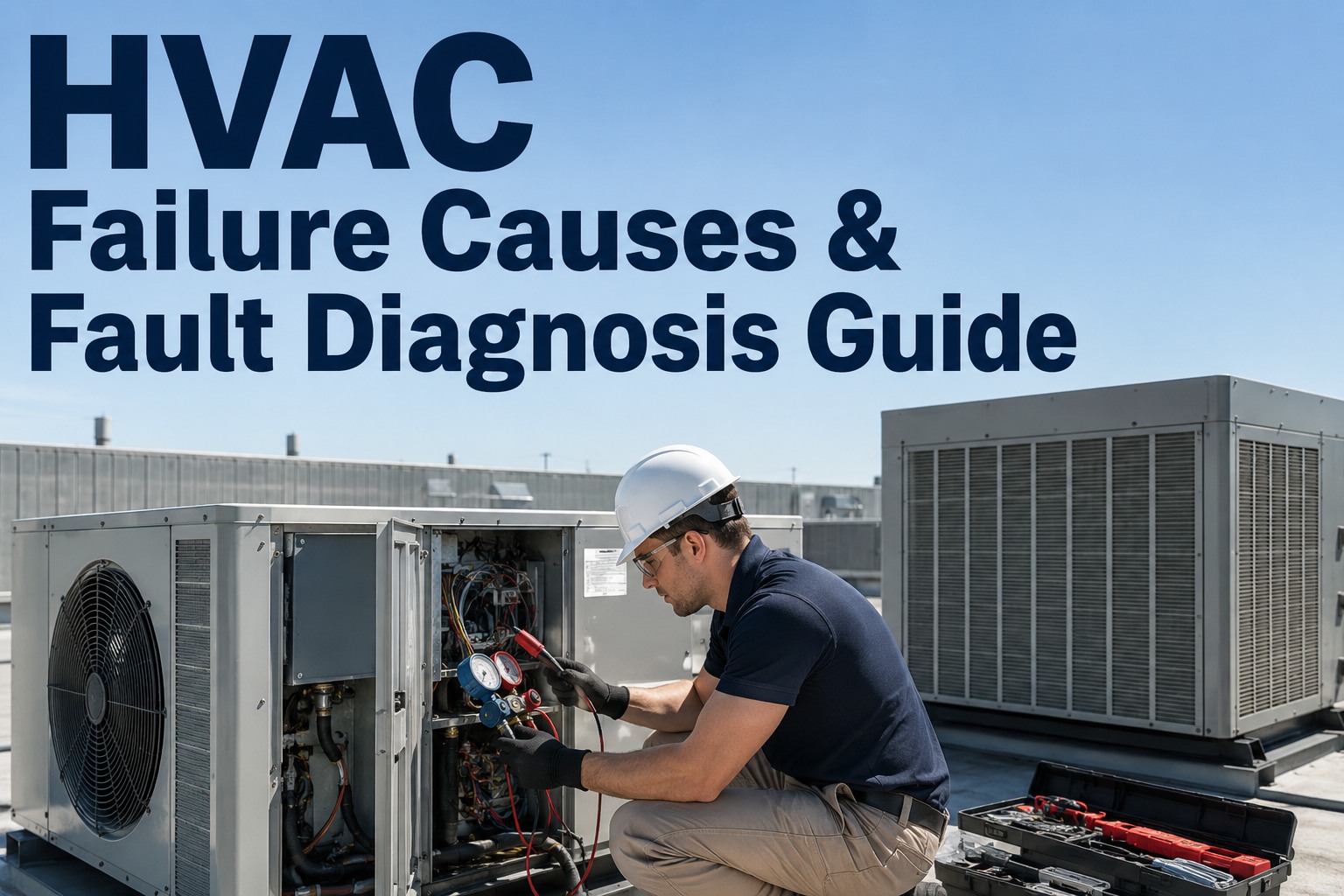
Over 93% of unplanned commercial HVAC failures trace back to just five core degradation mechanisms: refrigerant charge faults, heat transfer fouling, compressor degradation, electrical control failures, and airflow restrictions. This HVAC failure diagnosis guide breaks down each root cause, the early warning signs reliability teams should monitor, and the financial impact of reactive vs. preventive maintenance. By shifting from emergency repair schedules to CMMS-based fault diagnosis, facilities typically cut unplanned downtime by 30–50%. To see how AI-driven maintenance tracking works on your specific assets, you can Start Free Trial today.
HVAC Failure Analysis & Prevention
Is your HVAC system heading toward an unplanned failure?
Commercial HVAC systems degrade predictably, yet most maintenance teams wait for occupant complaints or catastrophic breakdowns before acting. Identifying HVAC failure causes early prevents costly downtime, saves energy, and extends equipment life.
HVAC Degradation Mechanisms
Top 5 common HVAC faults and their root causes
Understanding HVAC degradation mechanisms is the first step in a reliable fault diagnosis framework. Below are the five primary failure modes that account for the vast majority of commercial system breakdowns.
Refrigerant Charge Faults
Low or overcharged refrigerant reduces cooling capacity by up to 20% and spikes compressor head pressure. Caused by micro-leaks at flare fittings or Schrader valves, refrigerant faults force compressors to run longer cycles, accelerating wear and risking catastrophic seizure if ignored.
Heat Transfer Fouling
Biological growth, scale, and debris on condenser and evaporator coils degrade heat transfer efficiency. A fouled condenser coil can increase compressor energy consumption by 30% while lowering cooling capacity, directly driving up utility costs and overheating the refrigerant cycle.
Compressor Degradation
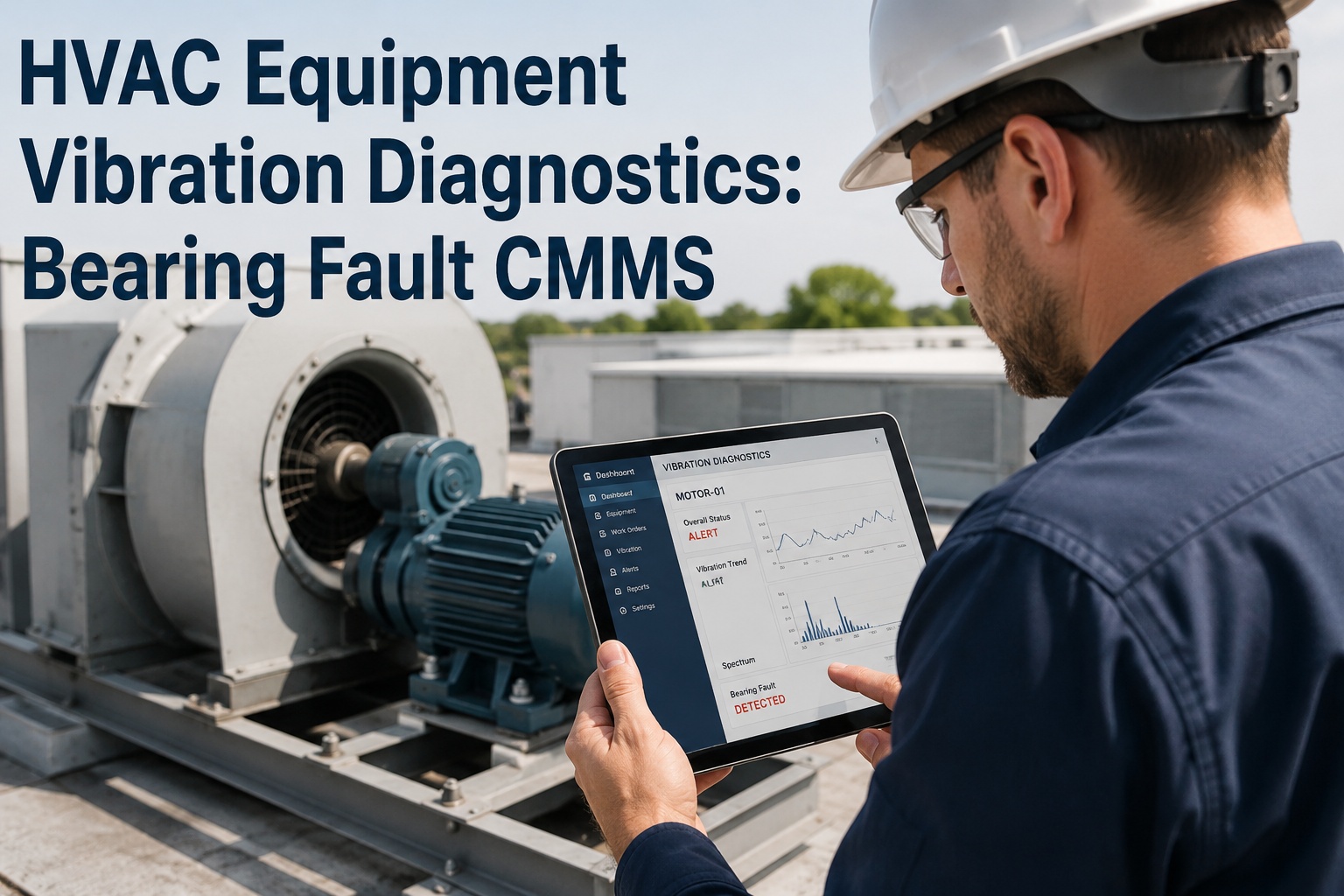
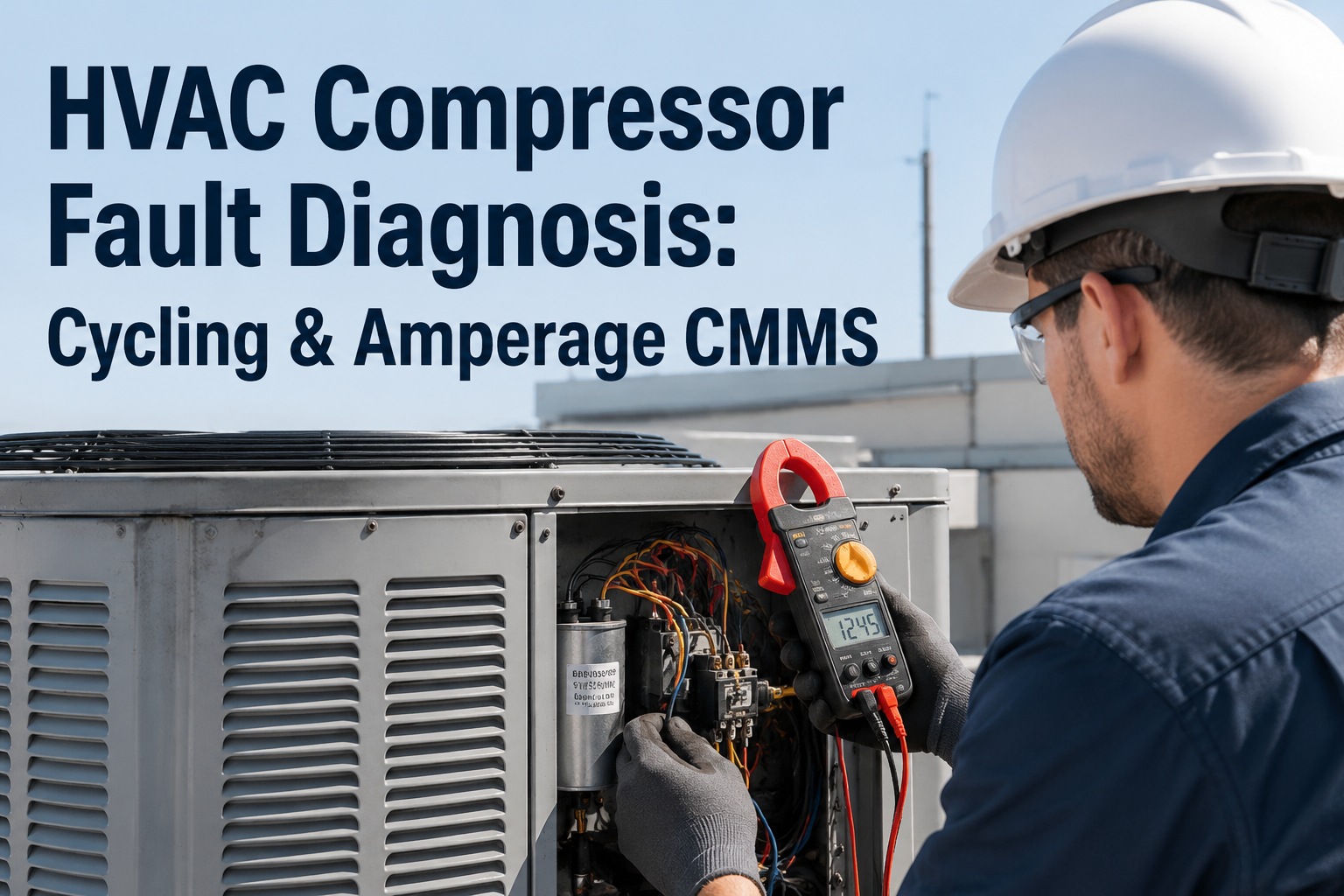
Often a secondary failure caused by refrigerant leaks or liquid slugging. Compressor degradation manifests as rising amperage, unusual vibration, and oil discoloration. Replacing a commercial compressor costs $4K–$12K, making early HVAC failure diagnosis critical to avoiding total system replacement.
Electrical Control Failures
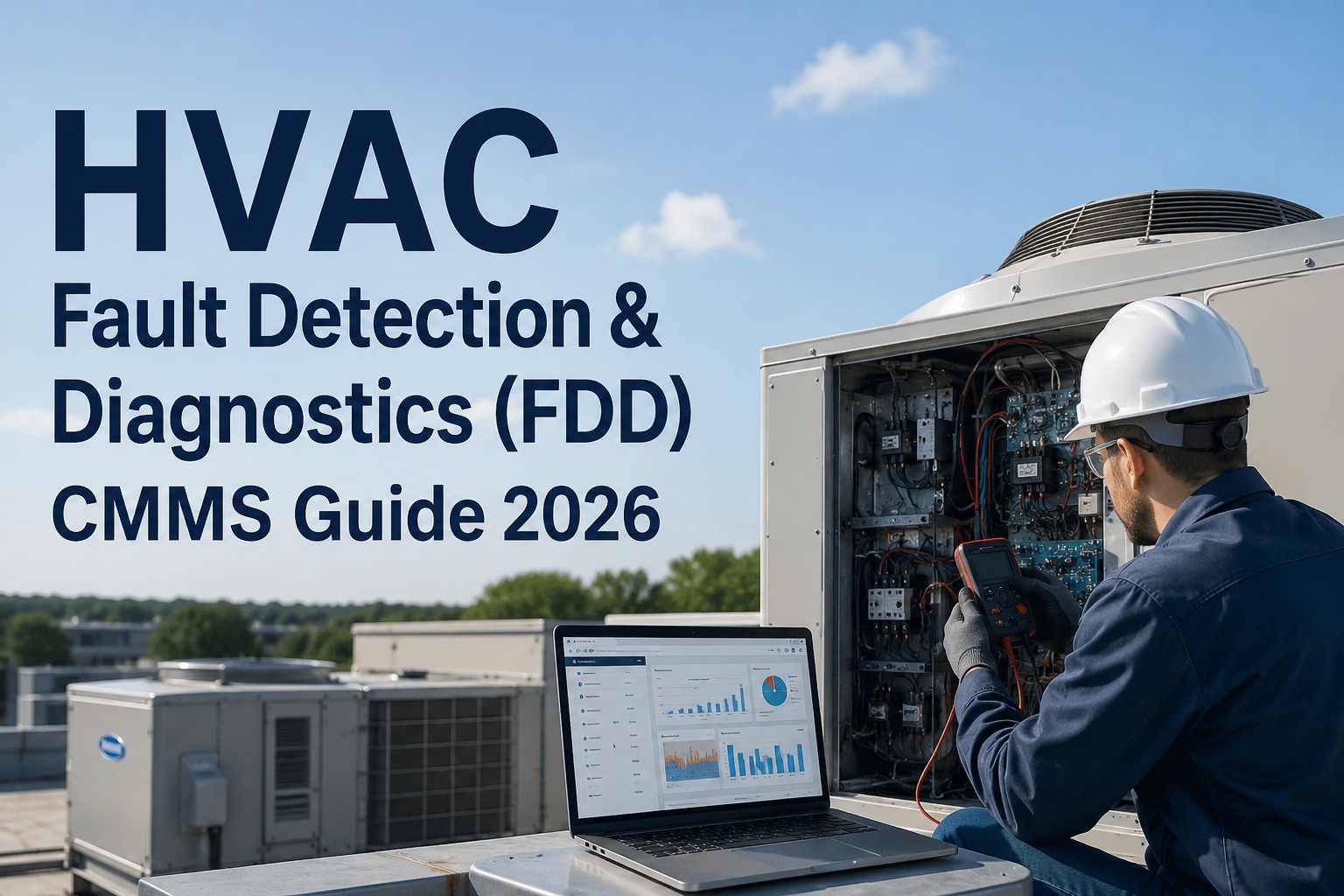
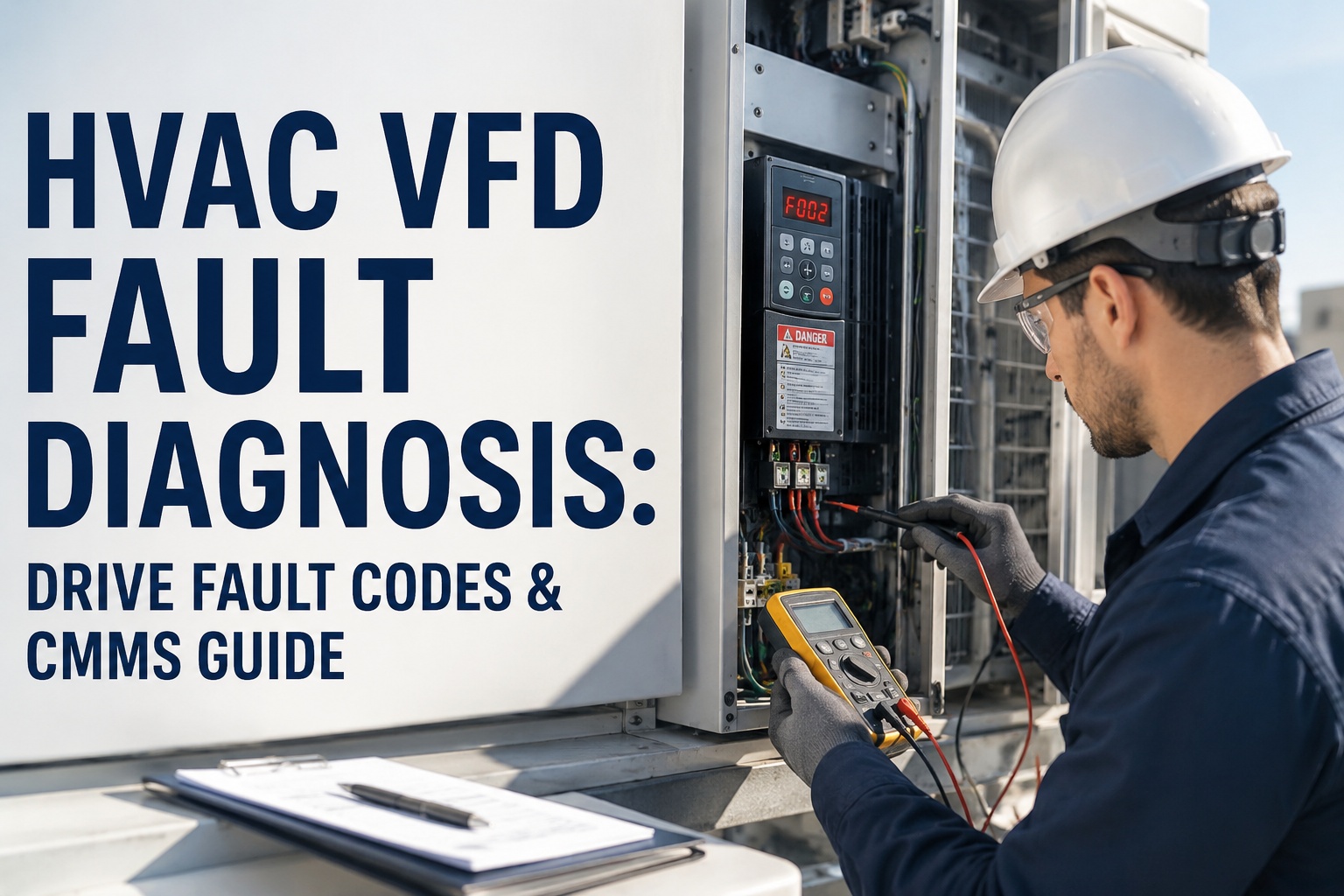
Pitted contactors, blown capacitors, and failed relays account for a massive portion of no-cool calls. Voltage drops across pitted contacts cause motors to draw higher amperage, leading to winding insulation breakdown and motor burnout if the fault is not cleared swiftly.
Airflow Restrictions
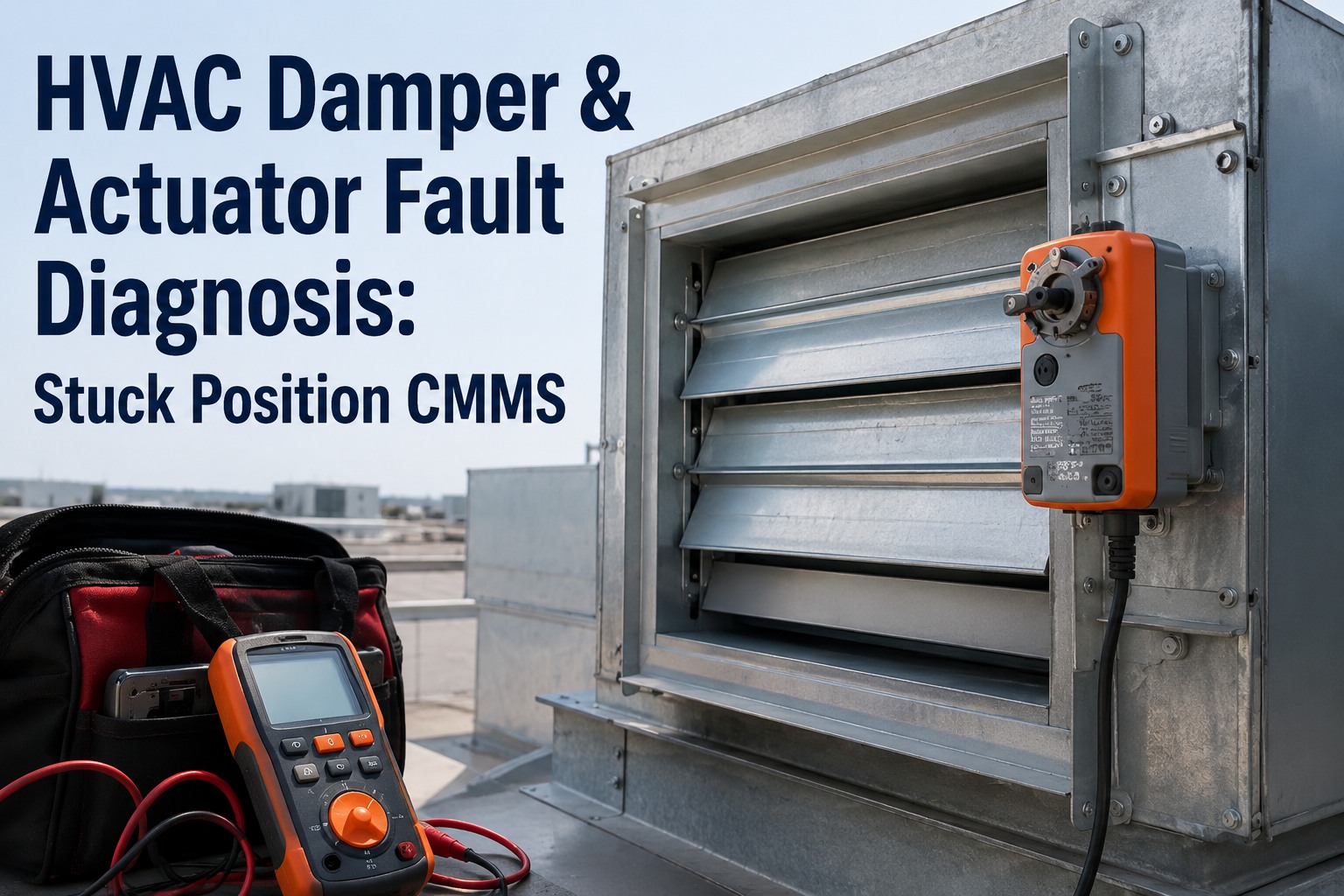
Clogged filters, collapsed ductwork, and failed blower motors reduce evaporator airflow. Low airflow causes coil freeze-up, liquid refrigerant flooding back to the compressor, and severe mechanical damage. A 20% drop in airflow can increase system energy use by up to 15%.
Financial Impact
HVAC failure analysis: The true cost of reactive maintenance
A modern HVAC failure prevention guide must quantify the cost of delayed action. When maintenance is purely reactive, facilities pay a premium in emergency labor, expedited parts, and secondary damage. Use the formula below to calculate your reactive maintenance premium.
Reactive Maintenance Premium (RMP) Formula
RMP = (E + S + O) − P
| Maintenance Strategy | Avg. Downtime / Year | Energy Penalty | Asset Lifespan | Annual Cost (180-asset plant) |
|---|---|---|---|---|
| Reactive (Run-to-Failure) | 48–72 hrs | +25% to 35% | 8–10 years | $84,000+ |
| Preventive (Calendar-Based) | 12–18 hrs | +10% to 15% | 13–15 years | $52,000 |
| Predictive (CMMS-Driven) | 2–5 hrs | +0% to 3% | 18–22 years | $31,000 |
Consider a 180-asset commercial facility spending $42K annually on emergency HVAC repairs. By shifting to a predictive, CMMS-driven model, they eliminated 65% of unplanned failures, saving $26,000 in year one while cutting energy consumption by 18%.
Diagnostic Workflow
Step-by-step HVAC fault diagnosis guide for technicians
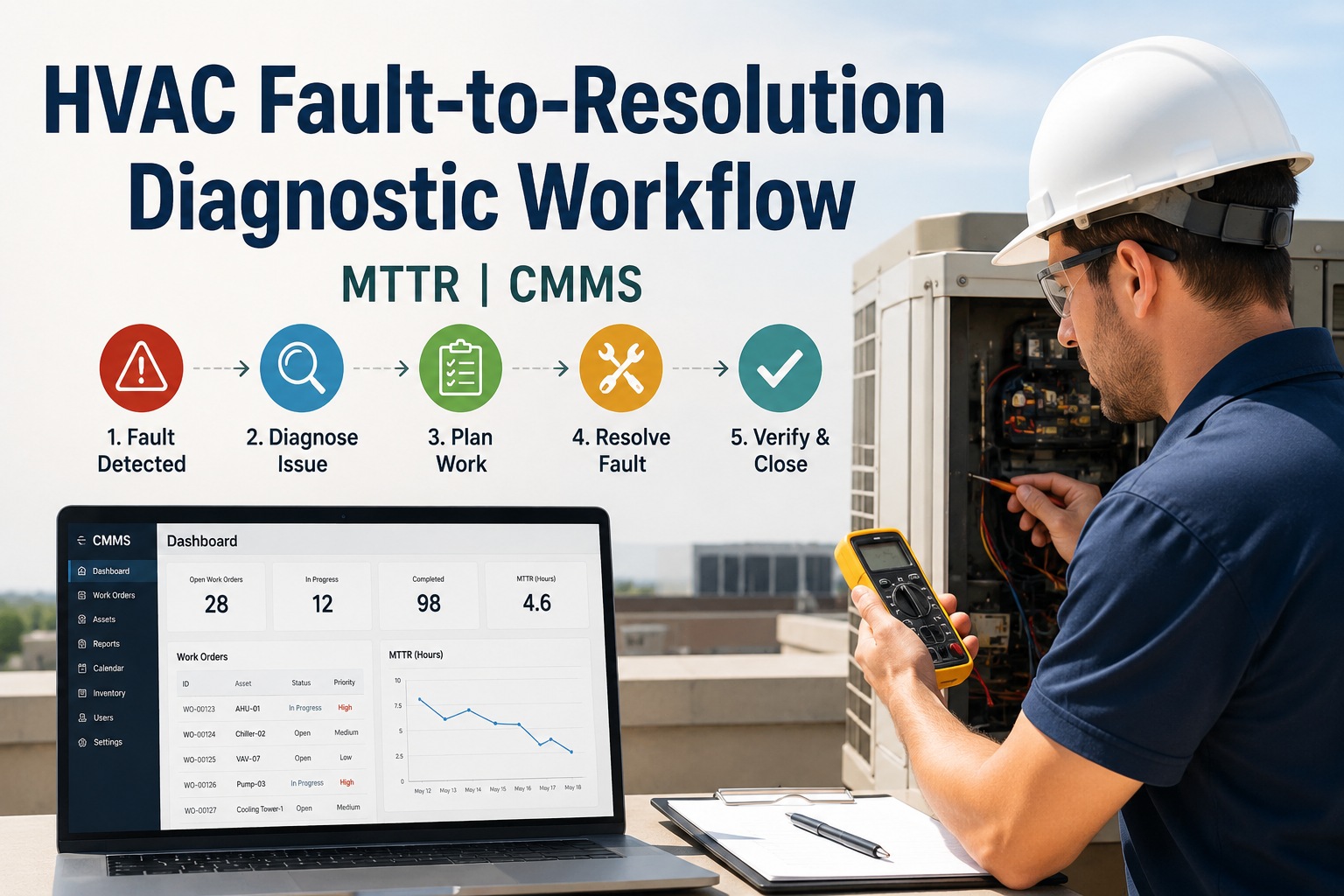
A standardized HVAC failure diagnosis workflow prevents misdiagnosis and ensures the root cause is fixed, not just the symptom. Follow this 4-step timeline to resolve faults efficiently.
Validate the fault before touching the unit
Review the CMMS work order history for repeat calls on the same asset. Verify occupant complaints against actual zone temperatures and supply-air readings to rule out sensor calibration issues before dispatching a technician.
Identify obvious degradation mechanisms
Check for coil frost, oil stains on refrigerant lines, burnt wiring insulation, and unusual compressor noise. Document findings via mobile CMMS software to maintain a digital twin of the asset's health history.
Measure key performance indicators
Measure compressor amperage, superheat, subcooling, and temperature splits. Compare readings against OEM baselines stored in the CMMS. A temperature split below 14°F indicates a refrigerant or airflow fault requiring deeper diagnosis.
Fix the source, not the symptom
If a capacitor failed, check for voltage imbalance at the contactor. If refrigerant is low, repair the leak rather than just recharging. Log all parts and labor in the CMMS to trigger predictive alerts for similar assets in the portfolio.
Stop reacting to HVAC failures. Start predicting them.
See how OxMaint's AI-powered fault diagnosis and work order management can cut your unplanned downtime by up to 50%.
OxMaint CMMS Solutions
How OxMaint helps prevent HVAC failures before they happen
OxMaint is an AI-powered CMMS and EAM platform designed to move maintenance teams from reactive firefighting to predictive asset management. Here is how OxMaint directly addresses the top HVAC failure causes.
Predictive Analytics & Fault Diagnosis
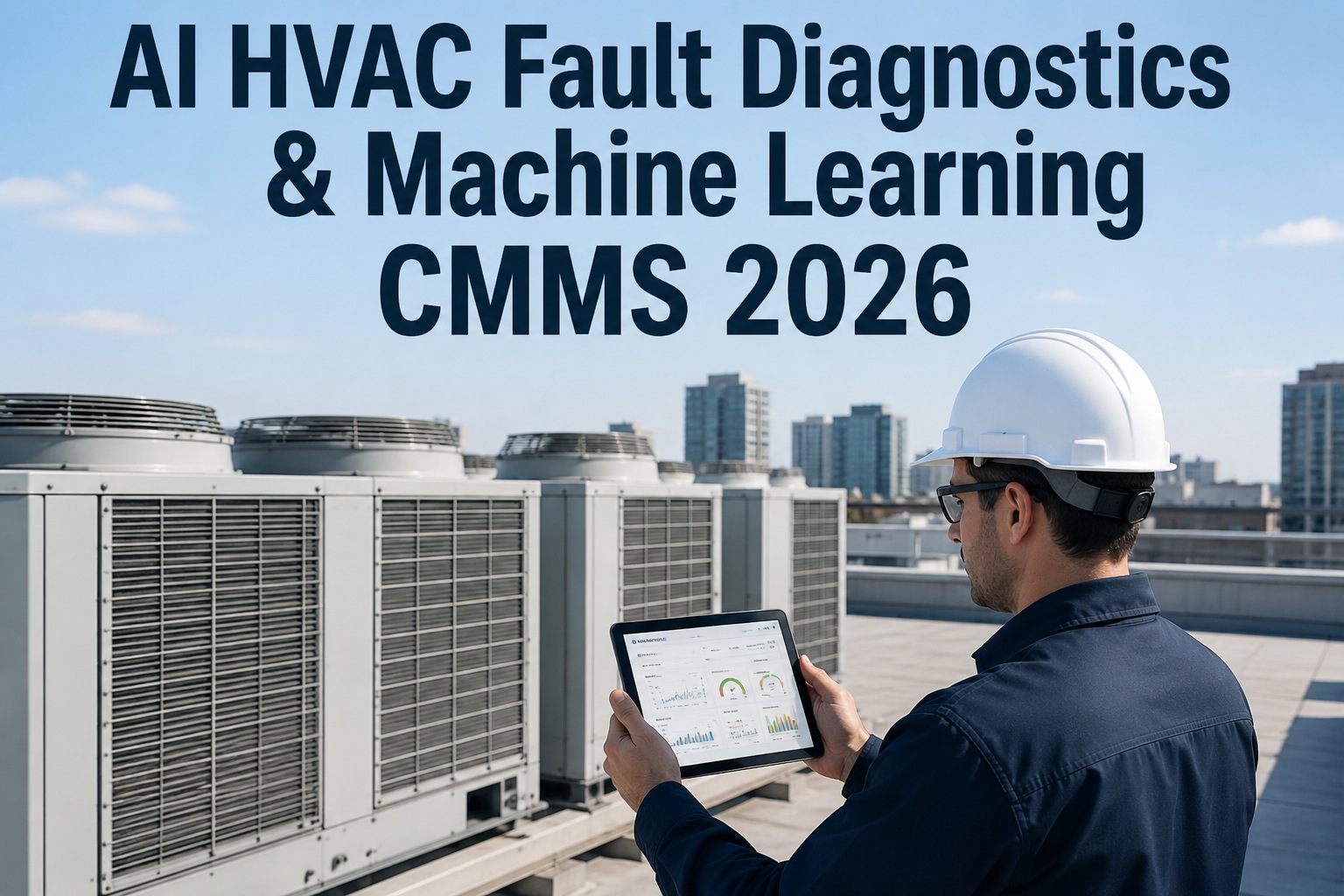
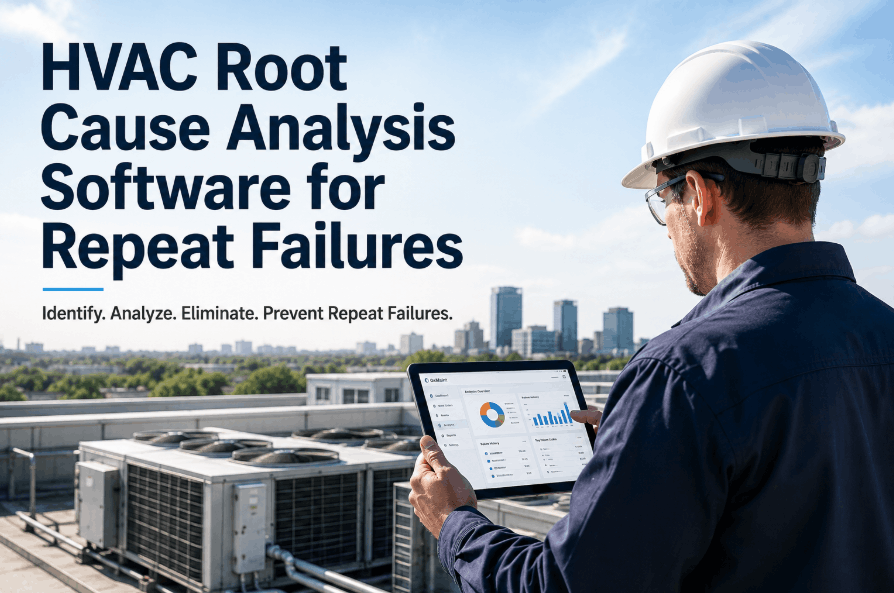
OxMaint uses AI to analyze vibration, temperature, and amperage trends to detect refrigerant faults and compressor degradation weeks before failure. Outcome: Cut unplanned downtime by 30–50% and eliminate catastrophic equipment loss.
Automated Preventive Maintenance
Automate filter changes, coil cleanings, and belt inspections based on runtime hours or calendar intervals. Outcome: Prevent heat transfer fouling and airflow restrictions while eliminating paper work orders and missed PMs.
Centralized Asset & Parts Tracking
Maintain a complete digital history of every HVAC unit, including OEM specs, warranty data, and spare parts inventory. Outcome: Reduce mean time to repair (MTTR) by 40% by ensuring the right parts are always in stock.
Maintenance Analytics & Reporting
Track KPIs like OEE, MTBF, and energy consumption to identify underperforming assets. Outcome: Justify capital replacements with hard data and optimize maintenance budgets for maximum ROI.
Frequently Asked Questions
HVAC fault causes guide: Your top questions answered
What is the most common cause of HVAC system failure?
The most common cause of HVAC system failure is neglected preventive maintenance, leading to dirty coils and clogged filters. This heat transfer fouling restricts airflow, causing the compressor to overwork and eventually fail due to liquid slugging or overheating. Regular filter changes and coil cleanings prevent over 70% of these breakdowns.
How do you diagnose a refrigerant fault in an HVAC system?
Diagnosing a refrigerant fault requires measuring superheat and subcooling against the manufacturer's baseline. If subcooling is low and superheat is high, the system is likely undercharged due to a leak. Technicians should use an electronic leak detector on coil u-bends and Schrader valves, then log the repair in a CMMS to trigger future predictive monitoring.
How does a CMMS help with HVAC failure diagnosis?
A CMMS like OxMaint stores historical work order data, OEM specifications, and real-time sensor readings for every asset. By analyzing this data, maintenance teams can spot degradation trends—such as rising compressor amperage—before a failure occurs. To see this in action on your assets, you can Book a Demo with our team.
What are the signs of a failing HVAC compressor?
Signs of a failing compressor include loud clanking or rattling noises, the outdoor unit tripping the breaker frequently, hard starting (stuttering on startup), and warm air blowing from supply vents. If the compressor draws amperage 15% higher than its rated LRA, it is likely failing and should be replaced before it damages the contactor and control board.
How often should commercial HVAC systems be inspected?
Commercial HVAC systems should be inspected quarterly at minimum, with monthly filter checks during peak cooling or heating seasons. High-use environments like data centers or manufacturing plants may require bi-weekly inspections. Using CMMS-based preventive maintenance software ensures these inspections are never missed and automatically scheduled based on actual equipment runtime.
Ready to eliminate unplanned HVAC downtime?
Join hundreds of reliability teams using OxMaint to predict failures, automate work orders, and cut maintenance costs by up to 40%.
Free 14-day trial · No credit card required