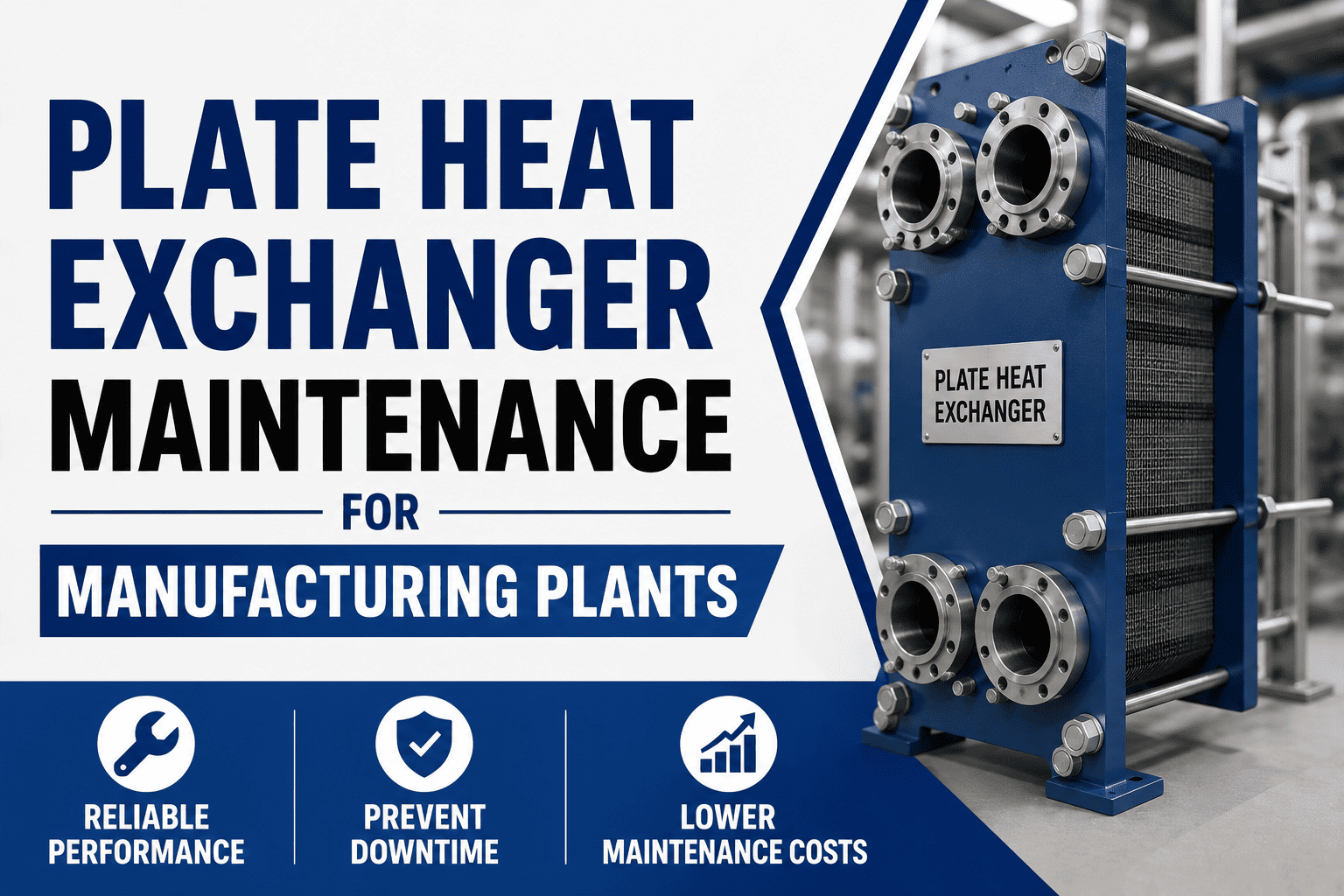
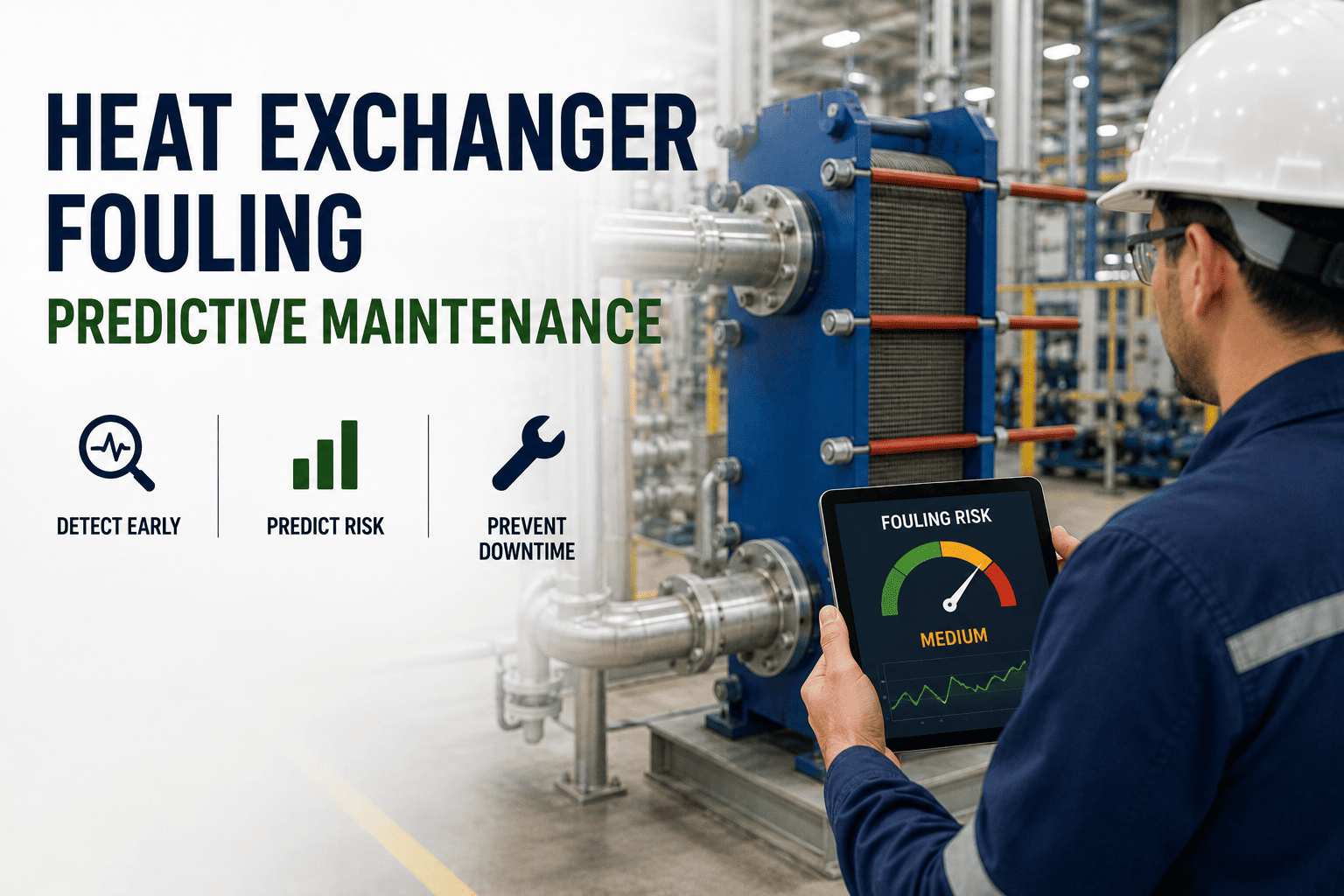
Heat exchanger failures cost manufacturing plants an average of $42,000 per incident in lost production and emergency repairs — yet 68% of these failures are preventable with structured maintenance protocols according to industrial reliability studies. The difference between facilities that run heat exchangers for 15+ years versus those replacing them every 5 years comes down to systematic fouling detection, scheduled tube inspections, and performance monitoring tracked in real-time maintenance software rather than reactive cleaning after efficiency drops below acceptable thresholds. This page covers the essential maintenance practices for shell-and-tube, plate, and air-cooled heat exchangers in manufacturing environments, with practical schedules and inspection checklists you can implement immediately.
Heat Exchanger Types in Manufacturing: Maintenance Requirements by Design
Different heat exchanger designs require different maintenance approaches. Understanding your equipment type determines inspection frequency, cleaning methods, and failure modes to monitor.
Most common in chemical processing, oil refining, and power generation. Tubes carry one fluid while shell contains another, allowing heat transfer through tube walls.
Inspection Frequency:
Every 6 months
Common Issues:
Tube fouling from scale deposits
Tube leaks at rolled joints
Baffle damage from flow erosion
Gasket failures at tube sheets
Compact design with corrugated metal plates stacked together. High thermal efficiency but more sensitive to fouling and requires more frequent cleaning.
Inspection Frequency:
Every 3-4 months
Common Issues:
Plate fouling in narrow gaps
Gasket deterioration from chemicals
Plate corrosion and pitting
Pressure drop increase from blockages
Uses ambient air to cool process fluids through finned tubes with forced or natural draft. Common where water is scarce or cooling water treatment is costly.
Inspection Frequency:
Every 3 months
Common Issues:
Fin fouling from airborne debris
Fan bearing failures
Tube external corrosion
Vibration-induced tube failures
The Hidden Cost of Heat Exchanger Fouling: Performance Degradation Timeline
Fouling is the gradual accumulation of unwanted deposits on heat transfer surfaces. Even thin fouling layers dramatically reduce thermal efficiency and increase operating costs long before visual inspection reveals the problem.
Week 1-4
0.5mm deposit
5% efficiency loss
Normal operation
Week 5-12
1.5mm deposit
15% efficiency loss
Monitoring required
Week 13-24
3mm deposit
30% efficiency loss
Cleaning needed
Week 24+
5mm+ deposit
50%+ efficiency loss
Critical condition
Annual Cost Impact: 1000 kW Heat Exchanger
Clean Operation
$48,000/year
Energy costs calculated at $0.12/kWh with continuous operation. Does not include production losses from temperature deviations.
Stop Guessing When to Clean Your Heat Exchangers
Oxmaint Tracks Thermal Performance and Alerts You Before Efficiency Drops
Connect your heat exchanger temperature and pressure sensors to Oxmaint's predictive maintenance platform. Our algorithms detect fouling trends 4-6 weeks before they impact production, automatically schedule cleaning work orders, and track cleaning effectiveness against baseline performance data.
Heat Exchanger Inspection Protocol: What to Check and When
Effective maintenance combines online monitoring during operation with physical inspection during planned shutdowns. This protocol covers both approaches with specific inspection points for each heat exchanger type.
Temperature differential
Track inlet/outlet temps on both sides — 10% reduction indicates fouling or flow issues
Pressure drop
Monitor delta-P across unit — 20% increase signals blockage or scale buildup
Flow rates
Verify design flow maintained — reduced flow reduces heat transfer coefficient
Vibration levels
Air-cooled units: check fan bearing vibration — levels above 0.3 in/sec require bearing service
External corrosion
Check shell, heads, nozzles for rust, pitting, or stress cracks especially at welds
Gasket condition
Inspect for leaks, compression set, or chemical degradation at all flanged connections
Insulation integrity
Look for damaged or wet insulation that allows heat loss and accelerates corrosion
Support structures
Verify saddles, legs, and foundations are level with no settling or corrosion damage
Tube bundle condition
Remove bundle to check for fouling pattern, tube sag, and baffle plate wear or damage
Tube integrity testing
Eddy current or hydrostatic test to detect wall thinning, pitting, or through-wall cracks
Tube sheet inspection
Check tube-to-tubesheet joints for leaks, examine tubesheet face for erosion or corrosion
Shell side cleanliness
Inspect shell interior for sludge accumulation, scale deposits, or debris that blocks flow
Heat transfer rate
Calculate actual vs design duty using flow rates and temperature measurements
Fouling resistance
Compare current overall heat transfer coefficient to clean baseline — track fouling factor
Effectiveness
Measure thermal effectiveness as ratio of actual to maximum possible heat transfer
Cleanliness factor
Document percentage of design performance currently achieved — trigger cleaning at 85%
Heat Exchanger Cleaning Methods: Selecting the Right Approach
Cleaning method depends on fouling type, heat exchanger design, and available downtime. Chemical cleaning works for most organic deposits while mechanical methods handle hard scale and tube blockages.
Chemical Circulation
Downtime Required:
12-24 hours
Effectiveness:
85-95% for soft deposits
Cost Range:
$2,000-$8,000
Best For: Organic fouling, biological growth, light mineral scale in shell-and-tube and plate exchangers where bundle removal is difficult.
Isolate unit and drain process fluids
Circulate cleaning solution at controlled temperature
Monitor pH and dissolved metals to track progress
Neutralize, rinse, and pressure test before restart
High-Pressure Water Jetting
Downtime Required:
24-48 hours
Effectiveness:
95-100% all deposits
Cost Range:
$5,000-$15,000
Best For: Hard scale, polymer deposits, complete tube blockages. Requires bundle removal for shell-and-tube units.
Remove tube bundle from shell or open plate pack
Water jet each tube at 10,000-20,000 psi
Inspect tubes with borescope after cleaning
Reassemble with new gaskets and hydro test
Mechanical Brushing
Downtime Required:
16-32 hours
Effectiveness:
90-95% tube side
Cost Range:
$3,000-$10,000
Best For: Moderate fouling in accessible straight tubes. Can be done with bundle in place for some designs.
Access tube ends through channel heads
Insert rotating brush through each tube
Remove dislodged debris and flush thoroughly
Verify cleanliness and reassemble unit
Online Cleaning Systems
Downtime Required:
Zero (continuous)
Effectiveness:
70-80% prevention
Cost Range:
$15,000-$50,000 installed
Best For: High-fouling applications where continuous cleaning prevents buildup. Automatic ball or brush systems.
Sponge balls or brushes circulate through tubes
Mechanical action prevents deposit adhesion
System operates during normal production
Extends time between offline cleanings 3-5x
Preventive Maintenance Schedule: Shell-and-Tube Heat Exchanger
This schedule represents industry best practice for a typical shell-and-tube unit in moderate service. Adjust frequencies based on your specific fouling rate, fluid chemistry, and operating conditions.
| Task |
Frequency |
Duration |
Critical Actions |
| Performance Monitoring |
Daily |
15 min |
Log inlet/outlet temperatures and pressures both sides. Calculate and trend heat transfer rate against baseline. |
| External Visual Check |
Weekly |
30 min |
Walk around unit checking for leaks, unusual noises, vibration, corrosion, or damaged insulation. |
| Gasket Inspection |
Monthly |
1 hour |
Inspect all flanged connections for weeping or active leaks. Check gasket compression and bolt torque. |
| Performance Testing |
Quarterly |
2 hours |
Full heat balance calculation. Compare actual duty to design. Document fouling factor increase. |
| Chemical Cleaning |
6-12 Months |
1-2 days |
Circulate cleaning chemicals when performance drops below 85% of design. Test sample coupons first. |
| Bundle Removal & Inspection |
24 Months |
3-5 days |
Pull bundle for complete inspection. Check tubes, baffles, tie rods, tube sheet. Replace degraded components. |
| Tube Integrity Testing |
24-36 Months |
1-2 days |
Eddy current test all tubes. Plug or replace tubes with >40% wall loss. Hydro test at 1.5x design pressure. |
| Complete Overhaul |
5-7 Years |
1-2 weeks |
Replace all gaskets, re-tube if needed, repair or replace baffles, resurface tube sheets, test and recertify. |
Your Heat Exchangers Are Losing Efficiency Right Now
Start Tracking Performance Before the Next Cleaning Emergency
Oxmaint connects to your existing instrumentation to automatically calculate heat transfer rates, fouling factors, and cleanliness levels in real time. Set custom performance thresholds that trigger work orders when cleaning is needed — before efficiency losses impact your production targets or energy costs spike.
Common Heat Exchanger Problems: Symptoms, Causes, and Solutions
Most heat exchanger failures follow predictable patterns. Early detection of these symptoms allows corrective action before complete failure forces an unplanned shutdown.
Reduced Heat Transfer / Temperature Not Met
Likely Causes:
Fouling on tube or shell side reducing heat transfer coefficient
Reduced flow rate from pump issues or valve partially closed
Air or vapor binding in tubes preventing liquid contact
Tube bundle bypass from damaged or missing baffles
Diagnostic Steps:
Check pressure drop across unit — high delta-P indicates fouling. Verify flow rates match design. Vent high points to remove air pockets. If flow and pressure are normal but performance is poor, schedule cleaning or internal inspection.
Excessive Pressure Drop
Likely Causes:
Tube fouling or partial blockage increasing flow restriction
Shell side flow obstruction from debris or failed baffles
Gasket protrusion into flow path from over-compression
Undersized unit operating above design flow rate
Diagnostic Steps:
Compare current pressure drop to baseline at same flow rate. Sudden increase points to blockage. Gradual increase indicates progressive fouling. If pressure drop is at design levels, verify flow rate is not exceeding nameplate capacity.
External Leakage
Likely Causes:
Gasket failure from age, chemical attack, or thermal cycling
Flange face damage or warping preventing proper seal
Bolt stretch or corrosion reducing clamp load on gasket
Shell or head corrosion creating through-wall leak path
Diagnostic Steps:
Depressurize and inspect gasket for damage, compression set, or improper installation. Check flange faces for scratches, pitting, or warping. Re-torque bolts to specification in proper sequence. If leak persists, replace gasket. Persistent leaks after gasket replacement indicate flange or shell damage requiring weld repair.
Tube Side to Shell Side Leakage
Likely Causes:
Tube leak from corrosion, erosion, or stress cracking
Tube-to-tubesheet joint failure from thermal stress
Tubesheet corrosion creating leak path around tube
Vibration-induced tube failure at baffle contact points
Diagnostic Steps:
Sample shell side fluid for contamination from tube side. Isolate and pressure test suspected side to locate leak. Perform eddy current or dye penetrant testing to identify failed tubes. Plug leaking tubes temporarily if less than 10% of total — beyond that, plan tube replacement during next shutdown.
Vibration or Unusual Noise
Likely Causes:
Flow-induced vibration from velocity exceeding design limits
Damaged or missing baffle allowing tube movement
Cavitation from low suction pressure or flashing
Fan bearing wear in air-cooled units
Diagnostic Steps:
Measure vibration amplitude and frequency — compare to baseline. High-frequency vibration suggests flow issues. Low-frequency suggests structural problem. Check flow velocity against design — reduce if exceeding limits. Inspect during shutdown for broken baffles or unsupported tube spans. For air-cooled units, check fan bearing condition and balance.
Rapid Performance Degradation
Likely Causes:
Process upset introducing contaminants or particulates
Sudden increase in suspended solids from upstream equipment
Polymerization or precipitation from temperature/pH change
Biological growth from water treatment system failure
Diagnostic Steps:
Review recent process changes or upsets. Sample fouling deposits for analysis to identify source. Check upstream filtration and water treatment systems. Address root cause in process before cleaning exchanger — otherwise fouling will immediately return. May require emergency cleaning if production is impacted.
Frequently Asked Questions
Prevent Heat Exchanger Failures Before They Stop Your Production Line
Let Oxmaint Monitor Your Heat Exchangers 24/7 and Alert You to Problems Early
Every manufacturing plant has heat exchangers critical to production — and most are operating below design efficiency right now without anyone knowing. Oxmaint automatically tracks thermal performance, detects fouling trends, schedules preventive cleaning, and documents all maintenance history in one system. Start with your most critical units and expand from there as you see the impact on uptime and energy costs.