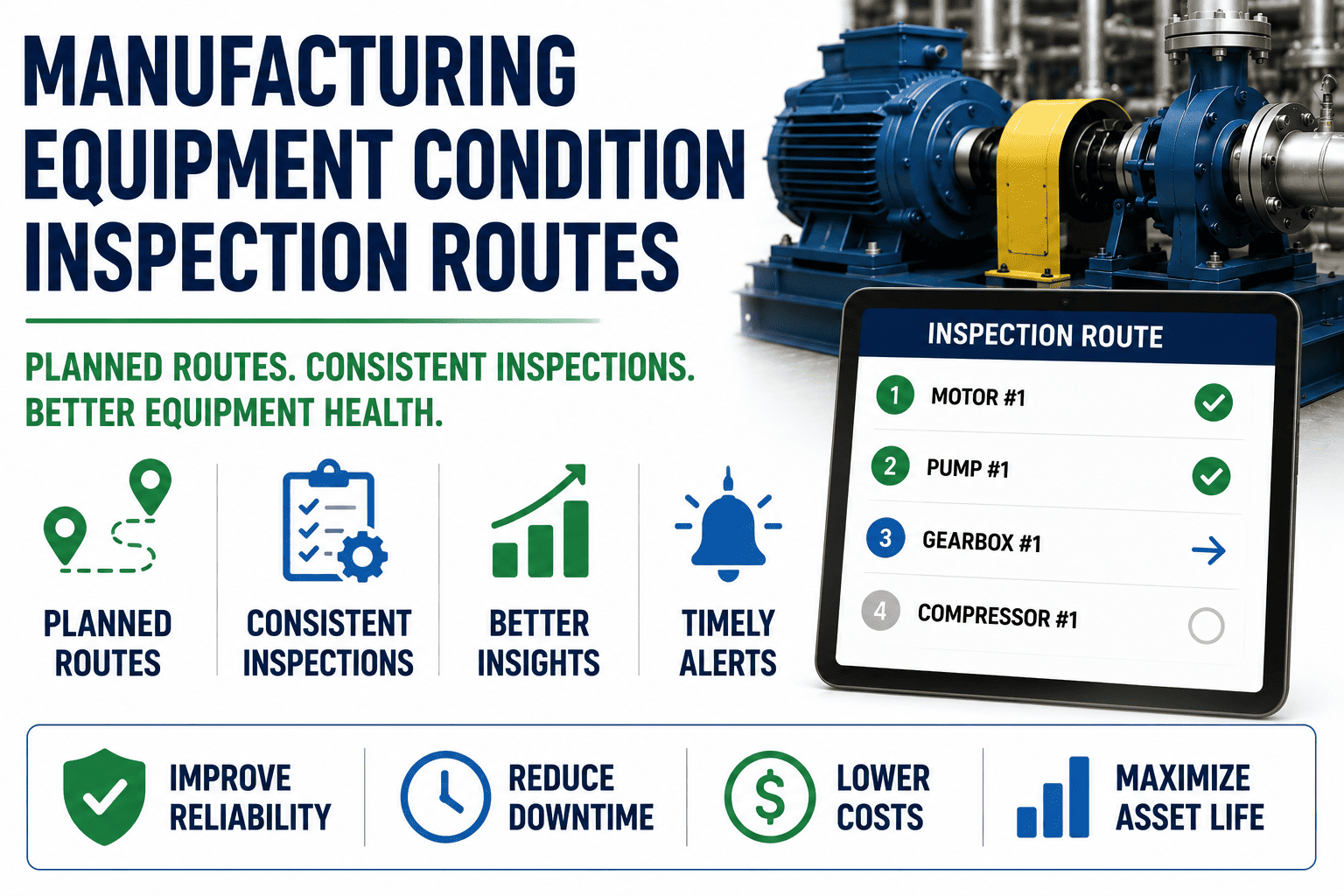
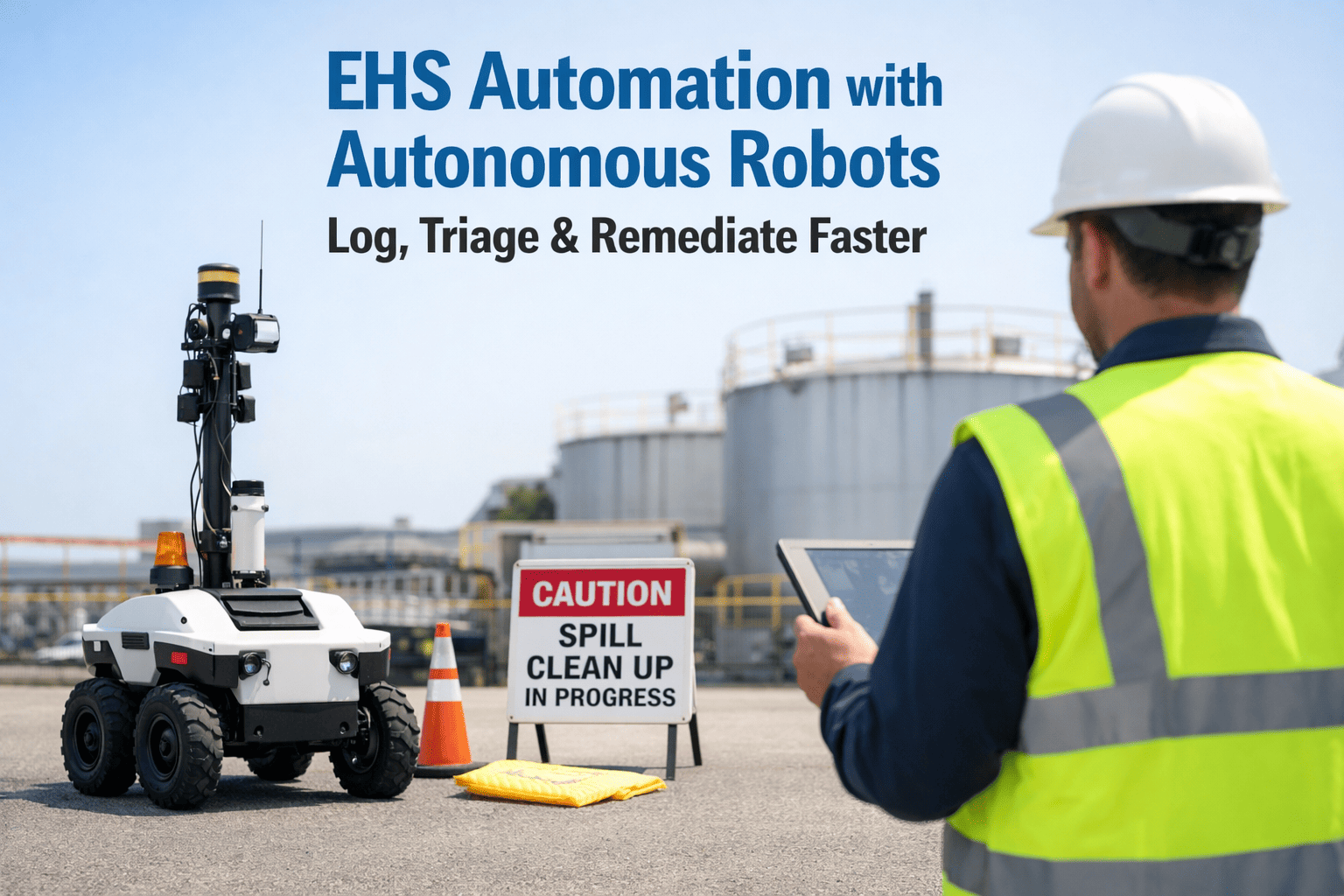
Industrial IoT networks generate thousands of sensor alerts every week — vibration spikes, thermal anomalies, pressure irregularities — but studies show that nearly half never require technician action. These false positives drain maintenance budgets, contribute to alert fatigue, and slow response to real equipment failures. Forward-thinking facilities are solving this with a robotic validation layer: autonomous inspection robots that physically verify each IoT alert before it becomes a dispatch. The robot captures thermal imaging, vibration spectra, acoustic signatures, and visual evidence, then applies configurable thresholds. Validated alerts flow directly into your CMMS as prioritized work orders — sign up for Oxmaint free to automate your alert-to-work-order pipeline. False positives are filtered into analytics — reducing unnecessary technician dispatches by up to 70% while ensuring every confirmed issue gets immediate attention.
Why IoT Alert Fatigue Is Costing Your Maintenance Team Thousands
Alert fatigue is the silent productivity killer in sensor-heavy facilities. When technicians are dispatched to investigate alerts that turn out to be sensor drift, environmental noise, or transient spikes, the cost goes beyond wasted labor. Real issues get deprioritized. Response times slow. Trust in the monitoring system erodes — and teams start ignoring alerts altogether. The root cause is a missing validation step between the sensor alert and the human dispatch. Robotic validation fills that gap with physical, multi-sensor confirmation that no software filter alone can provide.
How Autonomous Robots Validate IoT Sensor Alerts in Real Time
When an IoT sensor triggers an alert, the validation robot receives a mission command within seconds. It autonomously navigates to the flagged asset — avoiding obstacles, taking stairs or ramps where needed — and deploys its multi-sensor payload to independently verify the alert. The robot does not rely on the original IoT data; it captures its own thermal profile, vibration reading, acoustic signature, and high-resolution visual evidence. This independent verification is what separates robotic validation from software-based alert filtering, which only reprocesses the same sensor data that triggered the alert in the first place.
5-Step Playbook to Deploy Robotic Alert Validation at Your Facility
Implementing robotic alert validation is not a rip-and-replace project — it layers on top of your existing IoT infrastructure and CMMS. This playbook walks through each phase, from auditing your current alert noise to scaling validated workflows across your entire operation. Each step feeds the next, creating a self-improving loop where every false positive caught makes the system smarter. Schedule a free demo to see how Oxmaint automates each phase of this playbook.
Pull 90 days of alert history from your IoT platform. Tag every alert by outcome: true issue, false positive, or inconclusive. Rank assets by false-positive volume. The top 10-15 worst offenders become your pilot validation targets — these are where robots will deliver the fastest ROI.
Each alert type needs robot-measurable confirmation criteria calibrated to the specific equipment. A motor overheating alert might require the robot's thermal camera to read within 5 degrees C of the IoT sensor value. A vibration alert might need accelerometer confirmation above 2mm/s deviation from baseline. These thresholds are what eliminate ambiguity and automate the decision.
Build robot inspection routes that reach every pilot asset within 15 minutes of alert trigger. Assign sensor payloads per alert type — thermal camera for heat alerts, accelerometer for vibration, ultrasonic mic for acoustic anomalies, PTZ camera for visual confirmation. Define dwell time, capture resolution, and data format for seamless CMMS ingestion.
This is the integration that turns validation data into maintenance action. Connect the robot fleet API to Oxmaint so that every confirmed alert auto-generates a prioritized work order — with thermal images, vibration spectra, audio clips, and annotated photos attached. False positives route to the analytics dashboard. Inconclusive results trigger automated re-inspection scheduling.
Review validation accuracy reports weekly inside Oxmaint. Track false-positive reduction rate, average time from alert to validated work order, and cumulative dispatch savings. When pilot assets reach 90%+ validation accuracy, expand robot coverage to the next tier of high-alert assets. Each expansion cycle tightens thresholds and improves system intelligence.
Validation Threshold Mapping: How Robot Data Becomes CMMS Action
The core innovation of this playbook is the threshold-to-action map. Every piece of data the robot captures is evaluated against asset-specific rules, and the result triggers a deterministic action inside your CMMS — no manual triage, no judgment calls, no delays. Sign up for Oxmaint to connect robot validation directly to your work order engine.
| Validation Result | Robot Threshold Criteria | Automated Oxmaint Action | Priority |
|---|---|---|---|
| Thermal Match | Robot IR reading within 5 deg C of IoT trigger value | Create work order + attach thermal image + assign to nearest technician | Critical |
| Vibration Match | Robot accelerometer confirms deviation above 2mm/s from baseline | Create work order + attach vibration spectrum + flag bearing/motor inspection | Critical |
| Visual Defect | Robot camera detects leak, corrosion, crack, or physical misalignment | Create work order + attach annotated photo evidence + tag asset for repair | High |
| Acoustic Fault | Ultrasonic signature matches known fault pattern (leak, arcing, bearing wear) | Create work order + attach audio analysis + recommend diagnostic inspection | High |
| All Normal | Every robot reading falls within normal operating range for asset class | Log as false positive + update sensor accuracy analytics + no dispatch | None |
| Partial Match | Some robot readings borderline but below full confirmation threshold | Schedule automated re-inspection in 24 hours + flag for trend monitoring | Watch |
What Sensors Do Inspection Robots Use to Verify Maintenance Alerts
The validation accuracy of a robot depends entirely on its sensor payload. Each sensor type targets specific alert categories, and the best deployments combine all four to cross-validate findings — eliminating the single-point-of-failure problem that plagues IoT sensor networks relying on a single data source.
Reducing Unnecessary Technician Dispatches: Before and After Robotic Validation
The operational contrast between facilities dispatching technicians on every IoT alert versus those using robotic pre-validation is stark. Robot-validated workflows ensure that every dispatch results in productive maintenance action — while false positives are quietly filtered into analytics rather than consuming technician hours.
Proven Results: Dispatch Reduction and Maintenance Efficiency Gains
Facilities that implement robot-validated alert workflows with CMMS integration measure improvements across every maintenance KPI — from dispatch volume and response time to mean time to repair and annual maintenance spend.
Integrating IoT Sensors, Robots, and CMMS Into One Automated Workflow
The full value of robotic alert validation emerges when every system — IoT platform, robot fleet manager, and CMMS — communicates through real-time APIs. This integration table shows how each component connects for end-to-end automation from alert to resolution. Book a demo to see how Oxmaint integrates with your IoT platform and robot fleet.
| System Component | Connection Type | Data Exchanged |
|---|---|---|
| IoT Sensor Network | Real-time webhook | Alert triggers, raw sensor values, asset identifiers, severity tags |
| Robot Fleet Manager | Bidirectional API | Mission dispatch commands, navigation status, sensor payloads, captured media |
| Oxmaint CMMS | Event-driven API | Work order creation, priority assignment, media attachments, resolution tracking |
| Validation Analytics | Batch processing | False-positive rates, sensor accuracy trends, threshold optimization data |
| SCADA / BMS | OPC-UA / Modbus | Equipment baselines, operating setpoints, historical performance data |