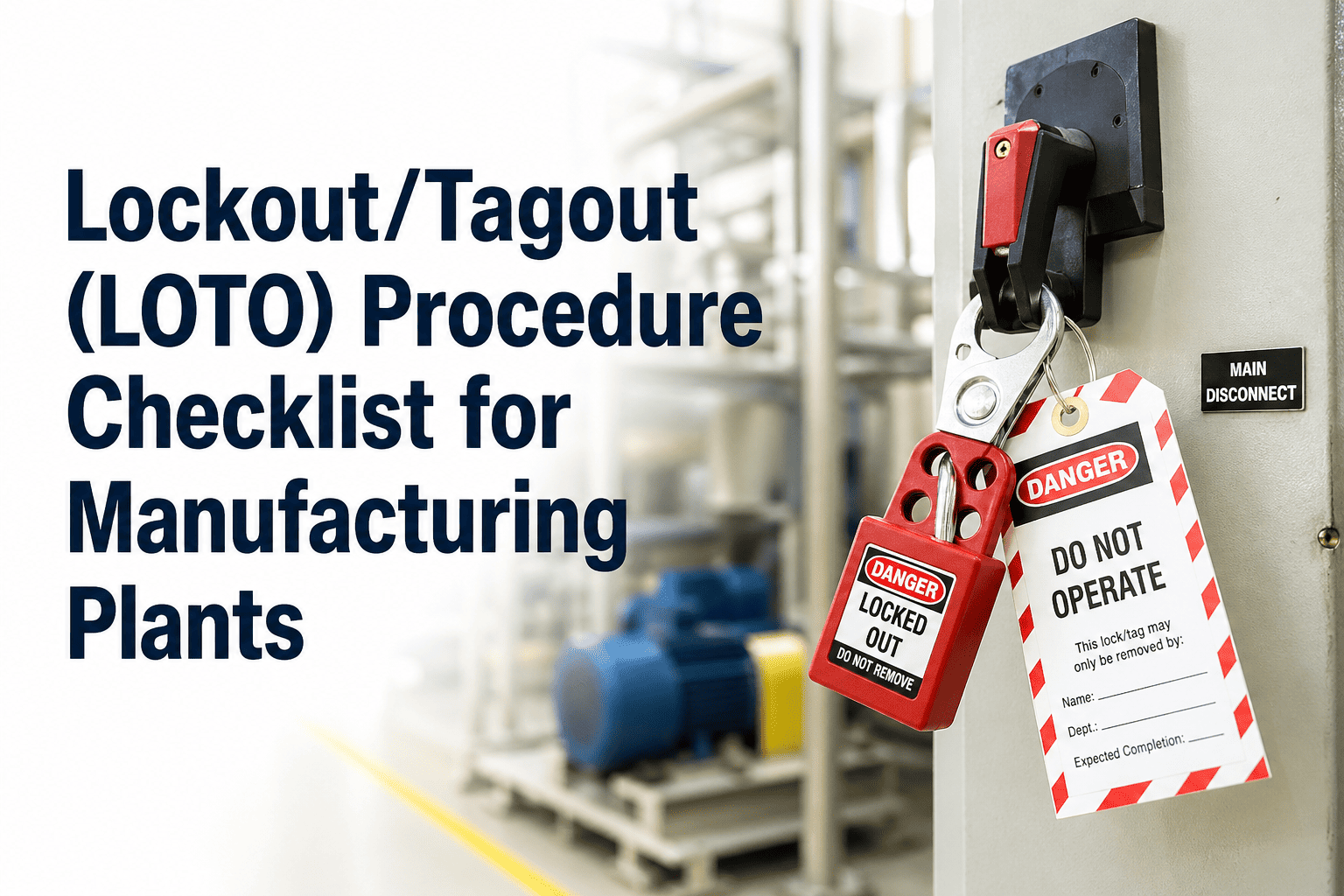
Lockout tagout failures killed 54 workers caught in running equipment during maintenance in a single year and caused nearly 18,000 lost workdays — yet OSHA continues to issue over 2,000 LOTO citations annually because most manufacturing facilities still manage energy control procedures through binder-based checklists, inconsistent training logs, and paper lockout permits that no one can locate during an inspection. Oxmaint's lockout tagout management system digitizes the entire LOTO lifecycle — machine-specific energy control procedures, worker authorization tracking, group lockout coordination, annual inspection records, and real-time compliance dashboards — so your safety team can prove compliance in seconds instead of scrambling through filing cabinets when OSHA arrives.
Lockout Tagout Compliance
Paper LOTO Programs Get People Hurt. Digital Ones Get Audits Passed.
Digitize machine-specific procedures, track every lock placement, automate annual inspections, and maintain audit-ready records for every energy isolation event across your facility.
2,177
OSHA LOTO citations issued in FY 2025
$165K
Max penalty per willful LOTO violation
50,000
Injuries prevented annually by proper LOTO
120
Fatalities prevented annually by proper LOTO
Why LOTO Violations Compound Faster Than Any Other OSHA Standard
Unlike most safety citations where OSHA issues one penalty per violation, lockout tagout citations are assessed per machine and per employee. A facility with 10 machines missing documented procedures and 15 untrained workers can face dozens of individual citations from a single inspection — pushing total penalties into six or seven figures before the inspector leaves the building.
No written procedures
$16,550 per machine
Missing training records
$16,550 per employee
No annual inspections
$16,550 per procedure
Willful / repeat violation
$165,514 per violation
The Seven Hazardous Energy Types Your LOTO Program Must Cover
OSHA 29 CFR 1910.147 requires isolation procedures for every energy source on every machine. Most facilities handle electrical lockout well but leave hydraulic, pneumatic, and gravitational energy undocumented — which is exactly where inspectors find gaps and where injuries happen.
Electrical
Motors, circuits, capacitors, control panels
Breaker lockout, disconnect switch, voltage verification
Mechanical
Flywheels, springs, belts, gears, shafts
Blocking, restraining, dissipation of stored energy
Hydraulic
Presses, lifts, cylinders, accumulators
Valve lockout, pressure bleed, gauge verification
Pneumatic
Air cylinders, compressors, blow-off nozzles
Valve isolation, line bleed, pressure gauge zero check
Chemical
Pipelines, reactors, tanks, process vessels
Valve lockout, line blanking, purging, double-block-and-bleed
Thermal
Steam lines, ovens, furnaces, heated dies
Valve isolation, cool-down verification, temperature monitoring
Gravitational
Elevated platforms, suspended loads, counterweights, press rams
Mechanical blocking, pinning, cribbing — gravity never shuts off
See How Oxmaint Manages All Seven Energy Types Per Machine
Every machine-specific LOTO procedure in Oxmaint documents each energy source, isolation point, lockout device, and verification step — exactly what 29 CFR 1910.147(c)(4) requires. Walk through a live demo configured for your equipment types.
The Six-Step LOTO Procedure — And Where Most Facilities Break It
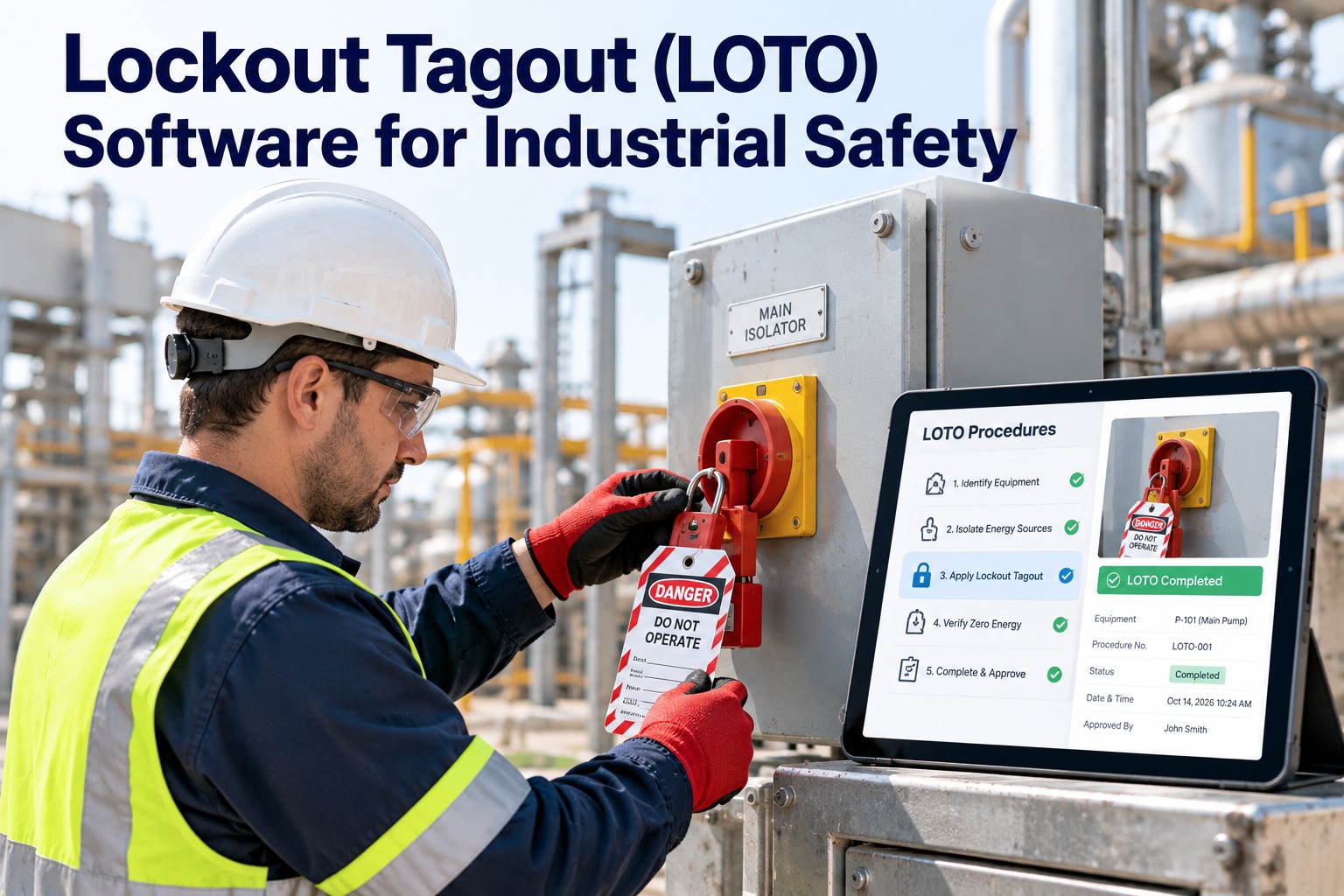
OSHA mandates a specific sequence for applying and removing lockout tagout. The procedure itself is straightforward — but facilities fail because steps are skipped, verification is assumed instead of tested, and the documentation linking each step to a specific machine does not exist. Oxmaint enforces the full sequence digitally.
1
Preparation
Identify all energy sources, types, magnitudes, and the specific isolation devices for the machine. Review the machine-specific procedure before beginning any work.
Common failure: No machine-specific procedure exists — workers rely on memory or a generic checklist.
2
Notification
Notify all affected employees that the machine will be shut down and locked out. Affected employees are those who operate or work near the equipment.
Common failure: Shift change happens mid-lockout and incoming crew is not notified.
3
Shutdown & Isolation
Shut down the machine using normal stopping procedures. Operate each energy-isolating device to physically isolate the machine from every energy source.
Common failure: One of three energy sources on the machine is missed — usually hydraulic or gravitational.
4
Lock & Tag Application
Each authorized employee applies their personal lock and tag to every energy-isolating device. Tags must show the employee's name, date, department, and reason for lockout.
Common failure: Workers share locks, or a supervisor applies one lock on behalf of the entire crew.
5
Stored Energy Verification
Release, restrain, or dissipate all residual or stored energy — then attempt to restart the machine to verify zero energy state. Test with calibrated instruments where applicable.
Common failure: Verification is skipped entirely. Worker assumes the machine is de-energized after flipping the breaker.
6
Perform Service / Maintenance
With all energy isolated, verified, and locked out — work can begin safely. Each lock remains in place until the specific authorized employee who applied it removes it after work completion.
Common failure: Work finishes, but lock removal is not documented — creating gaps in the audit trail.
What OSHA Inspectors Actually Ask For — And What Most Facilities Cannot Produce
An OSHA compliance officer during a LOTO inspection does not ask if you have a safety program. They ask for specific documents, for specific machines, for specific employees — and expect them produced on the spot. Here is the documentation gap that turns routine inspections into citation events.
LOTO Documentation Requirements vs. Typical Facility Gaps
Three Employee Categories OSHA Requires You to Train Differently
A common citation trigger is training all employees the same way. OSHA defines three distinct categories — authorized, affected, and other — and each category requires different training content, different documentation, and different retraining triggers.
Authorized Employee
Locks out or tags out machines to perform servicing or maintenance
Training Must Cover
Recognition of hazardous energy sources
Type and magnitude of energy on assigned machines
Methods and means of energy isolation and control
Purpose and use of energy control procedures
Affected Employee
Operates or works near machines being serviced under LOTO
Training Must Cover
Purpose and use of energy control procedures
Prohibition against restarting locked-out equipment
Recognition of lockout/tagout devices in use
Other Employee
Works in the area but does not operate or service the machine
Training Must Cover
Prohibition against removing locks, tags, or restarting equipment
Awareness of LOTO procedures in their work area
Track Every Employee's LOTO Authorization and Training History
Oxmaint maintains authorization records per employee, per machine, with category classification, training dates, retraining triggers, and expiration alerts — so you never discover a training gap during an inspection.
Frequently Asked Questions
What does OSHA require in a machine-specific LOTO procedure?
Each procedure must document all energy sources, isolation points, lockout devices, and verification steps for that specific machine. Generic procedures covering multiple machines are only permitted when machines share identical energy types, magnitudes, and isolation devices.
Book a demo to see how Oxmaint builds machine-specific procedures.
How often must LOTO procedures be inspected?
OSHA requires an annual periodic inspection of each energy control procedure by an authorized employee other than the one using it. The inspection must be documented with the date, machine identified, employees included, and name of the inspector.
Oxmaint automates inspection scheduling and documentation.
How does Oxmaint handle group lockout situations?
Oxmaint tracks group lockout events with a designated primary authorized employee coordinating the lockout while each crew member's personal lock is individually logged. The system prevents re-energization records until every lock is verified removed.
Schedule a walkthrough of the group lockout workflow.
What triggers LOTO retraining requirements?
Retraining is required when job assignments change, machines or processes are modified, new hazards are introduced, or periodic inspections reveal procedural deviations.
Oxmaint flags retraining triggers automatically and tracks completion per employee.
Can Oxmaint manage LOTO compliance across multiple facilities?
Yes. Machine-specific procedures, employee authorizations, inspection schedules, and compliance dashboards are managed centrally across all sites — giving corporate safety teams real-time visibility into LOTO compliance status at every location.
Talk to our team about multi-site deployment.
Stop Risking $16,550 Per Machine, Per Employee, Per Violation
Oxmaint gives safety and maintenance teams digital machine-specific LOTO procedures, automated annual inspection scheduling, employee authorization tracking, group lockout coordination, and audit-ready documentation — so your next OSHA inspection ends with a handshake instead of a citation. See the full platform in 30 minutes.


-audit-checklist-for-manufacturing-plants.png)