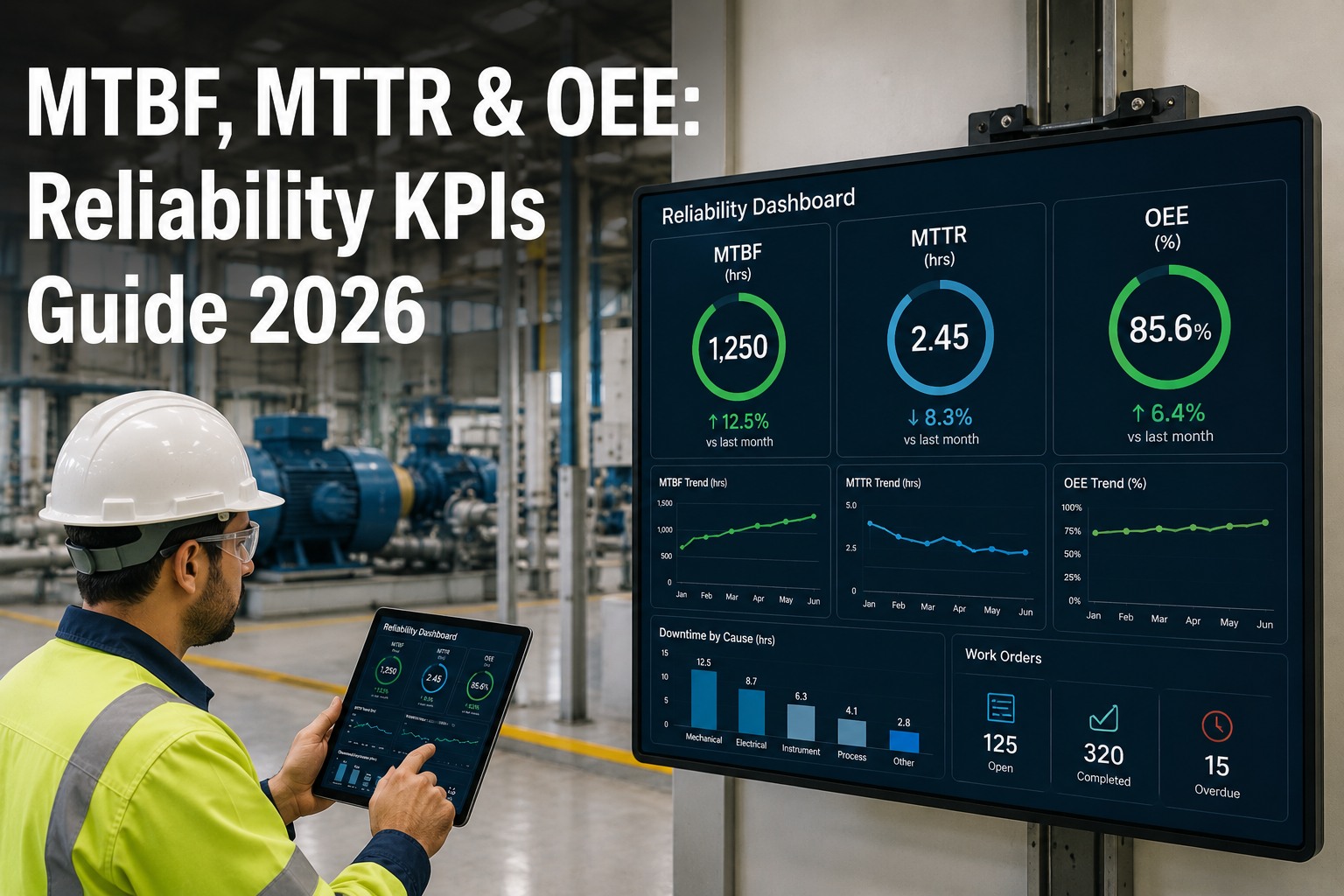
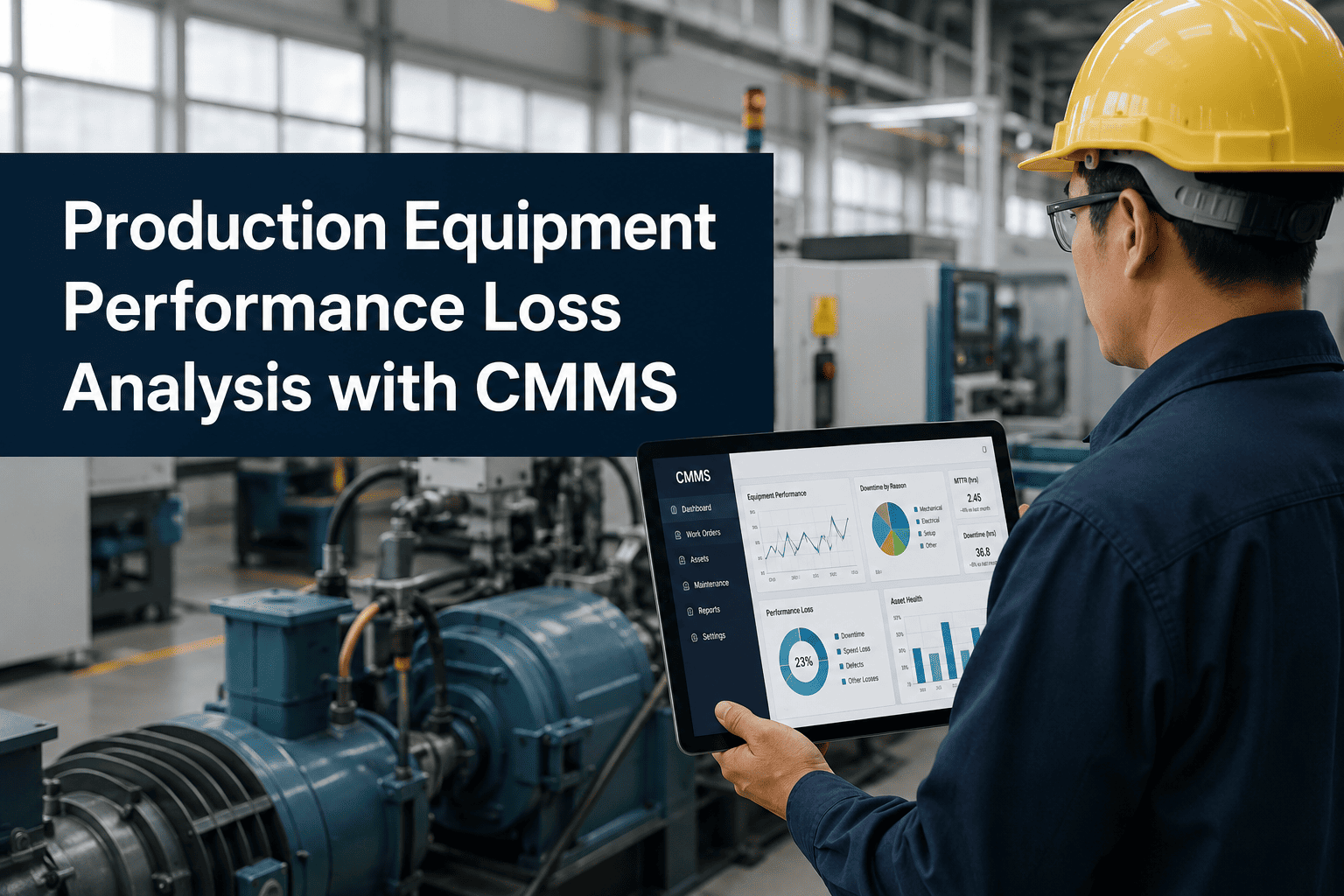
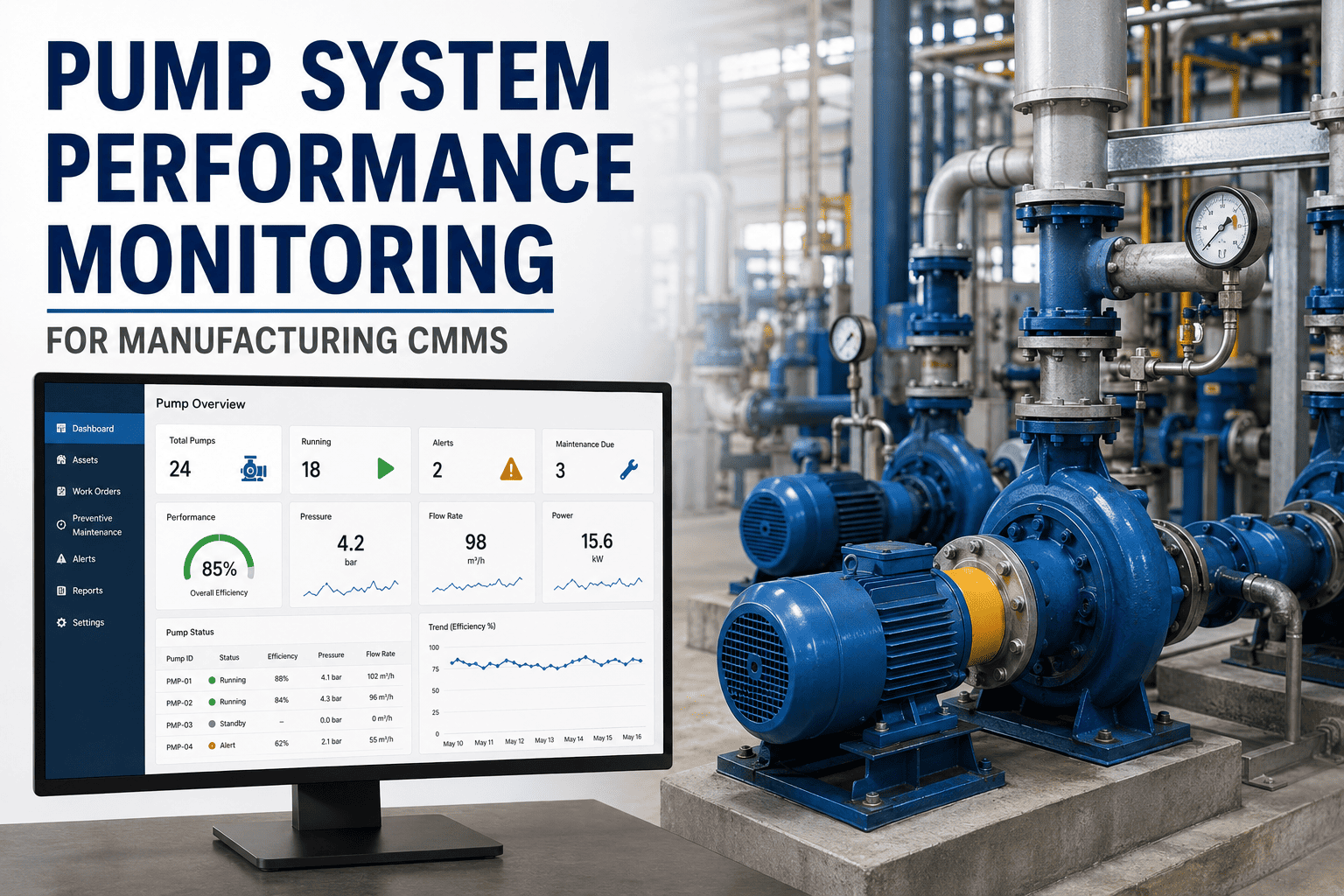
Every manufacturing plant has data—work orders, downtime logs, repair histories—but very few turn that data into decisions that actually improve reliability and reduce cost. The difference between plants that struggle with constant breakdowns and those that run like clockwork comes down to which maintenance KPIs they track and how they act on them. The right performance indicators reveal where your equipment reliability stands today, where the biggest losses hide, and exactly which improvements will deliver the fastest return. Schedule a free KPI assessment with our maintenance experts to pinpoint which metrics will deliver the fastest ROI at your facility.
What Makes a Maintenance KPI Worth Tracking
Not every number on a spreadsheet qualifies as a useful KPI. Effective maintenance metrics must connect directly to business outcomes—production throughput, cost reduction, or asset lifespan extension. The most successful maintenance teams limit their dashboard to 5-7 carefully chosen indicators that drive weekly action rather than monthly reports that nobody reads.
$260K/hr
Average cost of unplanned downtime in manufacturing
67%
Of manufacturers actively implementing preventive maintenance programs
10-25%
MTTR reduction achievable within 60 days through targeted process fixes
A maintenance KPI qualifies as "worth tracking" when it passes three tests: it can be measured consistently with your current systems, it reveals an actionable insight your team can respond to within a week, and it ties directly to a financial or operational outcome that leadership cares about. If a metric fails any of these tests, it belongs on a secondary report—not your primary dashboard.
Still relying on spreadsheets for KPI tracking? Oxmaint CMMS calculates your critical maintenance metrics automatically from every closed work order—saving 8-12 hours per week on manual reporting.
OEE: The Single Metric That Tells the Full Production Story
Overall Equipment Effectiveness is the most comprehensive manufacturing KPI because it combines three dimensions—availability, performance, and quality—into one percentage that reveals true productive capacity. A machine might show 95% uptime on a basic availability report, but when you factor in speed losses and defect rates, the real productive output could be 30% lower than expected.
OEE Formula
Availability x Performance x Quality = OEE
Availability
Actual run time vs. planned production time. Captures downtime from breakdowns, changeovers, and material shortages.
Target: 90%+
Performance
Actual throughput vs. maximum possible speed. Captures slow cycles, minor stops, and reduced feed rates.
Target: 95%+
Quality
Good units produced vs. total units started. Captures scrap, rework, and defective output during startup.
Target: 99%+
World-Class OEE: 85%+
Industry Average: ~60%
The gap between 60% average OEE and 85% world-class represents enormous hidden capacity. For a plant running three shifts, closing even half that gap can be equivalent to adding an entire production line—without any capital investment in new equipment. Maintenance teams directly influence the availability component of OEE, making it the clearest bridge between maintenance activity and production results.
Reliability Metrics: MTBF and MTTR Explained
If OEE tells you how your production system performs overall, MTBF and MTTR explain why. Mean Time Between Failures measures how long equipment runs before it breaks down, while Mean Time to Repair measures how quickly your team gets it running again. Together, these two KPIs determine your equipment availability—and they point directly to different improvement strategies.
Mean Time Between Failures
MTBF = Total Operating Time / Number of Failures
A pump runs 690 hours and fails 3 times: MTBF = 230 hours
What it tells you: How reliable your equipment actually is. A declining MTBF signals that preventive maintenance needs adjustment—either more frequent PM tasks or different inspection methods are required.
World-class: 300+ days
Average: 120-200 days
Poor: <120 days
Mean Time to Repair
MTTR = Total Repair Time / Number of Repairs
10 hours total repair across 3 failures: MTTR = 3.3 hours
What it tells you: How fast your team recovers from failures. High MTTR usually points to spare parts availability issues, insufficient technician training, or poor diagnostic procedures—not lazy workers.
World-class: <2 hours
Average: 2-4 hours
Poor: 6+ hours
The relationship between these two metrics feeds directly into equipment availability: Availability = MTBF / (MTBF + MTTR). This means a pump with 230-hour MTBF and 3.3-hour MTTR delivers 98.6% availability. Improving either metric raises availability, but targeting the one with more room for improvement gives faster results.
See your MTBF and MTTR calculated in real-time. Oxmaint automatically tracks failure timestamps, repair durations, and equipment uptime from every work order your team closes.
Planning Metrics That Shift You From Reactive to Proactive
Reliability metrics tell you how your equipment behaves. Planning metrics tell you how your maintenance organization behaves. The difference between a reactive fire-fighting culture and a proactive reliability-focused team shows up clearly in two KPIs: Planned Maintenance Percentage and Schedule Compliance.
Planned Maintenance Percentage (PMP)
(Planned Hours / Total Maintenance Hours) x 100
Reactive <40%
Developing 40-70%
Proactive 70-90%+
Reveals the ratio of planned preventive work versus emergency repairs. Plants below 50% PMP spend most of their time reacting to breakdowns instead of preventing them. The industry benchmark for a mature maintenance program is 80%+ planned work.
Schedule Compliance
(Completed On-Time WOs / Total Scheduled WOs) x 100
Weak <60%
Average 60-80%
Strong 80-95%+
Measures whether planned maintenance actually gets done when scheduled. Low compliance often signals too many emergency interruptions, poor planning, or understaffing. Consistent 90%+ compliance indicates a maintenance team that controls its own workload.
Work Order Backlog
Total Pending WO Hours / Available Weekly Labor Hours
Healthy 2-4 wks
Monitor 4-6 wks
Critical 6+ wks
Tracks pending maintenance work relative to available team capacity. A backlog of 2-4 weeks is considered healthy—it means your team has enough work to stay productive without being overwhelmed. A growing backlog signals the need for additional resources or process improvements.
Financial KPIs: Connecting Maintenance to the Bottom Line
Maintenance teams that speak the language of finance earn bigger budgets and stronger executive support. These cost-focused KPIs translate wrench-turning into dollars, making it easy for leadership to understand why investing in maintenance is investing in profitability. Sign up free to generate automated maintenance cost reports that translate equipment performance into financial metrics your CFO will actually use.
| KPI |
Formula |
Why It Matters |
Benchmark |
| Maintenance Cost per Unit |
Total Maintenance Cost / Units Produced |
Directly ties maintenance spending to production output—shows cost efficiency per product |
Industry-specific; track trend |
| Maintenance Cost as % of RAV |
(Annual Maintenance Cost / Replacement Asset Value) x 100 |
Benchmarks your maintenance investment against the total value of assets being maintained |
2-3% (world-class) to 6%+ (poor) |
| Avoided Cost |
Assumed Repair + Production Loss - PM Cost |
Quantifies the savings from preventive maintenance by comparing against worst-case breakdown scenarios |
3:1 to 5:1 PM-to-breakdown ratio |
| Emergency Maintenance Ratio |
(Emergency WOs / Total WOs) x 100 |
High emergency ratios mean higher costs per repair—emergency work typically costs 3-5x more than planned work |
<10% (world-class) |
Benchmark Targets Across Manufacturing Sectors
KPI targets should reflect your industry's specific equipment complexity, regulatory requirements, and production demands. An automotive stamping plant operates under very different constraints than a food processing facility, and their maintenance KPI targets should reflect those differences.
| Sector |
OEE Target |
MTBF |
MTTR |
PMP |
| Automotive Assembly |
85-90% |
400+ hrs |
<1.5 hrs |
90%+ |
| Food & Beverage |
75-85% |
200+ hrs |
<3 hrs |
85%+ |
| Pharmaceutical |
70-80% |
300+ hrs |
<2 hrs |
90%+ |
| Steel & Heavy Metals |
75-85% |
350+ hrs |
<4 hrs |
80%+ |
| Chemical Processing |
80-90% |
500+ hrs |
<3 hrs |
85%+ |
| Packaging & Consumer Goods |
70-80% |
150+ hrs |
<2 hrs |
85%+ |
Wondering how your plant stacks up? Our team will benchmark your current maintenance KPIs against industry standards and build a custom improvement roadmap tailored to your operation.
The 5 Most Common KPI Tracking Mistakes
Even well-intentioned maintenance teams sabotage their own KPI programs through avoidable errors. Recognizing these patterns early prevents months of wasted effort and ensures your metrics actually drive improvement rather than just generating paperwork.
01
Measuring Everything, Improving Nothing
Tracking 20+ metrics creates dashboard overload where no single KPI gets enough attention to drive action. Start with three core metrics—MTBF, MTTR, and Planned Maintenance Percentage—and add others only when these are consistently reviewed and acted upon in weekly meetings.
02
Garbage Data from Incomplete Work Orders
KPIs are only as reliable as the data feeding them. If technicians skip failure codes, estimate repair times, or delay closing work orders, your MTBF and MTTR calculations become fiction. Require timestamps, failure codes, and labor hours on every work order before it can be closed.
03
Comparing Pumps to Conveyors
Benchmarking MTBF across fundamentally different equipment types produces meaningless numbers. A centrifugal pump and a packaging line have completely different reliability profiles. Benchmark similar assets against each other and compare your facility performance against sector-specific standards.
04
Using Metrics as a Blame Tool
When high MTTR gets a technician reprimanded instead of triggering an investigation into spare parts availability or training gaps, data quality collapses overnight. Technicians start gaming numbers to avoid blame, and your KPIs become worse than useless.
05
Ignoring Leading Indicators
MTBF and OEE are lagging indicators—they report what already happened. Balance them with leading indicators like PM compliance rate and schedule adherence that predict future equipment performance before breakdowns occur.
Building a KPI-Driven Maintenance Culture in 8 Weeks
The most common reason KPI programs fail is not the choice of metrics—it is the lack of a structured rollout plan that builds team buy-in and establishes review habits. This proven 8-week approach delivers measurable improvements while creating sustainable data-driven practices. Sign up now and configure your KPI dashboard in under 15 minutes—start capturing baseline data from week one.
Phase 1
Week 1-2
Foundation
Select 3-5 KPIs aligned with top business priorities
Calculate baselines from last 90 days of work order history
Configure CMMS dashboard with targets and alert thresholds
Phase 2
Week 3-4
Data Quality
Train all technicians on required work order fields and failure codes
Standardize timestamps: reported, work started, completed
Launch first weekly KPI review meeting with maintenance team
Phase 3
Week 5-6
Quick Wins
Target top 3 worst-performing assets by MTBF for focused PM improvement
Pre-stage spare parts kits for highest-frequency repairs to cut MTTR
Create standard repair procedures for the 10 most common failure modes
Phase 4
Week 7-8
Scale & Report
Recalculate KPIs and compare against week 1-2 baselines
Present improvement results to leadership with clear ROI data
Expand KPI tracking to additional asset groups and production lines
Turn Maintenance Data Into Business Results
Your work orders already contain the data needed to calculate every KPI on this page. Oxmaint CMMS transforms that raw data into real-time dashboards with automated MTBF, MTTR, OEE, and PMP calculations—giving your maintenance team the visibility to make faster, smarter decisions every day without spending hours on manual reporting.
Frequently Asked Questions
Which maintenance KPIs should a manufacturing plant start tracking first?
Start with three core KPIs that deliver the highest insight-to-effort ratio: MTBF (equipment reliability), MTTR (repair speed), and Planned Maintenance Percentage (proactive vs. reactive balance). These three metrics cover equipment health, team efficiency, and organizational maturity. Once your data quality is consistent and you are reviewing these weekly, layer in OEE and schedule compliance for a fuller picture.
Sign up free to auto-track MTBF, MTTR, and PMP from your very first work order.
What OEE score should my plant target?
An OEE of 85% is considered world-class, but most manufacturing facilities operate around 60%. The exact target matters less than the trend direction. Focus on consistent monthly improvement rather than chasing a specific number. Even a 5-percentage-point OEE gain can unlock significant production capacity equivalent to adding shifts—without any capital investment in new equipment.
How does a CMMS help track maintenance KPIs?
A modern CMMS like Oxmaint calculates KPIs automatically from your work order data in real-time. When technicians close work orders with accurate timestamps and failure codes, the system generates live dashboard metrics—including MTBF, MTTR, OEE, PMP, and schedule compliance—without any manual spreadsheet work. This eliminates 8-12 hours per week of reporting effort while delivering fresher, more accurate data.
Book a live demo to see your maintenance data transformed into real-time KPI dashboards.
How often should we review maintenance KPIs?
Establish three review cadences: daily monitoring of live dashboards to catch anomalies early, weekly team reviews to discuss trends and assign specific action items, and monthly management reviews focused on strategic resource allocation and capital planning. The weekly review is the most critical—this is where KPI data converts into improvement actions that actually get executed.
What is the fastest way to reduce MTTR at my facility?
Target three areas simultaneously for fastest results: pre-stage spare parts kits for your most failure-prone assets, create standardized diagnostic procedures for your top 10 failure modes, and invest in cross-training so more technicians can handle common repairs. Many teams achieve a 10-25% MTTR reduction within 60 days through these targeted process and parts availability improvements—well before any technology investment is needed.