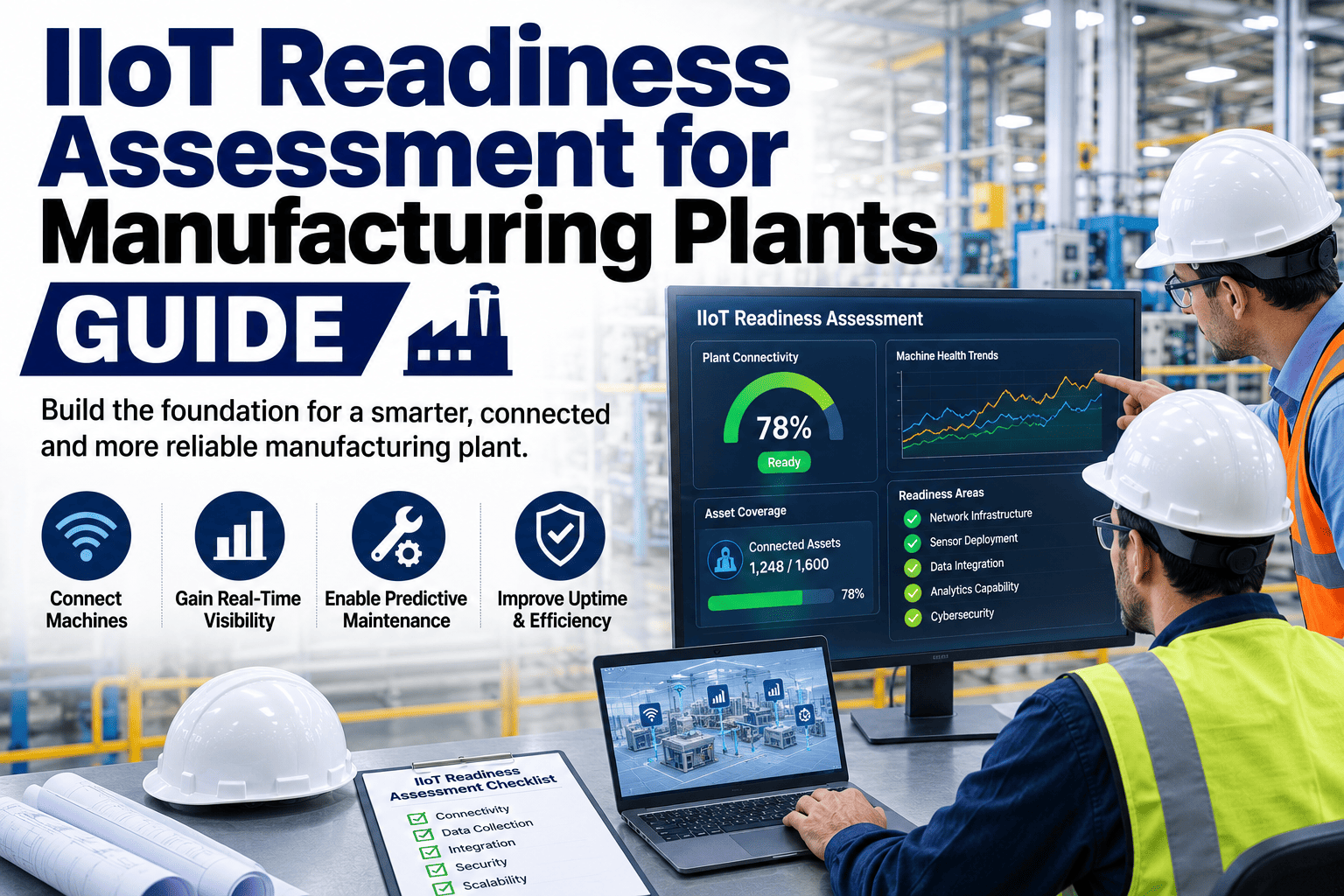
Smart manufacturing transformation requires more than purchasing IoT sensors and installing dashboards — it demands organizational readiness across infrastructure, data systems, workforce skills, and operational processes. Manufacturers investing millions in Industry 4.0 technologies without assessing foundational capabilities often deploy sensors that cannot communicate with legacy equipment, generate data that no one analyzes, and create digital workflows that operators cannot execute. A comprehensive smart manufacturing readiness assessment evaluates current-state capabilities across connectivity infrastructure, CMMS maturity, data collection systems, analytics capabilities, and workforce digital literacy before technology investments are made. AI-driven platforms like Oxmaint provide self-assessment tools that score readiness across 10 critical dimensions, identify capability gaps that must be closed before smart manufacturing deployment, and generate prioritized roadmaps that sequence technology investments for maximum ROI. Book a free demo to see smart manufacturing readiness assessment and roadmap generation in action.
Assessment · Smart Manufacturing · Industry 4.0 · 2026
Smart Manufacturing Readiness Assessment Checklist
A comprehensive self-assessment framework evaluating your facility's IoT infrastructure, data maturity, CMMS capability, workforce readiness, and connectivity foundation — scoring readiness across 10 dimensions and identifying gaps that must be closed before Industry 4.0 technology investments deliver ROI.
10
critical readiness dimensions manufacturers must assess before smart manufacturing investments
70%
of smart manufacturing projects fail due to inadequate infrastructure and workforce readiness
3X
higher ROI when readiness gaps are closed systematically before technology deployment
Zero
wasted technology investment when readiness assessment guides deployment sequencing
The 10 Dimensions of Smart Manufacturing Readiness
Smart manufacturing readiness is not binary — facilities exist on a maturity spectrum from manual paper-based operations to fully autonomous production systems. This assessment framework evaluates 10 critical dimensions that determine technology deployment success: network connectivity, equipment instrumentation, data collection infrastructure, CMMS maturity, analytics capability, integration architecture, cybersecurity posture, workforce digital skills, process standardization, and change management readiness. Each dimension is scored independently, revealing specific capability gaps that must be addressed before advanced technologies can deliver value.
01
Network Connectivity
Industrial network coverage, bandwidth capacity, wireless infrastructure, and edge computing capability supporting real-time data transmission.
02
Equipment Instrumentation
Sensor deployment, PLC connectivity, machine data availability, and equipment communication protocol standardization across production assets.
03
Data Collection Systems
Automated data capture, manual data entry elimination, real-time data availability, and data quality validation mechanisms in place.
04
CMMS Maturity
Preventive maintenance scheduling, work order completion tracking, asset hierarchy structure, and spare parts inventory management digitization level.
05
Analytics Capability
Descriptive reporting, predictive analytics deployment, machine learning model usage, and advanced optimization algorithm implementation status.
06
Integration Architecture
ERP-CMMS integration, MES connectivity, data warehouse infrastructure, and API-based system interoperability across enterprise platforms.
07
Cybersecurity Posture
Network segmentation, access controls, intrusion detection systems, and operational technology cybersecurity protocols protecting industrial systems.
08
Workforce Digital Skills
Operator digital literacy, technician data analysis capability, engineer programming skills, and management dashboard interpretation competency.
09
Process Standardization
Standard operating procedures documentation, process variation reduction, workflow consistency across shifts, and procedure adherence measurement.
10
Change Management
Leadership digital transformation commitment, organizational change capability, technology adoption resistance management, and continuous improvement culture.
Dimension 1: Network Connectivity Readiness Assessment
Smart manufacturing requires robust network infrastructure connecting sensors, PLCs, edge devices, and enterprise systems in real time. Legacy facilities often lack wireless coverage in production areas, operate on insufficient bandwidth, and have no redundancy protecting against network failures. This assessment evaluates whether your network infrastructure can support real-time data transmission, edge computing workloads, and remote monitoring without degrading production control system performance.
Dimension 2: Equipment Instrumentation Readiness Assessment
Smart manufacturing requires machine-level data — temperature, vibration, pressure, speed, cycle time, and operational status transmitted continuously from production equipment. Legacy assets often lack modern communication protocols, operate without sensors, and provide no digital interfaces for data extraction. This assessment determines whether your equipment can generate the operational data required for predictive maintenance, real-time optimization, and autonomous production control.
Assess Your Smart Manufacturing Readiness and Generate Your Roadmap
Oxmaint's readiness assessment tool evaluates all 10 dimensions automatically, scores your current maturity level per dimension, identifies critical gaps blocking smart manufacturing deployment, and generates a prioritized technology roadmap sequencing investments for maximum ROI.
Dimension 3: CMMS Maturity Readiness Assessment
Computerized Maintenance Management Systems provide the operational foundation for smart manufacturing — tracking asset hierarchies, scheduling preventive maintenance, managing work orders, and maintaining spare parts inventory digitally. Facilities still using spreadsheets, paper work orders, and manual PM scheduling lack the data infrastructure required for predictive maintenance algorithms and automated workflow optimization. This assessment evaluates whether your CMMS is mature enough to support advanced maintenance strategies and AI-driven optimization. See how Oxmaint accelerates CMMS maturity from basic to Industry 4.0 ready.
Dimensions 4-10: Comprehensive Readiness Evaluation
The remaining seven dimensions evaluate data analytics capability, system integration maturity, cybersecurity readiness, workforce digital skills, process standardization, and organizational change management capability. Each dimension requires honest self-assessment against defined maturity levels. Facilities scoring below 6 in any dimension face significant implementation risk — technology deployments will fail without foundational capability improvements. Oxmaint's assessment framework guides manufacturers through all 10 dimensions, calculates composite readiness scores, and prioritizes capability-building initiatives before technology investments are made.
Dimension 4
Analytics Capability
Evaluate whether your organization can generate descriptive reports from operational data, build predictive models forecasting equipment failures, and deploy prescriptive optimization algorithms recommending maintenance actions automatically.
Target Score: 7+ for Smart Manufacturing
Dimension 5
Integration Architecture
Assess whether your ERP, CMMS, MES, and SCADA systems exchange data automatically via APIs, maintain synchronized master data across platforms, and provide unified visibility without manual data transfer or duplicate entry.
Target Score: 7+ for Smart Manufacturing
Dimension 6
Cybersecurity Posture
Determine whether operational technology networks are segmented from corporate IT, access controls restrict unauthorized system modifications, intrusion detection monitors industrial protocols, and incident response procedures protect production uptime.
Target Score: 8+ for Smart Manufacturing
Dimension 7
Workforce Digital Skills
Measure whether operators can interpret digital dashboards and respond to automated alerts, technicians can troubleshoot networked systems and analyze trend data, engineers can configure analytics models, and managers can make data-driven decisions.
Target Score: 6+ for Smart Manufacturing
Dimension 8
Process Standardization
Verify whether standard operating procedures are documented digitally, process variation is measured and minimized, workflows are consistent across shifts and facilities, and procedure adherence is tracked automatically rather than assumed.
Target Score: 7+ for Smart Manufacturing
Dimension 9
Change Management Readiness
Evaluate whether leadership visibly champions digital transformation, organizational culture embraces technology adoption, change resistance is managed proactively, and continuous improvement mindset is embedded across all levels.
Target Score: 8+ for Smart Manufacturing
Interpreting Your Smart Manufacturing Readiness Score
After completing all 10 dimension assessments, calculate your composite readiness score and identify priority improvement areas. Facilities scoring below 50 out of 100 lack foundational infrastructure and should focus on basic digitization before pursuing advanced technologies. Scores between 50-70 indicate partial readiness — specific capability gaps must be closed before full smart manufacturing deployment. Scores above 70 demonstrate strong readiness for Industry 4.0 investments with high probability of successful implementation and ROI achievement.
Status: Not Ready for Smart Manufacturing
Recommended Actions: Deploy basic CMMS, digitize PM schedules, install network infrastructure, train workforce on digital tools, standardize maintenance procedures before considering IoT sensors or predictive analytics.
Estimated Timeline to Readiness: 18-24 Months
Status: Foundational Capabilities Developing
Recommended Actions: Complete CMMS implementation, instrument critical equipment with sensors, expand network coverage, develop analytics capability, begin ERP-CMMS integration before deploying autonomous systems.
Estimated Timeline to Readiness: 12-18 Months
Status: Selective Deployment Possible
Recommended Actions: Address specific dimension gaps scoring below 6, pilot predictive maintenance on instrumented assets, expand workforce training, strengthen cybersecurity before full-scale deployment across all production areas.
Estimated Timeline to Full Readiness: 6-12 Months
Status: Ready for Advanced Technology Deployment
Recommended Actions: Deploy AI-driven predictive maintenance, implement autonomous optimization algorithms, expand real-time production control, integrate supply chain systems, pursue autonomous operations where appropriate.
Deployment Timeline: Immediate to 6 Months
Building Your Smart Manufacturing Roadmap
Readiness assessment identifies where you are today — the roadmap defines how to reach Industry 4.0 maturity systematically. Technology investments must be sequenced correctly — network infrastructure before sensors, sensors before analytics, process standardization before automation. Facilities attempting to skip foundational steps waste millions on technologies that cannot deliver value without supporting capabilities in place. Oxmaint generates prioritized roadmaps automatically based on your assessment scores, sequencing capability-building initiatives and technology deployments for maximum ROI with minimum implementation risk.
Deploy industrial network infrastructure with wireless coverage in production areas
Implement CMMS with complete asset hierarchy and digital PM scheduling
Standardize maintenance procedures and digitize work order workflows
Train operators and technicians on digital tools and dashboard interpretation
Establish cybersecurity baseline with network segmentation and access controls
Instrument critical equipment with temperature, vibration, and operational sensors
Deploy edge computing infrastructure for local data processing and analysis
Integrate CMMS with ERP for synchronized master data and automated procurement
Implement data governance framework defining ownership, quality, and retention policies
Build analytics capability with descriptive reporting and trend visualization dashboards
Deploy predictive maintenance models forecasting equipment failures from sensor data
Implement automated work order generation triggered by anomaly detection algorithms
Expand workforce training to include data analysis and model interpretation skills
Optimize maintenance schedules using AI-driven prescriptive recommendations
Establish continuous improvement process for model accuracy and ROI measurement
Deploy autonomous production control systems with self-optimizing parameters
Implement closed-loop maintenance where AI schedules and dispatches work automatically
Integrate supply chain systems for automated material replenishment and JIT delivery
Expand to digital twin modeling for virtual commissioning and scenario simulation
Achieve Industry 4.0 maturity with human-machine collaboration across all operations
3X
higher ROI when smart manufacturing investments are sequenced based on readiness assessment
70%
reduction in implementation risk when foundational gaps are closed before technology deployment
Zero
wasted investment on technologies your organization is not ready to utilize effectively
Deploy Smart Manufacturing with Confidence Based on Proven Readiness
Oxmaint eliminates smart manufacturing deployment risk by assessing your readiness across all 10 critical dimensions, identifying gaps that must be closed before technology investments, generating prioritized roadmaps that sequence capability-building and technology deployment correctly, and tracking progress automatically as your organization advances from paper-based operations to autonomous Industry 4.0 maturity.
Frequently Asked Questions
What are the 10 dimensions of smart manufacturing readiness?
The 10 dimensions are network connectivity infrastructure, equipment instrumentation and sensor deployment, data collection systems maturity, CMMS capability level, analytics and AI competency, system integration architecture, cybersecurity posture, workforce digital skills, process standardization degree, and organizational change management readiness. Each dimension is scored 0-10 independently.
Complete your readiness assessment with Oxmaint's self-evaluation tool.
Why do 70% of smart manufacturing projects fail to deliver expected ROI?
Most failures result from deploying advanced technologies before foundational capabilities exist — installing sensors on equipment without network connectivity, implementing predictive models without quality data, deploying automation without standardized processes, or purchasing AI platforms when workforce lacks skills to interpret recommendations. Readiness assessment prevents these failures by identifying gaps before investments are made.
What minimum readiness score is required before deploying predictive maintenance?
Predictive maintenance requires scores of 7+ in equipment instrumentation, 7+ in CMMS maturity, 6+ in analytics capability, and 6+ in workforce digital skills. Lower scores indicate missing foundational capabilities — attempting predictive deployment without these prerequisites results in model failure, poor adoption, and wasted investment.
Book a demo to see readiness-based deployment planning.
How long does it take to advance from paper-based to smart manufacturing ready?
Timeline depends on starting maturity level and investment pace. Facilities scoring 0-30 typically require 18-24 months building foundational capabilities before smart manufacturing deployment. Those scoring 31-50 need 12-18 months addressing infrastructure and workforce gaps. Facilities scoring 51-70 can achieve full readiness in 6-12 months by closing specific dimension weaknesses identified in assessment.
Can readiness assessment be completed for multi-site manufacturing operations?
Yes, readiness assessment should be performed independently per facility because infrastructure maturity, workforce skills, and process standardization vary significantly across sites. Oxmaint enables multi-site assessment with facility-specific scores, comparative benchmarking across locations, and prioritized roadmaps tailored to each site's readiness level and strategic importance.