OSHA cited over 14,600 violations across its top ten most-cited standards in fiscal year 2024 — and manufacturing plants consistently rank among the most penalized workplaces, with the manufacturing sector alone accumulating 937 forklift-related citations and $2.7 million in penalties in a single category. With serious violations now carrying fines up to $16,550 each and willful or repeated offences reaching $165,514 per instance, the cost of a single failed inspection can exceed what most plants spend on their entire annual safety programme. This OSHA-aligned manufacturing plant safety checklist covers the seven compliance areas inspectors examine most frequently — machine guarding, lockout/tagout, hazard communication, fall protection, electrical safety, respiratory protection and emergency action — with specific inspection items, responsible roles and documentation requirements your team can start running digitally today.
Safety & Compliance · Manufacturing · OSHA Checklist
Manufacturing Plant Safety Checklist for OSHA Compliance
Seven critical compliance areas covering machine guarding, LOTO, HazCom, fall protection, electrical safety, respiratory protection and emergency action planning — structured for inspection readiness every shift.
$16,550
Max fine per serious violation (2025)
$165,514
Max fine per willful/repeat violation
14,617
Total top-10 OSHA citations in FY 2024
OSHA Top Cited Standards
Where Manufacturing Plants Get Cited Most
OSHA's top-cited standards have remained remarkably consistent for over a decade — the same violations appear year after year because the same gaps persist. The seven areas below represent the highest-frequency citation categories that apply directly to manufacturing operations. Each area maps to a specific OSHA standard with defined requirements that inspectors verify during walkthroughs.
1
HazCom (1910.1200)
2,888 citations in FY 2024. Most-cited general industry standard — SDS availability, container labelling and worker training on chemical hazards.
Critical
2
LOTO (1910.147)
Lockout/tagout rose to 5th overall in FY 2024 with a 24% increase in citations. 190 hazardous energy deaths in 2023 — amputations, electrocutions, crush injuries.
Critical
3
Machine Guarding (1910.212)
Unguarded moving parts cause amputations that trigger immediate OSHA investigations. Manufacturing sees the largest number of machine guarding citations by far.
High
4
Respiratory Protection (1910.134)
Returned to 4th overall in FY 2024. Medical evaluations, fit testing and training violations dominate — common in welding, grinding and chemical handling areas.
High
5
Fall Protection (1910.28 / 1926.501)
Falls remain OSHA's number one cited standard for the 15th consecutive year. Walking-working surfaces and elevated platforms in manufacturing are frequent targets.
High
6
Electrical (1910.303 / 1910.305)
Exposed wiring, missing covers on junction boxes and inadequate guarding of electrical equipment. Electrical violations often accompany LOTO citations.
Moderate
7
Emergency Action (1910.38)
Written emergency action plans, evacuation procedures and alarm systems. Often cited alongside fire extinguisher (1910.157) violations during inspections.
Moderate
Checklist 01
Machine Guarding & LOTO Checklist
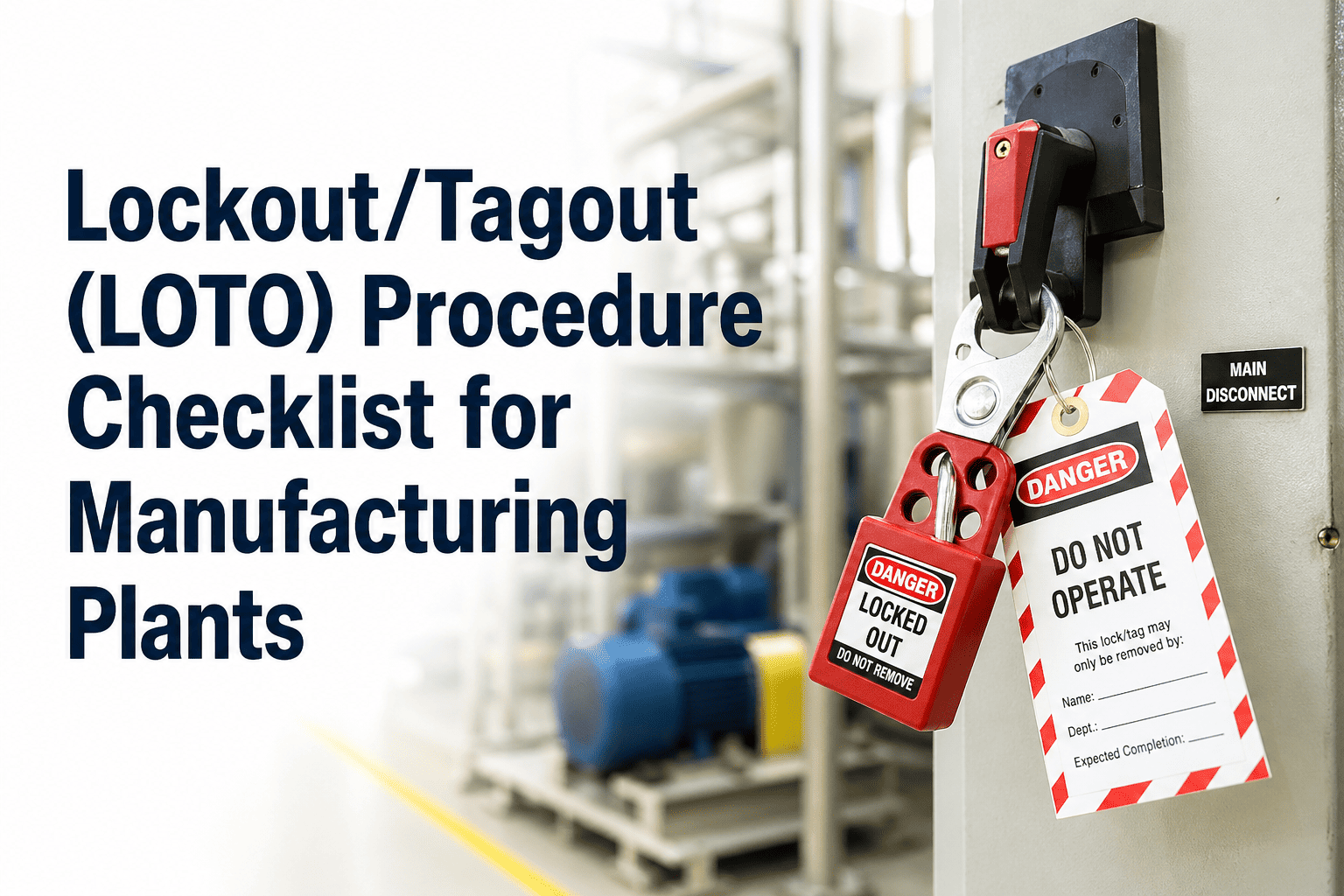
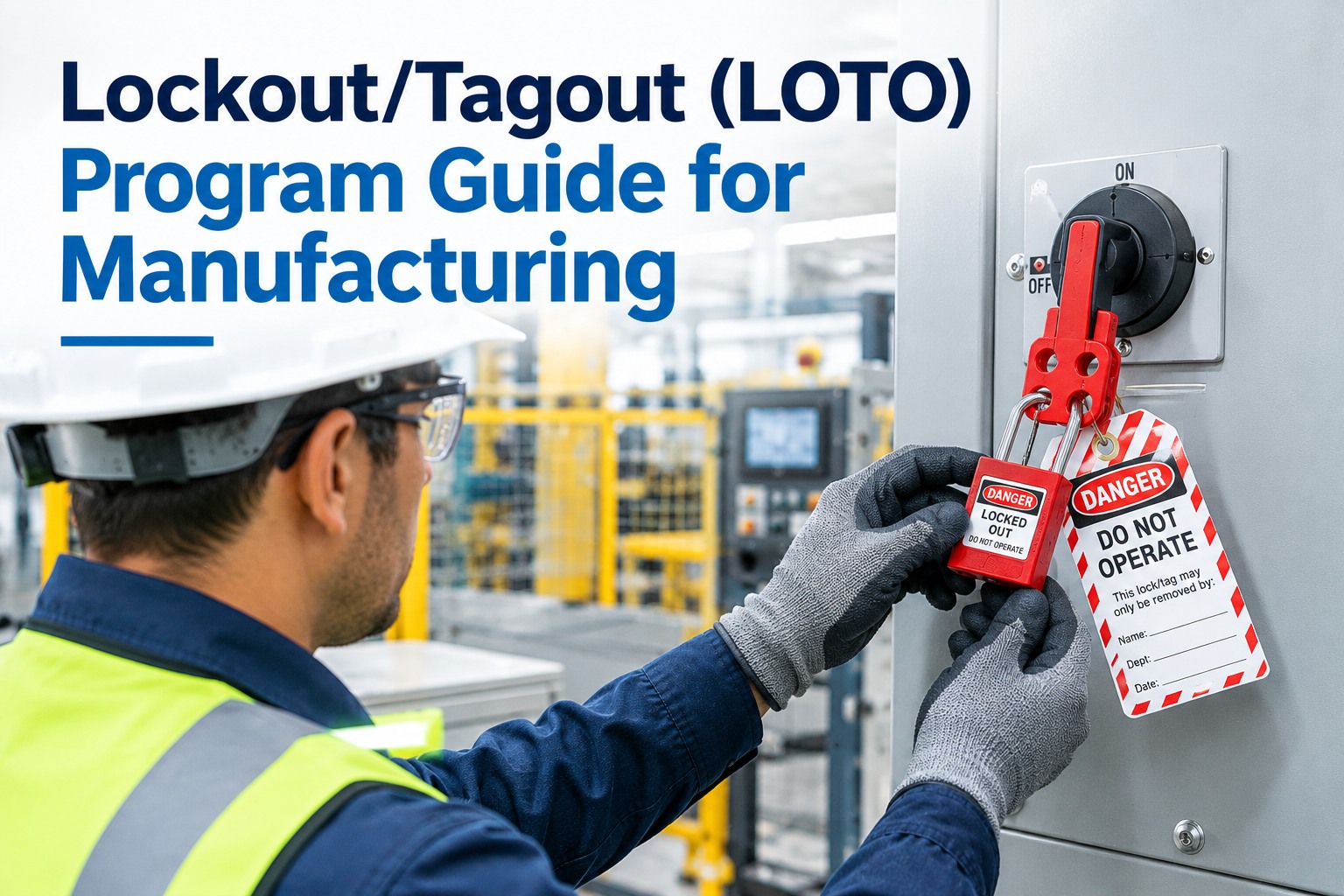
Machine guarding and lockout/tagout are the two standards most likely to trigger an OSHA investigation following an amputation or fatality report. An inspector will verify that guards are in place, that machine-specific LOTO procedures exist in writing, and that affected and authorised employees can demonstrate the isolation procedure on demand.
Verify all point-of-operation guards are in place and secure on every machine with moving parts that could cause injury — presses, lathes, mills, saws, conveyors and rollers
Responsible: Maintenance / Safety · Record: Guard inspection log with machine ID
Confirm all guards are affixed permanently where possible and cannot be easily removed by operators — guards secured by wing nuts or quick-release fasteners are a common citation trigger
Responsible: Maintenance · Record: Fastener type verification per machine
Inspect nip point guards on all power transmission equipment — belts, pulleys, chains, sprockets, gears and shafts must be fully enclosed
Responsible: Safety Engineer · Record: Power transmission guard checklist
Test all interlocked guards to confirm that removing or opening the guard stops the machine — document interlock test results for each guarded machine
Responsible: Electrical / Safety · Record: Interlock test certificate
Verify written machine-specific energy control procedures exist for every piece of equipment requiring isolation — generic "one-size-fits-all" procedures are a citation
Responsible: Safety Engineer · Record: LOTO procedure binder indexed by machine
Confirm all authorised employees have been trained on LOTO procedures specific to the equipment they service — verify training records are dated and signed
Responsible: HR / Safety · Record: Training matrix with expiry dates
Conduct annual LOTO inspection — observe at least three randomly selected maintenance tasks to verify actual execution matches written procedure
Responsible: Safety Manager · Record: Annual LOTO inspection certification
Inspect LOTO devices — confirm individually keyed padlocks, tags and lockout hasps are available for every authorised employee and in serviceable condition
Responsible: Safety Officer · Record: Device inventory audit
Checklist 02
Hazard Communication & Chemical Safety Checklist
The HazCom standard (1910.1200) is the most-cited general industry standard year after year. OSHA inspectors check three things within the first ten minutes of a chemical area walkthrough: written HazCom programme, SDS accessibility and container labels.
Verify a written hazard communication programme exists, names the responsible person, and includes a current inventory of all hazardous chemicals on site
Responsible: EHS Manager · Record: Written HazCom programme document
Confirm Safety Data Sheets (SDS) are available for every hazardous chemical on site, current version, and accessible to employees during every shift without obstruction
Responsible: EHS Officer · Record: Chemical inventory cross-referenced to SDS register
Inspect all chemical containers for GHS-compliant labels — product name, hazard pictograms, signal word, precautionary statements and supplier information must be present and legible
Responsible: EHS Officer · Record: Label audit log
Verify all workers who handle or are exposed to hazardous chemicals have documented HazCom training covering chemical hazards, SDS use, label reading and protective measures
Responsible: HR / Safety · Record: Training records with dates and signatures
Stop Tracking Safety Compliance on Spreadsheets
OxMaint assigns every checklist item to a named team member, captures timestamped photo evidence, auto-sends reminders before deadlines, and generates inspection-ready audit reports in one click.
Checklist 03
Fall Protection, Electrical & Respiratory Safety Checklist
Falls from height, electrical contact and respiratory hazard exposure are the three OSHA categories most likely to result in fatalities during manufacturing operations. These checklists cover the walking-working surface requirements, electrical safety standards and respiratory protection programme elements that inspectors verify during plant walkthroughs.
Inspect all guardrail systems on platforms, mezzanines and open-sided floors above 4 feet — verify top rail height (42" +/- 3"), mid-rail and toe-board presence
Responsible: Safety Officer · Record: Guardrail inspection log
Verify all fixed ladders over 24 feet have ladder safety systems or cages, and all portable ladders are rated for industrial use and inspected for damage before each use
Responsible: Maintenance · Record: Ladder inventory and inspection register
Confirm fall protection training has been provided to all workers exposed to fall hazards — training must cover hazard recognition, equipment use and rescue procedures
Responsible: Safety / HR · Record: Fall protection training certification
Inspect all electrical panels for proper labelling, unobstructed 36-inch clearance in front, and no missing knockouts or cover plates
Responsible: Electrical / Safety · Record: Panel inspection checklist
Verify all flexible cords and cables are in serviceable condition — no spliced extension cords, no cords run through walls/ceilings/floors, and all grounding prongs intact
Responsible: Electrical Maintenance · Record: Cord and cable audit
Confirm GFCIs are installed and functional in all wet or damp locations — test trip function monthly and document
Responsible: Electrical · Record: GFCI test log
Verify a written respiratory protection programme exists, names the programme administrator, and identifies all operations requiring respirator use
Responsible: EHS Manager · Record: Written programme document
Confirm all respirator users have current medical evaluation clearance and annual fit test documentation — no employee may use a respirator without both
Responsible: Occupational Health · Record: Medical clearance and fit test records
Inspect respirator storage, cleaning procedures and cartridge/filter change schedules — improperly maintained respirators provide a false sense of protection
Responsible: Safety Officer · Record: Respirator maintenance log
Checklist 04
Emergency Action & General Plant Safety Checklist
Emergency action plans, fire prevention, walking-working surface housekeeping and PPE compliance round out the checklist areas that inspectors review during a comprehensive manufacturing plant walkthrough.
Verify a written Emergency Action Plan (EAP) exists covering evacuation procedures, reporting procedures, alarm systems and designated assembly areas
Responsible: EHS Manager · Record: Written EAP document
Inspect all fire extinguishers — monthly visual check for accessibility and condition, annual professional inspection, and six-year maintenance / 12-year hydrostatic test
Responsible: Safety / Facilities · Record: Fire extinguisher inspection tags and log
Verify all emergency exits are clearly marked, illuminated, unobstructed and open freely in the direction of egress — conduct quarterly evacuation drills and document participation
Responsible: Safety Officer · Record: Drill report with headcount
Complete a written PPE hazard assessment for every job classification — update for any equipment changes, new chemicals or process modifications made during the year
Responsible: Safety Engineer · Record: PPE hazard assessment document
Verify walking-working surfaces are maintained in clean, orderly condition — aisles marked and clear, no tripping hazards, spills cleaned immediately with signage posted
Responsible: Supervisors / Safety · Record: Daily housekeeping inspection log
Confirm OSHA 300 log, 300A summary and 301 incident reports are complete, accurate and current — 300A must be posted from February 1 to April 30 each year
Responsible: EHS Officer · Record: OSHA 300 log with posting confirmation
Penalty Quick Reference
OSHA Penalty Schedule at a Glance
Penalty amounts are adjusted annually for inflation. These figures reflect the amounts effective after January 15, 2025, and carry forward into fiscal year 2026.
| Violation Type |
Max Penalty |
Notes |
| Serious |
$16,550 per violation |
May be reduced based on good faith, size and history |
| Other-than-Serious |
$16,550 per violation |
Discretionary — may be issued with no monetary penalty |
| Willful |
$165,514 per violation |
Minimum $11,823 — no reduction for good faith |
| Repeated |
$165,514 per violation |
Same violation within 5 years triggers repeat classification |
| Failure to Abate |
$16,550 per day |
Assessed daily beyond the abatement deadline |
Inspection Readiness
Your 10-Minute Inspection Response Plan
The first ten minutes of an OSHA inspection determine whether the visit is a formality or an enforcement action. Having a response plan and knowing where every compliance document is located prevents the scramble that turns minor findings into formal citations.
1
Inspector Arrives
Notify plant manager and designated inspection response contact immediately. Confirm both know where all compliance documents are stored.
2
Opening Conference
Review inspector credentials, understand the scope and reason for inspection. Assign an employee representative to accompany the walkthrough.
3
Document Presentation
Present OSHA 300 log, written safety programmes (LOTO, HazCom, Respiratory, EAP), training records, and inspection logs within minutes — not hours.
4
Walkthrough & Closing
Walk with the inspector, take notes, photograph anything cited. After closing conference, immediately assign corrective actions with deadlines.
Be Inspection-Ready Every Day — Not Just Before an OSHA Visit
OxMaint keeps every safety checklist, training record, inspection log and corrective action in one searchable platform. When the inspector arrives, your team pulls the report in one click.
FAQs
Frequently Asked Questions
What are the most common OSHA citations in manufacturing plants?
Hazard communication (1910.1200), lockout/tagout (1910.147), machine guarding (1910.212) and respiratory protection (1910.134) are consistently the most-cited general industry standards in manufacturing. Machine guarding citations are especially high in manufacturing compared to other sectors.
Book a demo to see how OxMaint tracks all four compliance areas.
How much can OSHA fine a manufacturing plant per inspection?
There is no cap on total penalties per inspection. A single visit that uncovers multiple serious violations can exceed $100,000, and willful violations carry fines up to $165,514 each. Multiple willful citations in one inspection can push total penalties past $1 million.
Start using OxMaint free to maintain compliance documentation.
How often should internal OSHA compliance audits be conducted?
OSHA recommends self-inspections at least twice per year using an auditor external to the area being inspected. Manufacturing facilities that conduct regular internal audits consistently receive fewer citations during unannounced OSHA inspections.
Book a demo to set up your audit schedule in OxMaint.
What documents does an OSHA inspector ask for first?
Inspectors typically request the OSHA 300 log and 300A summary, written safety programmes for LOTO, HazCom and respiratory protection, training records, and the emergency action plan. Having these in a single accessible location — not scattered across filing cabinets — is critical.
Try OxMaint to centralise all compliance records.
Can OxMaint help with OSHA compliance documentation?
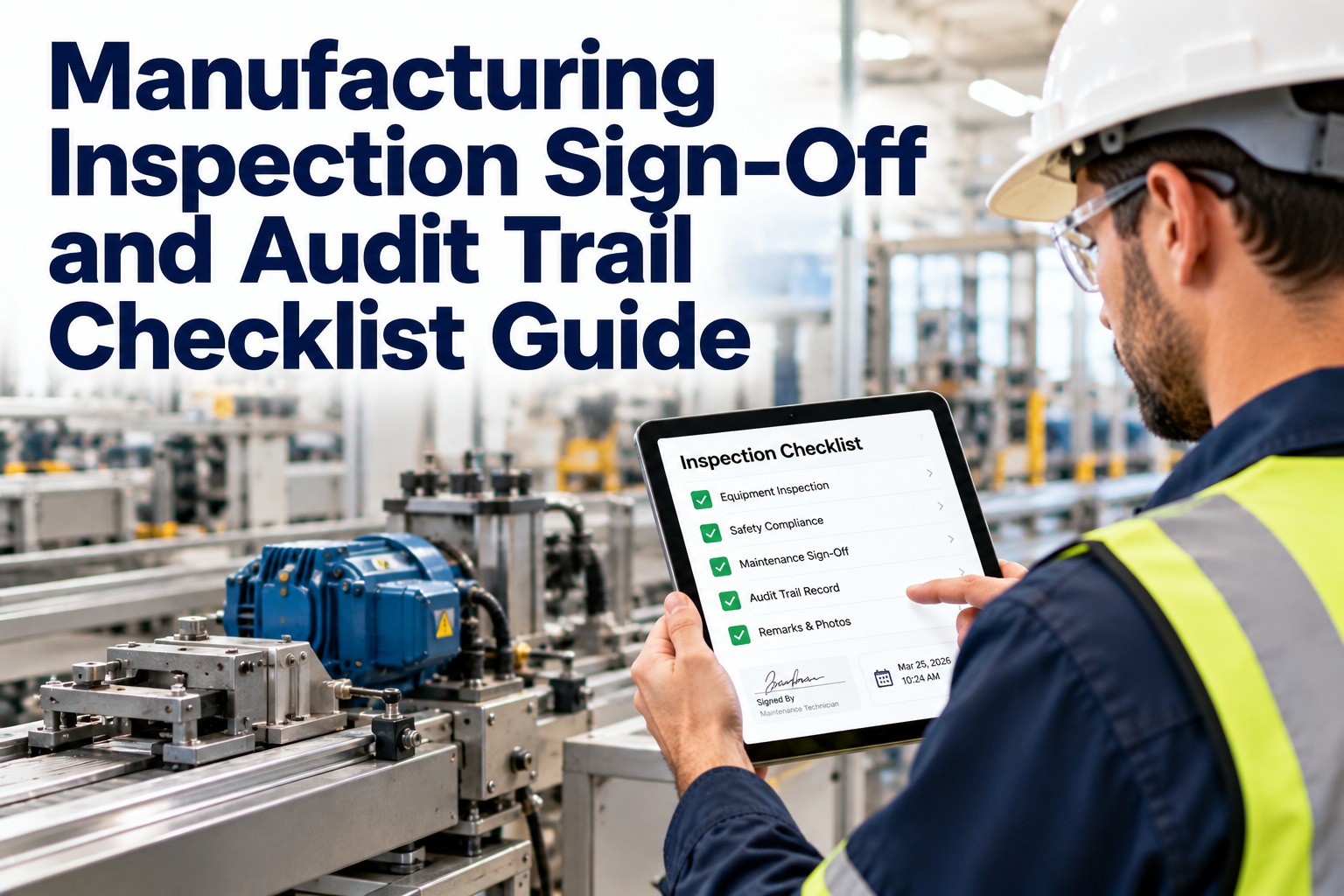
Yes. OxMaint generates timestamped audit reports with photo evidence, corrective action tracking and responsible officer sign-offs — formatted for regulatory inspection use. Every checklist completion is attributed to a named user with a precise timestamp.
Book a demo to see a sample compliance report.
Your Plant's Next OSHA Inspection Could Be Tomorrow
OxMaint replaces paper checklists and scattered safety records with a digital compliance system that keeps your manufacturing plant inspection-ready every shift, every day.

![monthly-manufacturing-plant-safety-audit-checklist-[osha---iso-45001]](./manage-post-2k26/uploads/monthly-manufacturing-plant-safety-audit-checklist-[osha---iso-45001].png)