Boiler failures in manufacturing plants can halt production, compromise safety, and drain budgets through emergency repairs and unplanned downtime. Root Cause Analysis (RCA) transforms reactive maintenance into strategic prevention by identifying why failures occur rather than simply addressing symptoms. When properly implemented, RCA for boiler systems delivers measurable improvements in equipment reliability, operational efficiency, and long-term cost reduction. Schedule a consultation to explore how structured RCA methodologies can strengthen boiler reliability at your facility.
Why Root Cause Analysis Matters for Boiler Systems
Manufacturing plants depend on boilers for critical processes including steam generation, heating, and power production. When these systems fail unexpectedly, the consequences extend far beyond repair costs. Production delays, safety incidents, and regulatory violations can compound rapidly without systematic failure investigation.
Common Boiler Failure Modes in Manufacturing
Understanding the most frequent failure patterns provides the foundation for effective root cause investigation. Each failure mode has distinct indicators, contributing factors, and prevention strategies that RCA helps identify and address systematically.
Tube failures account for approximately 40% of all boiler incidents. RCA identifies whether failures stem from water chemistry issues, flame impingement, or operational stress patterns.
Scale deposits reduce heat transfer efficiency by up to 12% per millimeter of buildup. RCA traces scaling to water treatment deficiencies or operational deviations.
Improper combustion reduces efficiency and accelerates component wear. RCA examines fuel quality, burner maintenance, and control system calibration.
Pressure excursions stress components and trigger safety shutdowns. RCA investigates control loops, safety valve testing, and operator response patterns.
The RCA Process for Boiler Failures
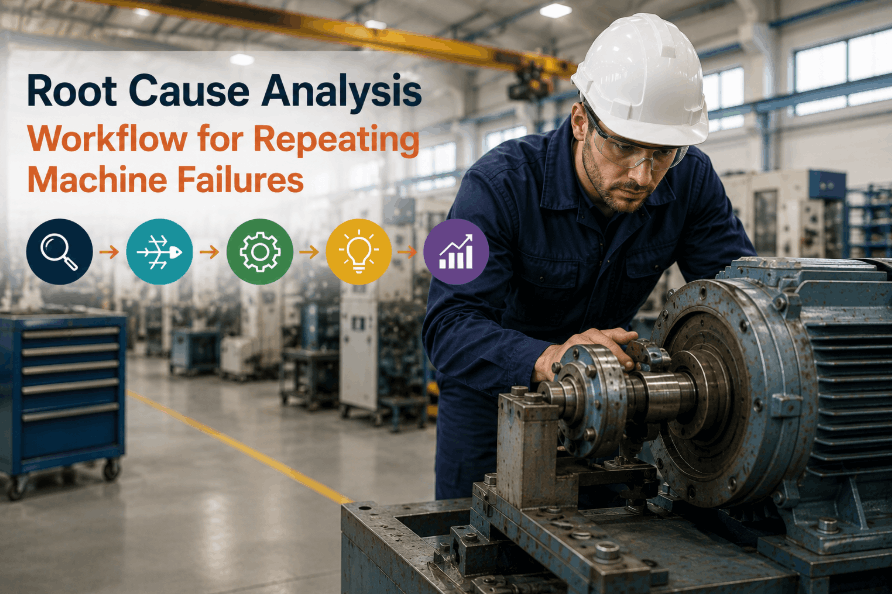
Effective root cause analysis follows a structured methodology that moves beyond surface symptoms to identify fundamental causes and implement lasting corrections. Each phase builds on the previous to ensure comprehensive investigation and sustainable solutions.
Document the failure event with precise details including timing, operating conditions, observed symptoms, and immediate consequences. Clear problem statements prevent investigation drift and ensure team alignment.
Gather operational data, maintenance records, inspection reports, and personnel observations. Evidence preservation is critical for accurate analysis and regulatory compliance documentation.
Apply structured techniques such as fishbone diagrams, 5-Why analysis, or fault tree analysis to trace symptoms back to root causes. Sign up for Oxmaint to centralize failure data and analysis documentation.
Design corrective actions addressing each identified root cause. Effective solutions consider technical feasibility, cost-benefit analysis, and implementation timeline.
Execute corrective actions with clear ownership and deadlines. Monitor effectiveness through defined metrics and adjust approaches based on measured outcomes.
RCA Techniques for Boiler Investigation
Different analytical techniques suit different failure scenarios. Selecting the appropriate method depends on failure complexity, available data, and investigation objectives.
| Technique | Best Application | Complexity | Output |
|---|---|---|---|
| 5-Why Analysis | Simple, single-cause failures | Low | Linear cause chain |
| Fishbone Diagram | Multiple contributing factors | Medium | Categorized cause map |
| Fault Tree Analysis | Complex system failures | High | Logic-based failure paths |
| Failure Mode Effects Analysis | Proactive risk assessment | Medium | Prioritized risk rankings |
| Pareto Analysis | Recurring failure patterns | Low | Frequency-based priorities |
Boiler-Specific Investigation Checklist
Comprehensive boiler RCA requires examining multiple system areas. This checklist ensures investigators cover all potential contributing factors during analysis.
Connecting RCA to Preventive Maintenance
Root cause analysis generates actionable insights that strengthen preventive maintenance programs. Each completed investigation should feed improvements into inspection schedules, maintenance procedures, and operator training.
RCA Documentation Best Practices
Thorough documentation ensures RCA findings remain accessible for future reference, regulatory compliance, and organizational learning. Quality documentation transforms individual investigations into institutional knowledge.
Use consistent templates that capture problem statements, investigation methodology, evidence collected, root causes identified, and corrective actions assigned. Standardization enables trend analysis across multiple investigations.
Photograph failed components, retain samples when feasible, and archive relevant operational data. Physical evidence often reveals details that written descriptions miss.
Document corrective action assignments with clear ownership, deadlines, and verification criteria. Sign up for Oxmaint to automate action tracking and completion verification.
Share relevant findings across maintenance teams, operations staff, and management. Effective knowledge sharing prevents similar failures at other equipment or facilities.
Oxmaint centralizes failure documentation, structures investigation workflows, and tracks corrective actions to completion. Stop repeating the same failures and start building lasting reliability improvements.