Industrial facilities lose thousands of dollars annually through undetected heat loss paths that silently inflate utility bills. A thermal waste audit systematically maps heat loss across motors, steam traps, insulation gaps, and compressed air lines—exposing the exact points where energy spend leaks out. Sign Up Free to start tracking thermal assets and energy inspection records before the next billing cycle catches your team off guard. Without a structured audit process, maintenance teams rely on reactive complaints and manual walkthroughs that miss intermittent or slow-building losses. OxMaint connects thermal inspection checklists to work orders, asset histories, and energy dashboards—so every heat loss finding triggers a documented repair path. Book a Demo to see how facilities teams use OxMaint to close thermal waste gaps faster.
INDUSTRIAL ENERGY · THERMAL AUDIT · 2026
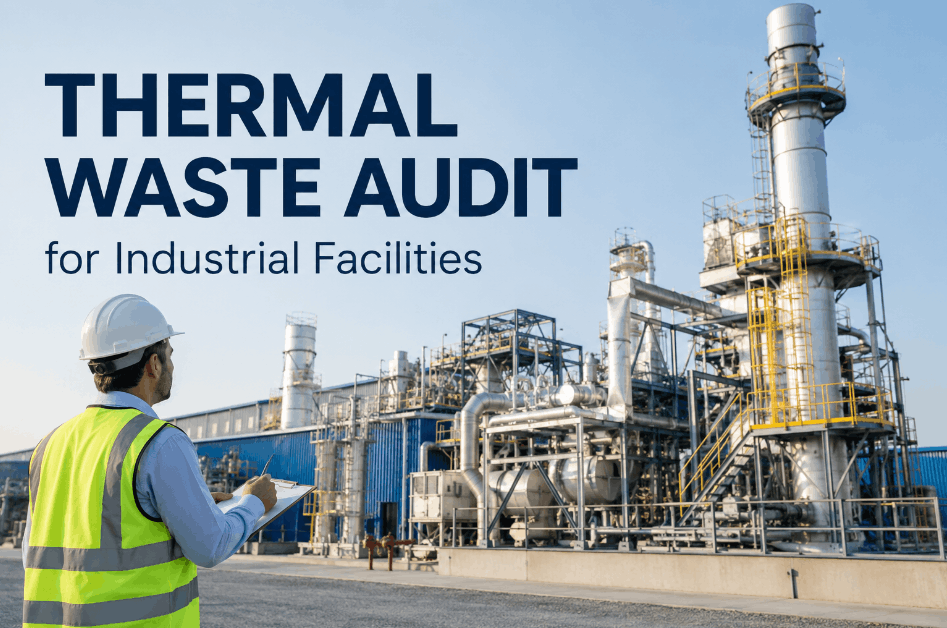
Thermal Waste Audit for Industrial Facilities
Heat loss across motors, steam lines, and insulation costs facilities more than most maintenance budgets account for. Run structured thermal audits and connect findings directly to work orders with OxMaint.
30%Average energy waste found in unaudited industrial facilities through thermal inspection
$42K+Typical annual utility savings recovered after a structured thermal waste audit program
3.8xCost of reactive energy repair vs. scheduled thermal inspection and preventive correction
60 daysAverage payback period for implementing a CMMS-driven thermal audit workflow
What a Thermal Waste Audit Actually Covers in Industrial Operations
A thermal waste audit is not a one-time energy walk. It is a repeatable inspection framework covering steam trap performance, motor surface temperatures, compressed air leak points, pipe insulation integrity, and HVAC cycling patterns. Each category has different failure signatures—a failed steam trap wastes energy continuously while a degraded insulation section shows up only under full load. OxMaint's inspection module structures each audit zone into individual checklist items, assigns technician responsibilities, and logs thermal readings against baseline values—so deviations trigger work orders automatically. Sign Up Free to build thermal audit checklists mapped to your facility's asset register. When findings are disconnected from the maintenance system, repair prioritization becomes guesswork. Connecting audit data to asset records inside a CMMS converts thermal findings into a ranked repair queue with documented energy impact per item.
Thermal Waste Audit — Coverage Map by System Category
Steam Trap Inspection
Monthly
Failed-open and failed-closed traps, bypass valve leakage, condensate return losses
Motor Surface Temperature
Weekly
Overloaded motors, bearing heat signatures, imbalanced phase loads, cooling blockage
Compressed Air Leaks
Bi-weekly
Fitting leaks, hose wear points, pressure drop mapping, compressor duty cycle review
Pipe Insulation Integrity
Quarterly
Missing lagging, moisture ingress zones, thermal bridge locations, surface temperature variance
HVAC & Ventilation
Monthly
Damper leakage, duct insulation loss, chiller delta-T degradation, filter restriction
Electrical Panel Thermal
Quarterly
Hot bus bars, loose terminations, overloaded breakers, harmonic distortion signatures
Boiler & Heat Exchanger
Monthly
Scale buildup on heat transfer surfaces, flue gas temperature deviation, stack heat loss, burner efficiency
Refrigeration Systems
Bi-weekly
Condenser coil fouling, refrigerant charge variance, compressor discharge temperature, evaporator frost pattern
Furnace & Oven Systems
Weekly
Door seal integrity, refractory lining condition, burner air-to-fuel ratio, exhaust gas temperature deviation
Pump & Drive Bearing Heat
Weekly
Bearing surface temperature trending, seal friction heat, coupling misalignment signatures, lubrication adequacy
Connecting Thermal Findings to Work Orders and Repair Priority
The most common failure in thermal audit programs is the gap between inspection findings and corrective action. Technicians log heat loss observations in paper forms or spreadsheets that never reach the maintenance planner. OxMaint closes this gap by linking every thermal checklist item directly to the asset record—when a steam trap reading exceeds threshold, a corrective work order is created automatically, assigned to the right crew, and tracked to completion. Book a Demo to see how thermal audit findings translate into measurable repair ROI inside OxMaint. Energy governance programs also require documentation: audit logs, repair history, and before/after readings that demonstrate improvement. OxMaint stores every thermal inspection result with timestamp, technician, and reading value—giving energy managers a complete audit trail for reporting and budget justification. Book a Demo to see the energy reporting dashboard in action.
Thermal Audit Inspection Points — Priority Zones by Energy Impact
Steam Distribution
Steam trap failures alone can account for 15–25% of total boiler output going to waste undetected across a shift.
High Energy Impact
Motor Drive Systems
Motors running above rated temperature draw excess current and age faster—thermal checks catch overload before failure.
Medium-High Impact
Compressed Air Network
A 1/8" air leak at 100 PSI wastes roughly 25 CFM continuously. Multiplied across a facility, the compressor load impact is significant.
High Energy Impact
Thermal Envelope
Wall, roof, and pipe insulation degradation is invisible until a thermal camera survey maps the actual loss paths.
Medium Impact
Electrical Infrastructure
Loose terminations and overloaded panels generate heat that indicates both energy waste and imminent failure risk.
Safety + Energy Impact
HVAC Systems
Chiller and AHU thermal performance degrades gradually—delta-T monitoring catches efficiency loss before it affects production comfort.
Operational Impact
Boiler Plant
Scale accumulation of just 1mm on boiler heat transfer surfaces raises fuel consumption by up to 8%—thermal audits expose this loss early.
High Energy Impact
Refrigeration Loop
Fouled condenser coils and low refrigerant charge force compressors to run longer cycles, increasing energy draw per ton of cooling produced.
Medium-High Impact
Furnace & Oven Lines
Worn door seals and degraded refractory allow heat to escape continuously during production—a thermal camera reveals gaps invisible to the naked eye.
High Energy Impact
Pump & Drive Bearings
Elevated bearing temperatures indicate friction losses from misalignment or lubrication failure—catching them early prevents both energy waste and unplanned failures.
Reliability + Energy
Turn Thermal Findings Into Documented Savings
OxMaint connects thermal audit checklists to asset records, auto-generates repair work orders from threshold breaches, and tracks energy savings from every corrective action. Start building your audit program today.
Frequently Asked Questions — Thermal Waste Audit for Industrial Facilities
What is a thermal waste audit in an industrial facility?
A thermal waste audit maps all heat loss sources across a facility—steam traps, motors, compressed air, and insulation—to identify where energy spend is escaping without delivering useful work. Results are ranked by energy impact and converted into repair priorities.
How does a CMMS support thermal waste audits?
A CMMS like OxMaint links thermal inspection checklists to asset records, triggers corrective work orders when readings exceed baseline, and stores a full audit trail for energy governance reporting.
How often should industrial facilities run thermal audits?
High-energy systems like steam and compressed air should be checked monthly. Insulation, electrical panels, and HVAC benefit from quarterly thermal inspection tied to your PM schedule.
What equipment is needed for a facility thermal audit?
Thermal cameras for surface temperature mapping, ultrasonic detectors for compressed air leaks, and a CMMS platform to log findings and dispatch repairs are the core tools for a structured program.
Can thermal audit data be used for ESG reporting?
Yes. OxMaint stores timestamped thermal readings, repair records, and before/after energy comparisons that support carbon intensity reporting and sustainability KPI documentation.
Start Your Thermal Waste Audit Program
OxMaint automates thermal inspection scheduling, connects findings to repair work orders, and tracks energy savings across every audit cycle. Free to start. Reduce utility spend with systematic thermal audits.