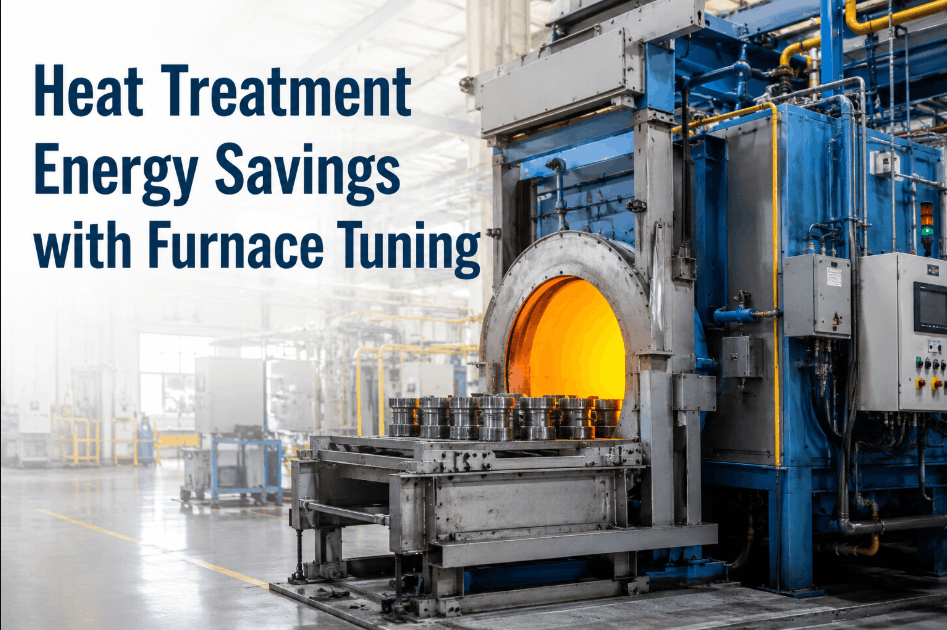
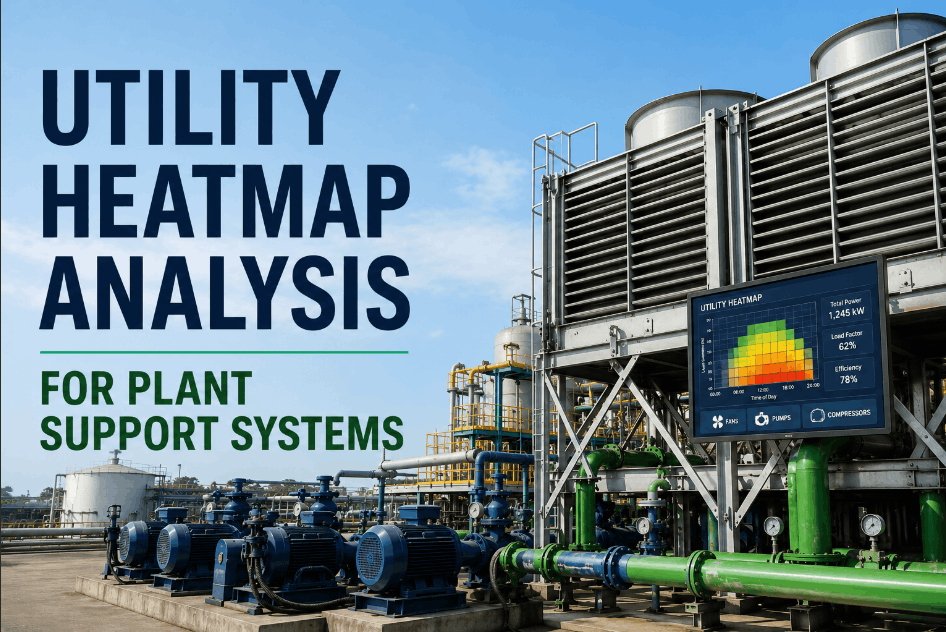
Every manufacturing plant running kilns, furnaces, compressors, or boilers is sitting on an untapped energy asset: waste heat. Approximately 72% of primary energy in industrial conversion systems is lost as heat, escaping through exhaust stacks, cooling water, and hot surfaces without doing any useful work. Waste heat recovery systems (WHRS) capture this thermal energy and redirect it into productive applications—preheating combustion air, generating steam, producing electricity via Organic Rankine Cycle (ORC), or feeding adjacent process lines. The global WHRS market reached $64.76 billion in 2024 and is growing at 7.5% annually as manufacturers face rising energy costs, mandatory efficiency regulations, and net-zero commitments that make leaving recoverable heat on the table an indefensible business decision. For every megawatt of energy recovered in energy-intensive manufacturing, up to 4,000 tonnes of CO₂ emissions can be avoided per year. This guide covers the core technologies, temperature-grade selection logic, ROI framework, and implementation approach that energy and maintenance managers need to evaluate and execute a waste heat recovery strategy.
Waste Heat Recovery in Numbers — 2025/2026
72%
Primary energy lost as waste heat in industry
$64.8B
Global WHRS market value (2024)
47%
Industrial operations now deploying WHRS
7.5%
Annual market growth rate through 2034
Choosing the Right Technology by Heat Source Temperature
Not all waste heat is created equal. The temperature grade of your heat source is the single most important factor in selecting the right recovery technology. High-temperature streams above 650°C can drive steam turbines and HRSGs; medium-temperature streams between 230°C and 650°C suit ORC systems; low-temperature streams below 230°C are addressable with plate heat exchangers and heat pumps. Matching technology to temperature is where most projects succeed or fail.
HIGH GRADE
Above 650°C
Typical Sources
Kilns, furnaces, EAF off-gas, glass ovens, reformers
Recommended Technologies
Heat Recovery Steam Generator (HRSG)
Recuperators / Regenerators
Waste Heat Boilers
Combined Heat and Power (CHP)
Payback: 2–4 years
MEDIUM GRADE
230°C – 650°C
Typical Sources
Compressor exhaust, distillation off-gas, dryer exhaust, engine flue gas
Recommended Technologies
Organic Rankine Cycle (ORC)
Shell-and-Tube Heat Exchangers
Thermoelectric Generators (TEG)
Air Preheaters
Payback: 2–6 years
LOW GRADE
Below 230°C
Typical Sources
Cooling water, HVAC exhaust, condenser discharge, wash water
Recommended Technologies
Plate Heat Exchangers
Industrial Heat Pumps
ORC (below 150°C capable)
Economizers
Payback: 1–3 years
Core Technologies Explained
Heat Exchangers (Plate & Shell-and-Tube)
The foundational technology for waste heat recovery. Plate heat exchangers achieve up to 25% higher heat recovery yield than shell-and-tube at comparable cost, making them the default choice for low-to-medium temperature duties. Shell-and-tube exchangers excel in high-pressure, high-temperature, and fouling-prone applications where robust construction outweighs compact footprint. Key design considerations include fouling resistance, differential pressure management, and material compatibility with process fluids.
Best for: Process-to-process heat transfer, combustion air preheat, feedwater heating
Energy recovery: 60–90% of available heat depending on design
Maintenance flag: Fouling reduces heat transfer coefficient—track pressure drop trends weekly
Organic Rankine Cycle (ORC) Systems
ORC systems convert waste heat into electricity using organic working fluids with low boiling points, making them effective at temperatures where conventional steam Rankine cycles are impractical (as low as 80°C with modern designs). In 2024, over 55% of European industrial energy recovery projects used ORC systems. The 1–5 MW capacity segment is the industrial sweet spot, generating $360 million in market activity in 2024 alone. ORC units are particularly suited to cement, glass, chemical, and refinery applications where heat availability is continuous and predictable.
Optimal temperature range: 80°C–400°C (150°C–350°C peak ROI window)
Electrical output: 5–30% conversion efficiency depending on heat source grade
Key advantage: Converts otherwise unusable low-grade heat into revenue-generating electricity
Industrial Heat Pumps
Heat pumps capture waste heat at low temperatures and upgrade it to a higher usable temperature level, extending the range of recoverable heat well beyond what passive heat exchangers can reach. They are especially effective when integrated with electrification strategies: as plants electrify process heat, industrial heat pumps that harvest on-site waste heat and upgrade its temperature become a critical link between energy efficiency and decarbonization. Over 90% of input energy can be recovered for useful application in well-designed CHP configurations.
Best for: Upgrading cooling water and HVAC exhaust to process-useful temperatures
COP range: 3:1 to 6:1 (delivers 3–6 units of heat per unit of electricity consumed)
Synergy: Pairs with renewable electricity to create near-zero-carbon process heat
Heat Recovery Steam Generators (HRSG)
HRSGs recover high-temperature exhaust from gas turbines and large industrial burners to generate steam for process use or electricity generation. They are the backbone of Combined Heat and Power (CHP) systems, enabling overall system efficiencies above 85% versus the 35–45% typical of standalone power generation. Siemens Energy HRSG innovations have enabled large-scale manufacturers to meet EU and US emissions standards while dramatically improving energy intensity.
Best for: Gas turbine exhaust, large boilers, industrial co-generation
System efficiency: 85%+ in combined heat and power configuration
Scale: Most economic at 5 MW+ heat input; modular units available for smaller loads
Map Your Facility's Waste Heat Potential Before Investing
Oxmaint helps operations teams log equipment thermal data, track energy losses by source, and build documented heat recovery project cases that get funded. Start your energy audit trail today.
Process Integration: Pinch Analysis and Where Heat Goes
The highest-value waste heat recovery projects don't just capture heat—they systematically integrate it into the existing process design using pinch analysis. Pinch technology identifies the minimum energy targets for a process network and reveals where heat can be exchanged between process streams to reduce both hot utility (boilers, furnaces) and cold utility (cooling towers, chillers) demand simultaneously.
Heat Sources (Waste Generators)
Furnace / Kiln exhaust
Compressor heat of compression
Cooling water from process
Condenser discharge streams
Dryer and oven exhaust
Engine/turbine exhaust
Heat Uses (Recovery Destinations)
Combustion air preheat (direct fuel savings)
Boiler feedwater preheat
Process fluid heating
Space heating and HVAC
Electricity generation (ORC)
Raw material pre-conditioning
ROI Framework: Calculating Your Waste Heat Recovery Return
A structured ROI analysis for a waste heat recovery project covers five variables: available heat quantity, recovery efficiency, energy price, avoided utility cost, and capital investment. Here is a practical framework used by energy managers across manufacturing sectors.
1
Quantify Available Waste Heat
Measure exhaust gas flow rate (kg/h), temperature, and specific heat capacity. Available power (kW) = mass flow rate × specific heat × temperature difference between exhaust and stack exit temperature. This is the theoretical ceiling of what can be recovered.
2
Apply Recovery Efficiency Factor
Plate heat exchangers typically recover 70–90% of available heat. ORC systems convert 5–30% of thermal input to electricity. HRSGs achieve 80–90% thermal recovery. Multiply available heat by technology efficiency factor to get recoverable energy.
3
Calculate Annual Energy Value
Recoverable energy (kWh/year) = Recoverable power (kW) × annual operating hours. Multiply by energy cost avoided: natural gas price if replacing boiler heat, electricity price if generating power via ORC. Factor in demand charge reductions where applicable.
4
Simple Payback Calculation
Payback (years) = Total installed capital cost ÷ Annual energy value saved. Industry benchmarks: combustion air preheat projects often pay back in under 2 years; ORC systems typically 3–6 years; plate HEX projects for process integration often under 18 months.
5
Add Incentives and Carbon Value
Layer in available utility rebates, government grants (EU Energy Efficiency Directive incentives, US DOE programs), and carbon credit value where applicable. In the EU, projects qualifying under the revised Energy Efficiency Directive can access contracts-for-difference mechanisms that dramatically improve project economics.
Industry Applications: Where Waste Heat Recovery Pays Most
Cement & Glass
Kiln exhaust: 300°C–1,000°C
ORC + HRSG
Up to 30% energy cost reduction
Kiln exhaust is continuous, high-temperature, and high-volume—ideal for large ORC installations with consistent electricity output.
Steel & Metals
EAF off-gas: 200°C–800°C
Recuperators + ORC
25 GWh/year in documented cases
High dust content in off-gas requires robust heat exchanger design with fouling-resistant surfaces and planned cleaning cycles.
Chemical & Refinery
Distillation + reformers: 150°C–650°C
Shell-and-tube HEX + ORC
4,000 tonnes CO₂/MW recovered
Pinch analysis reveals significant cross-stream heat integration opportunities that reduce both boiler fuel and cooling tower load simultaneously.
Food & Beverage
Pasteurization + dryers: 80°C–200°C
Plate HEX + heat pumps
10-month payback documented
Hygienic plate heat exchangers with clean-in-place capability recover heat from pasteurizers and dryers while maintaining food safety compliance.
Frequently Asked Questions
What temperature of waste heat is worth recovering in manufacturing?
Any continuous heat source above 80°C can be economically recovered with modern ORC and plate heat exchanger technology. High-grade heat above 650°C is the most valuable (HRSG and recuperator territory); medium-grade at 230–650°C suits ORC systems; low-grade below 230°C is addressable with plate exchangers and heat pumps. The economics improve with higher temperatures, higher flow rates, and longer annual operating hours.
Track your equipment thermal data in Oxmaint to build a site-wide heat source inventory before selecting technology.
How long does a waste heat recovery project typically take to deliver ROI?
Payback periods vary by technology: combustion air preheat and plate heat exchangers often pay back in 12–24 months; ORC systems typically in 2–6 years; HRSGs in 3–7 years for large industrial installations. Government incentives (EU EED, US DOE rebates) and carbon credit revenues can reduce payback by 30–50%. For every MW recovered in a refinery, up to 4,000 tonnes of annual CO₂ avoidance also generates carbon credit value in markets with carbon pricing.
Book a session with our team to model your specific facility's numbers.
What is an ORC system and when should a manufacturer use one?
An Organic Rankine Cycle system generates electricity from waste heat using organic working fluids with low boiling points—making it viable at temperatures as low as 80°C where steam turbines cannot operate economically. ORC is the right choice when your waste heat source is continuous, the temperature is in the 80–400°C range, and your facility wants to convert thermal losses into measurable electricity output rather than just transfer heat elsewhere. In 2024, over 55% of European industrial energy recovery projects used ORC systems for these reasons.
What is pinch analysis and why does it matter for heat recovery?
Pinch analysis is a systematic method for identifying the maximum theoretical heat recovery between process streams, revealing exactly where a heat exchanger network can reduce external heating (boilers) and cooling (cooling towers) utility demand simultaneously. It is particularly valuable in chemical plants and refineries with multiple hot and cold streams, where ad hoc heat recovery misses significant cross-stream opportunities. Most facilities that run a formal pinch study find 15–40% more recoverable heat than initial estimates.
Use Oxmaint to log stream temperature and flow data to prepare for a pinch analysis with your engineering team.
How do I maintain a waste heat recovery system to preserve long-term performance?
Fouling is the primary performance killer—dust, scale, and corrosion reduce heat transfer coefficients by 20–40% if not managed. Maintenance priorities include monitoring differential pressure across heat exchangers as a fouling proxy, scheduling cleaning on pressure-drop thresholds rather than fixed intervals, calibrating gas meters and temperature sensors quarterly, inspecting ORC working fluid quality annually, and tracking heat exchanger effectiveness over time. Facilities that shift to condition-based maintenance for heat recovery equipment preserve 90%+ of design efficiency throughout the system's lifespan.
Turn Your Plant's Wasted Heat Into Documented Savings
Oxmaint gives energy managers a centralized platform to track heat source data, schedule heat exchanger maintenance on condition-based triggers, and generate the project documentation needed to secure capital for waste heat recovery investments.