Steel plant maintenance teams are drowning in IoT alerts they cannot trust. Vibration sensors on rolling mill drives fire dozens of warnings per shift, thermocouples across blast furnace cooling circuits flag temperature excursions that resolve before anyone can respond, and gas detectors near coke oven batteries trigger on ambient fluctuations that have nothing to do with actual leaks. The result is predictable: technicians stop trusting the alerts, response times stretch from minutes to hours, and the one genuine warning that signals a bearing seizure or a cooling panel crack gets buried in noise. The Unitree Go2 quadruped robot solves this by physically reaching every alert location, capturing multi-sensor inspection evidence, and feeding that validated data directly into Oxmaint's CMMS—so only confirmed problems generate work orders, and every work order arrives with geotagged photos, thermal images, and asset tags already attached. Schedule a demo to see how robotic alert validation eliminates noise and accelerates corrective maintenance in steel plants.
The False Alarm Problem in Steel
Every Unverified Alert Costs Your Team 45-90 Minutes of Productive Maintenance Time
Integrated steel mills generate 300+ IoT sensor alerts per week. Industry data shows up to 70% are false positives. That translates to hundreds of wasted technician-hours per month—hours that should be spent on actual corrective and preventive maintenance. The Go2 robot validates alerts autonomously, returning only confirmed issues to your CMMS queue.
Start Free with Oxmaint
300+weekly IoT alerts in a typical integrated mill
70%are false positives wasting technician time
<8 minGo2 dispatches, inspects, and reports back
What Makes Sensor Alerts Unreliable in Steel Manufacturing
The harsh operating environment inside a steel plant is uniquely hostile to IoT sensor accuracy. Ambient temperatures near blast furnaces and reheating furnaces regularly exceed 60 °C, which causes sensor drift and premature calibration loss. Electromagnetic interference from arc furnaces and high-current bus bars corrupts vibration and electrical monitoring signals. Dust, scale, and moisture from water spray systems coat sensor housings and degrade signal quality over weeks. Heavy mobile equipment—overhead cranes, ladle transfer cars, torpedo ladles on rail—generates transient vibration that fixed sensors cannot distinguish from equipment degradation. Every one of these conditions produces alerts that look real on a dashboard but have no actionable maintenance cause.
60 °C+ ambient near furnaces causes sensor drift
EMI from arc furnaces corrupts vibration signals
Scale and dust degrades sensor housings weekly
Crane vibration creates false bearing alerts
Without physical verification, maintenance teams face two bad options: respond to every alert and waste hundreds of hours per month, or start ignoring alerts and risk missing the genuine failures that lead to unplanned shutdowns costing $200,000+ per event. The Go2 provides a third option—autonomous physical verification that separates signal from noise before any human resource is committed.
Inside the Robotic Alert Validation Workflow
The Unitree Go2 does not replace your IoT infrastructure—it makes every sensor in your plant dramatically more valuable by adding physical verification between the alert and the work order. Here is the complete workflow from the moment an IoT threshold is breached to a fully documented CMMS action in Sign up with - Oxmaint.
01
Sensor Threshold Breach Triggers Robotic Dispatch
When any connected IoT sensor exceeds its configured threshold—vibration amplitude on a rolling mill motor, bearing temperature on a continuous caster segment, gas concentration near coke oven machinery—the alert routes to the Go2 dispatch controller via MQTT, OPC-UA, or REST API. The controller identifies the asset location on the pre-mapped plant layout, calculates the optimal safe path using 4D LiDAR navigation, and dispatches the nearest available Go2 unit. Dispatch happens within 30 seconds of the original alert.
02
Autonomous Navigation Through Steel Plant Terrain
The Go2's quadruped locomotion handles the unique terrain challenges of a steel mill—grated catwalks, cable trays on the floor, puddles from cooling water overspray, scale debris, and narrow passages between equipment banks. Its 360° hemispherical LiDAR detects personnel, forklift traffic, and temporary obstructions in real time and dynamically replans routes. The robot reaches the alert location in 2-5 minutes depending on plant layout complexity.
03
Multi-Sensor Evidence Collection at the Asset
At the flagged equipment, the Go2 executes a standardized inspection sequence: thermal imaging (640x512 resolution, -20 °C to +550 °C range) captures surface temperature maps of motors, bearings, panels, and enclosures. HD camera records visual condition—corrosion, oil leaks, belt wear, missing guards, structural cracks. Acoustic sensor module detects abnormal frequency patterns such as bearing grind, air leaks, electrical arcing, or steam blowby. For vibration alerts specifically, the Go2 positions near the equipment base to capture independent vibration readings that either confirm or contradict the fixed sensor data.
04
Cross-Reference: Robot Data vs. Original Alert
The onboard processor compares the Go2's independent inspection findings against the original IoT alert parameters. A vibration alert is validated when the robot's independent readings confirm abnormal spectral patterns. A temperature alert is confirmed when thermal imaging reveals hotspots consistent with the sensor data. If robot findings show a normal thermal profile, no acoustic anomaly, and no visible damage—the alert is classified as a false positive with full evidence documentation.
05
Validated Alerts Become Complete Work Orders Automatically
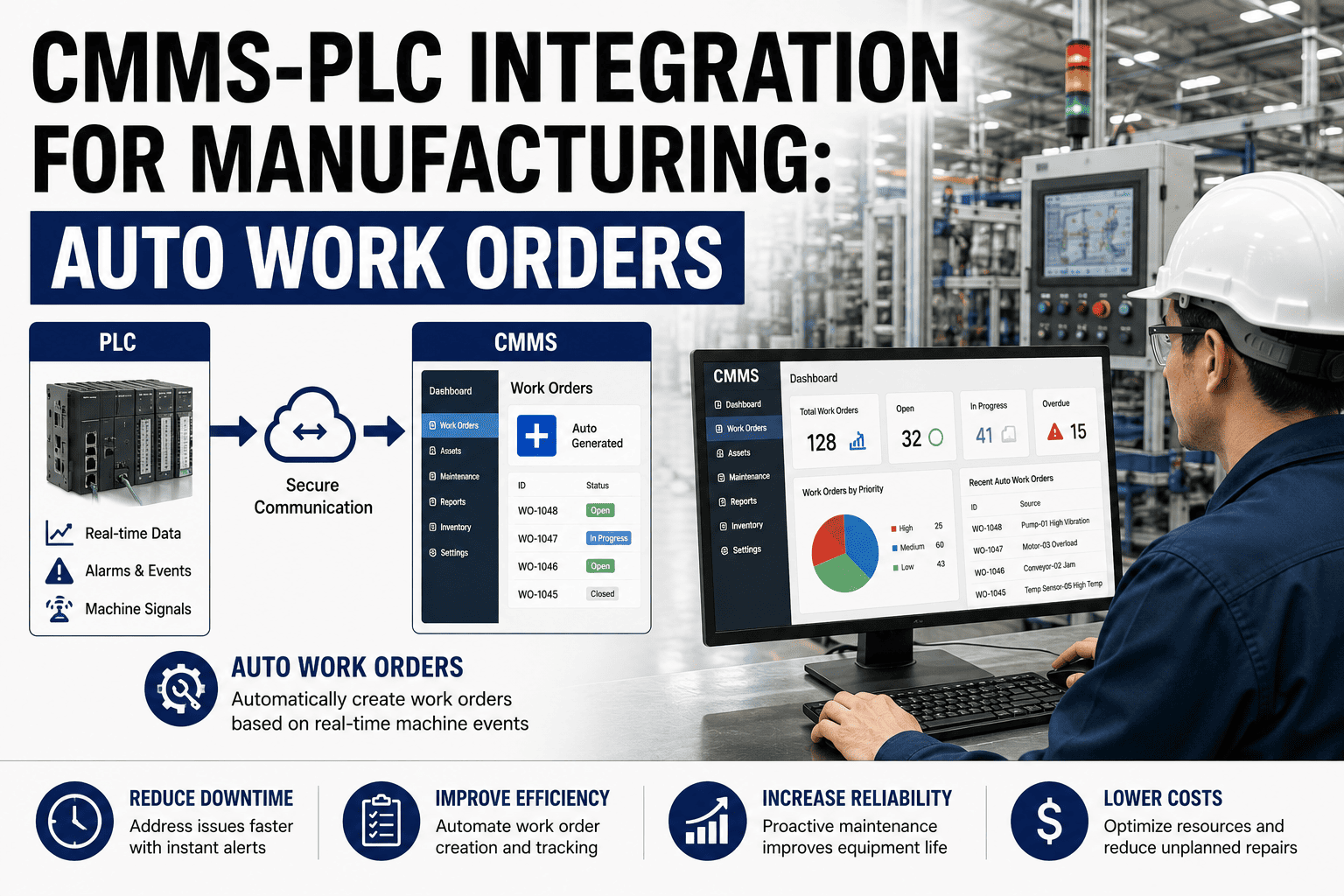
Confirmed issues generate a maintenance work order in Oxmaint pre-populated with: asset ID (read from QR code or RFID tag on the equipment), alert type and severity, geotagged thermal images, HD inspection photos, video clips, acoustic recordings, independent vibration data, and AI-recommended corrective action. False alarms are auto-closed with a disposition record containing all inspection evidence—creating a searchable history that helps reliability engineers recalibrate sensor thresholds.
Sign up for Oxmaint to connect robotic inspections to your work order queue.
Your sensors detect. The Go2 verifies. Oxmaint acts. See the full alert-to-work-order pipeline running on real steel plant data in a 30-minute walkthrough.
Inspection Evidence That Arrives Before the Technician
The most frustrating part of a false alarm is not the walk—it is the lost context when a real problem is found. A technician who arrives at a motor 90 minutes after the alert often cannot tell what changed because conditions have shifted. The Go2 captures evidence within minutes of the alert, preserving the exact conditions that triggered it.
Thermal
Surface Temperature Mapping
640x512 infrared resolution captures hotspots on motors, bearings, electrical switchgear, and cooling circuits. Temperature range -20 °C to +550 °C covers every asset in a steel mill from cold-side finishing to hot-side melt shop equipment. Each thermal image is auto-annotated with peak temperature, delta from baseline, and timestamp.
Visual
HD Photos and Video with Asset Tags
Every image and video clip is geotagged with GPS coordinates and automatically linked to the correct asset record via QR code or RFID scan. Maintenance planners see equipment condition, corrosion progression, leak locations, and wear patterns without dispatching a technician for initial assessment.
Acoustic
Sound Signature Analysis
Microphone array captures audio at the asset and compares frequency spectra against baseline signatures. Detects bearing grind, compressed air leaks, electrical arcing, loose components, and steam blowby. Especially valuable near blast furnace tuyeres and gas recovery equipment where sound changes precede visible damage.
Vibration
Independent Cross-Verification
Robot-mounted accelerometer takes independent vibration readings at the equipment base. Compares spectral patterns against the fixed IoT sensor that triggered the alert. This cross-reference eliminates false positives caused by environmental vibration from overhead cranes, ladle cars, and adjacent machinery.
Steel Plant Zones Where Robotic Patrol Replaces Manual Rounds
The Go2's quadruped mobility allows it to cover every zone in an integrated steel works—from the raw materials yard through the melt shop to finishing lines. Each zone has distinct environmental challenges and alert types. Book a demo to configure patrol routes for your plant layout.
Melt Shop — EAF, BOF, Ladle Furnace
Furnace cooling panels, electrode arms, lance mechanisms, transformer rooms, off-gas ducting. Validates temperature spikes, cooling flow anomalies, electrical faults, and gas detection warnings in the highest-heat zone of the plant.
Continuous Casting
Mold oscillation drives, segment roller bearings, spray nozzle arrays, strand guide alignment. Vibration spikes on oscillation motors, bearing temperature rises, and cooling water pressure drops are the top alert categories.
Hot Strip and Plate Mill
Work roll drives, backup roll bearings, loopers, coilers, descaling headers. Generates the highest volume of vibration alerts due to heavy rolling loads and proximity to overhead cranes that create transient false positives.
Cold Rolling, Coating, and Finishing
Tension reels, temper mill drives, galvanizing pot equipment, coating rolls, trimming shears. Lower ambient temperatures but high precision requirements mean even small vibration anomalies need verification.
Energy Recovery and Utilities
Blast furnace gas holders, coke oven gas lines, steam turbines, cooling towers, electrical substations. Gas leak detection, transformer thermal alerts, and cooling fan vibration dominate the alert mix in this zone.
Raw Materials Handling
Stacker-reclaimers, conveyor belt drives, sinter fans, pelletizing kilns, coal handling systems. Outdoor exposure and heavy dust loads make sensor drift particularly common in this zone—ideal for robotic verification.
Quantified Gains: What Changes After Deployment
The operational impact of robotic IoT alert validation compounds month over month. Fewer false alarm investigations free technician capacity. Better inspection data means more accurate work scoping. Faster alert response catches degradation before it reaches the shutdown threshold.
70%
Reduction in false alarm investigations—technicians only respond to confirmed issues
120+
Technician-hours recovered per month, redirected to planned corrective maintenance
95%
Work orders arrive with complete inspection media—photos, thermal, video, and asset tags
<8 min
Alert-to-validated-report cycle, versus 45-90 minutes for manual investigation
30%
Fewer emergency shutdowns when degradation is caught during robotic patrol rounds
100%
Audit trail on every alert—validated or dismissed—with timestamped evidence
The Eight-Minute Path from Sensor Trigger to Maintenance Action
Speed matters because conditions change. A motor bearing that shows elevated temperature at 2:14 AM may have already progressed to visible smoke by 3:00 AM if no one acts. The Go2 closes the gap between detection and documented response to under eight minutes.
0 sec
IoT sensor threshold breached
~30 sec
Go2 dispatched via shortest safe route
3-5 min
Arrives at asset, begins inspection sequence
6-7 min
Cross-references findings vs. original alert
<8 min
Work order live in Oxmaint or false alarm closed
Your Sensors Detect Problems. Let the Go2 Prove Them.
Maintenance teams that trust their alerts respond faster, plan better, and prevent more shutdowns. Oxmaint connects the Unitree Go2's validated inspection data directly to your CMMS—so every work order is backed by evidence, every false alarm is documented, and your technicians spend every hour on work that actually matters.
Frequently Asked Questions
Is the Unitree Go2 safe to operate inside a steel plant?
Yes. The Go2 is deployed on pre-mapped patrol routes that avoid direct exposure to molten metal, extreme radiant heat zones, and active overhead crane paths. Its 4D LiDAR and obstacle avoidance system detects personnel, mobile equipment, and temporary obstructions in real time and dynamically replans its route. All patrol zones are configured during initial plant mapping to stay within safe temperature and environmental envelopes.
Schedule a demo to discuss zone planning for your facility.
How does the Go2 connect to our existing IoT and SCADA systems?
The dispatch system integrates with your existing sensor infrastructure through standard MQTT, OPC-UA, or REST API connectors. When a sensor alert triggers, the system receives alert metadata—asset ID, location coordinates, alert type, severity—and routes the nearest Go2 unit. No modifications to your existing sensors, PLCs, or SCADA architecture are required.
What happens when the robot confirms a real problem?
Validated alerts automatically generate a maintenance work order in Oxmaint populated with asset ID, alert classification, severity rating, geotagged thermal images, HD photos, video, acoustic data, and recommended corrective actions. The work order is routed to the appropriate crew based on your existing priority and assignment rules.
Sign up for Oxmaint to see automated work order generation from robotic inspections.
How does the system handle and document false alarms?
When inspection data contradicts the IoT alert, the alert is auto-closed with a timestamped disposition record containing all inspection evidence—thermal images, photos, acoustic data, and vibration readings. This creates a searchable false alarm history that reliability engineers use to recalibrate thresholds, identify chronic sensor drift, and reduce overall noise volume over time.
How many Go2 robots does a typical steel plant need?
Most integrated mills start with 2-3 units covering the highest-alert-volume zones: one for the melt shop and casting area, one for rolling mills, and one for utilities and raw materials. Each robot runs scheduled patrol routes and responds to ad-hoc IoT alerts between patrols. The optimal number depends on plant layout, alert volume, and target response time.
Book a demo for a custom deployment plan.