Cooling water chemistry is the silent governor of condenser reliability in every thermal power plant — invisible when it is working, catastrophic when it drifts. A single week of pH excursion can deposit scale that cuts condenser heat transfer by 8 to 12 percent. A month of low corrosion inhibitor concentration silently thins tube walls across dozens of heat exchangers before any visual symptom appears. Most plant teams discover chemistry drift the same way: a condenser performance report flags a rise in back pressure, or an outage inspection finds pitting that started three cycles ago. OxMaint's CMMS brings structured chemistry sampling workflows, automated excursion alerts, dosing task management, and corrective WO linkage into one dashboard — so your chemistry program runs as a proactive maintenance discipline, not a reactive damage report. Start your free OxMaint trial — no credit card required.
Cooling Systems · Water Chemistry · CMMS
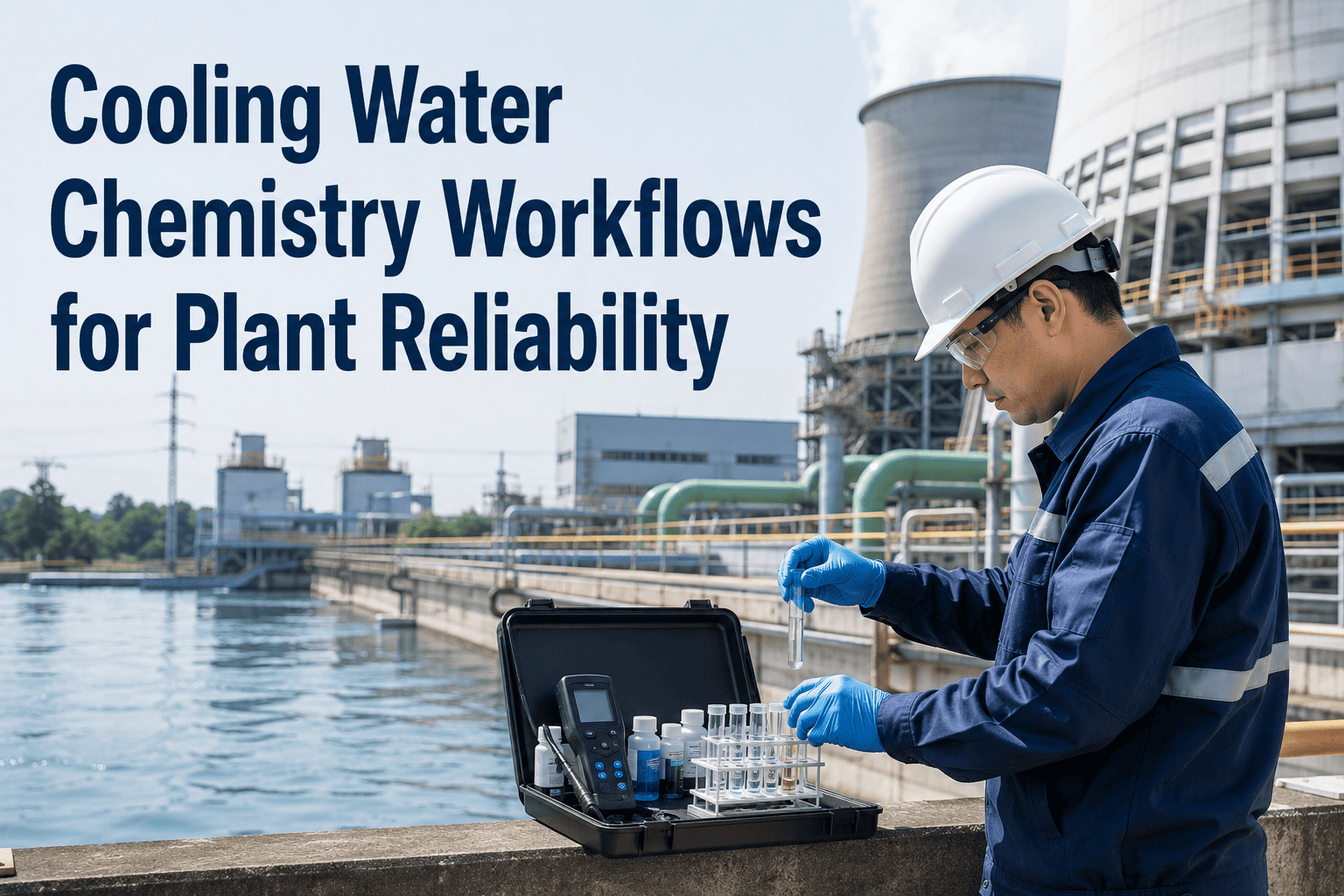
Cooling Water Chemistry Workflows for Plant Reliability
Track tests, catch excursions, manage dosing, and close corrective work orders — all linked to your condenser and heat exchanger asset records.
Live Chemistry Parameters
Conductivity
2,410 µS — High
Corr. Inhibitor
Low — WO Open
Biocide Residual
0.4 ppm — OK
Cycles of Conc.
4.7 — Review
60–80%
Reduction in unplanned cooling events after CMMS-structured chemistry tracking
8–12%
Condenser heat transfer loss from unchecked scale — one week of pH drift
5–8 yrs
Equipment life extension from structured water treatment and corrosion programs
Where Chemistry Drift Becomes Asset Damage
01
Scale Deposition on Condenser Tubes
Calcium and magnesium concentrate as water evaporates, precipitating as hard insulating scale on heat exchanger tubes — restricting flow and forcing increased fan and pump load to maintain output.
OxMaint triggers weekly conductivity and cycles-of-concentration sampling WOs with automated escalation when readings exceed configurable limits.
02
Corrosion from Inhibitor Depletion
Imbalanced pH and low inhibitor levels allow dissolved oxygen and aggressive anions to thin tube walls progressively — damage invisible externally until outage inspection reveals pitting or wall loss.
OxMaint logs corrosion inhibitor and pH readings per system; out-of-range results auto-generate corrective dosing work orders before tube damage accumulates.
03
Microbiological Fouling
Insufficient biocide residual allows Legionella and biofilm-forming bacteria to colonize fill media and basin surfaces — degrading heat transfer performance and creating public health and regulatory exposure.
OxMaint schedules biocide residual checks on configurable intervals, with regulatory compliance documentation stored against each asset record.
04
Cycles-of-Concentration Excursion
High concentration cycles accelerate scaling and corrosion simultaneously. Low cycles waste chemical treatment and water. Both drift silently between manual readings without a structured tracking cadence.
OxMaint captures conductivity and makeup flow trends to surface CoC drift before it crosses the damage threshold in either direction.
One Dashboard for Every Chemistry Test, Every Excursion, Every Corrective Action
OxMaint links chemistry readings directly to condenser and heat exchanger asset records — so every out-of-range result creates a traceable work order, not just a number in a logbook. Your chemistry program becomes a documented maintenance discipline.
Chemistry Sampling Schedule — OxMaint PM Template
How OxMaint Closes the Chemistry-to-Maintenance Loop
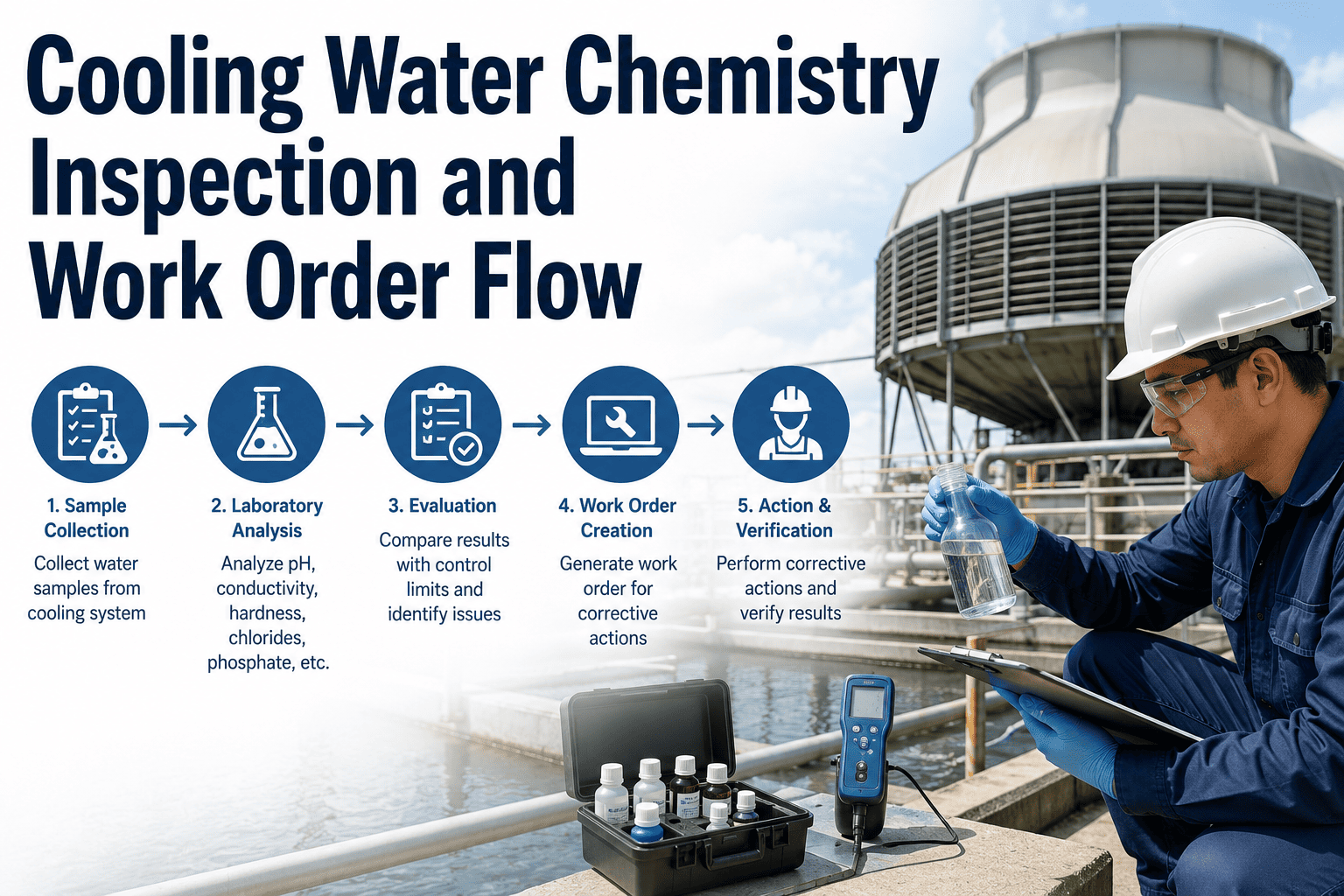
1
Scheduled Sampling Tasks
Chemistry tests are scheduled as recurring PM work orders per system — daily, weekly, or monthly — with configurable checklists that capture readings, technician sign-off, and sample source in one digital record.
2
Threshold-Based Alert Generation
Every reading is compared against configurable plant-specific control limits. Out-of-range results trigger immediate alerts to the maintenance supervisor — not end-of-week report reviews.
3
Corrective Dosing Work Orders
Exceedance alerts automatically generate corrective work orders — dosing task, chemical type, target dose, responsible technician — assigned and tracked to closure before the next sampling interval.
4
Trend Reporting and Audit Trail
OxMaint stores all chemistry readings, excursion events, and corrective actions against the asset record — providing a complete, retrievable history for regulatory audits, outage planning, and condenser fouling root cause analysis.
Frequently Asked Questions
How does OxMaint link chemistry excursions to specific equipment damage risk?
Chemistry sampling tasks are registered against the cooling system asset in OxMaint — not in a separate logbook. When an excursion is flagged, the corrective WO is created against the same asset record, giving the maintenance team a clear line between the chemistry finding and the equipment at risk. This upstream-to-downstream correlation is what prevents outage investigations from starting at zero.
Register your cooling systems in OxMaint.
Can OxMaint manage multiple cooling systems across a multi-unit plant?
Each cooling system — main condenser, closed cooling water loops, auxiliary coolers — is registered as an individual asset with its own chemistry PM template and control limits. Multi-unit plants can run differentiated sampling schedules per system from one dashboard without settings from one unit overriding another.
See multi-system configuration in a live demo.
How does OxMaint support Legionella compliance documentation?
Biocide residual and microbiological count tests are scheduled as compliance-critical PM tasks with mandatory completion windows. Results, technician sign-offs, and any corrective dosing actions are stored with full timestamps against the asset record — ready for extraction in audit-ready format without manual compilation.
What reports does OxMaint generate for chemistry program performance?
OxMaint generates per-system reports covering PM completion rate, excursion frequency by parameter, open corrective WO aging, and trend charts of key chemistry indicators over configurable date ranges. These support both operational review and long-term outage planning.
Can field technicians log chemistry readings on mobile devices?
OxMaint's mobile app delivers chemistry sampling checklists to technicians on any smartphone — readings, pass/fail flags, and photos are captured on-device and synced to the asset record in real time. No paper forms, no back-office transcription, no data entry delay.
Try the mobile workflow free.
Chemistry Drift That Started Last Week Is Already Costing You — You Just Cannot See It Yet
OxMaint gives your chemistry program the structure it needs: scheduled sampling tasks, threshold-based excursion alerts, corrective dosing work orders, and full audit trails — all linked to your condenser and heat exchanger asset records.