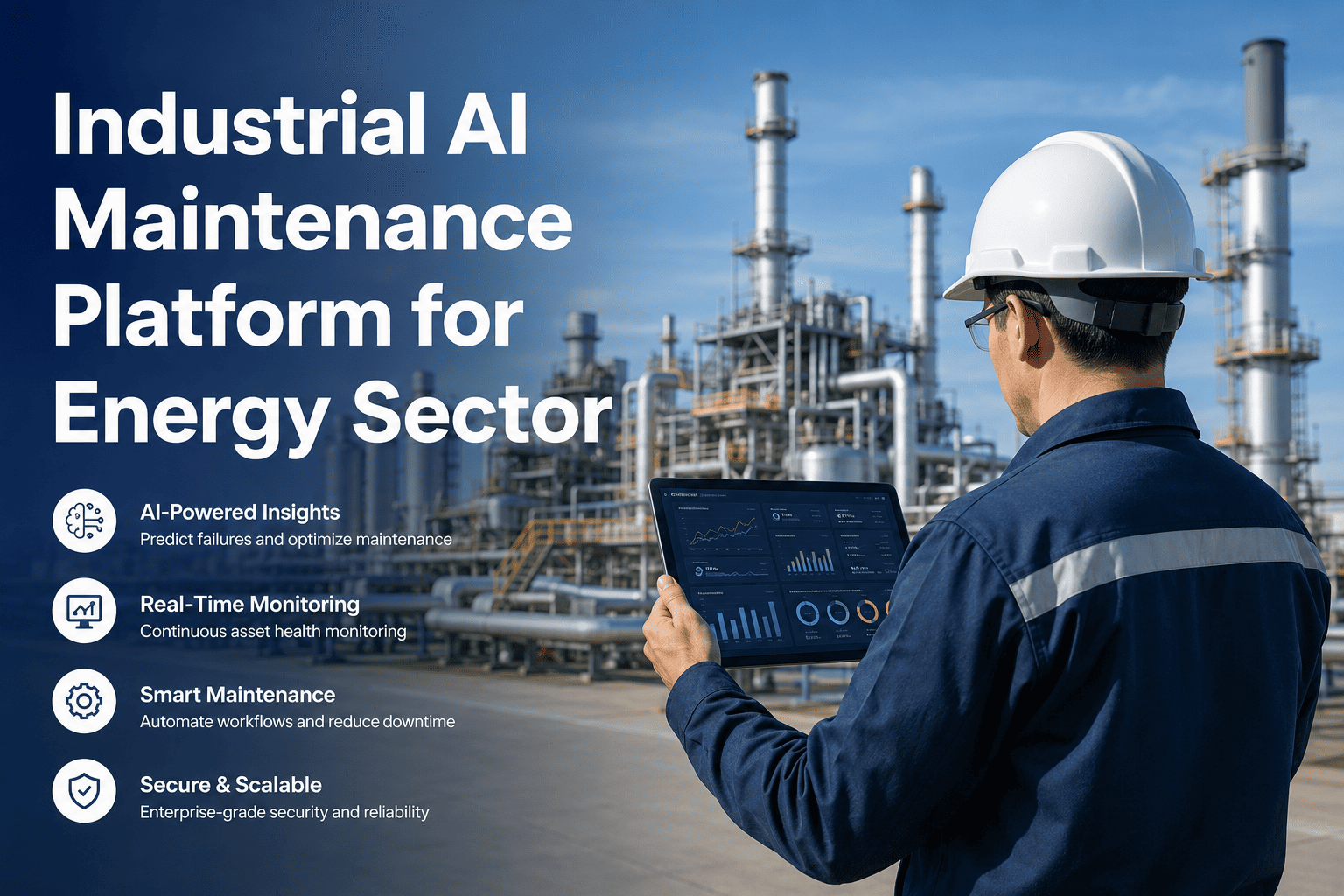
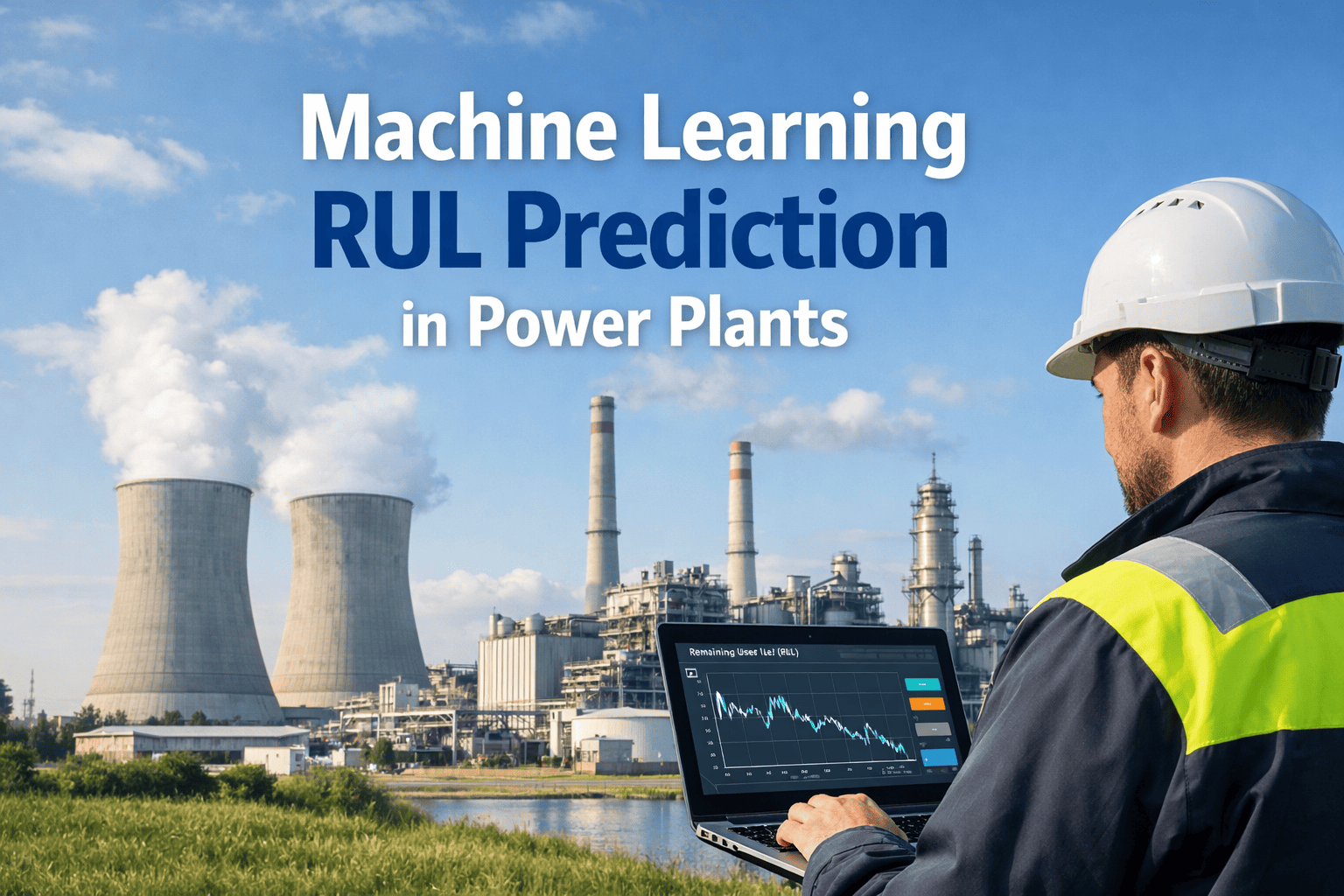
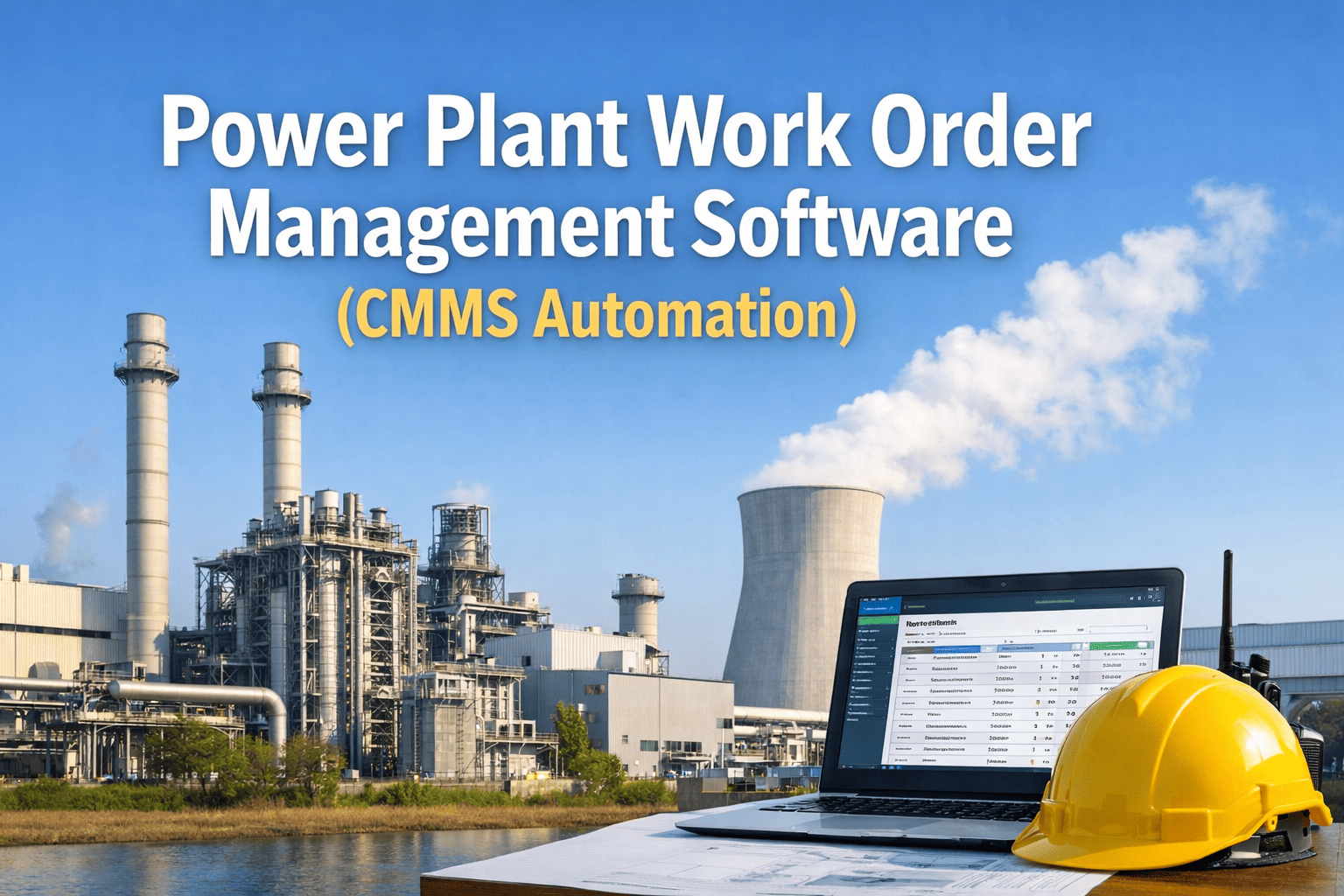
The energy sector is entering a period of operational transformation driven not by new generation assets, but by what happens to existing ones between planned maintenance windows. Aging thermal plants, expanding renewables portfolios, and tightening grid reliability obligations are stretching maintenance teams beyond what traditional CMMS tools and paper-based inspection rounds can handle. Industrial AI maintenance platforms are filling this gap — not by replacing engineers, but by giving them a 10× improvement in what they can see, predict, and act on across hundreds of assets simultaneously. This article examines what these platforms actually do in energy sector operations, what separates effective deployments from expensive failures, and how utility operators are measuring the results. Book a demo to see OxMaint's AI maintenance platform operating in an energy sector environment and ask questions specific to your plant type and asset mix.
Industry Deep-Dive · AI Platform · Energy & Utilities
Industrial AI Maintenance Platform for the Energy Sector
How AI-powered maintenance is transforming reliability, cost control, and compliance in power generation and utility operations — what works, what fails, and how to deploy it right.
The Context
Why the Energy Sector Needs AI Maintenance Now
Four converging pressures are making traditional maintenance approaches inadequate for modern energy operations. Understanding these pressures clarifies exactly what an AI platform needs to solve — and what it does not.
Pressure 01
Asset Age Without Replacement Budget
A significant share of global thermal generation capacity was built before 1990. Capital replacement cycles are extending due to budget constraints and transition uncertainty — meaning aging equipment must operate reliably beyond original design parameters. AI condition monitoring is the only scalable way to manage this risk without replacing assets.
Pressure 02
Renewables Expanding the Asset Count
A utility that previously managed 3 large thermal units now manages hundreds of wind turbines, thousands of solar inverters, and battery storage systems across dozens of sites. The asset-to-technician ratio has exploded. No manual inspection programme scales to this complexity — AI-driven monitoring and automated work orders are the only operationally viable answer.
Pressure 03
Grid Reliability Obligations Tightening
Capacity market penalties, availability guarantees, and grid code compliance requirements mean that unplanned outages carry financial consequences that did not exist a decade ago. Demonstrating compliance requires documented evidence of proactive maintenance — which AI platforms generate automatically through digital work orders and audit trails.
Pressure 04
Maintenance Workforce Shortages
Experienced reliability engineers and maintenance technicians are retiring faster than they are being replaced. AI platforms preserve institutional knowledge by encoding expert diagnostic rules into the system — so a new technician guided by AI-generated work orders achieves better outcomes than the same technician working without it.
Platform Capabilities
What an Industrial AI Maintenance Platform Actually Does
The term "AI maintenance platform" covers a wide range of actual capabilities. In the energy sector, the following six functions are what differentiate a platform that generates real ROI from one that produces dashboards without operational impact.
1
Continuous Asset Health Scoring
Rather than binary pass/fail readings, AI platforms assign every monitored asset a health score (typically 0–100) that updates continuously based on sensor data. The score factors in multiple parameters simultaneously — a bearing temperature slightly elevated combined with a vibration trend moving upward produces a lower score than either parameter alone would trigger. This multi-parameter fusion is where AI outperforms threshold-based alerts.
OxMaint Feature: Asset Health Dashboard
2
Failure Mode Pattern Recognition
AI models trained on historical failure data recognise the parameter signatures that precede specific failure modes — not just that something is abnormal, but that the pattern of abnormality matches a bearing spall, a winding insulation degradation, or a seal leak. This specificity allows maintenance teams to prepare the correct parts and skills before arriving at the asset.
OxMaint Feature: AI Anomaly Detection
3
Automated Work Order Generation and Routing
When an AI alert fires, the platform automatically creates a work order, assigns it to the appropriate technician based on skill set and shift schedule, and populates it with the asset history, failure mode hypothesis, and recommended action. This eliminates the 2–4 hour delay between detection and dispatch that occurs in manual alert-to-work-order processes.
OxMaint Feature: Automated Work Orders
4
Predictive Maintenance Schedule Optimisation
Instead of fixed calendar intervals, AI-driven scheduling uses actual asset condition to determine when maintenance is genuinely needed. Assets in excellent condition get their intervals extended — reducing unnecessary downtime and parts consumption. Assets showing early deterioration get brought forward. This dynamic scheduling typically reduces preventive maintenance labour spend by 20–35%.
OxMaint Feature: Dynamic PM Scheduling
5
Regulatory Compliance Documentation
Energy sector audits require documented evidence of maintenance completion, condition assessments, and corrective action timelines. AI platforms generate this documentation automatically from operational data — creating the audit trail that manual records cannot produce reliably. When an auditor arrives unannounced, the compliance record is already complete.
OxMaint Feature: Digital Compliance Reports
6
Cross-Site Portfolio Analytics
Multi-site utility operators need to see performance across the portfolio — not just inside each plant. AI analytics platforms aggregate data across all sites to identify which locations have the highest unplanned failure rates, which asset types are consuming the most maintenance budget, and where reliability improvements at one site can be replicated at others.
OxMaint Feature: Portfolio Analytics Dashboard
OxMaint's AI platform delivers all six capabilities in a single system — from sensor monitoring to compliance reporting — without requiring separate tools for each function.
Deployment Reality
Why Some AI Maintenance Deployments Fail — and How to Avoid It
Adoption rates for AI maintenance platforms in energy are high, but success rates are not uniform. The failure modes below account for the majority of deployments that produce dashboards rather than operational change.
| Common Failure Mode |
Root Cause |
How to Avoid It |
| Data quality problems invalidate AI outputs |
Sensor calibration errors, missing readings, inconsistent tagging — AI models trained on dirty data produce unreliable alerts |
Conduct data quality audit before deployment. Fix sensor gaps and standardise asset naming before connecting AI models |
| Alert fatigue disengages maintenance teams |
Poorly tuned thresholds generate too many low-confidence alerts. Technicians stop responding after too many false positives |
Start with high-confidence, high-severity alerts only. Tune thresholds over 60–90 days before expanding alert scope |
| No integration with existing work order workflow |
AI alerts go to a separate inbox that is not connected to maintenance planning — creating two parallel systems and double-handling |
Require AI-to-CMMS work order integration before go-live. OxMaint integrates natively; for legacy CMMS, verify API compatibility first |
| Leadership adopts platform; technicians don't |
Platform imposed from top-down without technician involvement in threshold setting or alert validation — creates distrust of AI outputs |
Include reliability technicians in threshold configuration. Their knowledge of normal operating conditions improves AI accuracy significantly |
| ROI not tracked from day one |
No baseline captured before deployment — meaning savings are felt but cannot be demonstrated to justify renewal or expansion |
Capture 3-month pre-deployment baseline of downtime hours, maintenance spend, and failure events. Track delta monthly post-deployment |
What Good Looks Like
Energy Sector AI Maintenance: Performance Benchmarks
Failure Detection Lead Time
Schedule-based: 7–14 days avg
AI Predictive: 14–28 days avg
Unplanned Downtime Reduction
Maintenance Cost Reduction
Selecting a Platform
What to Evaluate When Choosing an AI Maintenance Platform for Energy
Platform selection decisions in the energy sector are long-term commitments. The evaluation criteria below separate platforms that are genuinely suited to industrial operations from those built for lighter commercial applications and retrofitted to the energy sector.
SCADA and industrial protocol integration
The platform must connect to OPC-UA, Modbus, DNP3, or your specific SCADA protocol without requiring data transformation middleware that adds failure points and latency.
Asset hierarchy depth
Energy operations have deep asset hierarchies: site → plant → system → equipment → component. The platform must reflect this structure so work orders, alerts, and reporting map to how your teams actually think about the facility.
Multi-site portfolio support
Single-site platforms that require separate instances for each plant cannot support the cross-site analytics and normalised benchmarking that portfolio-level management requires. Verify that portfolio aggregation is a native feature, not an add-on.
Offline mobile capability
Field technicians in substations, remote wind sites, and below-grade plant areas regularly operate without connectivity. The mobile app must function offline and sync when connection is restored — not require live internet for every data entry.
Configurable alert thresholds per asset type
A 200°C bearing temperature is critical on one machine and normal on another. Asset-type-specific threshold configuration is non-negotiable. Platforms with global thresholds applied across all assets will generate unacceptably high false positive rates in energy environments.
Regulatory reporting templates
The platform should include or support customisation of reports that meet your specific regulatory requirements — whether NERC CIP compliance documentation, environmental monitoring records, or grid operator availability reporting formats.
FAQs
Frequently Asked Questions
How is an AI maintenance platform different from a standard CMMS?
A CMMS records and manages maintenance activities. An AI maintenance platform predicts when maintenance is needed before failure occurs, automatically generates work orders from monitoring data, and learns from operational history to improve over time. OxMaint combines both functions in one system.
Start a free trial to explore the platform difference.
Does AI maintenance work for renewable energy assets like wind turbines and solar farms?
Yes, and renewables are often where AI monitoring delivers the fastest ROI — particularly offshore wind, where the cost of an unplanned crew deployment far exceeds most repair costs. The asset types and parameters differ from thermal plants, but the monitoring and AI pattern recognition principles are identical.
Book a demo to discuss renewable asset monitoring specifically.
What data security standards does OxMaint meet for energy sector deployments?
OxMaint supports SOC 2 Type II compliance, role-based access controls, and data residency options for regulated energy sector deployments. Specific security architecture details are available during a technical demo session for customers with detailed security requirements.
How long until the AI model is accurate enough to trust for critical asset alerts?
Rule-based threshold alerts are reliable from day one. AI anomaly detection that goes beyond static thresholds typically reaches high confidence after 60–90 days of training data per asset. Most customers run both in parallel during the calibration period to build technician confidence progressively.
Can the platform handle both legacy equipment from the 1980s and modern smart sensors simultaneously?
OxMaint supports manual data entry on mobile for legacy assets without sensors, alongside automated sensor feeds from modern equipment — in the same asset hierarchy and dashboard. Mixed-fleet management is a standard use case for energy sector customers, not an edge case.
The Energy Sector's Maintenance Gap Is an Operational Choice, Not a Technical Constraint
Every day without AI-powered condition monitoring is a day when your most critical assets are telling you something — and you cannot hear it. OxMaint gives your reliability team the eyes, the intelligence, and the workflow tools to act before failure, not after.