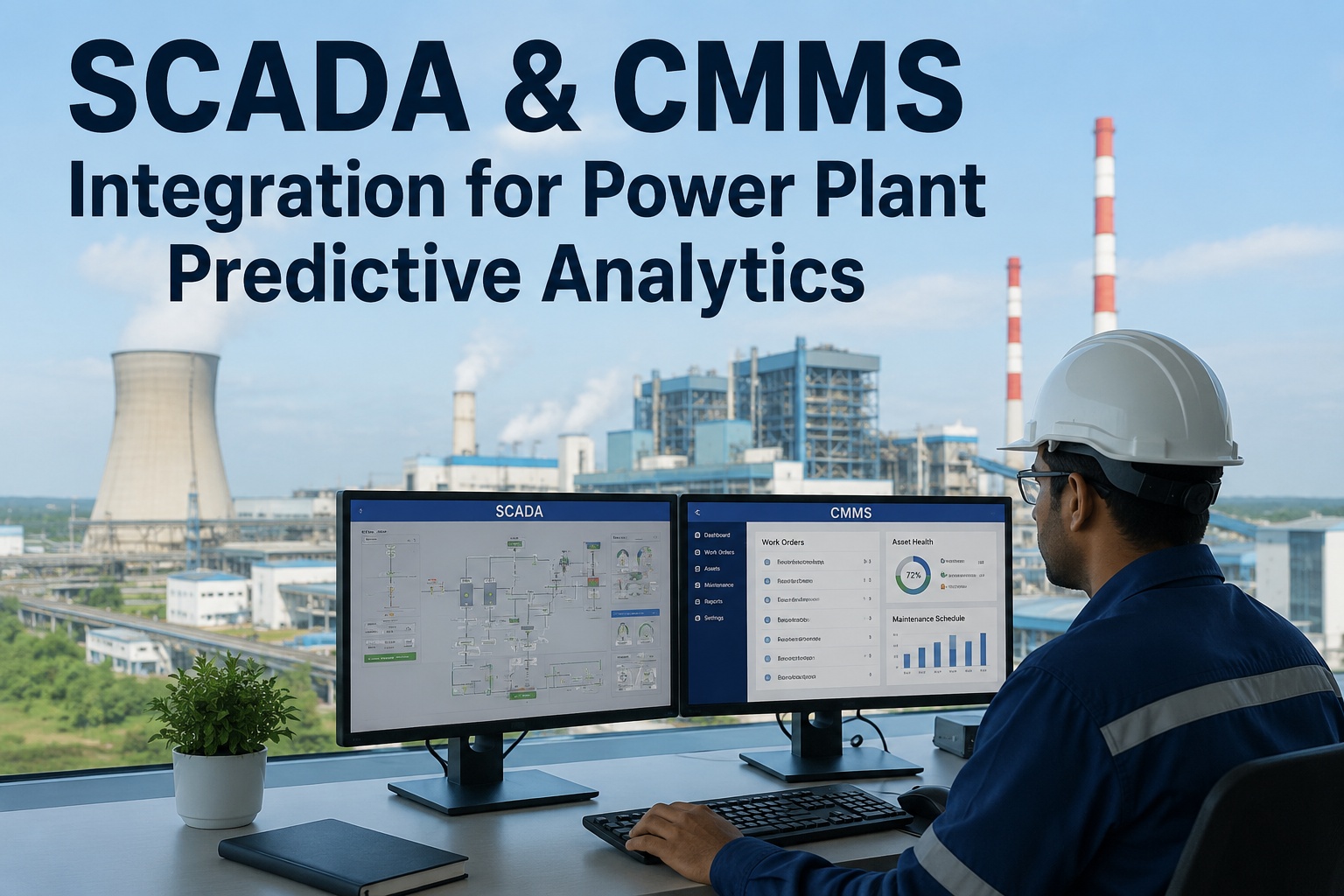
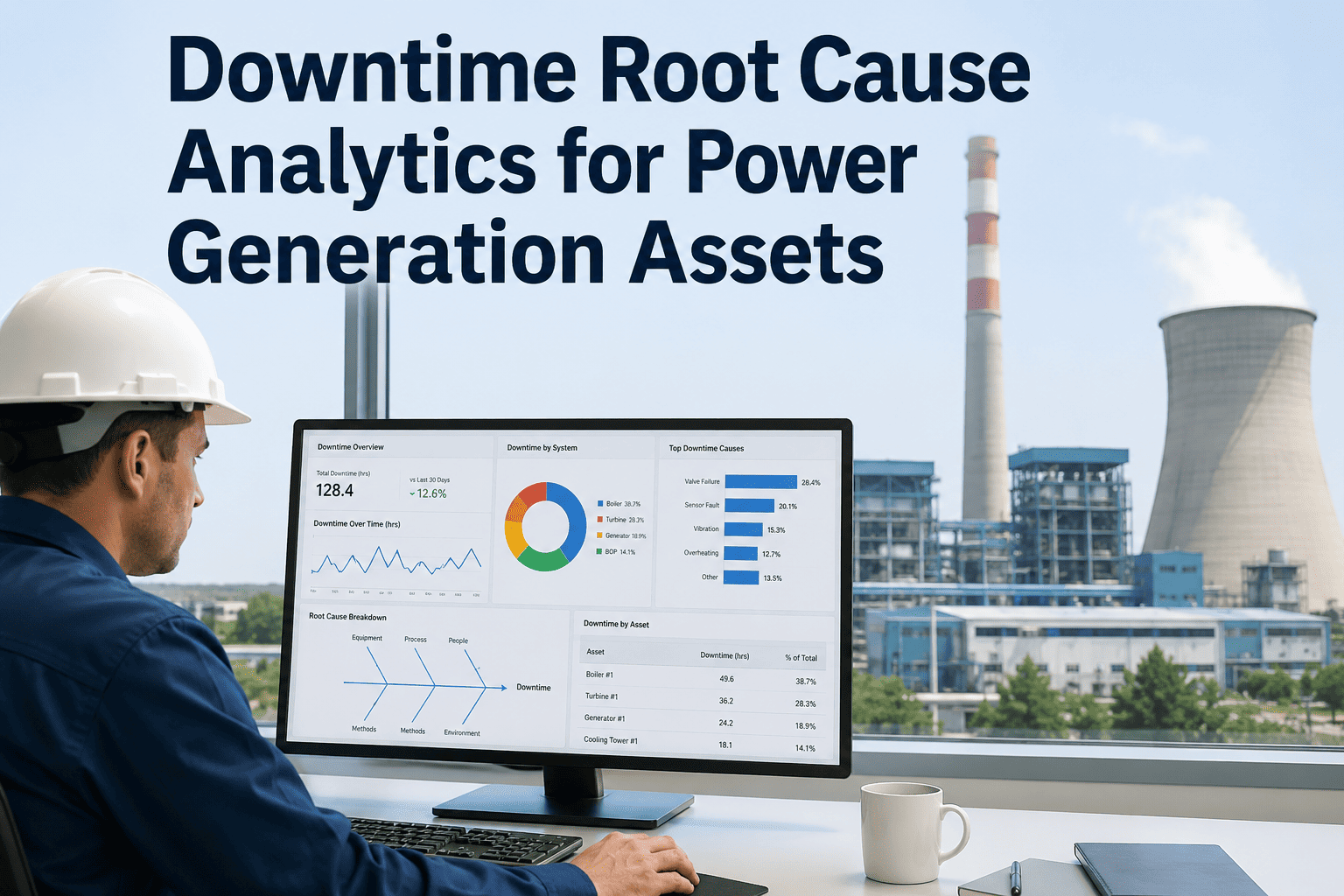
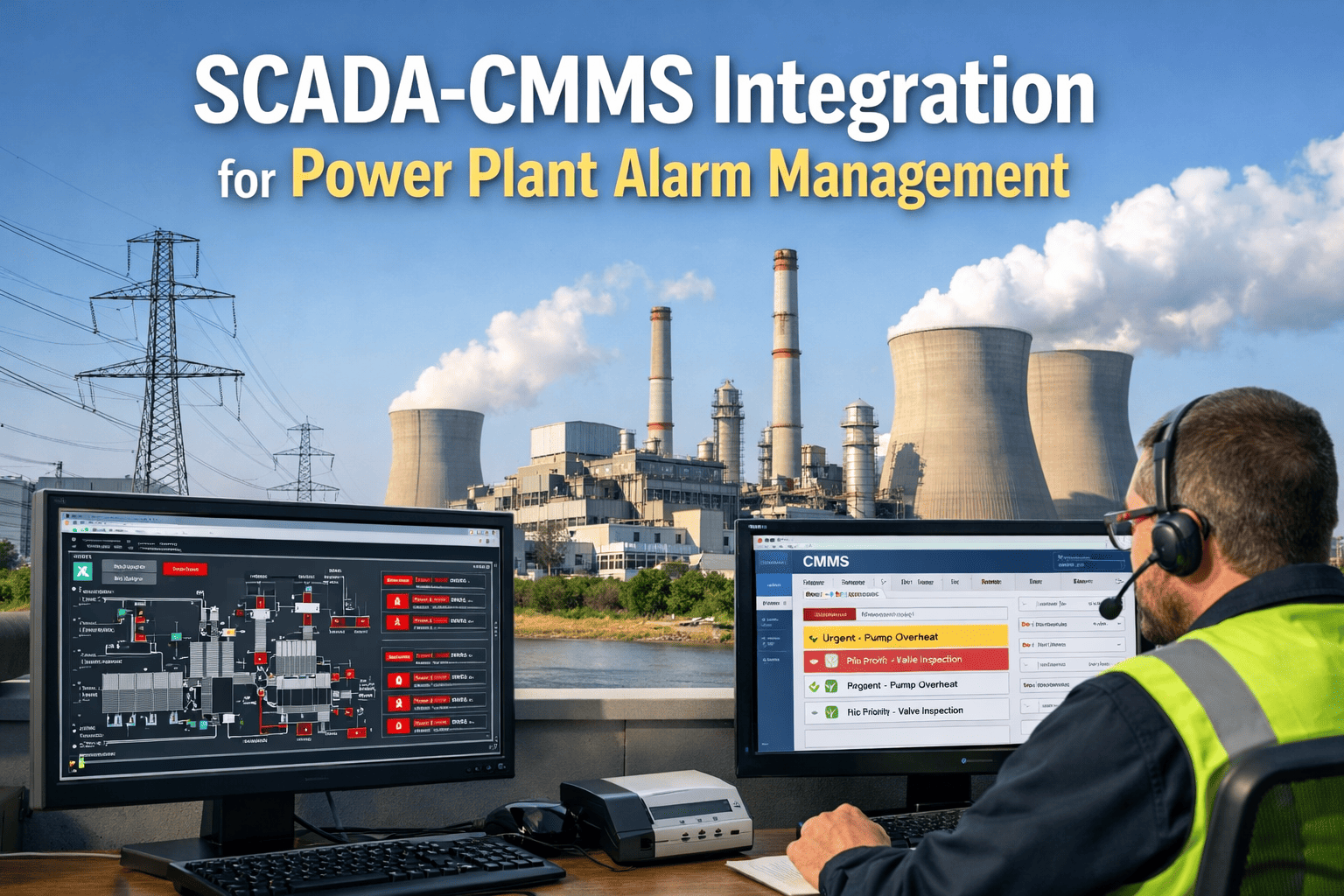
Your control room has data everywhere—SCADA screens showing real-time valve positions, DCS displays monitoring turbine temperatures, historians storing years of operational records. But when your plant manager asks why Unit 2's efficiency dropped 3% last month, finding the answer requires pulling data from five different systems, exporting to spreadsheets, and hours of manual analysis. This is the visibility gap that costs power plants millions annually. When SCADA, DCS, and analytics platforms work together seamlessly, that same question gets answered in minutes—with actionable insights that prevent the next efficiency drop before it happens.
The Integration Challenge
Why power plants struggle with fragmented control systems
SCADA
Remote monitoring & supervisory control
DCS
Distributed process control
Historian
Time-series data storage
Analytics
Predictive insights & ML
5+
Systems to query for answers
Hours
Of manual data analysis
$M+
Annual cost of visibility gaps
Understanding the Power Plant Control Ecosystem
Power plants rely on distinct but interconnected systems that each serve critical functions. SCADA systems handle supervisory monitoring across geographically distributed assets—substations, transmission lines, and remote equipment. DCS platforms manage the continuous, complex processes within the plant itself, controlling everything from boiler combustion to turbine speed with millisecond precision. Data historians capture and store the massive volumes of time-series data these systems generate, while analytics platforms transform that raw data into actionable intelligence. The challenge isn't that these systems don't work—it's that they don't work together effectively. Plants ready to bridge these gaps can sign up for integrated maintenance platforms that connect directly with existing control infrastructure.
SCADA vs DCS: Core Functions in Power Generation
SCADA Systems
Wide-area monitoring across multiple sites
Grid synchronization & load dispatch
Remote terminal unit (RTU) communication
Alarm management & event logging
Typically 1-10 second scan rates
Best For:Substations, transmission networks, renewable fleet management
+
DCS Systems
Tight loop control for continuous processes
Boiler, turbine & generator regulation
Advanced control algorithms (PID, MPC)
Built-in redundancy for reliability
Millisecond response times
Best For:Thermal plants, combined cycle units, continuous process control
The Data Integration Architecture
Modern power plant integration relies on standardized protocols that enable seamless communication between disparate systems. OPC UA (Unified Architecture) has emerged as the dominant standard, providing secure, platform-independent data exchange between SCADA, DCS, historians, and analytics platforms. This protocol supports both real-time data streaming and historical data access, making it ideal for power generation environments where both immediate control and long-term analysis matter. Plants that schedule a demo of integrated CMMS solutions can see how these protocol connections translate into automated maintenance workflows.
Integrated Data Architecture
How data flows from sensors to actionable insights
Field Layer
Sensors
PLCs
RTUs
Actuators
Control Layer
SCADA
DCS
Data Layer
Historian
Analytics
Action Layer
CMMS
Automated Work Orders
OPC UA Protocol
Secure, platform-independent data exchange standard connecting all layers
Market Growth Driving Integration Investments
The power plant control system market reached $7.5 billion in 2024 and continues expanding as plants modernize aging infrastructure. DCS systems dominate in thermal and nuclear facilities requiring precise continuous process control, while SCADA adoption is accelerating fastest—driven by renewable energy integration and the need for real-time grid monitoring across distributed assets. The integration of predictive maintenance and data analytics is becoming standard practice, with facilities reporting significant improvements in operational efficiency and reliability.
Power Plant Control System Market Indicators
$7.5B
Market Size 2024
Growing 6%+ CAGR
10-15%
Efficiency Improvement
With DCS centralization
60%
AI Integration by 2027
Predicted adoption rate
32%
Downtime Reduction
With edge computing
Bridge Your Control System Data Gaps
See how OXmaint connects with SCADA, DCS, and historian systems to transform operational data into automated maintenance workflows and predictive insights.
From Data to Decisions: The Analytics Integration Layer
Raw data from SCADA and DCS systems becomes valuable only when transformed into actionable intelligence. Modern analytics platforms ingest time-series data from historians, apply machine learning algorithms to identify patterns, and generate predictive insights that enable condition-based maintenance rather than arbitrary schedules. This shift from reactive to predictive operations can reduce unplanned downtime by 35-50% while cutting maintenance costs by 25-30%. The key is ensuring analytics outputs connect directly to maintenance execution systems—when an algorithm predicts bearing failure in 30 days, that insight must automatically generate a work order with the right parts, technician assignments, and scheduling. Facilities exploring this capability can create a free account to evaluate how automated workflows connect with existing infrastructure.
Integration Benefits by Function
Real-Time Visibility
Unified dashboards combining SCADA alerts, DCS process data, and maintenance status in single view
85%faster issue identification
Automated Work Orders
SCADA anomalies trigger maintenance requests with diagnostic data and recommended actions
40%reduction in response time
Predictive Analytics
ML algorithms analyze historian data to forecast failures weeks before they occur
35-50%downtime reduction
Cost Optimization
Data-driven decisions eliminate unnecessary preventive tasks while catching real issues early
25-30%maintenance cost savings
Expert Perspective: Making Integration Work
The real value of SCADA and DCS integration isn't just about connecting systems—it's about creating a feedback loop where real-time operational data automatically informs maintenance decisions. When sensor data from your control systems flows directly into a CMMS, you shift from scheduled maintenance to true condition-based maintenance. The technology exists today; success depends on thoughtful implementation that aligns with your operational workflows.
Start with Critical Assets
Prioritize integration for equipment where unplanned downtime has the highest cost impact
Standardize on OPC UA
Future-proof your architecture with the industry-standard protocol for cross-system communication
Connect to Maintenance Execution
Ensure analytics insights translate directly into work orders and technician assignments
Power plants that successfully integrate their control systems with maintenance management platforms report transformative results: faster response to developing issues, better resource allocation, and the ability to make data-driven decisions about asset health. The technology foundation exists—OPC UA provides the communication standard, modern historians handle the data volumes, and AI-powered analytics deliver the predictive insights. What remains is connecting these capabilities to the people and processes that keep plants running. Organizations ready to explore this integration can book a consultation to discuss their specific control system environment and integration requirements.
Connect Your Control Systems to Smarter Maintenance
OXmaint integrates with SCADA, DCS, and historian platforms to transform operational data into automated work orders, predictive alerts, and actionable maintenance insights.
What is the difference between SCADA and DCS in power plants?
SCADA (Supervisory Control and Data Acquisition) systems are designed for wide-area monitoring and supervisory control across geographically distributed assets like substations, transmission lines, and renewable energy fleets. They typically operate with 1-10 second scan rates and excel at remote monitoring and alarm management. DCS (Distributed Control Systems) handle tight-loop process control within a single facility, managing continuous processes like boiler combustion and turbine regulation with millisecond response times. In power plants, SCADA often monitors the grid interface while DCS controls the generation process itself.
How does OPC UA enable SCADA and DCS integration?
OPC UA (Unified Architecture) is a platform-independent communication standard that provides secure data exchange between different industrial systems. Unlike older protocols tied to specific operating systems, OPC UA works across Windows, Linux, and embedded systems while supporting both real-time data streaming and historical data access. This allows SCADA systems, DCS platforms, data historians, and analytics applications from different vendors to communicate seamlessly, creating a unified data architecture without custom integration work for each system pair.
What benefits does CMMS integration with SCADA/DCS provide?
Integrating CMMS with control systems enables condition-based maintenance where equipment anomalies detected by SCADA or DCS automatically trigger work orders in the maintenance system. This eliminates manual fault reporting, ensures rapid technician response with full diagnostic context, and enables predictive maintenance based on actual equipment condition rather than arbitrary schedules. Organizations report 35-50% reductions in unplanned downtime, 25-30% maintenance cost savings, and 40% faster response times when control system data flows directly into maintenance workflows.
What role do data historians play in power plant analytics?
Data historians are specialized time-series databases designed to efficiently store and retrieve the massive volumes of operational data generated by power plant control systems. They capture data at full resolution with advanced compression (up to 95% storage reduction), maintain precise timestamps across distributed sources, and provide rapid query access to historical trends spanning years. This historical data foundation enables predictive analytics, root cause analysis, efficiency trending, and compliance documentation—functions that real-time SCADA/DCS data alone cannot support.
How long does power plant control system integration typically take?
Integration timelines vary based on system complexity and scope. Simple integrations connecting a single SCADA or DCS system to a CMMS platform via OPC UA can be completed in 6-12 weeks including configuration, testing, and training. More comprehensive integrations spanning multiple control systems, historians, and analytics platforms typically require 3-6 months. The key factors affecting timeline include the number of data points being integrated, the protocols supported by existing systems, cybersecurity requirements, and the level of workflow automation desired.