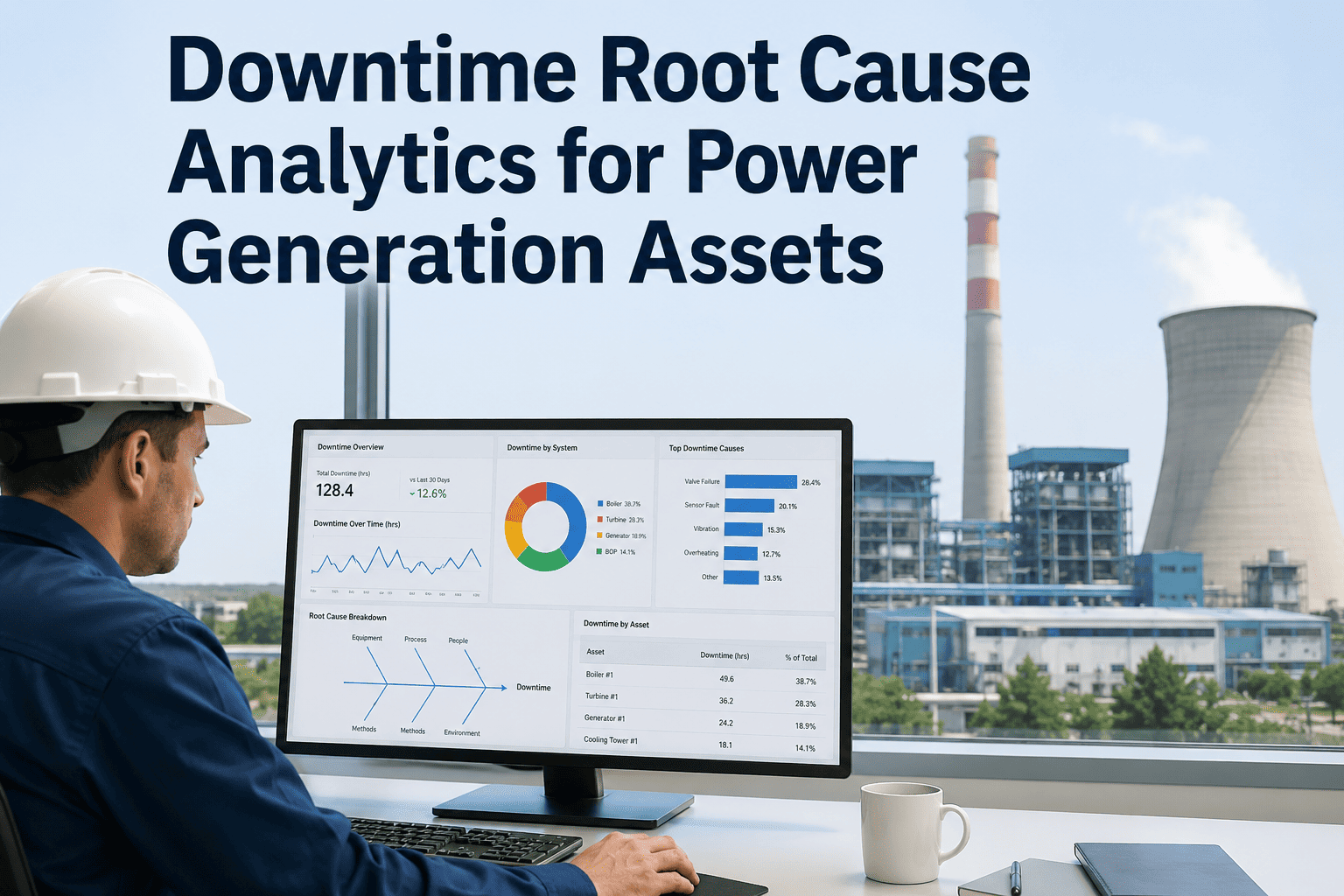
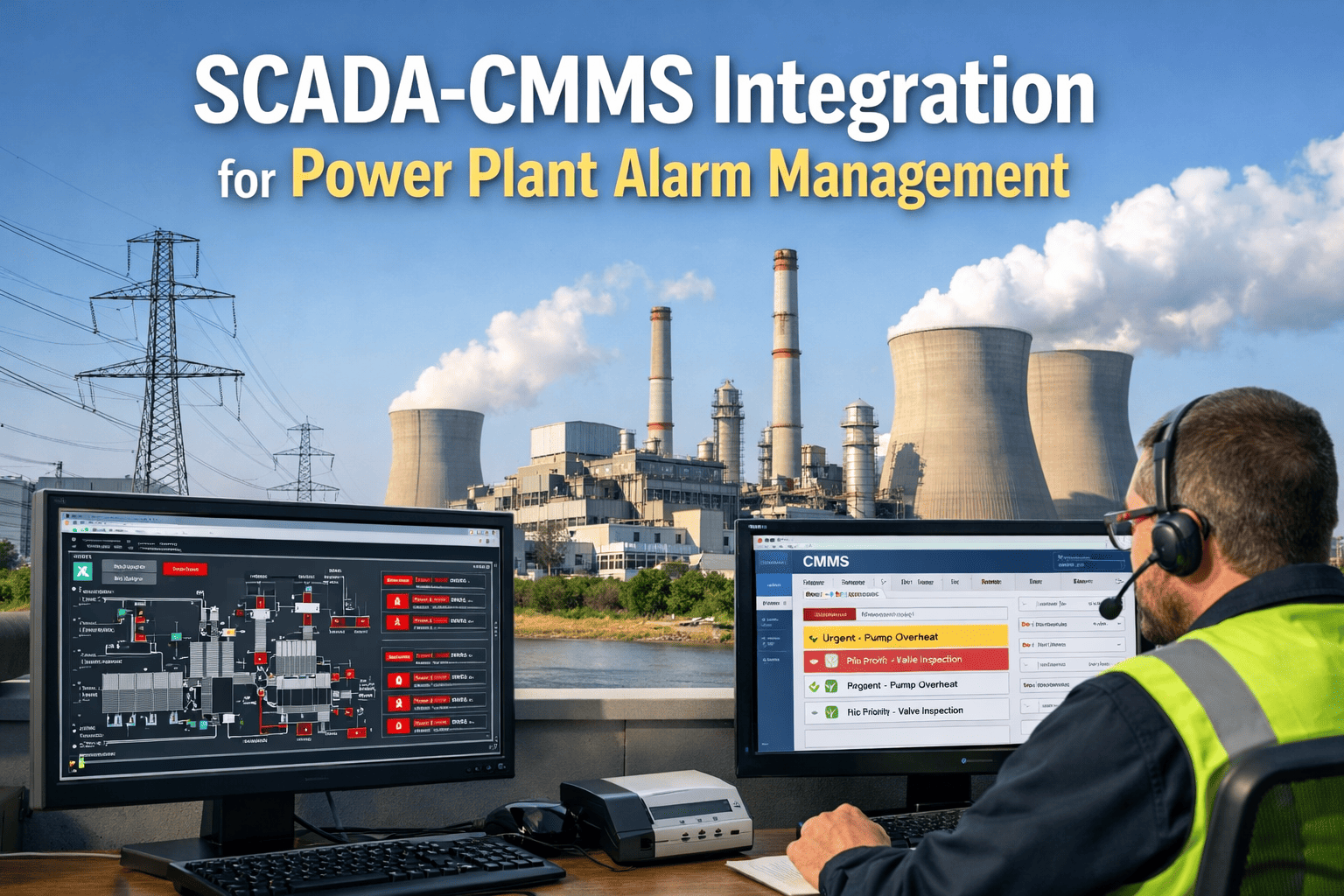
Modern power plants operate under relentless pressure — generating reliable output while managing thousands of assets, any one of which can trigger costly unplanned downtime. Traditional monitoring methods rely on scheduled inspections and reactive repairs, leaving plant operators blind to developing failures until damage is already done. IoT-based monitoring changes the equation entirely: sensors embedded across turbines, transformers, pumps, and switchgear stream live performance data into a unified platform, where AI analytics detect anomalies before they escalate. Start your free trial on Oxmaint to connect your plant assets to real-time IoT monitoring and predictive maintenance intelligence today.
Every Asset. Every Signal. One Dashboard.
Real-time IoT monitoring converts raw sensor data from thousands of plant assets into actionable maintenance intelligence — reducing unplanned downtime, extending equipment life, and protecting revenue per megawatt.
73%
of unplanned outages are detectable 2–4 weeks in advance with IoT sensor data
$260K
average cost per hour of unplanned power plant downtime — IoT monitoring directly protects this
40%
reduction in maintenance costs reported by plants adopting predictive IoT monitoring programs
99.7%
availability target achievable for critical generation assets with continuous condition monitoring
Why Traditional Plant Monitoring Falls Short
Scheduled walk-arounds and SCADA alerts catch visible failures — but developing faults in bearings, insulation, windings, and cooling systems give weeks of warning through vibration, temperature, and electrical signature changes that only IoT sensors capture continuously. The gap between what traditional systems see and what is actually happening inside the equipment is where most catastrophic failures originate.
Gap 01
Scheduled Checks Miss Developing Faults
A bearing running hot at 3 AM on a Tuesday is invisible to a weekly walkround. IoT sensors monitor 24/7 without labor cost and flag the anomaly the moment it begins — not the next time a technician passes through.
Gap 02
SCADA Alarms Fire After Damage Is Done
SCADA threshold alarms are set for protection, not prediction. By the time a trip occurs, the failure mode has already progressed. Predictive IoT analytics operate on trend patterns — identifying degradation weeks before protection thresholds are reached.
Gap 03
Data Silos Block Cross-Asset Intelligence
Vibration data in one system, thermal data in another, work orders in a third. When sensors don't talk to maintenance records, correlation between operating conditions and failure history is lost. Unified IoT platforms close this gap.
Gap 04
Remote Sites Have No Continuous Oversight
Hydro, wind, and solar assets far from central operations are among the most expensive to staff but easiest to monitor remotely. IoT sensor networks stream live status from every remote site into a central dashboard — no additional headcount required.
How IoT Monitoring Works in a Power Plant
IoT-based plant monitoring follows a structured data pipeline — from sensor installation on critical assets through AI-powered analysis to maintenance action. Understanding each layer helps plant engineers design a system that integrates with existing SCADA, DCS, and CMMS infrastructure without disrupting operations.
01
Sensor Layer — Asset-Level Data Capture
Vibration, temperature, current, voltage, pressure, and flow sensors attach to turbines, generators, transformers, pumps, cooling towers, and switchgear. Wireless and wired configurations coexist. Edge devices pre-process raw signals locally to reduce bandwidth.
Vibration
Thermal
Electrical Signature
Pressure
Flow
02
Connectivity Layer — Secure Data Transmission
Data transmits over industrial protocols — Modbus, OPC-UA, DNP3, IEC 61850 — or cellular and LoRaWAN for remote assets. Encrypted transmission meets NERC CIP cybersecurity standards. Redundant pathways ensure data continuity during communication interruptions.
OPC-UA
Modbus
IEC 61850
LoRaWAN
03
Analytics Layer — AI Pattern Recognition
Machine learning models trained on equipment failure signatures compare live readings against baseline performance profiles. Anomaly scores, remaining useful life estimates, and fault classification labels are generated automatically — not by threshold rules, but by pattern recognition across thousands of data points per asset.
Anomaly Detection
RUL Estimation
Fault Classification
04
Action Layer — Work Order Generation
When the analytics layer flags a degrading asset, Oxmaint automatically creates a prioritized work order with the sensor context attached — vibration trend chart, thermal image, anomaly timeline — routed to the correct maintenance team with suggested corrective actions. No manual handoff required.
Auto Work Orders
Priority Routing
Crew Assignment
Ready to Connect Your Plant?
From Sensor to Work Order in Under 60 Seconds
Oxmaint connects IoT sensor data directly to your maintenance workflow — no custom integration required. See the full pipeline live in a demo built around your plant asset types.
Asset Coverage by Plant Type
Different generation technologies carry different critical asset profiles. The monitoring parameters and failure modes for a gas turbine differ substantially from a wind turbine or a hydroelectric generator. Oxmaint's IoT integration supports sensor configuration templates tuned to each plant type — reducing setup time and ensuring the right parameters are monitored from day one.
What Oxmaint IoT Monitoring Delivers — 90-Day Results
Unplanned Downtime
-58%
Predictive alerts converted reactive emergency repairs into planned maintenance windows — protecting generation output and avoiding emergency contractor premiums.
MTTR (Mean Time to Repair)
-34%
Technicians arrive with sensor context — vibration trends, thermal images, anomaly timeline — eliminating diagnostic time at the asset. Repairs start immediately.
Maintenance Cost per MWh
-29%
Condition-based intervals replace calendar-based cycles. Parts replaced when data says replace them — not on a schedule that may be too early or too late.
Asset Coverage
3x
The same maintenance team monitors three times as many assets because IoT sensors surface issues automatically — no need to physically inspect every asset on every shift.
Audit Readiness
100%
Every sensor reading, anomaly flag, and maintenance action is timestamped and traceable. NERC CIP audit preparation drops from days to hours.
Spare Parts Inventory
-21%
Remaining useful life estimates allow parts to be ordered ahead of need — eliminating both emergency procurement and excessive safety stock.
Oxmaint vs. Standalone SCADA — The Monitoring Gap
| Capability |
SCADA Only |
Oxmaint IoT Platform |
| Fault detection timing |
At or after threshold breach (protection) |
2–4 weeks before failure (prediction) |
| Data granularity |
Process-level, 1–60 second scans |
Asset-level, high-frequency sampling per sensor |
| Maintenance integration |
Manual handoff to CMMS required |
Auto work order creation with sensor context attached |
| AI analytics |
Rule-based threshold alarms only |
ML anomaly detection with fault classification |
| Remote asset visibility |
Limited to hardwired field devices |
Wireless, cellular, LoRaWAN for any remote site |
| Compliance reporting |
Separate export and manual compilation |
Automated NERC CIP / ISO 55001 audit reports |
Frequently Asked Questions
Does Oxmaint IoT integration work alongside existing SCADA or DCS systems?
How long does sensor installation and platform onboarding take for a mid-size plant?
For a plant with 50–200 monitored assets, sensor installation typically runs 2–3 weeks depending on access windows. Platform onboarding — asset setup, threshold configuration, team training — runs concurrently and is complete within the same window. First anomaly alerts are typically live within 30 days.
Start your free trial to begin asset configuration immediately.
What cybersecurity standards does the IoT data transmission meet?
All sensor data is encrypted in transit and at rest. The platform architecture supports NERC CIP compliance requirements for electronic security perimeters. Data segmentation, role-based access, and audit logging are built into the platform — not optional add-ons. Air-gapped and private cloud deployment options are available for high-security environments.
Can the platform generate automatic work orders without manual review?
Yes. Configurable automation rules create, prioritize, and assign work orders when anomaly scores cross defined thresholds. High-confidence alerts trigger immediate work orders; lower-confidence signals create watch-list items for supervisor review. The automation level is fully configurable per asset class.
Book a demo to configure automation rules for your maintenance workflow.
Does Oxmaint support renewable energy assets like wind farms and solar plants?
Yes. Wind turbine gearboxes, pitch systems, and main bearings as well as solar inverters, string combiner boxes, and tracker systems are all supported with asset-specific sensor templates and failure mode libraries. Remote connectivity via cellular and LoRaWAN makes distributed renewable asset monitoring practical without dedicated fiber runs to each turbine or array.
Stop Waiting for Assets to Fail. Start Monitoring Them.
Connect your power plant's critical assets to real-time IoT monitoring and AI-powered predictive analytics on Oxmaint. Your first work order from a sensor alert can be live within days — not months.
Real-Time Sensor Monitoring
AI Anomaly Detection
Auto Work Orders
NERC CIP Compliance
SCADA Integration