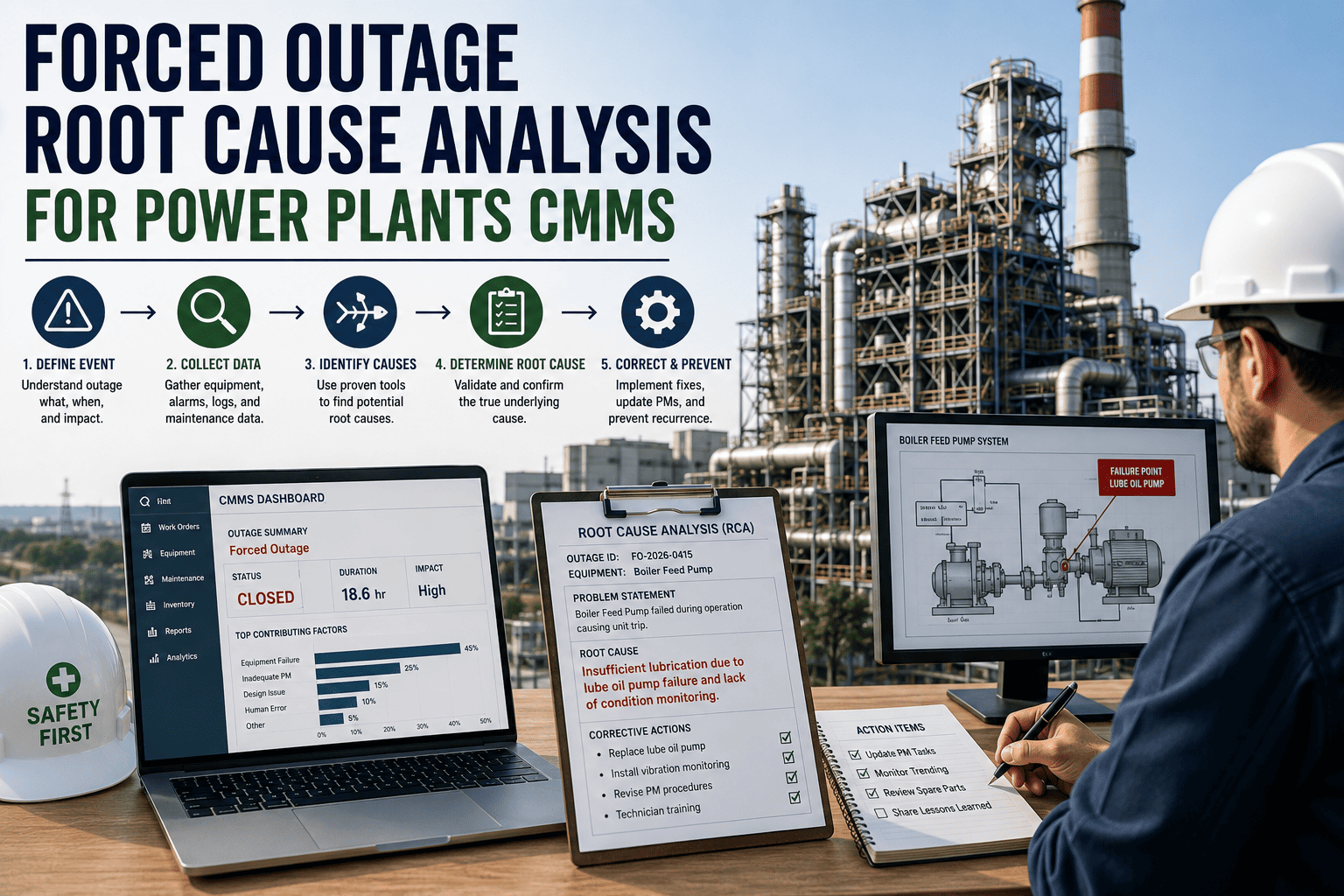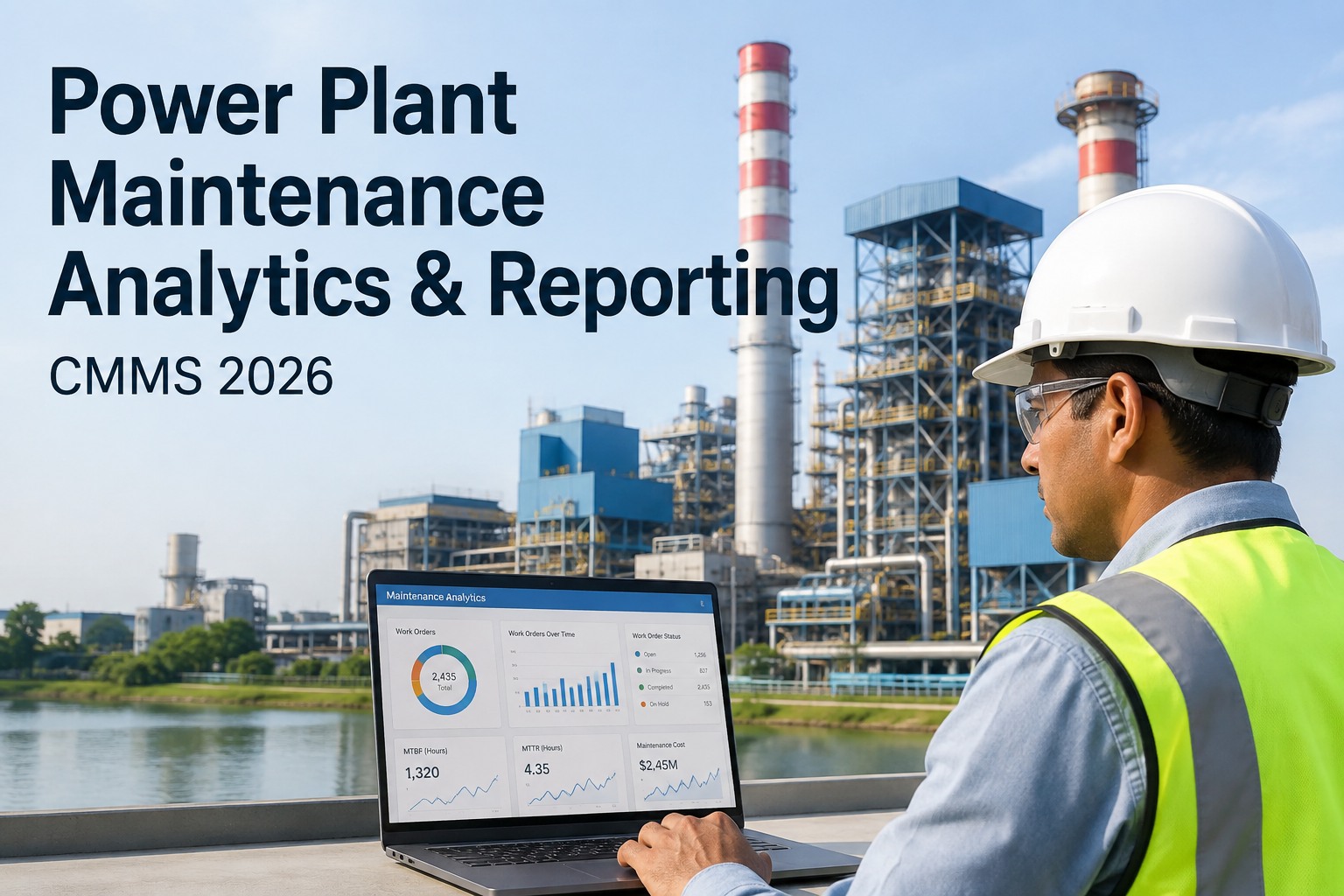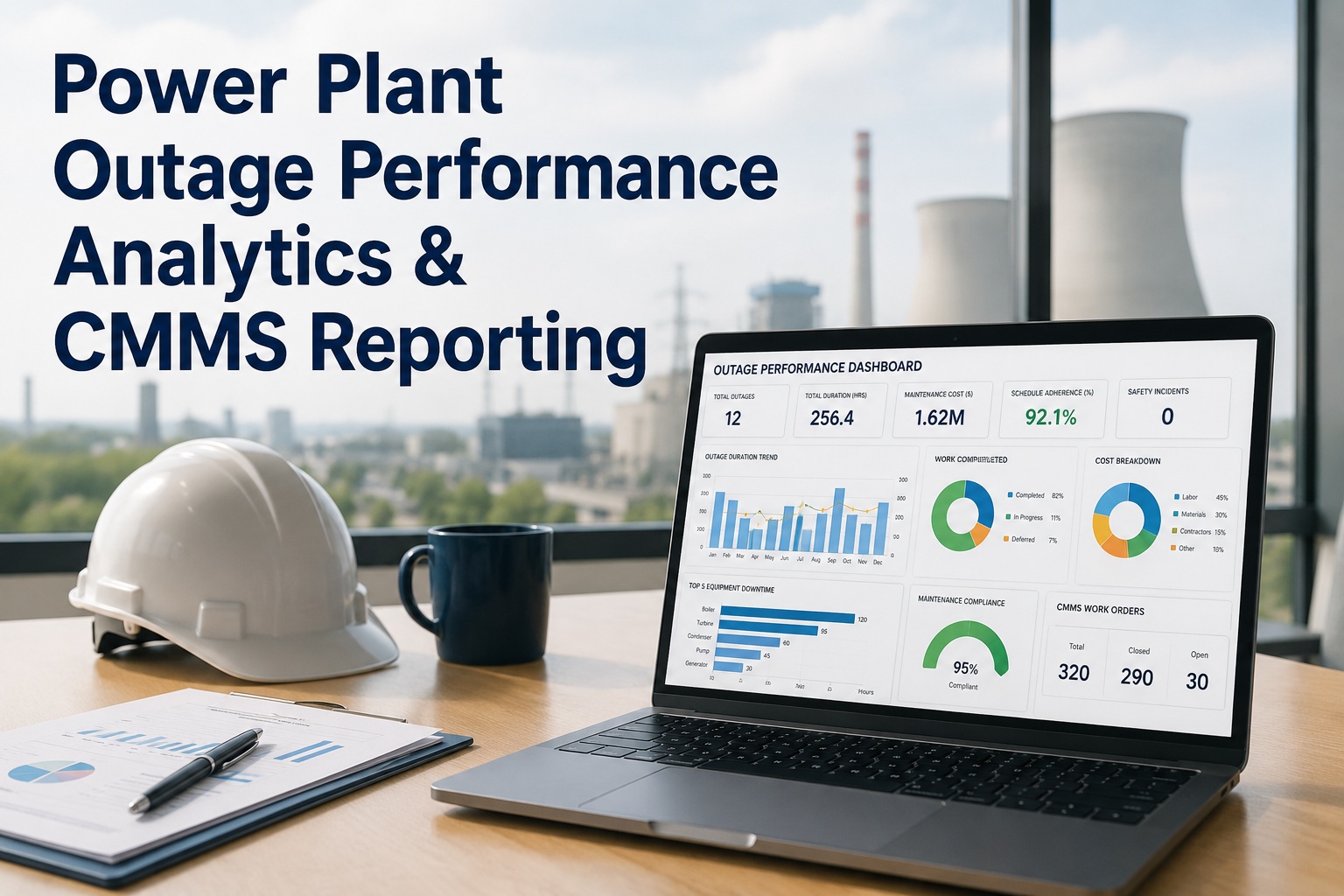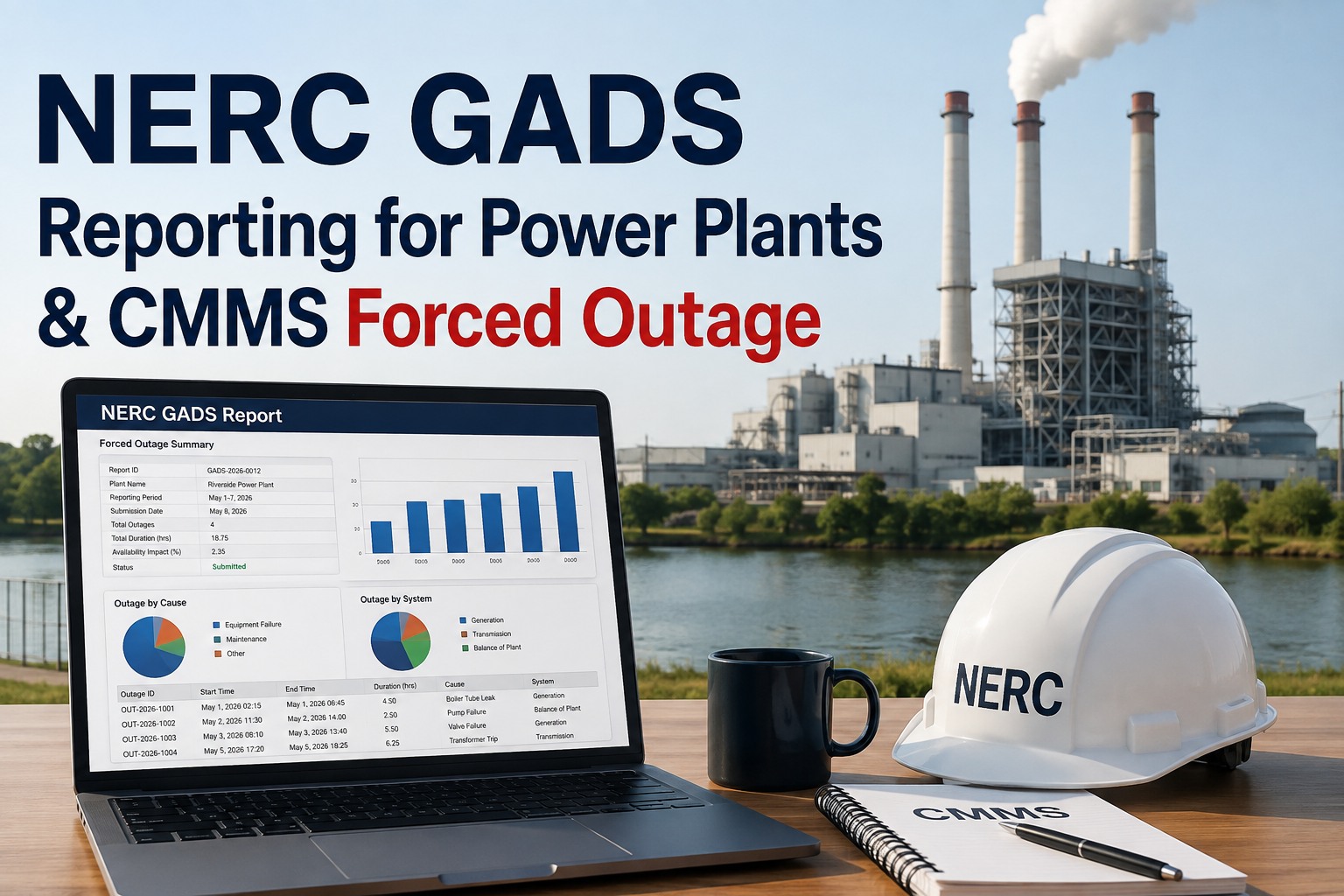
NERC GADS reporting is the backbone of generation reliability tracking for power plants across North America — it standardizes how utilities submit generation availability data, forced outage events, and cause codes to the North American Electric Reliability Corporation. A single misclassified forced outage GADS event can skew your Equivalent Forced Outage Rate (EFOR), trigger audit scrutiny, and inflate your insurance premiums. This guide walks through the complete GADS data collection workflow, event cause coding, and how a modern NERC GADS CMMS like OxMaint automates GADS submission power data — turning compliance from a month-long scramble into a one-click report. Ready to stop fighting spreadsheets? Start Free Trial and see the difference today.
Is Your Power Plant's Forced Outage Data Audit-Ready?
NERC mandates GADS reporting for all generating units ≥20 MW — and a single missed or misclassified forced outage event can trigger FERC enforcement penalties exceeding $1,000/day. OxMaint captures every outage, curtailment, and failure cause code in real time so your GADS submission is accurate, complete, and defensible.
What NERC GADS Reporting Requires From Power Plants
All conventional generating units ≥20 MW and wind/solar sites ≥75 MW must submit GADS data quarterly — unit performance, event records, and design specifications — or face NERC compliance violations.
Unit Performance Data
Hourly generating unit states (available, forced outage, planned outage, curtailed) with net and gross MW output. Submitted quarterly with no more than 60-day lag per NERC TOP-002 standards.
Event Records
Every forced, planned, and maintenance outage logged with start/end timestamps, duration, MW reduction, and NERC event cause codes. Even partial-day curtailments under 30 minutes must be captured.
Cause Code Mapping
Each event requires a validated NERC cause code (e.g., 9291 Turbine — Blade Failure) and component-level detail. Misclassification is the #1 finding in GADS compliance audits.
Design Specifications
Unit nameplate capacity, prime mover type, fuel classification, and commercial operation date. Updated annually or whenever a major modification alters the unit's rated capability.
How Forced Outage GADS Events Are Classified & Calculated
The difference between a forced and a maintenance outage is a 72-hour window — and it directly determines your EFOR, which NERC uses to benchmark your unit against the industry's Generating Availability Report.
FOH = Forced Outage Hours · EFDH = Equivalent Forced Derated Hours · SH = Service Hours. An EFOR above 8% for a coal unit or 5% for a combined-cycle gas plant signals deteriorating reliability to insurers, regulators, and counterparties.
Any outage that cannot be deferred past the next weekend is forced. MO requires ≥72 hours of notice. The classification drives which NERC cause code family applies and whether it counts against your availability factor in the annual NERC GADS benchmarking report.
A 500 MW combined-cycle plant logs 38 forced outage hours and 120 equivalent forced derated hours over 6,800 service hours in a year. EFOR = (38 + 120) / (6,800 + 38 + 120) × 100 = 2.27% — well within the industry benchmark. But if the same plant misclassifies a delayed turbine bearing failure as a planned outage and NERC flags it during an audit, the corrected EFOR jumps to 3.1% and the utility faces a data resubmission with a formal compliance letter. OxMaint's automatic event-state detection prevents this by validating outage type against the 72-hour rule in real time, flagging misclassifications before they reach your quarterly GADS report.
The Quarterly GADS Submission Power Plant Timeline
NERC requires quarterly GADS submissions within 60 days of quarter-end — missing the deadline triggers a formal noncompliance violation on your compliance registry profile.
Event Logging & Real-Time Capture
Every forced outage, derating, and curtailment is recorded as it happens — with timestamp, MW impact, and preliminary cause code assigned by the shift maintenance team. OxMaint auto-captures from work order close-out so nothing slips through.
Cause Code Validation & Review
Reliability engineers review each event, confirm NERC cause codes against the latest reference table, and reconcile MW reductions with SCADA logs. OxMaint cross-validates cause codes against your asset hierarchy automatically.
GADS Report Generation & Submission
Unit performance, event, and design data compiled into the NERC XML format and uploaded to the GADS Open Access system. OxMaint generates the complete submission package in one click — no manual spreadsheet assembly.
How OxMaint Automates NERC GADS Compliance
OxMaint is a NERC GADS CMMS built for power generation — it connects your work orders, asset hierarchy, and outage events into a single audit-ready GADS data stream, eliminating the manual reconciliation that typically eats 40+ engineer-hours per quarter.
Auto-Generated GADS Reports
OxMaint compiles every outage, derating, and cause code into NERC-compliant XML format with one click. No more cross-referencing three spreadsheets and a SharePoint folder the night before the submission deadline.
Validated Cause Code Library
Every event is checked against the full NERC cause code reference table with component-level validation. OxMaint flags codes that don't match your asset type — catching misclassifications before they reach the regulator.
Predictive Maintenance Alerts
OxMaint's AI analyzes vibration, temperature, and oil data to flag bearing failures, tube leaks, and valve issues weeks before they force an outage — so you fix it during a planned window, not a U1 emergency.
Closed-Loop Work Order Tracking
Every GADS event links back to its source work order, parts consumed, labor hours, and root-cause analysis — giving auditors a complete, timestamped trail from detection to resolution with zero manual digging.
CMMS vs Spreadsheets for GADS Compliance — A Real Cost Comparison
Most mid-size power plants still assemble their GADS submission from Excel, PI tags, and maintenance logs — burning 160+ engineer-hours per year and exposing themselves to misclassification risk.
| Compliance Dimension | Excel + Manual Process | OxMaint CMMS |
|---|---|---|
| Engineer-hours per quarter | 40–55 hours reconciling logs | 8–10 hours (review only) |
| Cause code accuracy | Manual lookup — 12–18% error rate | Validated automatically — <2% error |
| Event timestamp precision | Rounded to nearest hour from shift logs | Exact minute from work order + SCADA sync |
| Audit trail | Email chains, shared drives, tribal knowledge | Full closed-loop traceability per event |
| Submission format | Manual XML assembly — error-prone | One-click NERC XML export |
| Annual compliance risk cost | $45K–$120K (penalties + audit prep + rerates) | <$8K (platform cost included) |
See OxMaint on Your Assets — Book a 30-Minute Demo
Walk through a full GADS reporting cycle — from work order creation to one-click XML submission — on a live environment configured for your generating unit type. No slides, just the software.
NERC GADS Reporting — Frequently Asked Questions
What is NERC GADS reporting and who must submit?
NERC GADS (Generating Availability Data System) reporting is the mandatory submission of generating unit performance, outage event, and design data to NERC. All conventional generating units ≥20 MW and all wind/solar facilities ≥75 MW must submit quarterly performance and event data within 60 days of quarter-end, plus annual design updates.
How does a CMMS help with NERC forced outage data collection?
A CMMS like OxMaint captures every outage and derating event at the point of the work order — with exact timestamps, MW impact, and asset hierarchy — so nothing is missed or manually transcribed. It validates NERC cause codes in real time and generates the complete GADS XML submission in one click, cutting reporting time by up to 75%. Book a Demo to see the GADS workflow live.
What is the difference between forced and maintenance outages in GADS?
A forced outage (U1/U2/U3) is any outage that cannot be deferred beyond the next weekend, while a maintenance outage (MO) requires at least 72 hours of advance notice. The classification determines which NERC cause code family applies and directly impacts your Equivalent Forced Outage Rate (EFOR) — a key metric insurers and regulators use to assess unit reliability.
What happens if a power plant misses the GADS submission deadline?
Late or incomplete GADS submissions are logged as a NERC compliance violation on the registered entity's profile, potentially triggering a Compliance Violation Notice, self-report requirements, and monetary penalties that can exceed $1,000 per day per violation. Repeated violations escalate to formal enforcement actions and can affect the entity's future compliance monitoring level.
Can OxMaint generate GADS reports in NERC XML format automatically?
Yes. OxMaint compiles all unit performance, event, and cause-code data into NERC-compliant XML format with a single click, ready for upload to the GADS Open Access system. Every event is linked to its source work order for full audit traceability. Start Free Trial to generate your first GADS report today.
Make Your Next NERC GADS Submission a One-Click Export
Join the power plants that have eliminated spreadsheet-based GADS reporting, cut their engineer-hours by 75%, and passed every audit with zero findings. OxMaint makes it possible.
Free 14-day trial · No credit card