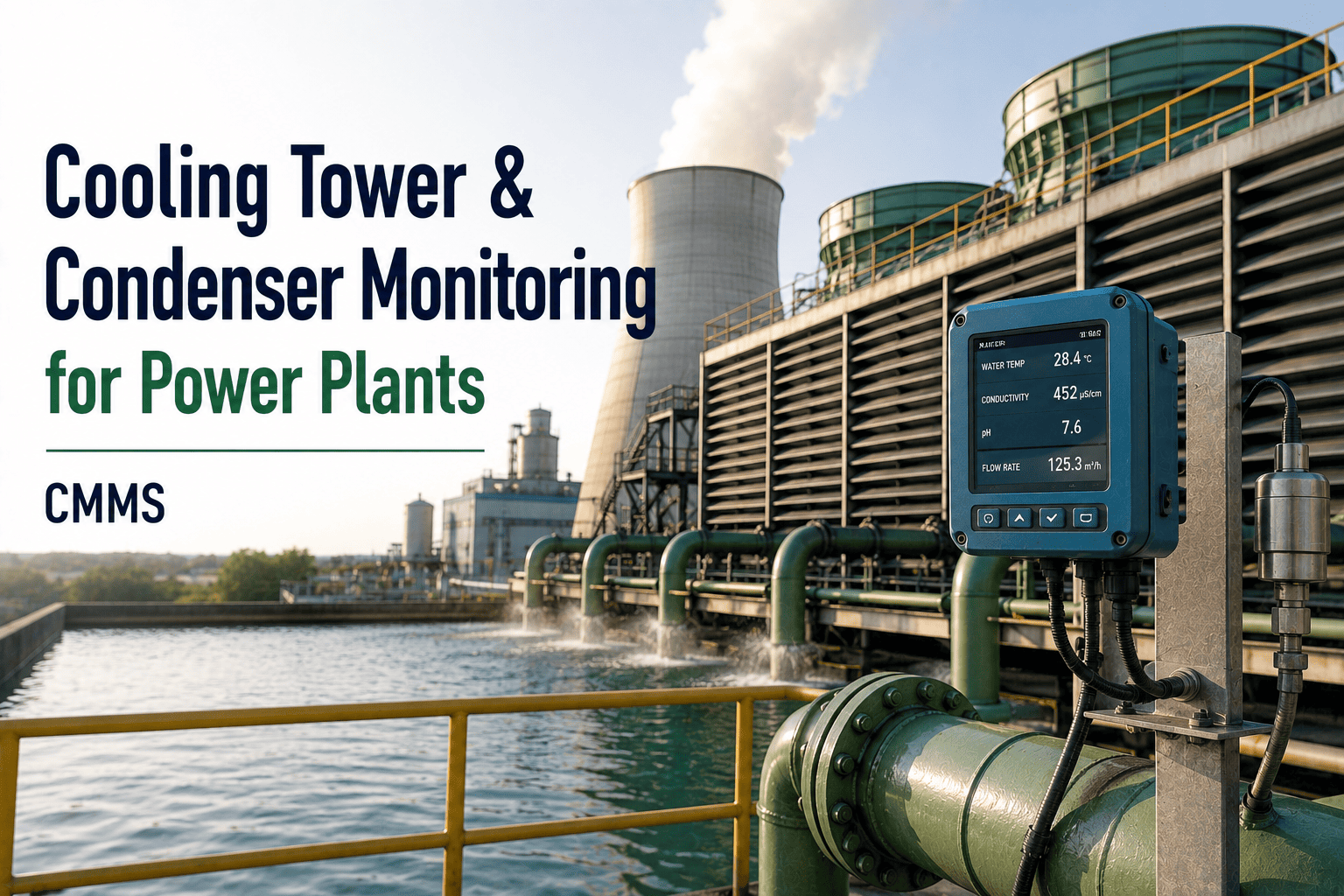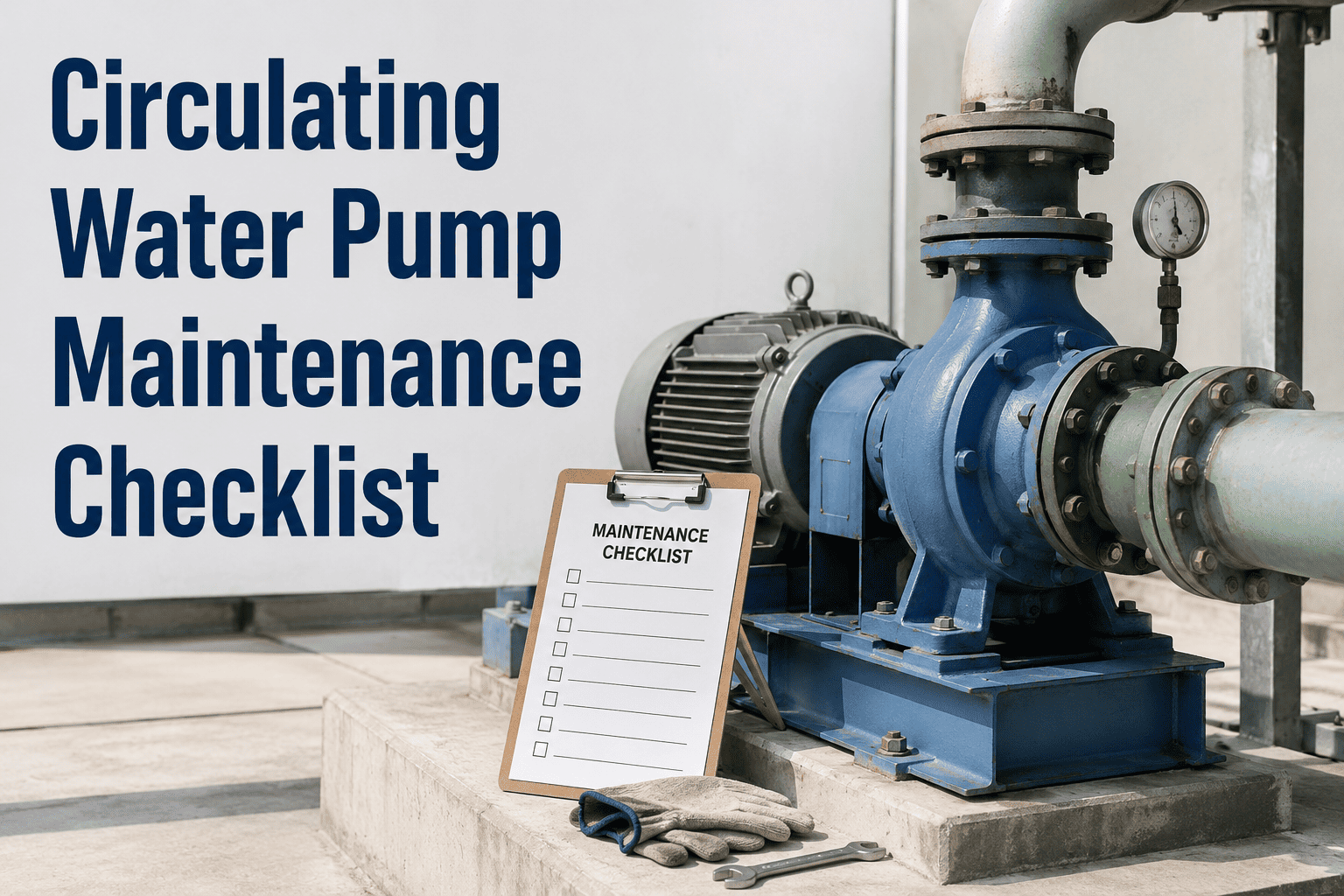
A circulating water pump running with misaligned shafts, degraded mechanical seals, or unchecked bearing temperatures is not cooling your condenser — it is scheduling an unplanned outage. In thermal power plants, CW pumps are the lifeline of the condenser cooling system, and a single pump failure can force a unit load reduction within minutes. This checklist gives your mechanical, electrical, and operations teams a structured inspection framework covering alignment, bearings, seals, motor current, vibration, and cooling circuit reliability — built so every finding flows into your OxMaint preventive maintenance workflow with a timestamped, audit-ready record.
Circulating Water Pump Maintenance Checklist
A zone-by-zone inspection checklist for CW pump systems — covering alignment, bearings, mechanical seals, motor current, vibration analysis, and cooling circuit reliability — built for power plants where pump failure means unit load reduction.
Pump Alignment & Coupling
Misalignment is the leading cause of premature bearing and seal failure in CW pumps. Even a 0.05 mm offset at the coupling translates into cyclic loading on the shaft, accelerating wear across every rotating component downstream.
Bearing Condition & Lubrication
Bearings are the most failure-prone component in large CW pumps. High bearing temperature, unusual noise, or oil contamination are advance warnings — each one giving you a window of days to weeks before a catastrophic failure that takes the pump offline for months.
Mechanical Seal & Gland Packing
A failing mechanical seal on a CW pump running at 3–10 MW motor power is not a slow leak — it is a safety event and an environmental discharge point. Seal flush system pressure, cooling flow, and face wear are the three indicators that predict seal life with high accuracy.
Pump teams that rely on logbooks miss the trend. OxMaint captures every reading, flags deviations instantly, and turns each finding into a traceable corrective work order — so your CW pump never catches your team by surprise.
Motor Performance & Electrical System
A CW pump motor drawing 5% above its rated current for 48 hours is not operating normally — it is signalling a hydraulic fault, a winding degradation, or a voltage imbalance that will cascade into a motor burnout or a pump runout condition if not investigated.
Hydraulic Performance & Cooling Circuit
A CW pump delivering 10% less flow than design is not a maintenance issue — it is a condenser performance issue that raises back-pressure on the turbine, increases heat rate, and erodes unit efficiency. Flow monitoring and condenser inlet temperature are the leading indicators of cooling circuit health.
Five Metrics That Tell You If Your CW Pump System Is Healthy
| Metric | How to Measure | Target | Frequency |
|---|---|---|---|
| Pump Availability | Running hours / Total scheduled hours | Above 98% | Monthly |
| Bearing Temperature | RTD / thermocouple reading at housing | Below 80°C | Daily |
| Vibration Severity | Overall RMS velocity at bearing housing | Below 4.5 mm/s | Weekly |
| Hydraulic Efficiency | Actual flow vs design curve operating point | Within 5% of design | Monthly |
| PM Completion Rate | Completed PMs / Scheduled PMs | 100% | Weekly |
Frequently Asked Questions
How often should CW pump alignment be checked in a thermal power plant?
Alignment should be verified monthly during routine inspection and after every bearing replacement, seal change, or any maintenance that requires disturbing the pump or motor. Thermal growth after startup can shift alignment significantly, so a hot check after 2–4 hours of operation is best practice for large pumps. OxMaint schedules alignment tasks automatically and captures results with technician sign-off.
What causes a CW pump to run in the cavitation zone?
Cavitation typically results from a blocked suction strainer, low forebay level, excessive pump speed, or a throttled suction valve. The resulting implosions pit the impeller surface and generate a distinctive crackling noise. Cavitation damage accumulates silently — catching it early through vibration trending and strainer DP monitoring prevents expensive impeller replacement. See how OxMaint flags cavitation indicators in real time.
What is the recommended bearing temperature alarm limit for large CW pumps?
The standard industry alarm limit is 80°C at the bearing housing, with a trip setpoint at 95°C for oil-lubricated bearings. For grease-lubricated bearings, limits are typically 10°C lower. Always trend temperature rise rate — a pump that reaches 78°C and is climbing at 2°C per hour needs intervention before the shift ends, regardless of whether it has crossed the alarm setpoint.
How does reduced CW flow affect turbine back-pressure?
Every 10% reduction in CW flow raises condenser back-pressure by approximately 15–25 mbar, depending on heat load. This increases turbine heat rate by 0.3–0.8%, which directly raises fuel consumption and lowers unit output. On a 500 MW unit, a degraded CW pump can cost several lakh rupees per day in additional fuel — making pump availability a financial, not just a mechanical, issue.
When should mechanical seal replacement be planned versus emergency?
A mechanical seal showing progressive leakage increase over 2–4 weeks, combined with declining flush pressure, should be planned for replacement at the next maintenance window — typically within 4 weeks. Emergency replacement is needed when leakage exceeds 20 drops per minute, flush pressure is lost, or the seal is visibly spraying. OxMaint tracks seal leakage trends and generates planned work orders before the situation becomes an emergency.
Every CW Pump Check Logged. Every Trend Tracked. Every Outage Anticipated.
OxMaint converts this checklist into mobile inspection rounds with digital sign-off, bearing temperature trending, and automatic work order generation — so your team catches pump degradation in days, not hours before the trip.