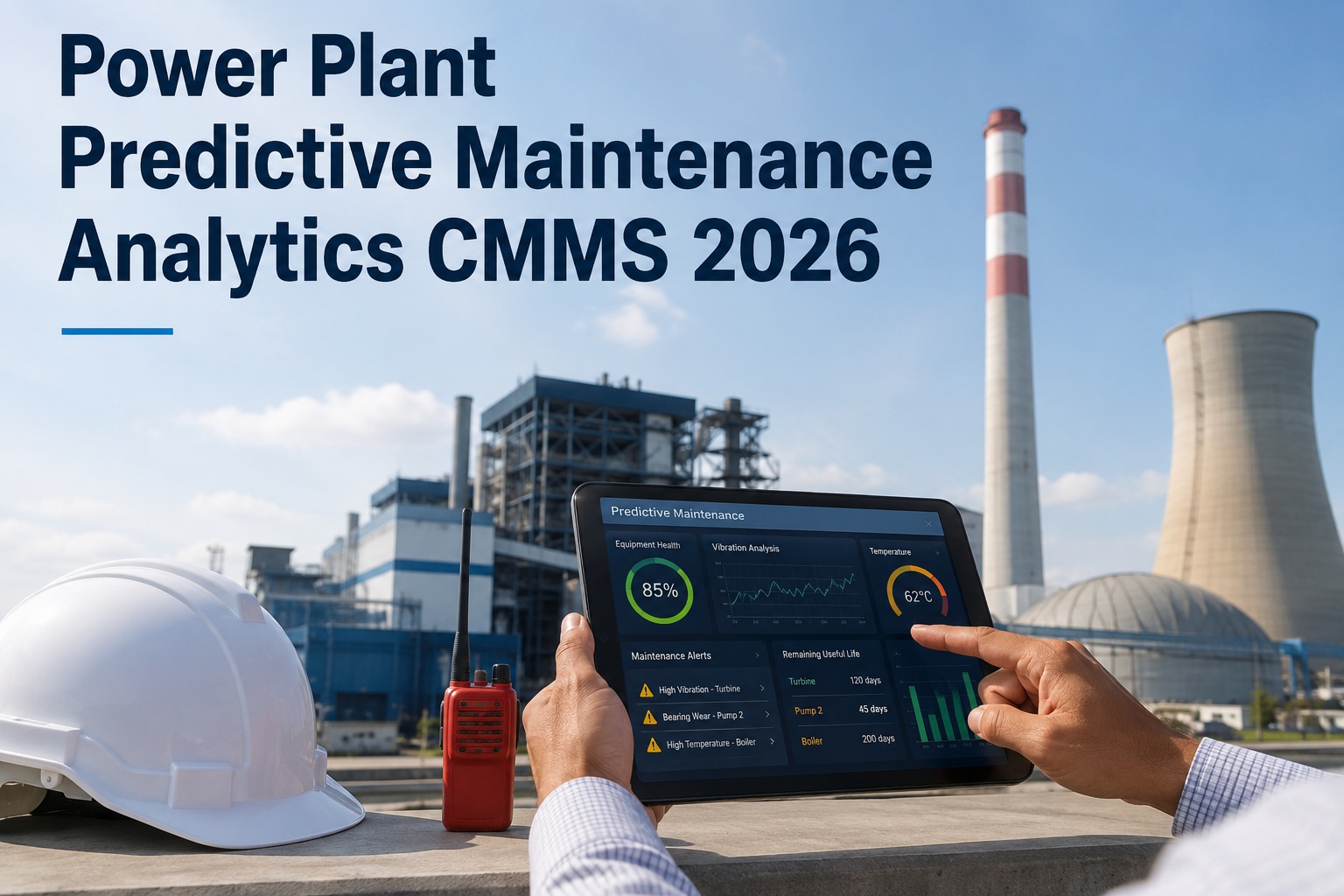
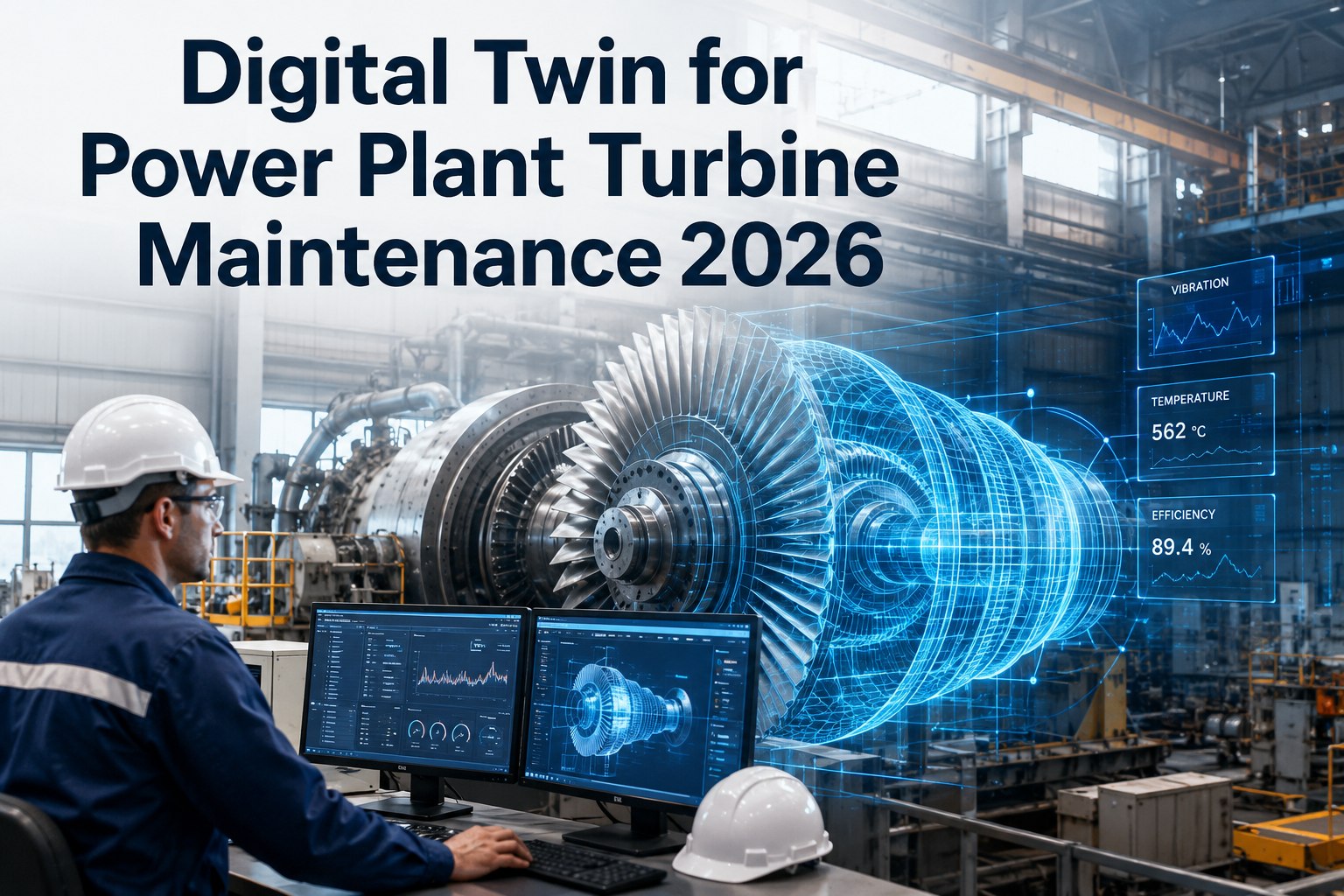
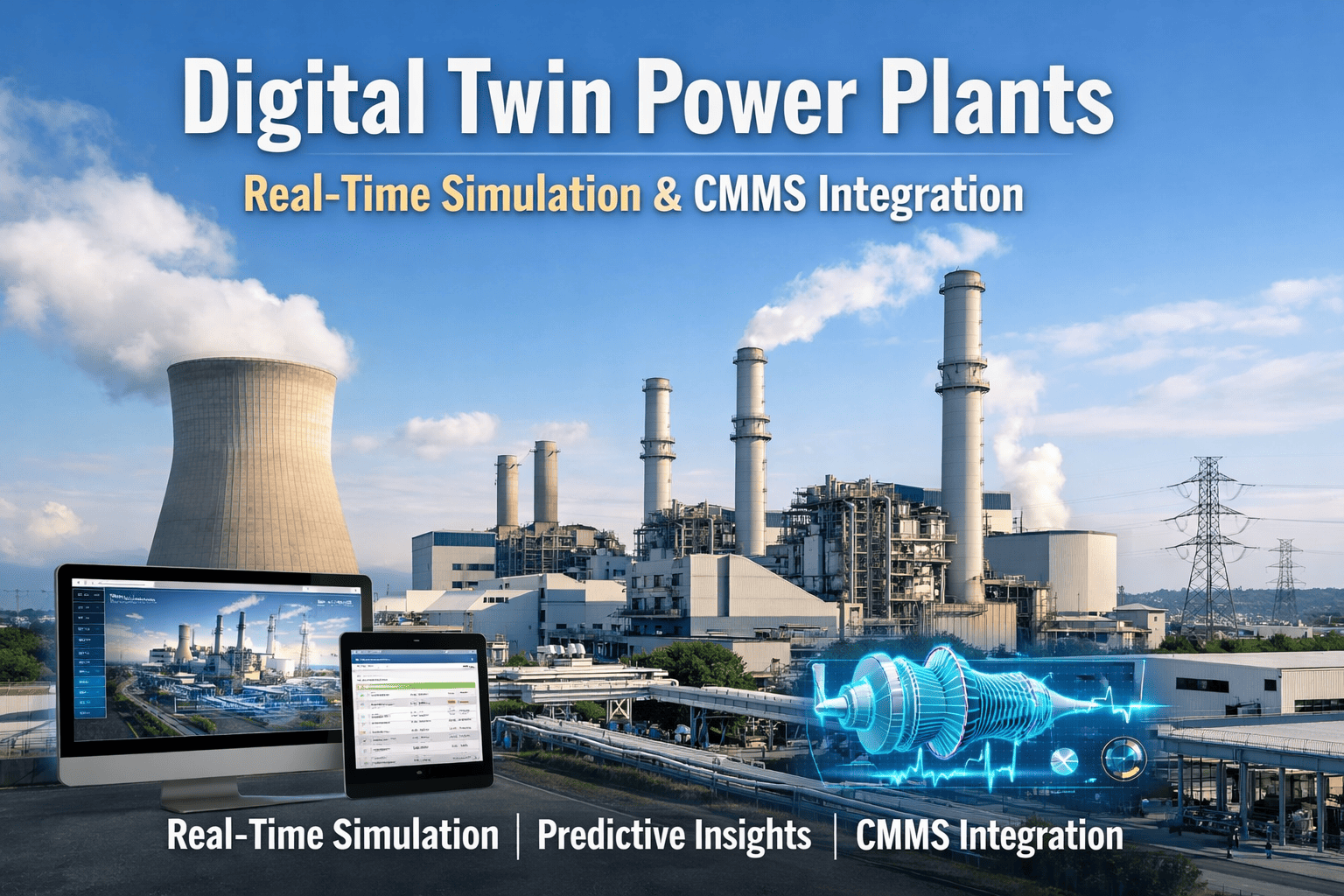
Power plants that ran on paper schedules and reactive repair calls in 2020 are facing a blunt reality in 2026: the cost of doing nothing has become far greater than the cost of transforming. AI-driven predictive maintenance, digital twins, and autonomous inspection systems are no longer pilot projects in a handful of Fortune 500 energy companies — they are the new operating standard that separates plants running at peak reliability from those bleeding millions in unplanned downtime every quarter.
2026 Energy Industry Report
Top 10 Power Plant Maintenance Trends Reshaping Energy in 2026
AI prediction. Digital twins. Autonomous drones. Robotic inspection. The maintenance floor of a modern power plant looks nothing like it did five years ago — and the gap is widening fast.
$260K
Cost per hour of unplanned downtime
4 Weeks
AI advance warning before bearing failure
65%
Energy companies now use AI for predictive maintenance
40-60%
Reduction in unplanned failures within 12 months
By The Numbers
What 2026 Looks Like in Real Deployments
Siemens Energy
$1.7B Saved Annually
Digital twin for heat recovery steam generators predicts corrosion progression, eliminating unnecessary inspection shutdowns and preventing unexpected tube failures in thermal plants transitioning to cyclic operation.
AEP Ohio Drone Program
150+ Critical Defects Found
A single 2025 drone inspection pilot covering 4% of the distribution system identified over 150 tier-one defects including thermal anomalies — findings that quarterly manual inspections would have missed for months or quarters.
AI Condition Monitoring (Industry)
40–60% Fewer Failures
Plants that connected condition monitoring sensors to a CMMS achieved 40–60% reductions in unplanned bearing and gearbox failures within 12 months — without capital equipment replacement.
AI Market (Energy Sector)
$26.3B in 2026
The AI in renewable energy market alone reaches $26.3 billion this year, growing at 25.65% CAGR. 65% of energy companies now use AI for predictive maintenance, up from a minority just three years ago.
Technology Stack
How These Technologies Connect in One Plant
Intelligence Layer
AI Prediction Models
Digital Twin Simulations
Autonomous Decision Engine
Data flows down — Action flows up
Platform Layer
Oxmaint CMMS — Work Orders, Scheduling, KPIs, Audit Trails
Sensor data up — Instructions down
Field Layer
IoT Sensors
Drones
Robotic Patrols
AR Headsets
Edge AI Nodes
Readiness Check
Where Does Your Plant Stand in 2026?
Power Plant Maintenance Maturity: 2026 Benchmark
| Capability | Reactive Plant (2020 Model) | Proactive Plant (2024 Model) | Autonomous Plant (2026 Standard) |
|---|---|---|---|
| Failure Detection | After equipment stops | Scheduled inspection cycle | AI detects 4 weeks before failure |
| Inspection Method | Manual walk-down, paper forms | Mobile checklists with photos | Drones + robots + CMMS auto-sync |
| Work Order Creation | Manual, hours after fault found | Digital form, same day | Auto-generated by AI/IoT signals |
| Asset Visibility | Periodic manual readings | Dashboard with manual data entry | Live digital twin with real-time data |
| Expert Access | On-site only, travel required | Phone/video call support | AR-guided remote annotation in real time |
| Downtime Cost Risk | High — no early warning | Moderate — some lead time | Low — systemic prevention |
Your Plant Deserves the 2026 Standard
Oxmaint connects AI signals, IoT data, drone inspections, and field workflows into one maintenance platform your team can deploy in days — not months. No consultants. No capital spend. Just cleaner data and faster repairs from day one.
FAQs
Questions Plant Managers Are Asking Right Now
How quickly can AI predictive maintenance reduce unplanned downtime in a power plant?
Most facilities deploying condition monitoring connected to a CMMS see 40–60% reductions in unplanned bearing and gearbox failures within the first 12 months. The key factor is data quality — AI models trained on clean, structured sensor data from your specific assets outperform generic models significantly. Oxmaint's CMMS is built to ingest AI and IoT signals automatically so your predictive models have the structured data they need from day one.
Is digital twin technology affordable for mid-size power plants in 2026?
Yes — digital twin costs have dropped significantly. Component-level twins for a single turbine, compressor, or boiler now start at $50,000–$200,000 for implementation, compared to full-facility twins that cost millions just a few years ago. Mid-size plants are increasingly starting with a single high-value asset — their most failure-prone or highest-cost component — and expanding from there. Book a demo to see how Oxmaint integrates digital twin data into live work order management and KPI dashboards.
What role does the CMMS play in autonomous maintenance at a power plant?
The CMMS is the central orchestration layer that makes autonomous maintenance possible — it receives signals from AI systems, drones, and IoT sensors, generates work orders, manages parts procurement, and records every outcome to improve the next maintenance cycle. Autonomous maintenance does not bypass the CMMS; it automates the human inputs to it. Oxmaint is designed to accept automated inputs from AI and sensor platforms, making it the right foundation to build toward fully autonomous operations.
How are drones and robots changing inspection safety at power plants?
Quadruped robots and aerial drones are eliminating human entry into confined spaces, energized switchyards, boiler interiors, and elevated chimney structures — the highest-risk inspection zones in any power plant. Robotic inspection also delivers far richer data: daily thermal scans versus quarterly visual walk-downs, with AI trend analysis detecting gradual temperature changes weeks before failure thresholds are reached. This data flows automatically into a connected CMMS like Oxmaint as prioritized work orders complete with thermal images and severity ratings.
When should a power plant start building toward autonomous maintenance?
The answer from industry data is clear: now. Autonomous systems require years of high-quality, structured work order data, failure history, and condition monitoring trends to function reliably. The plant that starts building this data foundation in 2026 will be operationally ready for autonomous maintenance by 2030. The plant that waits until 2028 will be years behind. Talk to an Oxmaint specialist about your plant's readiness roadmap and understand exactly where to start.