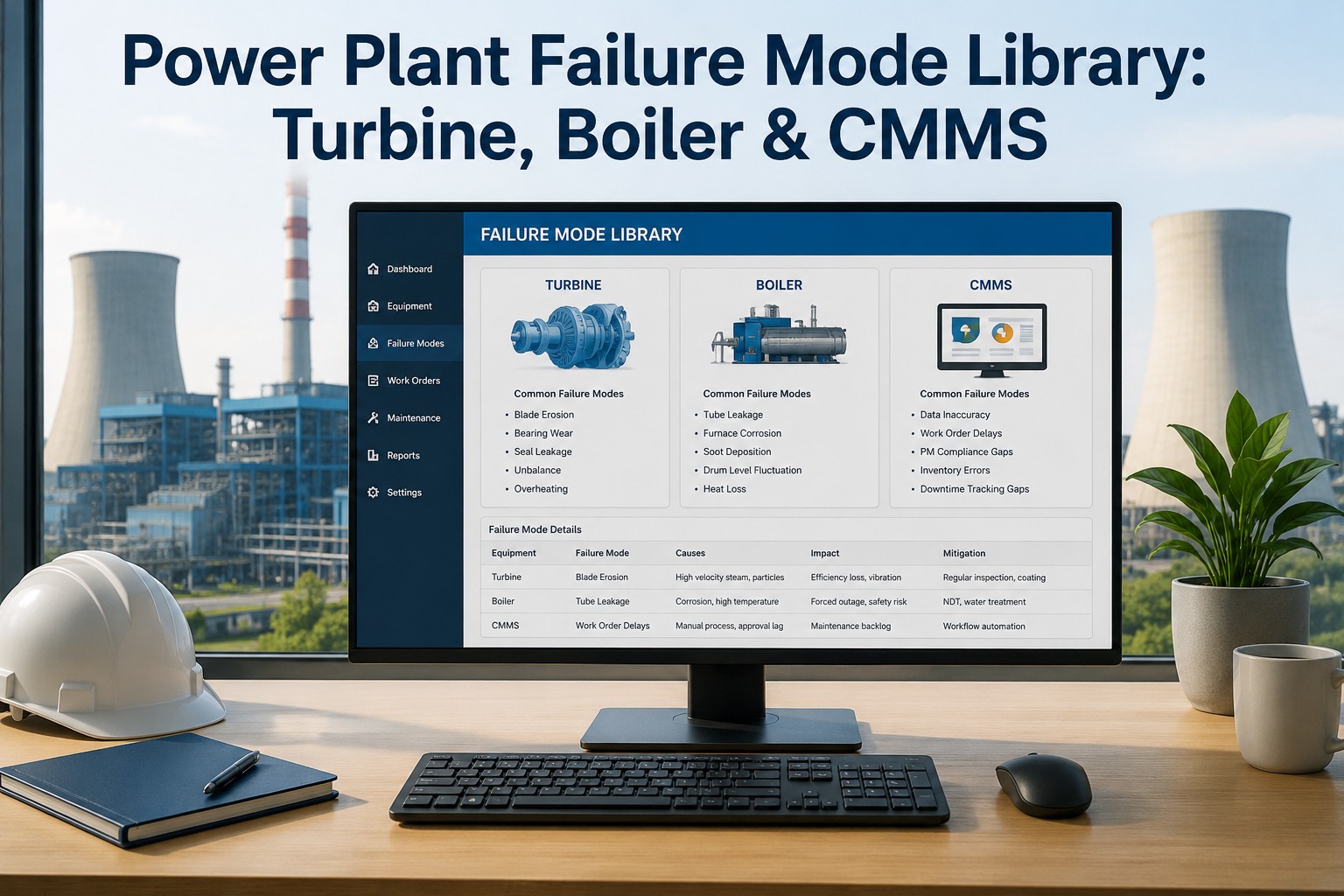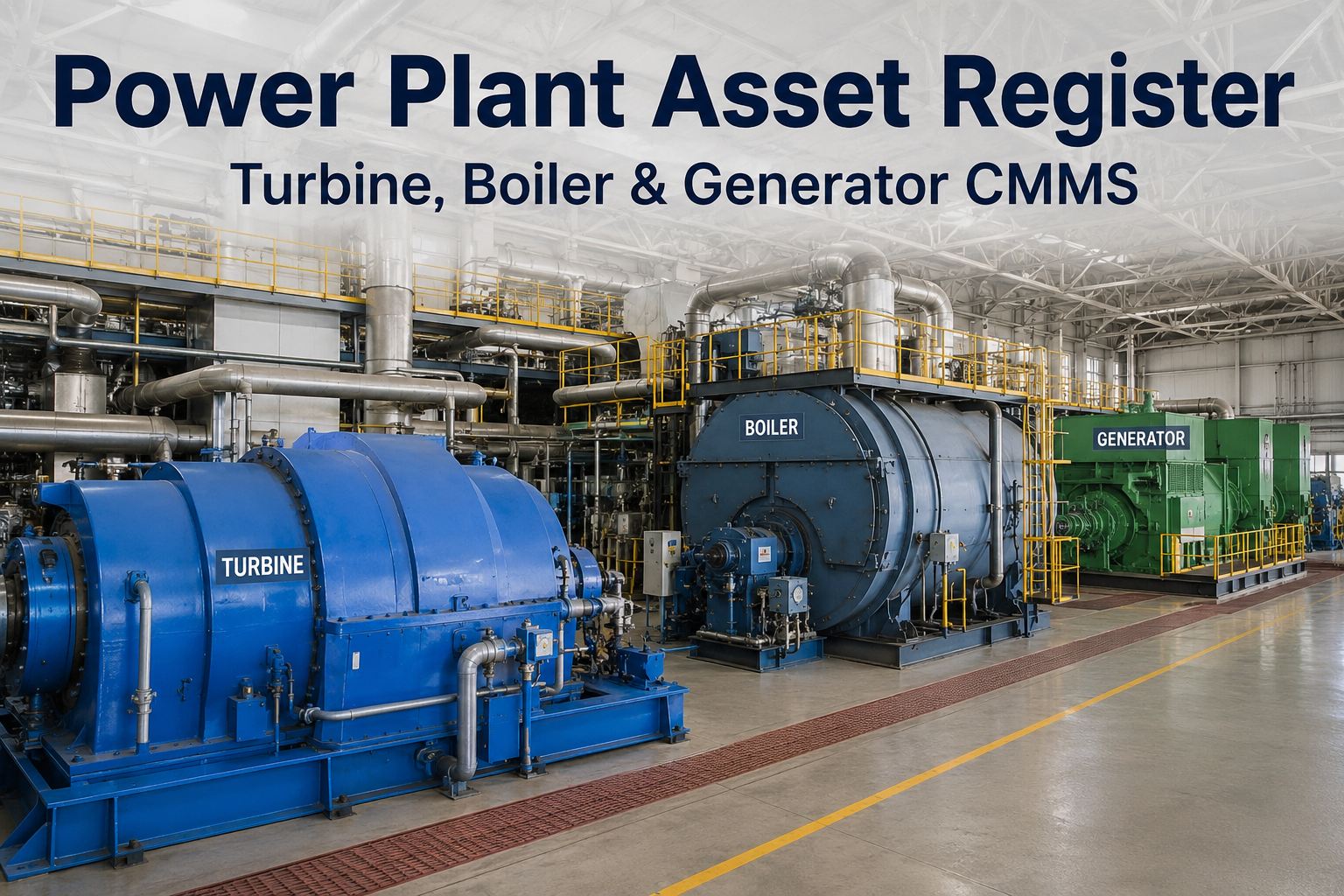
Capital project requests at power plants rarely fail because the engineering case is weak — they fail because the financial case is not constructed in the language that finance committees understand. A boiler reline or turbine rebuild is a multi-million dollar request, and plant managers who present it as a maintenance necessity rather than a lifecycle investment consistently lose to capital allocation committees managing quarterly earnings pressure. The difference between a funded project and a deferred one is almost always the quality of the remaining useful life analysis, the cost avoidance documentation, and the risk-adjusted NPV framing. Without a CMMS capturing longitudinal asset health data, maintenance cost trends, and failure history, the engineering team is building a financial case on anecdotal evidence — and finance committees know it. A CMMS-backed capital project defence in OxMaint gives plant managers the asset history, cost data, and remaining useful life evidence needed to win CapEx approval in the first submission cycle. If your next major project review is approaching, book a demo to see how OxMaint builds the data foundation for power plant CapEx justification.
Power Plant Capital Project Defense: Justifying a Boiler Reline or Turbine Rebuild
Finance committees fund projects that speak their language — lifecycle cost, remaining useful life, and risk-adjusted NPV. CMMS-backed CapEx justification turns your maintenance data into a capital case that wins approval.
Why CapEx Requests Get Deferred — and What Actually Gets Funded
Power plant CapEx committees are not anti-maintenance. They are anti-ambiguity. A boiler reline request that says "the refractory is degrading and we need to address it" sits in a different category from one that says "refractory thickness has declined from 12 inches to 6.8 inches over 18 months, maintenance cost on this unit has increased 34% year-over-year, and the projected cost of an unplanned outage based on our last forced shutdown exceeds the reline cost by a factor of 4.2." The difference is not opinion — it is data.
- Vague condition descriptions ("deteriorating," "aging")
- No historical cost trend data to support urgency
- No remaining useful life estimate with methodology
- No risk-adjusted cost of deferral
- Comparison to replacement cost only, not lifecycle cost
- No CMMS data backing the maintenance cost claims
- Quantified condition data with measurement trend
- 3–5 year maintenance cost trend per asset from CMMS
- RUL estimate with failure mode and consequence
- Probability-weighted cost of deferral scenario
- NPV comparison: rebuild vs replace vs defer
- Audit-ready work order and cost history export
The Lifecycle Math: Boiler Reline vs Replacement vs Defer
The three-scenario comparison is the core of any successful CapEx defense. Finance committees need to see that the project team has evaluated all options with consistent assumptions — not just advocated for the preferred one.
Building the RUL Case: Remaining Useful Life Methodology
Remaining useful life estimation for power plant equipment is not a guess — it is an engineering calculation supported by condition data, historical failure rates, and manufacturer degradation curves. A credible RUL estimate requires four evidence layers that a CMMS with complete maintenance records can provide.
Quantified physical condition tracked over time — refractory thickness measurements, turbine blade clearance readings, tube thickness from ultrasonic testing, vibration amplitude trends. The rate of degradation over 12–24 months projects the failure threshold date with defensible methodology.
Per-asset maintenance cost from the CMMS over 3–5 years shows the inflection point where repair costs begin accelerating beyond the asset's value curve. A cost trend that has increased 25–40% year-over-year is a stronger financial signal than any condition description.
The specific failure mode being addressed — refractory spalling, blade root fatigue, tube wall loss — has a defined consequence: unplanned outage, safety event, or capacity derating. Pricing the consequence in operational cost terms converts an engineering concern into a financial risk the committee can evaluate.
OEM service bulletins, industry inspection standards (ASME, API, EPRI), and comparable unit data from the industry provide the external validation that distinguishes an engineering assessment from an internal maintenance team's opinion — critical for finance committee credibility.
Does Your CMMS Have the Cost History to Win Your Next CapEx Review?
OxMaint captures per-asset maintenance cost, work order history, parts spend, and condition inspection data — the exact evidence set that finance committees require for capital project approval. Plants with five years of CMMS history win CapEx approvals on first submission. Those without it revise and resubmit.
The CapEx Defense Document: Structure That Finance Committees Approve
A capital project submission that wins approval follows a predictable structure that addresses financial questions before they are asked. The sequence matters — leading with engineering conditions and ending with financial framing loses committees that stop reading after page two.
Turbine Rebuild vs Boiler Reline: Key Differences in the CapEx Case
Boiler relines and turbine rebuilds both involve major capital investment, but the CapEx justification structure differs in important ways — driven by different failure modes, different consequence profiles, and different remaining useful life methodologies.
| Dimension | Boiler Reline | Turbine Rebuild |
|---|---|---|
| Primary failure mode | Refractory spalling, tube corrosion, seal loss | Blade erosion, rotor imbalance, bearing wear |
| Condition measurement method | Refractory thickness survey, tube UT, thermal imaging | Vibration analysis, blade inspection, clearance measurement |
| Consequence of deferral | Efficiency loss, tube failure, forced outage | Capacity derating, catastrophic failure risk |
| RUL methodology | Degradation rate from thickness trend | Fatigue life calculation, OEM blade life limits |
| Outage window | 4–8 weeks depending on scope | 6–14 weeks for major rebuild |
| Lifecycle extension | 8–15 years of additional boiler life | 10–20 years depending on component replacement depth |
| Key CMMS data needed | Inspection history, thermal performance trend, tube failure work orders | Vibration trend, bearing replacement history, efficiency derating log |
Frequently Asked Questions
Your Next Capital Project Defense Will Be Won or Lost on the Quality of Your Asset Data.
OxMaint captures per-asset maintenance costs, condition inspection history, work order frequency, and parts spend in a structured format that exports directly into CapEx justification documents — so your boiler reline or turbine rebuild request arrives at the finance committee with the lifecycle evidence, RUL methodology, and cost trajectory that capital approval requires.