Every maintenance manager knows the frustration: you've got hundreds of assets to monitor, but the same few troublemakers keep causing 80% of your headaches. According to the National Energy Technology Laboratory (NETL), just five equipment categories account for over 90% of forced outages in power plants. Knowing which assets fail most—and why—is the first step toward eliminating unplanned downtime. Plants that implement OXmaint's asset health scoring gain real-time visibility into exactly which equipment needs attention before it becomes a crisis.
Asset Reliability Report
Top 10 Assets Causing Power Plant Failures
Know your biggest risks to prevent your costliest outages
of failures from top 5 assets
The Failure Distribution: Where Your Outages Really Come From
NETL data reveals a striking pattern: more than half of all forced outages at power plants stem from a single source—boiler tube leaks. Understanding this distribution helps you prioritize monitoring investments where they'll have the greatest impact on plant reliability.
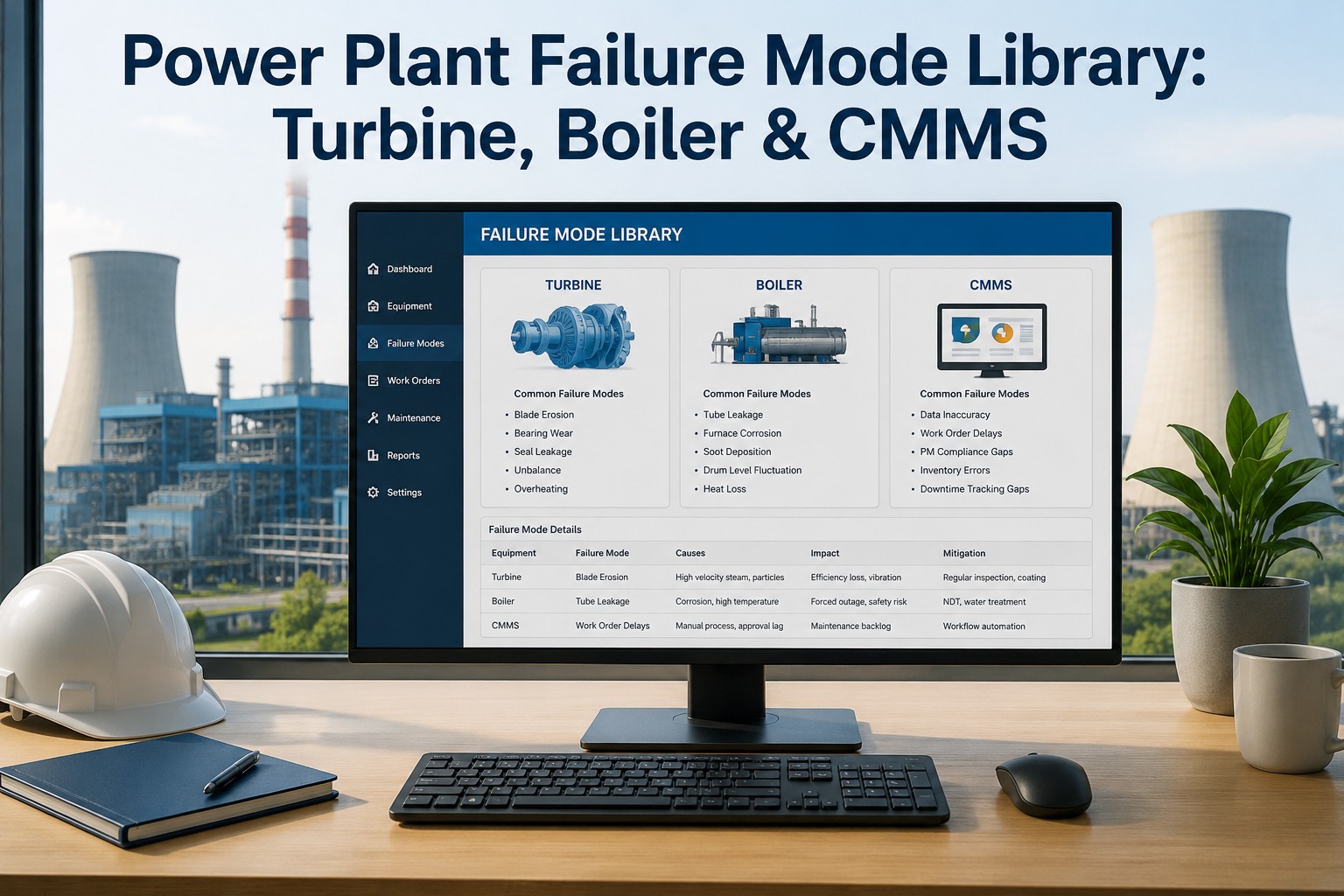
The Complete Top 10 Failure-Prone Assets
Beyond the NETL categories, power plant reliability engineers consistently identify these ten assets as the primary sources of maintenance headaches and unplanned outages. Each has unique failure modes, warning signs, and monitoring requirements. Want to see how your plant's failure patterns compare? Book a free asset health assessment with our specialists.
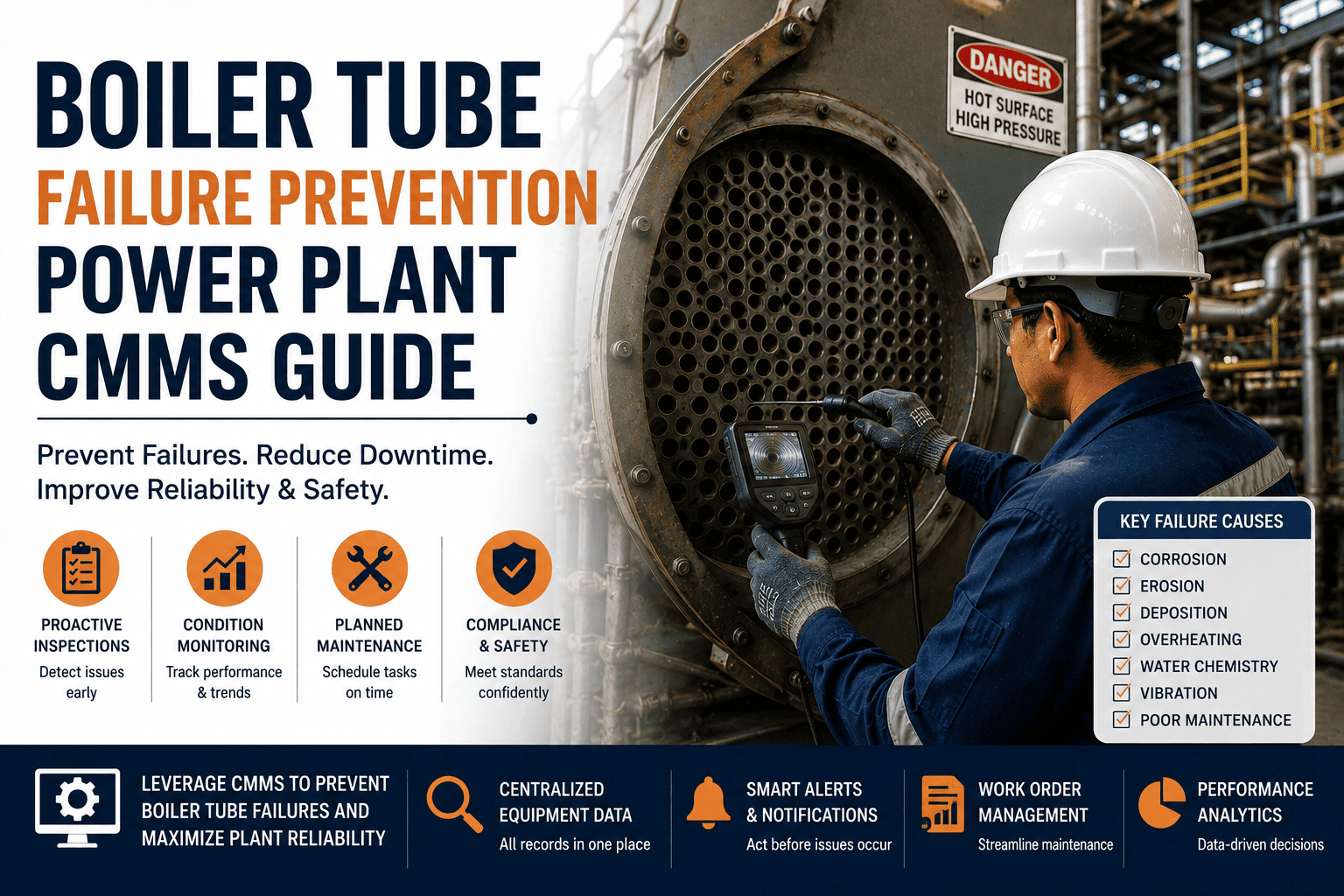
Boiler Tubes (Waterwalls)
54%
of outages
$2-10M
repair cost
Primary Failure Modes
Corrosion, fatigue, creep, thermal stress, weld defects, coal particle erosion
Warning Signs
Steam/water ratio changes, unusual sounds, pressure fluctuations, visual steam leaks
Monitoring Solution
Ultrasonic thickness testing, acoustic monitoring, water chemistry analysis
Steam Turbines
13%
of outages
$50K-2M
repair cost
Primary Failure Modes
Blade fatigue, steam erosion, foreign object damage, bearing wear, misalignment
Warning Signs
Vibration spikes, unusual sounds, efficiency drop, elevated bearing temperatures
Monitoring Solution
Vibration analysis, oil analysis, thermography, performance trending
Generators
12%
of outages
$100K-5M
repair cost
Primary Failure Modes
Insulation breakdown, stator winding faults, overheating, cooling system failures
Warning Signs
Partial discharge activity, temperature rise, vibration changes, insulation resistance drop
Monitoring Solution
Partial discharge monitoring, thermography, vibration analysis, insulation testing
Boiler Feed Pumps
High
criticality
$25K-500K
repair cost
Primary Failure Modes
Cavitation, bearing failure, seal leakage, impeller wear, shaft misalignment
Warning Signs
Unusual noise, vibration increase, flow reduction, seal leaks, temperature rise
Monitoring Solution
Vibration monitoring, pressure/flow trending, seal monitoring, bearing temperature
Transformers
14 yrs
avg failure age
$500K-3M
replacement
Primary Failure Modes
Insulation degradation, winding faults, bushing failures, oil contamination, tank corrosion
Warning Signs
Oil quality changes, gas-in-oil analysis anomalies, hot spots, unusual sounds
Monitoring Solution
Dissolved gas analysis (DGA), thermography, oil quality testing, bushing monitoring
Condensers
Frequent
tube leaks
$50K-300K
repair cost
Primary Failure Modes
Tube leaks, microbial fouling, erosion, scaling, air in-leakage
Warning Signs
Backpressure increase, sodium in condensate, reduced vacuum, tube wall thinning
Monitoring Solution
Eddy current testing, cooling water analysis, pressure monitoring, leak detection
Cooling Tower Systems
Efficiency
impact
$20K-150K
repair cost
Primary Failure Modes
Fan motor failures, fill scaling, structural degradation, pump failures, drift eliminator damage
Warning Signs
Reduced cooling efficiency, vibration, water quality degradation, visible scale buildup
Monitoring Solution
Water quality testing, vibration monitoring, thermal imaging, structural inspections
ID/FD Fans & Motors
High
runtime hrs
$15K-100K
repair cost
Primary Failure Modes
Bearing wear, blade erosion, motor winding failures, imbalance, coupling failures
Warning Signs
Vibration increase, noise changes, temperature rise, reduced airflow, current spikes
Monitoring Solution
Vibration analysis, motor current analysis, thermography, bearing temperature monitoring
Valves & Actuators
Cascade
failure risk
$5K-50K
repair cost
Primary Failure Modes
Seat leakage, stem packing failure, actuator malfunction, corrosion, sticking
Warning Signs
Slow response, position errors, visible leakage, abnormal actuator behavior
Monitoring Solution
Valve signature analysis, acoustic monitoring, position feedback trending
Control Systems & Instrumentation
Trip
cause
$10K-75K
repair cost
Primary Failure Modes
Sensor drift, transmitter failures, wiring degradation, software issues, communication faults
Warning Signs
Erratic readings, calibration drift, communication errors, false alarms
Monitoring Solution
Instrument calibration tracking, redundancy checks, diagnostic monitoring
Expert Perspective
"
Around 70% of power plant leaders lack insights and data into when assets are due for maintenance, upgrades, or replacement. The key to winning the fight against forced outages is shifting from reactive inspections to continuous condition monitoring. When you know exactly which tubes are thinning, which bearings are wearing, and which motors are stressed—you can act before failures happen.
Industry Reliability Expert
Gecko Robotics Research
Key Takeaways for Maintenance Managers
01
Focus on the 54%
Boiler tube monitoring alone can eliminate more than half of your forced outages. Start your predictive program here.
02
Prioritize by Impact
Critical assets (boilers, turbines, generators) justify higher monitoring investment because single failures cost millions.
03
Connect to CMMS
Monitoring data without action is useless. Integrate alerts with automated work order generation for fastest response.
04
Track Every Save
Document prevented failures to build the business case for expanding your reliability program across all asset classes.
How OXmaint Delivers Asset Visibility
OXmaint's AI-powered platform transforms how power plants manage asset reliability. Instead of waiting for failures, you get real-time health scores for every critical asset, automated alerts when conditions deteriorate, and seamless work order generation that connects detection to action. Ready to see your plant's assets ranked by failure risk? Start your free trial today and discover which equipment needs attention first.
Stop Guessing Which Assets Will Fail Next
Get real-time visibility into your plant's asset health and eliminate the surprise outages that drain your budget and disrupt operations.
Frequently Asked Questions
What causes the most forced outages in power plants?
According to NETL data, boiler tube leaks cause 54% of all forced outages in thermal power plants. Balance of plant issues account for 15%, steam turbines 13%, generators 12%, and human error 4%. Waterwall tubes specifically are the leading cause of boiler tube failures.
How much does a boiler tube leak repair cost?
Boiler tube leak repairs typically cost between $2 million and $10 million per incident, depending on the extent of damage and duration of the outage. Beyond direct repair costs, plants face lost generation revenue of $125,000+ per hour during the forced outage.
What are the early warning signs of turbine failure?
Key warning signs include vibration spikes (especially changes in baseline patterns), unusual sounds, efficiency drops, elevated bearing temperatures, and oil quality degradation. Modern vibration analysis can detect developing problems months before functional failure occurs.
How can CMMS help reduce power plant failures?
A modern CMMS integrates condition monitoring data with maintenance workflows, automatically generating work orders when equipment health deteriorates. This connects detection to action, reducing response times by up to 40% and ensuring problems are addressed before they cause outages.
The pattern is clear: a small number of asset categories cause the vast majority of power plant failures. By focusing your monitoring investments on boilers, turbines, generators, and critical rotating equipment, you can dramatically reduce unplanned outages while optimizing maintenance spending. The technology exists today to predict failures weeks or months in advance—the only question is how quickly you implement it. Schedule your asset health assessment and discover exactly where your plant's biggest reliability risks are hiding.