When the primary power grid fails at a power plant, every millisecond of backup power response matters — and the only thing standing between a controlled handover and a catastrophic loss of auxiliary systems is a UPS and emergency generator that were properly maintained last week, last month, and last quarter. Poorly maintained backup power systems in power plants have an industry-recorded reliability rate as low as 80% at 12 hours of use — meaning one in five emergency generators fails when it matters most. If your plant's UPS batteries, transfer switches, and diesel generators are not on a structured digital maintenance schedule, you are carrying a risk you cannot see. Book a demo with OxMaint to see how power plants run automated emergency power PM schedules — or sign up free and deploy your first UPS checklist today.
Free Maintenance Templates
UPS & Emergency Power System
Maintenance Checklist
Batteries · Diesel Generators · Transfer Switches · ATS · DC Systems
80%
Generator reliability without PM
3–5 yrs
Typical UPS battery lifespan
30 min
NFPA 110 monthly load test minimum
Weekly
Minimum battery inspection frequency
What Fails in Emergency Power Systems — And Why
Emergency power systems are uniquely vulnerable because they sit idle for most of their life. Unlike operating equipment that shows wear gradually, a UPS or standby generator can appear perfectly functional during routine visual checks — and then fail the moment it is called upon. Understanding the real failure modes is what separates a checklist that catches problems from one that misses them.
40%
Battery Failure
Capacity loss due to sulfation, thermal damage from overcharging, or cells at end of design life that were never load-tested
25%
Fuel System Issues
Degraded diesel fuel stored beyond 12 months, contaminated tanks, clogged filters discovered only under load conditions
20%
Cooling System
Low coolant levels, restricted radiator airflow, or fan failures causing generators to overheat and shut down under load
15%
Transfer Switch
Contact wear, relay failure, or mechanical binding — found only when the switch is exercised through an actual transfer sequence
UPS Maintenance Checklist: Daily, Weekly, Monthly & Annual
UPS systems protect the plant's control and protection systems — DCS, SCADA, protection relays, and emergency lighting — during grid disturbances. Their maintenance schedule must reflect that criticality. Use this checklist alongside your OxMaint preventive maintenance schedule to ensure no inspection interval is missed.
Daily
UPS Daily Visual & Reading Log
Every Shift — Control Room & UPS Room
System Status
UPS operating mode confirmed — online/double conversion, no bypass active
Input voltage and frequency within acceptable range — log readings
Output voltage, current, and frequency logged per phase
Battery float charge voltage confirmed within OEM specification
No active alarms on UPS front panel — any alarms require immediate investigation
Environment & Physical
UPS room temperature confirmed between 20–25°C — log reading
Cooling fans operating — no unusual noise or vibration from cabinet
No burning smell, discoloration, or visible damage to cables or terminals
Ventilation grilles and air inlets clean — no dust accumulation blocking airflow
Battery room access door secured — no unauthorized entry since last check
Weekly
UPS Battery & System Inspection
NFPA 110 §8.3.6 — Battery inspection required weekly
Battery Bank
Battery string voltage measured and logged for each string
Individual cell or block voltage spot-checked — minimum 10% of cells per NFPA 110
Battery terminal connections checked for corrosion, heat discoloration, or looseness
Battery cases inspected — no swelling, cracking, or electrolyte leakage visible
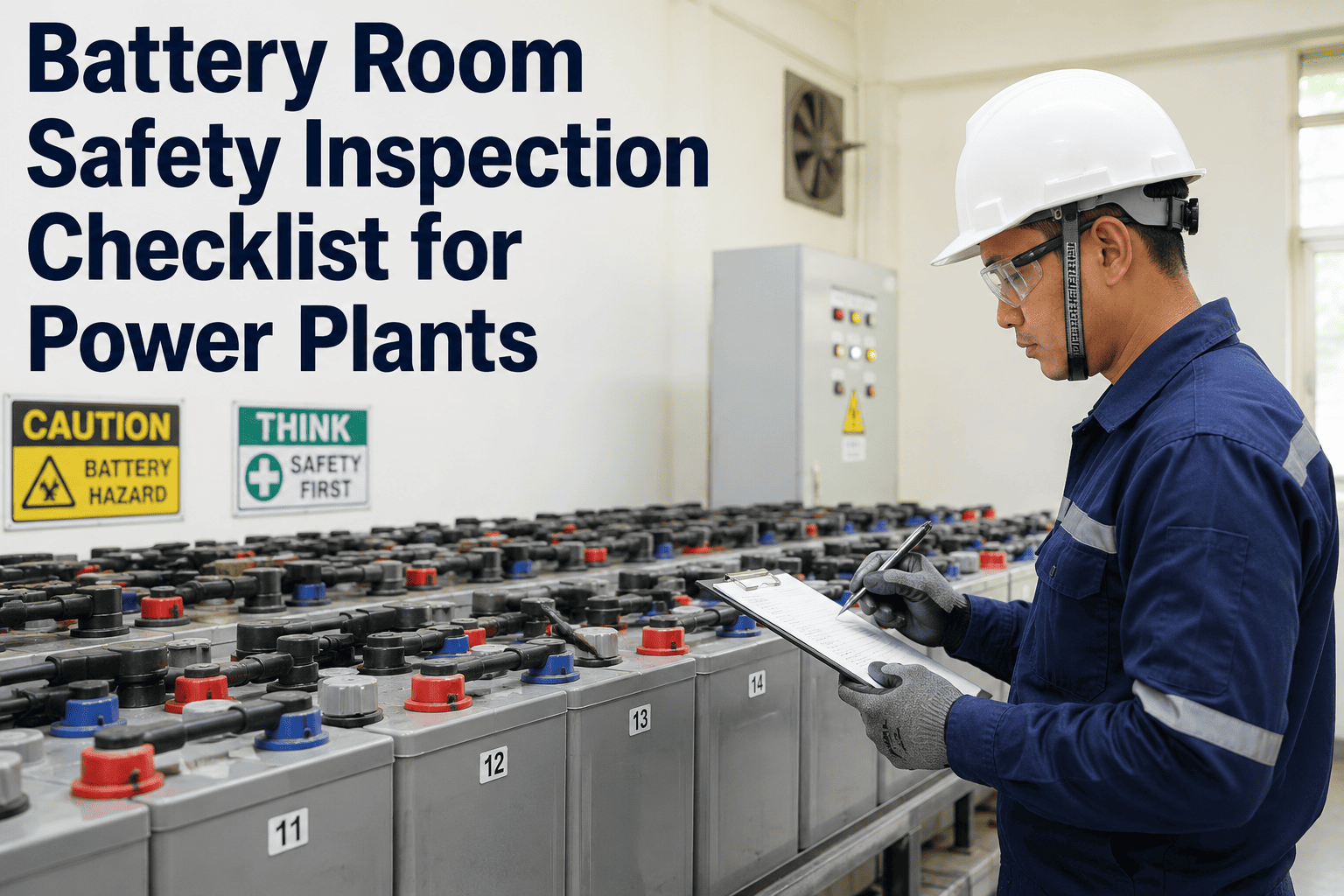
Battery room hydrogen gas ventilation confirmed operational — fan test completed
Electrical Connections
Float charging current measured for all battery strings — log values
Rectifier output DC voltage confirmed stable — no fluctuation observed
Inverter output waveform quality confirmed on UPS display — no THD alarm
Bypass switch contacts — confirm position indicator matches actual switch state
All cable connections visually intact — no loose terminations at terminal blocks
Quarterly
UPS Battery Load Test & Full System Check
Technician Required — System Load Test
Battery Testing
Battery impedance or conductance test performed — results compared to baseline
Ambient and negative-post temperature measured for minimum 10% of all battery cells
Battery runtime capacity estimated from impedance data — flag any string below 80% rated capacity
Electrolyte specific gravity checked for flooded lead-acid units — results recorded
Thermal imaging scan on battery terminals and busbars — hot spots above 10°C delta require action
System Transfer Test
Mains failure simulation performed — UPS transfers to battery without sag or interruption
Battery runtime under actual load measured and compared to design runtime
UPS static bypass transfer tested — load transfers without voltage interruption
Maintenance bypass operation confirmed — used for servicing without dropping critical load
Rectifier recharge rate after discharge confirmed — recharge to 90% within OEM specification time
Annual
UPS Full Preventive Maintenance — Qualified Technician
Full System Shutdown Maintenance Window Required
Internal Components
Capacitor inspection — check for bulging, leakage, or discoloration on DC bus capacitors
Power board and control board visual inspection — no burning, component damage, or dry solder joints
Cooling fan replacement per OEM interval or if bearing noise detected
Internal wiring inspection — loom integrity, cable tie condition, insulation checks
Firmware version verified against latest OEM release — update if required
Full Functional Testing
Full battery capacity rundown test — monitored discharge to confirm Ah capacity vs. nameplate rating
Circuit breakers and fuses tested — correct rating confirmed, no signs of thermal damage
Surge protection devices inspected — replace any with triggered indicator
Calibration of voltage and current meters — verify against calibrated reference instrument
Complete maintenance report issued — sign-off by maintenance engineer and filed in CMMS
Automate Every UPS PM Interval in OxMaint
OxMaint automatically schedules daily, weekly, quarterly, and annual UPS maintenance tasks, pushes them to technicians' mobile devices, and logs every completed check with a timestamp and technician signature — ready for NFPA 110 audit at any time.
Diesel Generator Maintenance Checklist (Emergency Standby)
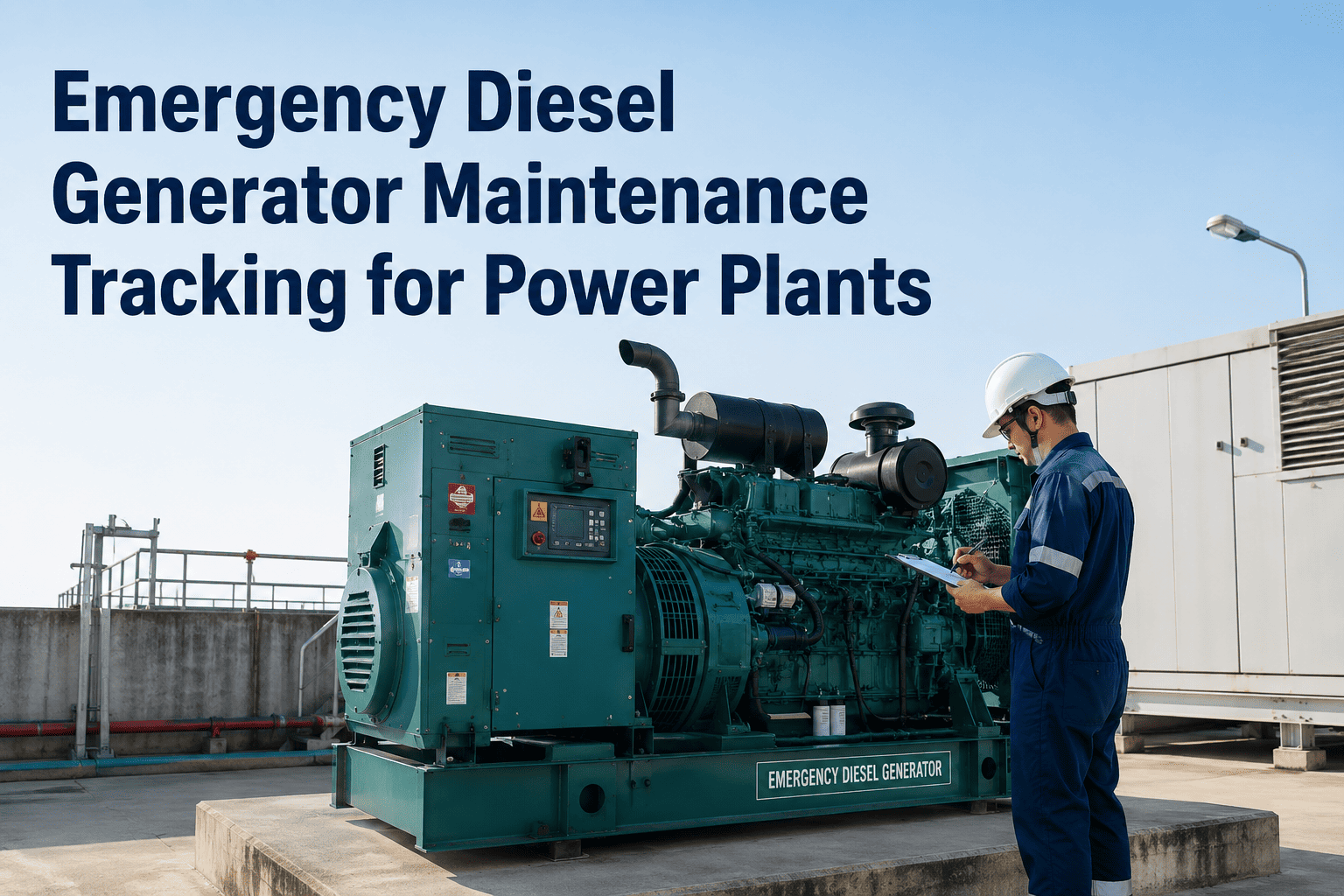
Under NFPA 110, diesel standby generators must be exercised monthly under load for a minimum of 30 minutes, with annual full load bank testing required. These are minimums — power plants with critical auxiliary loads should run more frequent tests. Every test result must be recorded and retained for regulatory audit. Manage these schedules automatically with OxMaint's emergency system PM module.
Weekly Generator Inspection
Engine oil level checked and topped if required — record level
Coolant level in radiator and overflow tank confirmed — no loss since last check
Fuel tank level recorded — minimum 75% capacity required for emergency readiness
Battery electrolyte level and specific gravity checked — terminals clean and tight
Visual inspection for oil, fuel, and coolant leaks at all hose connections and fittings
Generator block heater operation confirmed — coolant temperature at operating setpoint
Control panel status confirmed — no active alarms, auto-start mode enabled
Exhaust system visually inspected — no cracks, loose clamps, or blockage at exhaust outlet
Monthly Load Test (NFPA 110 Required)
Generator started via transfer switch — record start time and time to rated voltage/frequency
Run under load for minimum 30 minutes at 30%+ of rated kW — exhaust temperature confirms adequate loading
Transfer switch operation verified — automatic transfer confirmed, retransfer to normal supply tested
Voltage and frequency stability observed under load — no droop or hunting
Oil pressure and coolant temperature at operating conditions — log readings
Stack exhaust color and smoke checked — white or blue smoke indicates fuel or oil system issue
Fuel consumption during test recorded — significant deviation from baseline flags a fuel system problem
All test results and readings recorded in CMMS with technician sign-off
Annual Generator Maintenance — Full Load Bank Test & Overhaul Items
Fluid & Filter Service
Engine oil and all filters (oil, fuel, air) replaced per OEM service interval
Coolant sample sent for chemical analysis — inhibitor level, pH, and contamination checked
Diesel fuel quality test per ASTM D975 — fuel replaced or treated if degraded
Fuel tank interior inspected for water, sludge, and microbial contamination
Belts and hoses inspected — replace if cracked, glazed, or showing wear patterns
Electrical & Control Testing
Full load bank test at 100% rated capacity for minimum 60 minutes — all parameters logged
Transfer switch contacts inspected — contact wear measured, protective relay functions tested
Governor calibration and voltage regulator settings verified and adjusted if required
Emergency stop functions and all safety interlocks tested — high temp, low oil, overspeed
Rupture basin sensor test (above-ground fuel tanks) — confirm sensor triggers correctly
Transfer Switch Inspection Checklist
The Automatic Transfer Switch (ATS) is the component that physically connects or disconnects the emergency generator from the plant's auxiliary load. A generator that starts perfectly but fails to transfer is operationally identical to one that never starts. Transfer switch inspection is the most frequently skipped item in emergency power programs — and the one most likely to create a failure at the critical moment.
Monthly
Automatic transfer sequence tested — normal-to-emergency and emergency-to-normal
Transfer time from loss of normal power to full load on emergency supply measured and recorded
Retransfer time delay confirmed operating correctly — no premature retransfer to normal
Control panel indicators and LED status lamps confirmed functional
No unusual heating at ATS cabinet — exterior temperature normal to touch
Annual
Main contacts inspected — contact pitting, arc erosion, and surface condition documented
Mechanical operation of transfer mechanism tested — smooth actuation, no binding or sluggishness
Thermal imaging of ATS under load — temperature differential between phases flagged if greater than 10°C
All protective relay functions tested — undervoltage, phase loss, and frequency sensing
Control wiring inspected — no chafing, corrosion, or loose terminal connections
ATS manufacturer service bulletin review — any outstanding service recommendations actioned
Inspection Frequency Summary: Emergency Power Systems
| System / Component |
Daily |
Weekly |
Monthly |
Quarterly |
Annual |
| UPS Unit |
Mode, alarms, voltage, room temp |
Battery voltage, connections, float current |
Transfer test, alarm simulation |
Load test, impedance test, thermal scan |
Full rundown test, capacitor check, firmware |
| UPS Batteries |
Charger status, no alarms |
Cell voltage, terminal condition, electrolyte |
String voltage, temperature log |
Conductance test, thermal imaging |
Full capacity test, replace cells at end of life |
| Diesel Generator |
Block heater, control panel status |
Oil, fuel, coolant, battery, leaks |
30-min load test, transfer switch exercise |
Oil sample, cooling system performance |
Full load bank test, oil and filter service |
| Auto Transfer Switch |
Panel indicator status |
No unusual heating, visual check |
Auto transfer sequence test, timing verification |
Control wiring, thermal check |
Contact inspection, relay testing, full overhaul |
| DC Battery System (125V/48V) |
Float voltage, charger status |
Cell voltage, specific gravity |
Capacity trending, intercell connections |
Impedance test, thermal imaging |
Full discharge test, battery replacement assessment |
NFPA 110 Compliance: What Power Plants Must Document
Level 1 EPSS
Life-Safety Critical Systems
Control room power, protection relay DC systems, emergency lighting, and fire protection systems. These are Level 1 EPSS — the strictest maintenance and testing requirements apply. Monthly load tests, weekly battery inspections, and annual full-load tests are mandatory minimums, not recommendations.
Weekly battery inspection · Monthly 30-min load test · Annual full-load bank test
Level 2 EPSS
Non-Life-Safety Standby Systems
Plant auxiliary power, HVAC for control rooms, and non-critical process systems. Level 2 EPSS have somewhat relaxed testing requirements but must still follow a documented maintenance program. In power plant environments, most Level 2 systems should be maintained to Level 1 standards given the operational consequence of their failure.
Monthly testing recommended · Semi-annual detailed inspection · Annual load test
Record Retention
Documentation Requirements
NFPA 110 §8.5.1 requires records for all EPSS inspections, operational tests, exercising, repairs, and modifications. Retention period is defined by the Authority Having Jurisdiction (AHJ) — but records must be immediately available on request. Paper logs fail this requirement at scale. A CMMS with digital checklists makes audit-ready export a one-click operation.
Records available to AHJ on demand · All tests, repairs, and modifications logged
OxMaint Keeps Your Emergency Power Program NFPA 110 Compliant
Pre-built UPS, generator, and ATS maintenance schedules. Automated monthly load test reminders. Every inspection timestamped with technician sign-off. One-click audit export for NFPA 110 AHJ reviews. Most plants are fully live within one week of sign-up.
Frequently Asked Questions
How often should UPS batteries be tested in a power plant?
Under NFPA 110, battery systems used in Emergency Power Supply Systems must be inspected weekly, with monthly recording of electrolyte specific gravity for lead-acid types. Beyond this regulatory minimum, power plants should conduct quarterly impedance or conductance testing to track capacity degradation over time, and an annual full discharge test to verify actual runtime against the plant's backup power requirement. Most VRLA batteries reach end of life at 3–5 years regardless of visual condition — a structured battery testing schedule in OxMaint tracks cell-by-cell data and flags strings approaching replacement thresholds before they fail during an actual outage.
What is the NFPA 110 monthly generator test requirement?
NFPA 110 Chapter 8 requires that diesel generator sets in service be exercised at least once monthly for a minimum of 30 minutes under sufficient load to maintain exhaust temperatures recommended by the manufacturer — and at no less than 30% of the EPS standby nameplate kW rating. The test must be started through the transfer switch to exercise the complete emergency power chain, not just the generator in isolation. Rotating which transfer switch is used each month when multiple switches are installed is also required. All test results including times, readings, and any anomalies must be documented and retained. OxMaint automates these monthly test reminders and captures results directly from the field on mobile devices.
What causes a UPS to fail during a real power outage despite appearing healthy?
The most common cause is battery capacity loss that was never detected because the battery was never actually loaded. UPS monitoring circuits report a battery as "healthy" based on float voltage, but voltage and capacity can collapse rapidly under full load discharge — a condition only revealed by a proper load test. Capacitor degradation in older UPS units is the second major cause, as capacitors age regardless of use and can fail catastrophically under the thermal stress of a real transfer. The third cause is bypass and transfer switch issues that allow momentary power interruptions during transfer. A quarterly OxMaint checklist that includes mains failure simulation is the only reliable way to verify that all three components function correctly together.
How do I track UPS and generator maintenance across multiple units in a plant?
Managing multiple UPS units, generators, and transfer switches manually — via spreadsheets or paper logs — creates gaps because there is no automatic escalation when a scheduled test is overdue. A digital maintenance platform like OxMaint assigns each asset its own PM schedule, automatically generates work orders at the correct intervals, and escalates to supervisors when tasks are not completed on time. Every reading, test result, and technician sign-off is stored against the specific asset, giving you a complete, searchable maintenance history across every emergency power unit in the plant.
What is load bank testing and when is it required for emergency generators?
Load bank testing involves connecting a resistive load bank to the generator and running it at 100% of its rated kW output — typically for 60 minutes annually. This test reveals problems that no-load or partial-load tests cannot expose: fuel system limitations at full demand, cooling system capacity at peak thermal output, governor and voltage regulator stability under rapid load changes, and the actual power quality the generator delivers at nameplate rating. NFPA 110 requires annual load bank testing if the generator's normal monthly tests do not meet the minimum loading requirements.
Book a demo to see how OxMaint schedules and documents load bank test results as part of a complete emergency power PM program.