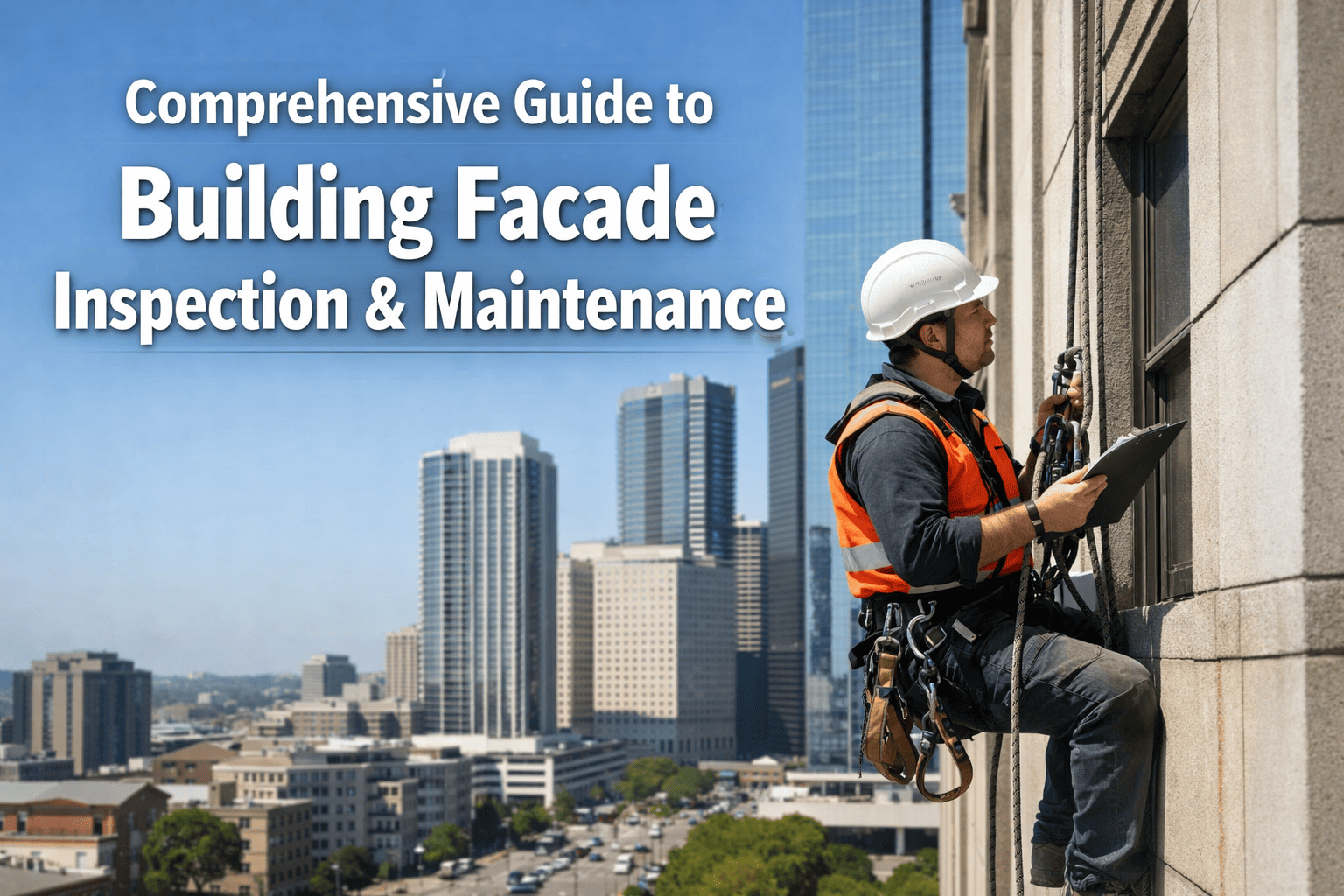
Comprehensive Guide to Building Facade Inspection & Maintenance
By Mark Strong on April 10, 2026
Your building's facade is its first line of defense — against weather, structural stress, and liability. A single overlooked crack can escalate into a six-figure repair, a failed inspection, or worse, a public safety emergency. Whether you manage one property or a full portfolio, a structured facade inspection and maintenance program is no longer optional — it's a code requirement in many jurisdictions and a financial necessity everywhere else.
Automate Your Facade Inspection Program
OxMaint generates code-aligned checklists, assigns inspections to qualified technicians, tracks findings per building, and stores compliance evidence — all from one platform.
Building envelopes deteriorate silently. Water infiltration, thermal cycling, and material fatigue compound over years before visible signs appear. When failure does occur — falling masonry, glass panels, or cladding — the consequences are immediate and severe. FISP (Facade Inspection Safety Program) in New York and similar mandates across major cities exist precisely because self-regulation alone has proven insufficient.
Public Safety
Falling facade elements are a leading cause of pedestrian injury in dense urban environments.
Code Compliance
FISP, Local Law 11, and equivalent codes mandate periodic inspections with documented reports.
Cost Prevention
Early detection reduces repair costs by up to 60% compared to emergency remediation.
FISP / Local Law 11 — Mandatory 5-year cycle for buildings over 6 stories. Classifications: Safe, SWTF, Unsafe. OxMaint auto-tracks cycle deadlines per building.
UK
Building Safety Act 2022 — Heightened requirements for higher-risk buildings (18m+). OxMaint schedules inspections and logs competent person records.
Australia
NCC / State Codes — Annual facade inspection requirements with state-specific variations. OxMaint generates WorkSafe documentation per jurisdiction.
Canada
NBC / Provincial — Toronto's Exterior Cladding inspection program mirrors FISP. OxMaint tracks cycles and generates province-aligned checklists.
Results With OxMaint
83%
Reduction in missed facade inspection deadlines
100%
Audit pass rate for OxMaint-managed portfolios
55%
Reduction in emergency facade repair costs
$0
Compliance fines for OxMaint-managed buildings
Frequently Asked Questions
What is FISP and who does it apply to?
FISP (Facade Inspection Safety Program), formerly Local Law 11, applies to buildings over 6 stories in New York City. It requires a qualified inspector to examine all facade elements every 5 years and submit a classified report to the Department of Buildings.
How often should a building facade be inspected?
At minimum, an annual visual inspection and a formal code-mandated inspection every 5 years. High-traffic or older buildings benefit from quarterly walkthroughs and post-storm checks to catch new damage early.
What are the most common facade defects found during inspection?
Spalling concrete, cracked or missing mortar, failed sealants, corroded anchors, and window seal failures are the most frequently cited. Most are preventable with a structured preventive maintenance program tracked in a CMMS like OxMaint.
Can OxMaint manage multiple buildings and facade inspection cycles?
Yes. OxMaint manages your entire property portfolio from a single dashboard — tracking inspection cycles, compliance deadlines, findings, and remediation progress per building and elevation.
Free to Start — Deploy in Days
Every Building. Every Elevation. Every Inspection Cycle. One Platform.
OxMaint turns facade maintenance from a compliance risk into a documented, measurable, audit-ready program.

-and-use-it-for-maintenance-planning.png)