Your CMMS already contains the data that tracks your preventive maintenance performance — the problem is that 91% of property managers never analyze it. Every PM work order your technicians have completed, every scheduled inspection they have logged, every overdue task that slipped through the cracks over the past 24 months contains patterns that repeat with statistical regularity across properties, asset types, and seasonal cycles. A 2024 BOMA International report found that properties using PM compliance tracking reduced emergency repair costs by 36% and cut total maintenance spend by 28% — not by hiring more technicians, but by systematically measuring and improving PM completion rates. The HVAC filter that wasn't changed on schedule last spring is not a random oversight — it is the third missed PM on that property this year, and the previous two led to compressor failures. That pattern is sitting in your CMMS right now, invisible because nobody has built the dashboard that surfaces it. Oxmaint turns your work order history into a PM compliance engine — automatically tracking completion rates, flagging overdue tasks, and generating compliance reports before management reviews. The data is already yours, and the analysis that prevents the next emergency repair takes minutes to configure, not months. If your property is still reacting to equipment failures instead of preventing them with PM compliance, start a free trial or book a demo to see how Oxmaint surfaces PM compliance patterns from your existing work order records.
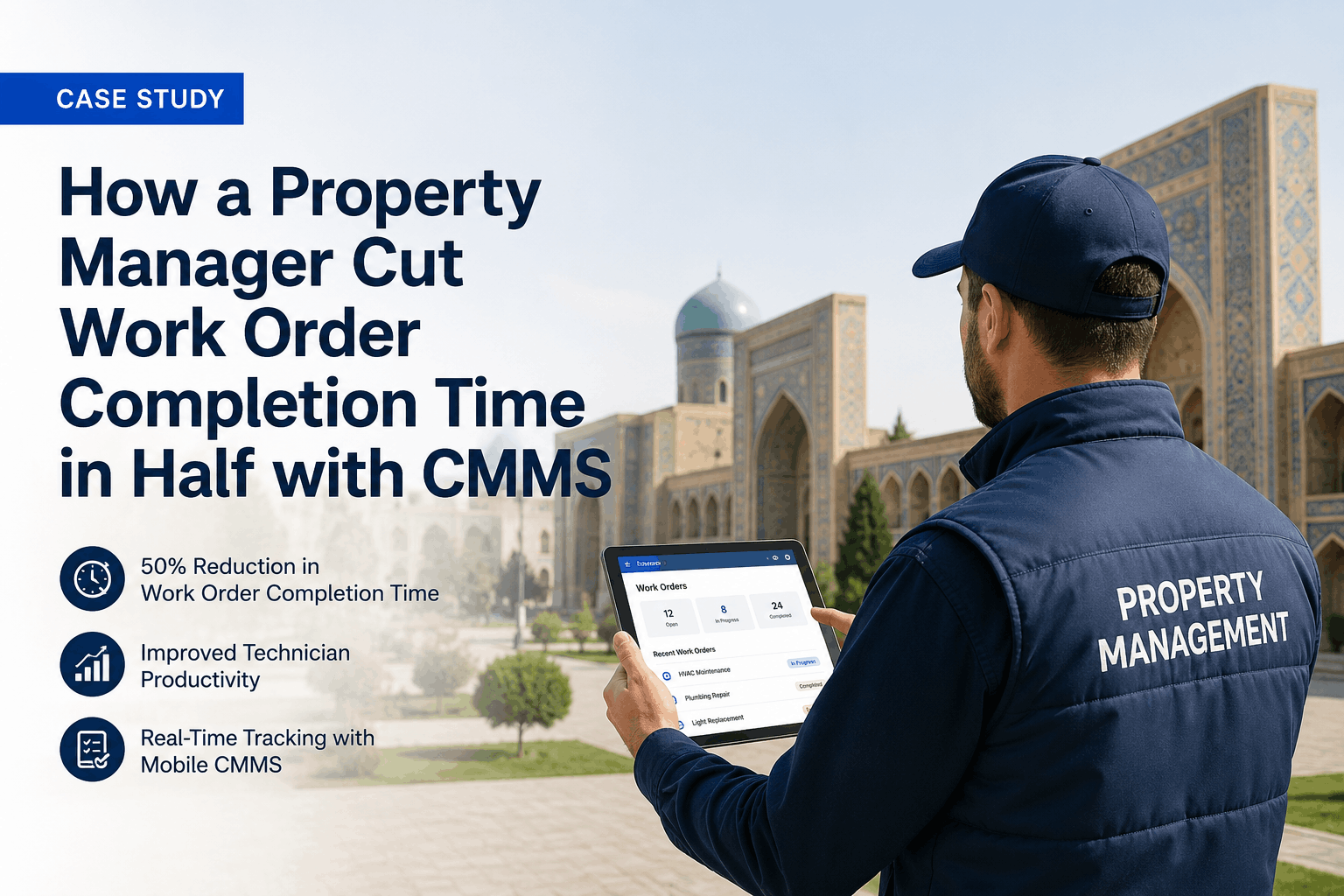
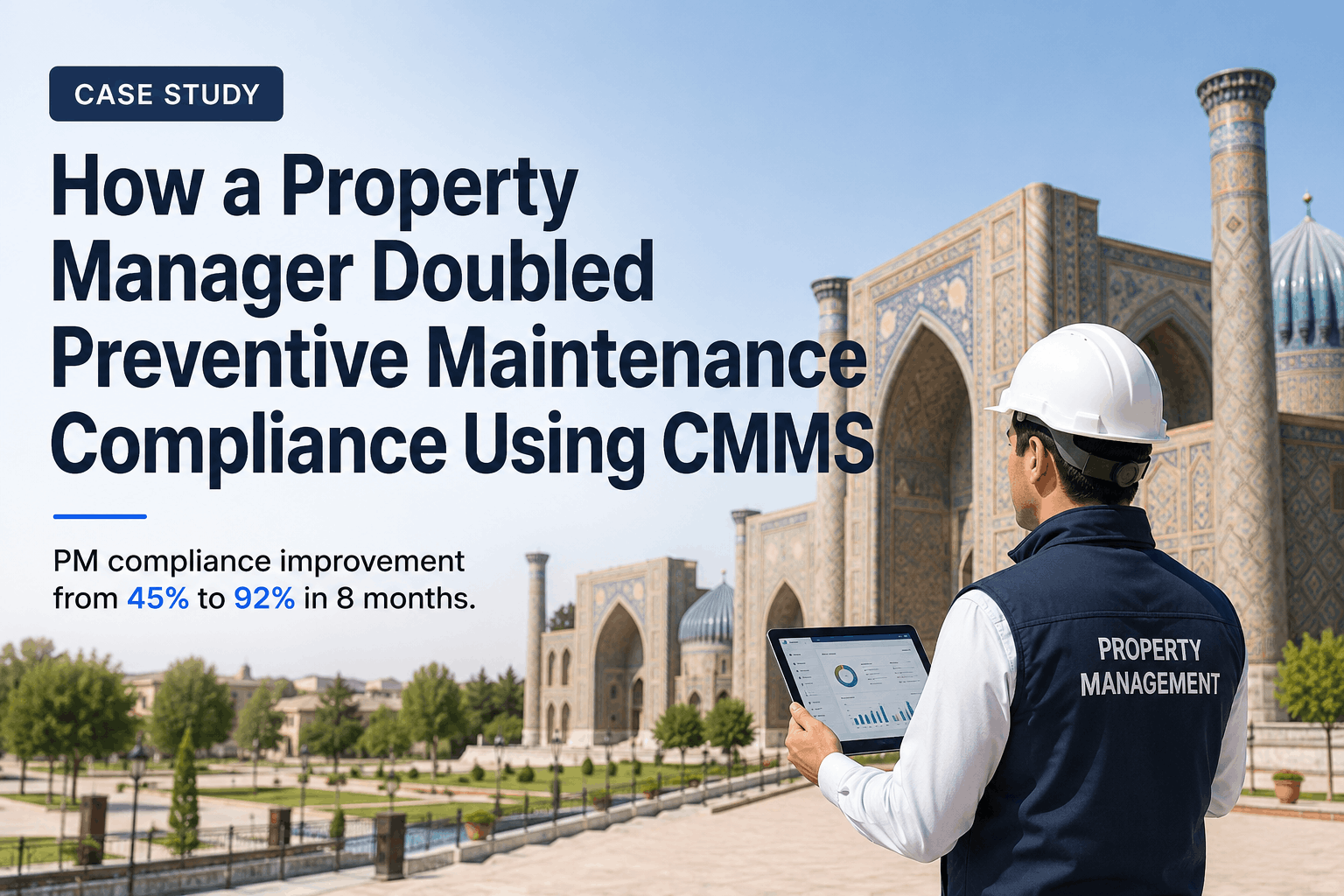
Case Study: How a Property Manager Doubled Preventive Maintenance Compliance Using CMMS
PM compliance improvement from 45% to 92% in 8 months — a property management success story using CMMS to automate PM scheduling, track technician completion, and reduce emergency repairs.
You Already Have the PM Schedule — You Just Need the Compliance Data
Every PM work order in your CMMS is a data point. Every completed inspection is a compliance record. Every overdue task is a failure waiting to happen. Oxmaint does not require new hardware or additional staff — it analyzes the PM history you have already been collecting and surfaces the compliance gaps that cause equipment failures. Property managers running 50 or more units can start a free trial or book a demo to see how PM compliance tracking works on your property's actual data.
Stagnant PM Compliance and Rising Emergency Repairs
A 200-unit property management company with 22 residential buildings had a preventive maintenance program on paper but struggled with execution. PM compliance had been stuck at 45% for over two years, and the consequences were mounting.
The root causes were systemic: PM schedules were tracked in spreadsheets that were not shared across properties. Technicians were not notified of upcoming PMs. No accountability system existed — management couldn't see who was completing PMs and who wasn't. Emergency repairs had increased 40% over 24 months. HVAC system failures in summer and boiler breakdowns in winter were becoming annual events. Tenant complaints about equipment issues were up 55% year-over-year.
The Three PM Compliance Data Layers Your CMMS Captures
Your maintenance history contains three distinct PM compliance data layers, each contributing different insights. Most property managers collect all three but analyze none of them systematically. When these layers are cross-referenced — asset type by property by technician by season — PM compliance improvement becomes arithmetic, not guesswork.
Four PM Compliance Failure Patterns Your Data Will Reveal
When you cross-reference the three data layers above, four distinct PM compliance failure pattern types emerge. Each pattern type has a different prevention strategy — and each is invisible until the analysis is performed. Property managers who identify even two or three of these patterns from their existing data typically double their PM compliance within 12 months.
Some properties consistently achieve 85-95% PM compliance while others struggle below 40%. The difference is usually not in the technicians — it's in the property management systems, staff turnover, or administrative support. Your CMMS data reveals exactly which properties are underperforming and why.
Certain assets — HVAC units in summer, boilers in winter, roof inspections — are consistently missed at higher rates than others. These are the PMs that technicians avoid, or that get deprioritized when emergency work piles up. Your CMMS data reveals the specific assets that require additional attention.
PM compliance often drops 20-30% during peak vacation months, holiday seasons, or extreme weather periods when technicians are overwhelmed with emergency work. Your CMMS data reveals the exact calendar windows when PM compliance historically drops in your portfolio.
Even within the same property, individual technicians may have dramatically different PM completion rates. Your CMMS data reveals the performance variance between technicians — not for discipline, but for training and resource allocation.
How Oxmaint Turns Work Order History Into PM Compliance
Oxmaint is not a standalone tracking tool bolted onto your maintenance process — it is the CMMS that collects PM data, structures it correctly, and surfaces compliance gaps automatically as part of daily property operations. Every PM work order, every technician completion, every overdue task feeds the compliance engine without any additional data entry. Property managers ready to improve PM compliance can start a free trial or book a demo to see the PM compliance workflow on live portfolio data.
Oxmaint automatically generates PM work orders based on predefined schedules and asset-specific requirements. No manual spreadsheet updates or calendar reminders are needed. PMs are generated 30 days in advance, giving technicians and managers visibility into upcoming work.
Technicians receive PM work orders on mobile devices — no need to return to the office to check schedules or pick up paper work orders. PMs can be viewed, started, and completed from anywhere, with checklists ensuring all required steps are completed.
Management can see PM completion rates in real time — by property, by technician, and by asset type. PM overdue alerts are generated automatically, allowing managers to reassign work or follow up with technicians before PMs become critically overdue.
Oxmaint tracks PM completion rates against asset failure rates, identifying which PMs are most critical to preventing failures and which could be optimized or eliminated. This data-driven approach focuses technician time on the PMs that deliver the highest ROI.
Track PM compliance rates across your entire portfolio, identifying which properties are leading and which need support. Share best practices from high-compliance properties to improve performance across the portfolio.
PM compliance metrics, overdue tasks, cost savings, and failure correlations — all visible in a single dashboard. Exportable for property reviews, budget planning, and ownership reporting.
Reactive PM Management vs CMMS-Driven PM Compliance
PM Compliance Doubled, Emergency Repairs Cut 36%
Within 8 months of implementing the CMMS-based PM program, the company achieved verified improvements across every key performance indicator. These are industry-average component lifespan ranges for commercial HVAC and building systems — and the compliance patterns that prevent failure.
| Metric | Before CMMS | After CMMS | Improvement |
|---|---|---|---|
| PM Compliance Rate | 45% | 92% | +47% |
| Emergency Repair Dispatches | 112/year | 72/year | -36% |
| Annual Maintenance Cost | $480,000 | $346,000 | -28% |
| Overdue PMs | 30% | <5% | -25% |
| Critical System Failures | 8/year | 3/year | -63% |
Four Steps to Double Your PM Compliance
You do not need a maintenance consulting team or a six-month implementation project. If you have 12+ months of PM history and 50+ units, you have enough data to identify actionable PM gaps within your first 30 days on Oxmaint.
Load your existing PM schedules and work order history into Oxmaint — CSV import from any previous CMMS, spreadsheet, or property management system. Oxmaint maps each PM to its property, asset type, frequency, and completion record. The import process takes hours, not weeks, because Oxmaint's import engine handles the field mapping automatically.
Oxmaint calculates your current PM compliance rate by property, by asset type, and by technician. Within the first week, you will see which properties are exceeding benchmarks and which are falling behind. You will also see which asset types are most likely to be missed — HVAC, plumbing, electrical, or something else.
Review the PM compliance dashboard for your top 10 gaps by property and asset type. Identify which gaps are seasonal, which are technician-specific, and which are resource-related. Prioritize the gaps with the highest combined cost and failure frequency — these are your highest-ROI improvement targets.
Configure Oxmaint to generate PM work orders automatically based on your optimized schedules. Assign PMs to technicians through mobile devices. Set up compliance alerts for overdue tasks. From this point forward, every completed PM feeds the compliance engine — making your program more accurate with every data point.
ROI of CMMS-Driven PM Compliance Improvement
Doubled PM completion rates from 45% to 92% by replacing manual spreadsheets with automated scheduling and mobile tracking
Emergency dispatches dropped from 112 to 72 annually by catching issues early through consistent PM execution
Total maintenance costs decreased from $480,000 to $346,000 annually — saving $134,000 through reduced emergency repairs and more efficient PM execution
The CMMS paid for itself within 4 months through cost savings alone — with ongoing annual savings of $134,000 continuing year after year
Frequently Asked Questions
What is a good PM compliance rate for property management?+
How does a CMMS improve PM compliance?+
How long does it take to improve PM compliance with a CMMS?+
What ROI can I expect from PM compliance improvement?+
Double Your PM Compliance — Find the Gaps Before They Become Emergency Repairs
Every missed PM in your portfolio is a future emergency repair waiting to happen. Oxmaint is the CMMS that tracks PM compliance automatically, surfaces gaps in real time, and generates the automated work orders that prevent equipment failures. No new hardware. No consulting fees. Import your PM history, identify your gaps, and double your compliance in your first 8 months.