Commercial Building Exterior Facade Inspection Checklist
By Alex Jordan on June 8, 2026
Commercial building facades are the first defense against weather damage, water intrusion, and structural deterioration. Yet most property managers inspect facades reactively — only after water stains or cracks appear. A structured annual facade inspection catches issues at the repair stage, preventing $500K+ restoration costs. Oxmaint's digital facade checklist combines visual surveys, thermal imaging data, and documentation standards to identify vulnerabilities before they become capital disasters.
Manage Commercial Facade Inspections DigitallySchedule annual and post-storm facade assessments, document findings with photos and thermal data, assign repairs, and track compliance — all visible to stakeholders in real time.
Visual inspection from ground level identifies surface-visible defects like peeling paint, cracks, water stains, and damaged cladding. This is the first step in any comprehensive facade survey, requiring high-definition photography and detailed location mapping for follow-up.
2. Roof Membrane & Flashing Assessment
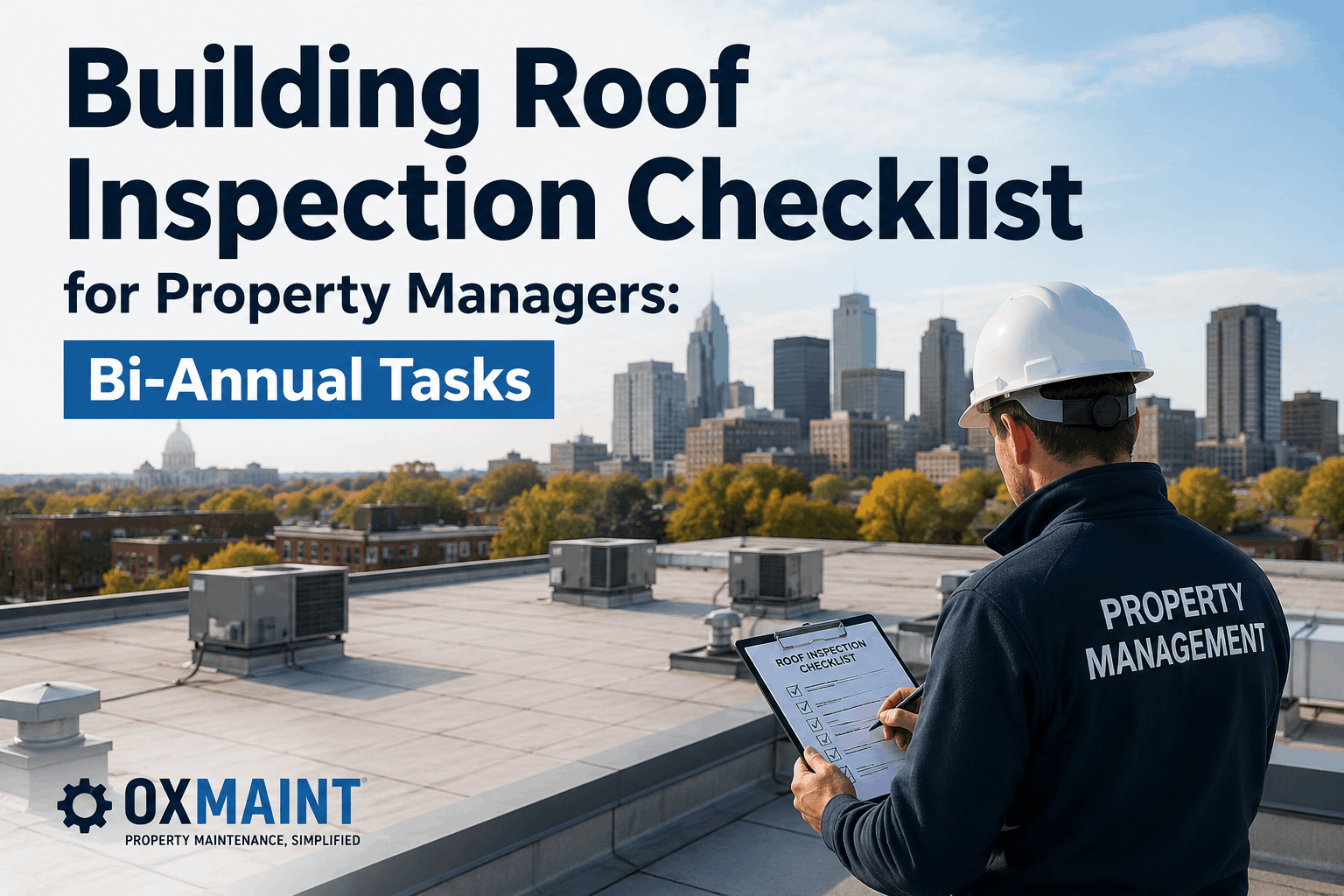
Roof condition directly affects facade integrity. Flashing failures at roof-wall transitions are common water intrusion pathways. Biannual roof inspections catch membrane blisters, seam separations, and flashing gaps before leaks cascade down through walls and ceilings.
Water Infiltration ImpactWater infiltration behind facade panels can cause $50K–$500K in structural damage before becoming visible. Early sealant failure detection prevents catastrophic interior damage to mechanical systems, electrical infrastructure, and building insulation.
3. Advanced Inspection Techniques & Technology
Modern facade inspection uses thermal imaging, moisture meters, and infrared thermography to detect hidden moisture and insulation gaps invisible to visual inspection. Professional-grade tools reveal problems 12–18 months before they cause visible water damage.
4. Material-Specific Inspection Protocols
Masonry, metal cladding, composite panels, and glass curtain walls each have unique failure modes. Material-specific inspection focuses on failure risks particular to each building envelope system.
Building Code ReferenceAnnual facade inspections are required by model building codes and insurance underwriters for structures over 5 stories. NFPA 101 Life Safety Code and IBC (International Building Code) mandate inspection frequency based on building age and material type. Documentation in Oxmaint provides proof of compliance for AHJ (Authority Having Jurisdiction) reviews.
Schedule Your Annual Facade Inspection TodayOxmaint coordinates inspection scheduling, documents findings with thermal data integration, tracks repairs, and maintains your compliance history — eliminating missed inspections and deferred defect resolution.
Severe weather (high winds, hail, ice) damages facades rapidly. Post-storm inspections within 24 hours document damage for insurance claims and identify urgent repairs preventing secondary water damage and emergency building closure orders.
Frequently Asked Questions — Commercial Building Facade Inspection Checklist
1. How often should commercial building facades be inspected?
Annual visual inspections are standard for most commercial buildings. Buildings over 50 years old or with known defects should be inspected biannually. High-wind or coastal regions require annual or post-storm inspections regardless of building age or condition.
2. What is the difference between facade cleaning and facade inspection?
Facade cleaning removes dirt, algae, and staining for aesthetic appearance. Inspection assesses structural integrity, identifies water intrusion, and documents defects requiring repair. Many inspections reveal hidden damage only visible after professional cleaning removes surface dirt.
3. How much does a comprehensive commercial facade inspection cost?
Ground-level visual inspection costs $1,500–$3,000 for most commercial buildings. Professional rope-access inspection with thermal imaging adds $3,000–$8,000. Water spray testing and core sampling add another $2,000–$5,000. This investment typically prevents $50K–$500K in hidden water damage repairs.
4. What is the most common facade defect found during inspections?
Sealant failure (cracks, separation, or deterioration around windows and panel joints) is the most common defect. These seemingly minor cosmetic failures allow water penetration within 12 months, leading to insulation saturation, mold growth, and structural damage. Early sealant replacement prevents cascade failure.
5. Can facade damage cause building closure or emergency code violations?
Yes. Building official can order temporary closure if facade defects create hazard risk (falling facade panels, exposed structural components) or if water intrusion threatens life safety systems (electrical panels, emergency egress). Documented inspection and prompt repair prevents emergency closure orders.
6. What is thermal imaging revealing about facades that visual inspection misses?
Infrared thermography reveals moisture-saturated areas, insulation gaps, and thermal bridges invisible to visual inspection. Wet insulation shows as cooler areas in thermal images. This technology detects hidden water damage 12–18 months before visible staining appears, enabling preventive repair before structural damage occurs.
7. How should facade inspection findings be documented for compliance and insurance purposes?
Document inspections with geotagged photos, elevation diagrams showing defect locations, moisture readings, and repair recommendations. Store all documentation in Oxmaint with timestamps and inspector credentials. This digital record satisfies building code compliance audits and supports insurance claims with objective evidence.
8. What accelerates facade deterioration and how can property managers slow it?
UV radiation, freeze-thaw cycles, salt spray (coastal areas), and air pollution accelerate facade aging. Regular inspection, timely sealant replacement, and protective coatings slow deterioration. In coastal regions, quinquennial (5-year) inspection and cleaning programs double facade service life versus deferred maintenance approaches.
"Our downtown office building is 35 years old with an aging glass curtain wall system. We missed annual facade inspections for three years — until water intrusion behind the glass caused $400K in insulation and mechanical system damage. We now use Oxmaint to schedule annual inspections and document findings with thermal imaging. The investment ($3K/year) is trivial compared to the water damage we just avoided. Every property manager should embrace preventive facade inspection."— David Park, Director of Real Estate Operations, Los Angeles
Protect Your Building EnvelopeStart with Oxmaint free. Schedule facade inspections, capture thermal imaging, document findings, and track repairs to prevent water damage and structural failure.