The call came from the CFO of a 34-property multifamily portfolio in Phoenix on a Tuesday afternoon in September. She had just received the annual capital expenditure report and something did not add up. Three properties built in the same year, same construction type, same HVAC systems, had wildly different maintenance costs. Property A spent $218,000 on mechanical repairs. Property B spent $87,000. Property C spent $312,000. All three had the same unit count, the same equipment age, the same climate exposure. The difference should not have existed, but nobody could explain why it did because nobody had the data to answer the question. Every building was managed reactively. Equipment ran until it broke. Repairs were dispatched when tenants complained. The maintenance team knew how much they spent but not why they spent it, where the failures were concentrating, or which systems were degrading fastest. That November, the portfolio deployed a digital twin platform across all 34 properties. IoT sensors were installed on every major mechanical system. Robotic inspectors began scheduled assessments of roofs, facades, and crawl spaces. Within 90 days, the digital twin revealed that Property C's $312,000 maintenance bill was driven by a single root cause: the building's chilled water loop had been running at 38 percent above design pressure for an estimated 14 months, accelerating wear on every connected component. A $4,200 valve recalibration resolved the pressure issue. Projected savings for that building alone in the following year: $189,000. One data point, invisible without a digital twin, was responsible for $225,000 in excess spending across a single building over two years. Book a demo to see how digital twin visibility eliminates the blind spots draining your maintenance budget.
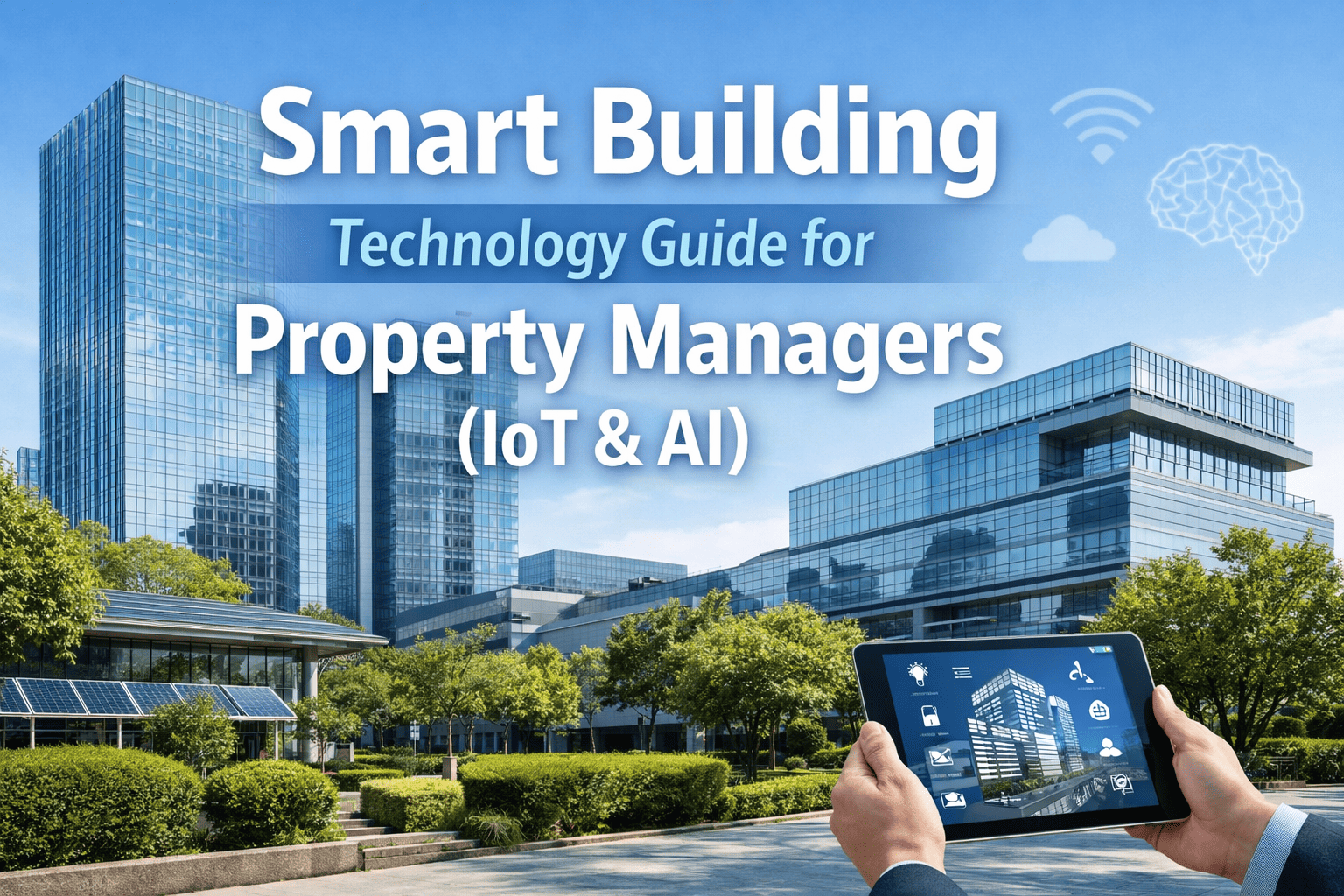
The building digital twin market reached $2.9 billion in 2025 and is growing at 44.2 percent annually toward $65.2 billion by 2034. That growth rate reflects an industry-wide recognition that managing buildings without a real-time virtual model is the equivalent of flying without instruments. Digital twins combined with robotics create a closed-loop system where robots continuously feed inspection data into a virtual model that simulates building performance, predicts failures before they occur, and generates maintenance plans based on actual condition rather than calendar schedules. When this system connects to a CMMS, every work order, every spare part, and every technician dispatch is driven by data that the building itself generates in real time. This guide covers exactly how digital twin robotics property maintenance works, what the technology stack looks like, and why the properties connecting robotic inspection to virtual building models are spending 25-30 percent less on maintenance while extending asset life by decades.
$2.9B
Building digital twin market in 2025, 44.2% CAGR to $65.2B by 2034
25-30%
Maintenance cost reduction with digital twin-driven predictive programs
7-20%
Property valuation increase through documented smart building analytics
What a Digital Twin Actually Is in Property Maintenance
A digital twin is not a 3D model of your building. A 3D model is static. A digital twin is a living, real-time virtual replica that mirrors the actual condition and performance of every system in the physical building. It ingests data continuously from IoT sensors on HVAC, plumbing, electrical, and structural systems. It receives inspection data from robotic assessments of roofs, facades, and underground infrastructure. It processes that data through AI models that predict when components will fail, which systems are degrading fastest, and where maintenance dollars will generate the highest return. When connected to a CMMS platform, the digital twin does not just show you what is happening in the building. It tells you what to do about it and when to do it.
Layer 1
Physical Building + IoT Sensors
Temperature, pressure, vibration, humidity, flow rate, and energy consumption sensors installed on every major mechanical, electrical, and plumbing system. Data streams continuously to the digital twin platform. Smart property digital twins begin here: the physical building generating its own performance data.
Layer 2
Robotic Inspection Data Feed
Drones inspect roofs and facades. Pipe crawlers assess underground infrastructure. Security patrol robots monitor building perimeters while detecting environmental anomalies. Every robotic inspection generates structured data that feeds into the digital twin as condition records, mapped to exact building coordinates.
Layer 3
AI Simulation and Prediction Engine
The digital twin processes sensor and inspection data through machine learning models trained on equipment failure patterns. AI facility monitoring predicts remaining useful life for every tracked component, simulates the impact of deferred maintenance, and identifies the cascade effects where one failing system accelerates wear on connected systems.
Layer 4
CMMS Integration and Automated Action
Predictions become work orders. The CMMS receives condition-based maintenance triggers from the digital twin, assigns technicians, orders parts, and schedules repairs during optimal windows. CMMS predictive maintenance integration closes the loop: the building tells you what it needs, the system schedules the response, and the technician executes with full context.
Sign up free to start connecting building data to automated maintenance workflows.
What Robots Feed Into the Digital Twin
Robots are the eyes and ears of the digital twin in areas where fixed sensors cannot reach. Every robotic inspection generates structured data that updates the virtual model with real-world condition evidence.
Roof Inspection Drones
Data Generated: HD imagery, thermal maps, 3D photogrammetric models, membrane condition scoring
Twin Update: Roof asset condition score, remaining life estimate, leak probability heat map
CMMS Action: Auto-generates repair work orders for Grade 3+ defects, updates capital forecast
Facade Inspection Drones
Data Generated: Crack mapping, spalling detection, sealant condition, moisture intrusion signatures
Twin Update: Elevation-by-elevation condition scoring, deterioration rate trending
CMMS Action: Prioritized repair scheduling by severity, compliance documentation auto-filed
Pipe Inspection Crawlers
Data Generated: HD video, AI defect classification, root intrusion mapping, pipe ovality measurement
Twin Update: Underground infrastructure condition layer, blockage risk scoring per segment
CMMS Action: Root treatment schedules, lining work orders, capital replacement forecasting
Security Patrol Robots
Data Generated: Environmental readings: water leaks, gas presence, temperature anomalies, open doors
Twin Update: Facility condition alerts overlaid on building model in real time
CMMS Action: Non-security findings route as maintenance work orders to facility teams
The ROI of Seeing What You Could Not See Before
Digital building optimization delivers measurable returns across every property operations category. These figures represent documented outcomes from properties operating digital twin platforms with robotic inspection feeds and CMMS integration.
25-30%
Maintenance Cost Reduction
Predictive maintenance robotics catches failures before they cascade. The $4,200 valve fix that prevented $189,000 in downstream damage is not an outlier. It is the standard outcome when you can see system interactions that reactive maintenance never reveals.
40-60%
Emergency Repair Elimination
Emergency repairs cost 3-5x planned repairs. Digital twins shift the ratio from 60 percent reactive to over 90 percent planned. Every emergency avoided is a budget line that funds improvement instead of crisis response.
15-25%
Energy Cost Reduction
Digital twins identify HVAC systems operating outside design parameters. The chilled water loop running 38 percent above design pressure was wasting energy every hour for 14 months. The twin found it in the first week.
7-20%
Property Valuation Increase
Documented building intelligence, condition scoring, and predictive maintenance programs demonstrate asset quality to investors, lenders, and buyers in ways that traditional property management cannot replicate.
Stop Guessing. Start Seeing.
Property C spent $225,000 more than it should have because nobody could see inside a chilled water loop. Your buildings have the same hidden inefficiencies right now. Oxmaint connects robotic inspection data and IoT sensor feeds to automated maintenance workflows that find the $4,200 fix before it becomes a $189,000 problem.
Reactive vs. Predictive: What Changes With a Digital Twin
| Criteria | Reactive / Calendar-Based | Digital Twin + Robotics + CMMS |
|---|
| Failure awareness | Discovered when tenants complain or systems stop | Predicted 2-6 months before failure via AI modeling |
| Root cause visibility | Unknown; same failures repeat across properties | System interactions modeled; cascade effects identified |
| Inspection coverage | Spot checks on accessible systems only | 100% coverage via robots: roof, facade, pipes, perimeter |
| Capital planning | Age-based guessing; budget surprises every year | Condition-based forecasting with actual degradation data |
| Energy optimization | No visibility into system efficiency or waste | Real-time monitoring identifies 15-25% savings opportunities |
| Portfolio comparison | No standardized data; each building is a black box | Every building scored on identical metrics; risk-ranked |
| Maintenance cost (200 units) | $312,000/yr (reactive, high emergency ratio) | $87,000-$120,000/yr (predictive, planned) |
Every property operating without a digital twin is Property C: spending more than it should because it cannot see the system interactions driving cost. Sign up free and start building the real-time visibility layer your portfolio has never had.
Implementation: From Sensors to Savings in 90 Days
01
Weeks 1-3: Sensor Deployment + CMMS Setup
Install IoT sensors on critical HVAC, plumbing, and electrical systems. Register every asset in the CMMS with location, age, and specification data. Establish the data foundation that the digital twin will consume.
02
Weeks 4-6: Robotic Baseline Inspections
Deploy roof drones, facade drones, and pipe crawlers across priority buildings. Every inspection feeds condition data into the twin. The building gets its first comprehensive condition baseline across all systems simultaneously.
03
Weeks 7-10: Digital Twin Activation
Sensor data and inspection results converge in the twin platform. AI models begin learning building behavior patterns. The first predictive alerts surface: systems operating outside parameters, degradation trends, efficiency anomalies.
04
Weeks 11-13: Automated Maintenance Pipeline
The twin generates condition-based work orders through the CMMS. Maintenance shifts from calendar-driven to data-driven. The portfolio begins operating with the visibility that found the $4,200 valve fix in the opening story.
Frequently Asked Questions
What does a digital twin cost for a typical property?
IoT sensor deployment runs $15,000-$40,000 per building depending on system complexity. Digital twin platform subscriptions range from $500-$2,000 per building per month. Robotic inspections add $5,000-$15,000 annually per building. Against 25-30 percent maintenance cost reduction and 15-25 percent energy savings, most properties achieve positive ROI within 6-12 months.
Book a demo to model your specific property economics.
Do digital twins work on older buildings?
Older buildings often benefit the most because they have the most hidden inefficiencies. IoT sensors retrofit onto any mechanical system regardless of age. Robotic inspections are especially valuable on 20-40 year-old buildings where underground pipes, facades, and roof membranes have never been systematically assessed. The twin provides the first complete picture of building condition that older properties have never had.
How does robotic inspection data integrate with the digital twin?
Robots export structured data: defect classifications, condition scores, location coordinates, and imagery. This data maps directly onto the digital twin as condition layers. Roof condition overlays the roof model. Pipe scores overlay the underground infrastructure model. Every inspection updates the twin's predictive algorithms with fresh real-world evidence.
Can we start with just CMMS and add the digital twin later?
Absolutely. Oxmaint works as a standalone CMMS today and connects to digital twin platforms as your program matures. Starting with CMMS establishes the asset registry, maintenance history, and work order workflows that the digital twin will eventually consume. Many properties begin with CMMS plus robotic inspections and add the full twin layer in year two.
Sign up free to start building the foundation now.
What is the difference between a BMS and a digital twin?
A Building Management System controls HVAC and lighting in real time. A digital twin simulates the entire building across time: past performance, current condition, and predicted future state. The BMS tells you the chiller is running. The digital twin tells you the chiller will fail in 4 months, what caused the degradation, and what it will cost if you wait versus repair now.
$312,000 or $87,000. Same Building. Same Year. Different Visibility.
The only difference between Property C's $312,000 maintenance bill and Property B's $87,000 bill was the ability to see what was happening inside the building systems. Digital twins combined with robotic inspection and CMMS integration give you that visibility across every building in your portfolio. The demo takes 30 minutes. The first insight usually pays for the platform.