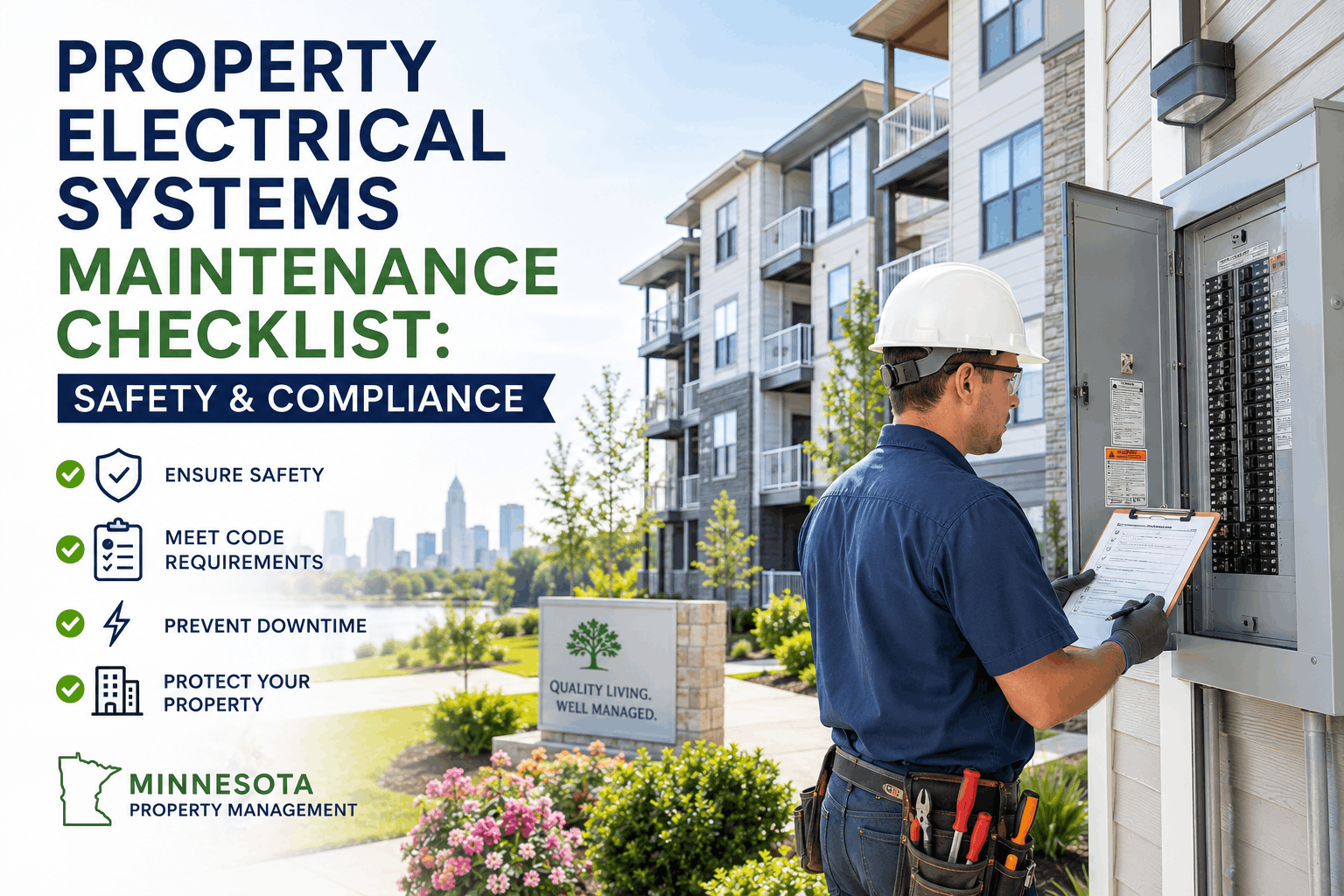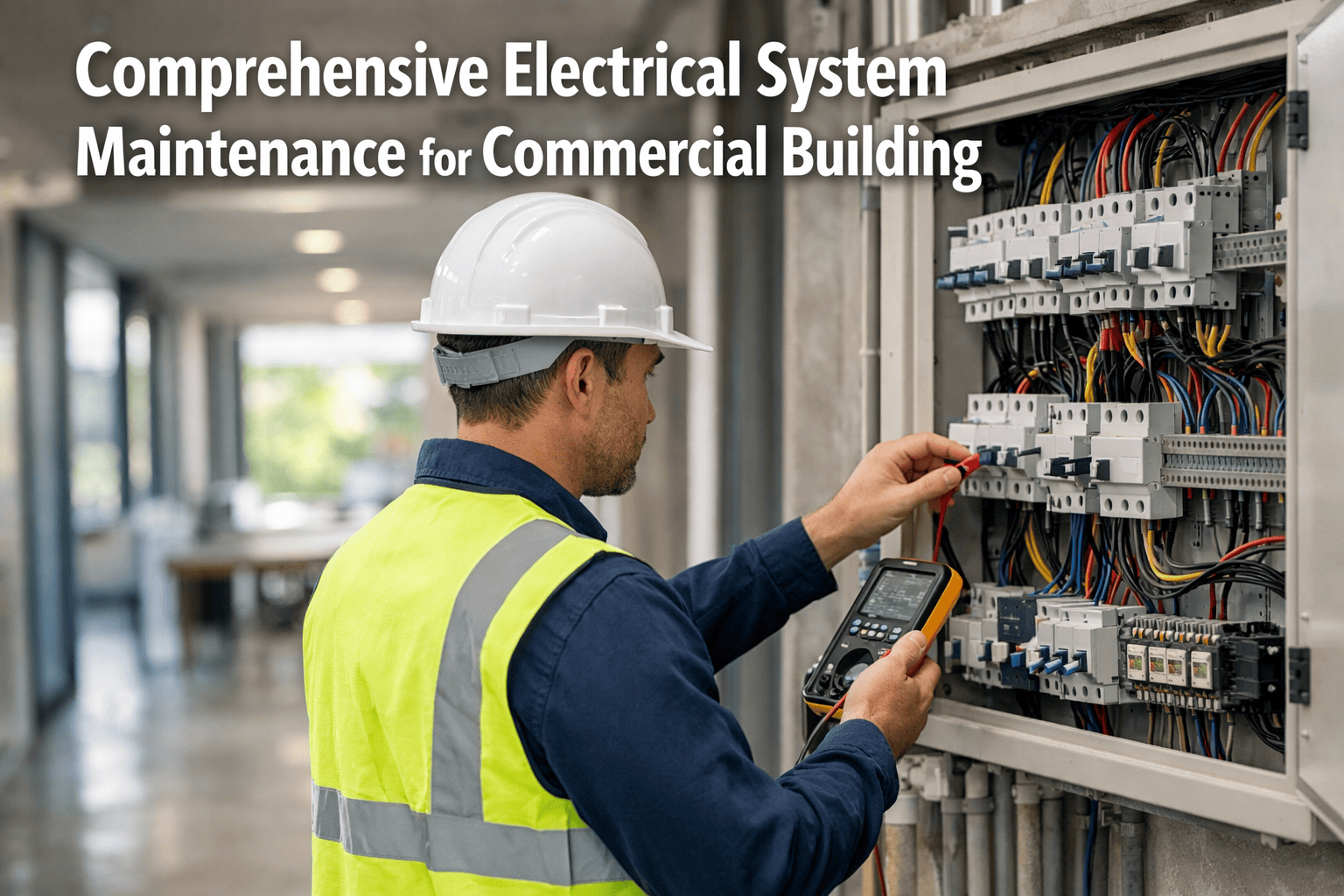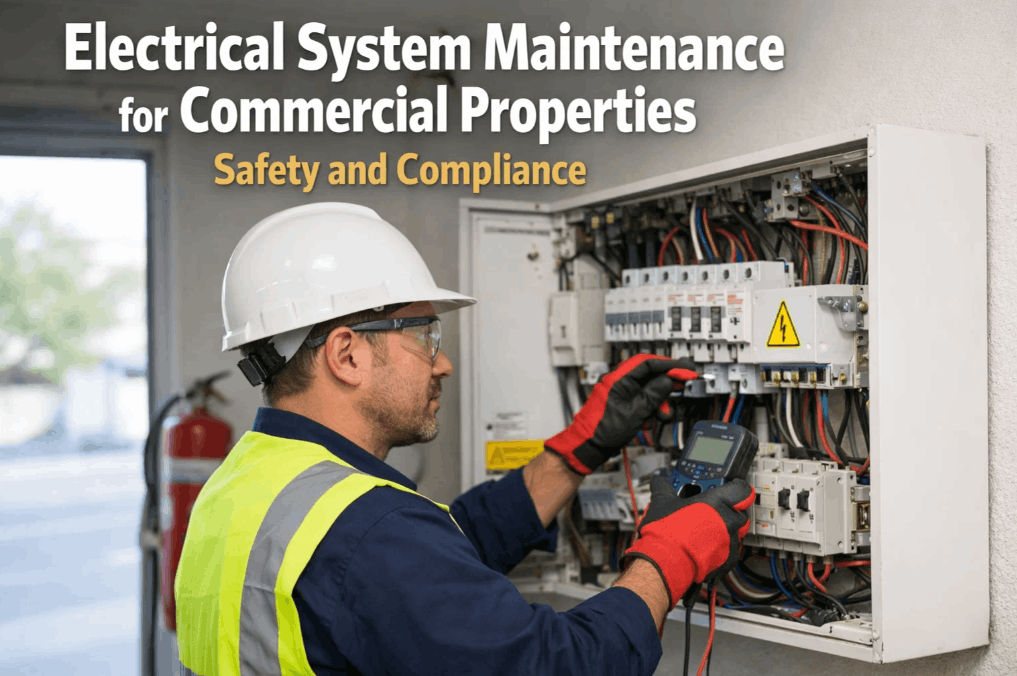
Electrical system maintenance in commercial properties is no longer just a routine checklist — it is a critical operational priority that directly impacts business continuity, regulatory compliance, and workplace safety. Poorly maintained electrical infrastructure is one of the leading causes of commercial building fires across the US, UK, Canada, Germany, and the UAE. Whether you manage a single office complex or a multi-site industrial portfolio, having a structured electrical maintenance system in place protects your people, your assets, and your bottom line.
Take Control of Your Electrical Compliance Today
OxMaint's compliance and audit tracking platform gives commercial property managers complete visibility over every inspection, test, and documentation requirement — all in one place.
What Is Commercial Electrical System Maintenance?
Commercial electrical maintenance refers to the systematic inspection, testing, servicing, and documentation of all electrical components within a commercial building or facility. This includes distribution panels, circuit breakers, wiring systems, grounding infrastructure, lighting circuits, emergency systems, and high-voltage equipment.
Unlike residential maintenance, commercial electrical systems carry significantly higher loads, serve more complex circuits, and are subject to strict national and regional electrical codes. In the UK, compliance is governed by BS 7671 (IET Wiring Regulations). In Canada, the Canadian Electrical Code (CEC) sets binding standards. Germany adheres to DIN VDE standards, while the UAE follows the UAE Electrical Wiring Regulation (EWR) aligned with IEC standards.
A well-implemented Start Your Journey ensures your facility meets all applicable requirements while minimizing unplanned downtime and liability exposure.
Why Electrical Maintenance Cannot Be Ignored
The consequences of neglecting electrical system upkeep extend far beyond flickering lights or tripped breakers. In commercial settings, electrical failures can cause fire outbreaks, equipment damage, employee injury, and regulatory fines that threaten business continuity.
Beyond safety, regulatory bodies in the US (NFPA 70E, NEC), UK (BS 7671), and Germany (DIN VDE 0105) mandate documented electrical inspections at defined intervals. Non-compliance can result in insurance invalidation, legal liability, and forced closure. A digital Book a Demo is no longer optional — it is essential infrastructure.
Core Components of a Commercial Electrical Maintenance Program
A robust electrical maintenance program is built on several interconnected disciplines. Each plays a specific role in ensuring total system reliability and code conformance.
Electrical Panel and Distribution Board Maintenance
Main distribution panels are the nerve center of any commercial electrical system. Panel maintenance involves inspecting breaker condition, verifying load balancing, checking for overheating signs, testing trip mechanisms, and ensuring proper labeling. In facilities across Canada and the UAE, where rapid commercial expansion often leads to overtaxed panels, regular load analysis is especially critical. Corroded bus bars, loose connections, and outdated fuse configurations are among the most common findings in aging commercial panels.
Circuit Testing and Load Analysis
Circuit testing confirms that each branch circuit operates within rated capacity and that protective devices respond correctly to overload conditions. Load analysis tools measure real-time current draw and identify circuits that are approaching or exceeding safe operating thresholds. This is particularly valuable in retail, hospitality, and manufacturing environments where seasonal demand peaks create temporary but dangerous overloading scenarios. Integrating circuit testing data into a centralized Start Your Journey allows trends to be tracked over time.
Wiring Inspection and Insulation Testing
Wiring degradation is an invisible risk in many older commercial buildings. Insulation resistance testing (megger testing) identifies cable aging, moisture ingress, and physical damage that visual inspection alone cannot detect. In Germany and the UK, where a significant proportion of commercial stock dates to pre-1980 construction, insulation testing during planned maintenance windows is a regulatory expectation rather than an optional enhancement. Wiring inspection reports must be retained as part of the facility's compliance documentation.
Arc Fault and Ground Fault Prevention
Arc faults — caused by damaged, overheated, or improperly installed wiring — are responsible for thousands of commercial electrical fires annually. AFCI (Arc Fault Circuit Interrupter) devices detect these dangerous arcing conditions before they escalate. GFCI (Ground Fault Circuit Interrupter) protection is mandatory in wet or outdoor areas across most jurisdictions. A proactive arc fault prevention strategy includes regular device testing, thermal imaging inspections, and documentation of all AFCI/GFCI installations.
Emergency and Backup Power System Testing
Emergency lighting, exit signs, and generator backup systems must be tested at mandated intervals to ensure they function when needed. In commercial properties across the UAE and US, where extreme weather events increasingly affect grid reliability, the integrity of backup power infrastructure is a business continuity imperative. Monthly functional tests and annual full-load tests should be logged in the facility's Book a Demo with timestamped records.
How AI Vision Enhances This Industry
AI Vision — the application of computer vision and machine learning to visual data — is transforming how commercial facilities identify, monitor, and resolve electrical hazards. Rather than relying solely on scheduled manual inspections, AI-powered visual monitoring can continuously scan electrical infrastructure for early warning signs that human eyes might miss.
AI vision systems integrated with infrared cameras can automatically flag hotspots in electrical panels, junction boxes, and cable trays. When a connection begins to fail or a component starts to overheat, the system raises an alert before the failure propagates into a safety incident. Facilities in Germany and the UK are already deploying these systems in data centers and industrial sites to eliminate manual thermal scanning rounds.
Computer vision models trained on electrical installation standards can visually inspect panel interiors, cable routing, and conduit integrity during maintenance walkthroughs — comparing current conditions against historical images to automatically identify changes, damage, or non-compliant installations. This dramatically reduces the time engineers spend on initial assessment, allowing them to focus on repair and remediation.
AI vision platforms can automatically extract and log inspection data from photos taken during site visits, populating compliance records in a Start Your Journey without manual data entry. In multi-site commercial portfolios across Canada and the UAE, this capability reduces administrative burden and ensures that documentation is always complete and audit-ready.
By analyzing patterns across thousands of electrical inspection images over time, AI models can predict which components are likely to fail within a defined timeframe. This shifts maintenance strategy from reactive to genuinely predictive, reducing emergency call-out costs and extending asset lifespan. For commercial property owners managing assets across multiple regulatory jurisdictions, predictive insights create measurable ROI in both safety performance and operational efficiency.
Electrical Maintenance Inspection Types and Frequency
Not all electrical inspections are the same. Different components require different inspection types at different intervals, and regulatory requirements vary by jurisdiction. The table below outlines the principal inspection categories, their purpose, and the recommended frequency aligned with industry best practice.
| Inspection Type | Components Covered | Recommended Frequency | Regulatory Reference |
|---|---|---|---|
| Visual Walk-Through Inspection | Panels, outlets, visible wiring, signage | Monthly | NFPA 70E / BS 7671 |
| Circuit Load Testing | Branch circuits, sub-panels | Quarterly | NEC / CEC |
| Insulation Resistance Testing | All fixed wiring and cables | Annual | DIN VDE 0105 / BS 7671 |
| Thermal Imaging Survey | Switchgear, panels, connections | Annual | NFPA 70B / IEC 60364 |
| Emergency System Full Test | Generators, UPS, emergency lighting | Annual | NFPA 110 / UAE EWR |
| Full Electrical Installation Condition Report (EICR) | Entire electrical installation | Every 3–5 years | BS 7671 / NEC |
OxMaint: The Compliance and Audit Tracking Platform Built for Commercial Electrical Teams
Managing electrical maintenance across a commercial property portfolio demands more than spreadsheets and paper records. OxMaint's Start Your Journey gives facilities managers, electrical contractors, and property owners a centralized, digital system for planning inspections, recording findings, generating compliance reports, and tracking corrective actions to closure.
Set recurring inspection schedules for every electrical component class across your portfolio. The system automatically generates work orders, assigns them to the right technician, and sends reminders before due dates — eliminating the risk of missed compliance intervals.
Every inspection, test result, and corrective action is logged with a timestamp, technician signature, and photographic evidence. Audit-ready reports can be generated in minutes for regulatory submissions, insurance reviews, or tenant due diligence requests.
Monitor the compliance status of every building in your portfolio from a single dashboard. Instantly identify sites with overdue inspections, open hazard findings, or expiring certifications — without chasing individual site teams for updates.
Convert inspection findings directly into tracked work orders with assigned owners, priority levels, and resolution deadlines. Nothing falls through the cracks, and every finding has a documented resolution pathway visible to the entire management team.
Benefits and ROI of Structured Electrical Maintenance
Investing in a structured electrical maintenance program with digital compliance tracking delivers measurable returns across multiple dimensions of business performance.
Reduced Unplanned Downtime
Proactive identification of deteriorating components allows repairs to be scheduled during planned maintenance windows rather than emergency callouts. For commercial tenants in the US and UAE, unplanned electrical outages can cost thousands of dollars per hour in lost productivity. Structured maintenance programs consistently reduce unplanned downtime by 40–60% in facilities that have made the transition from reactive to preventive approaches.
Insurance Premium Reductions
Commercial property insurers in the UK, Canada, and Germany increasingly reward documented maintenance programs with lower premiums. Demonstrating a consistent record of electrical inspections, timely corrective actions, and up-to-date compliance certifications positions your portfolio as a lower-risk asset class in the eyes of underwriters.
Regulatory Fine Avoidance
Regulatory inspections in all major markets can result in significant fines for facilities without documented electrical compliance records. Digital audit trails generated by a purpose-built Book a Demo provide the evidence required to demonstrate due diligence and avoid penalty proceedings.
Extended Asset Lifespan
Electrical infrastructure that is regularly maintained, properly loaded, and promptly repaired consistently outlasts neglected systems by substantial margins. Extending the useful life of switchgear, distribution panels, and emergency systems defers major capital expenditure and improves the long-term financial performance of commercial property assets.
Common Challenges and How to Overcome Them
Even organizations committed to electrical safety face persistent operational challenges that undermine program effectiveness. Understanding these obstacles — and the practical solutions available — is essential for building a maintenance program that holds up over time.
Challenge: Inconsistent Documentation Across Sites
Multi-site portfolios often suffer from fragmented record-keeping, with different sites using different formats, tools, and filing systems. The solution is centralizing all electrical maintenance data in a single Start Your Journey that enforces consistent data structures across every location, regardless of the site team's individual preferences.
Challenge: Aging Infrastructure Without Clear Upgrade Roadmaps
Many commercial buildings in Germany, the UK, and Canada contain electrical infrastructure installed decades ago that does not cleanly map to current codes. Addressing this requires condition-based assessment reports that quantify risk levels and prioritize remediation investments based on actual hazard severity rather than arbitrary replacement schedules.
Challenge: Contractor Accountability Gaps
Third-party electrical contractors are responsible for completing much of the inspection and testing work in commercial facilities, but verifying that work quality meets expectations is difficult without digital work order management. Requiring contractors to submit photo evidence, test readings, and digital sign-offs within a centralized platform closes this accountability gap.
Challenge: Staff Turnover and Knowledge Loss
When experienced facilities managers or engineers leave, institutional knowledge about building electrical quirks and historical issues often leaves with them. A well-structured digital maintenance history ensures that critical system knowledge is captured, retained, and accessible to successor staff and external auditors alike.
Best Practices for Commercial Electrical Maintenance
Organizations that achieve consistently strong electrical safety and compliance performance share a set of common practices that distinguish their approach from reactive, tick-box maintenance programs.
Adopt a Risk-Based Maintenance Frequency
Not all electrical assets carry equal risk. High-voltage switchgear in a manufacturing facility demands more frequent attention than standard lighting circuits in an office. Segmenting your asset register by criticality and assigning maintenance frequencies proportional to risk ensures that resources are focused where failure consequences are greatest.
Integrate Thermographic Scanning Into Annual Programs
Thermal imaging surveys are among the highest-value investments in electrical maintenance. The ability to identify failing connections, overloaded circuits, and developing arc fault conditions before they become safety incidents justifies the cost of annual thermographic surveys in virtually every commercial property category.
Maintain a Living Electrical Asset Register
Every panel, circuit, protective device, and piece of electrical infrastructure should be catalogued in a digital asset register that is updated whenever equipment is replaced, upgraded, or reconfigured. A current asset register is the foundation of effective scheduled maintenance and the first document requested by regulators and insurers following an electrical incident.
Train Facilities Staff on Electrical Hazard Recognition
Electrically qualified tradespeople are not always present on-site daily. Training general facilities staff to recognize the early signs of electrical hazards — burning smells, warm switch plates, frequently tripping breakers, flickering lights — enables early reporting that can prevent minor issues from escalating into serious incidents.
Building the Business Case for Better Electrical Maintenance
For decision-makers evaluating investment in upgraded electrical maintenance capabilities, the financial case is compelling across multiple scenarios. The cost of a single unplanned electrical outage in a medium-sized commercial facility typically exceeds the annual cost of a comprehensive maintenance and compliance tracking program. Insurance savings, reduced emergency repair premiums, extended asset life, and regulatory fine avoidance collectively produce payback periods well under twelve months for most commercial property portfolios.
Facilities teams in the US, UK, Canada, Germany, and the UAE that have transitioned to digital, AI-powered maintenance management platforms consistently report improvements not just in safety metrics but in staff efficiency, contractor accountability, and executive confidence in compliance posture. The shift from manual, paper-based processes to intelligent, automated workflow management is the defining operational upgrade for commercial electrical programs in this decade.
Ready to Modernize Your Electrical Compliance Program?
OxMaint's compliance and audit tracking platform is purpose-built for commercial facilities teams who need complete visibility, zero missed inspections, and audit-ready documentation on demand.
Frequently Asked Questions
How often should commercial electrical systems be inspected?
Frequency depends on component type, facility use, and jurisdiction. Visual inspections should occur monthly. Thermal imaging, insulation testing, and circuit load analysis are typically performed annually. Full Electrical Installation Condition Reports (EICRs) are required every three to five years in most jurisdictions, including the UK and Canada.
What is an Electrical Installation Condition Report (EICR) and who needs one?
An EICR is a comprehensive assessment of a commercial building's entire electrical installation, evaluating condition, safety, and code compliance. It is legally required for commercial properties in the UK and recommended as best practice across the US, Canada, Germany, and the UAE. The report identifies coding categories for all deficiencies found.
What electrical codes apply to commercial properties in North America?
In the United States, the National Electrical Code (NEC / NFPA 70) and NFPA 70E govern commercial electrical installations and maintenance practices. In Canada, the Canadian Electrical Code (CEC) sets the binding standard, though individual provinces may have additional requirements. Both codes are updated on regular cycles and compliance with the adopted edition in your jurisdiction is mandatory.
How does arc fault prevention work in commercial buildings?
Arc Fault Circuit Interrupter (AFCI) devices continuously monitor circuit current waveforms for patterns that indicate arcing conditions — which can cause fires even when no overload is present. When an arc signature is detected, the AFCI trips the circuit within milliseconds. Regular testing of AFCI devices and documentation of test results is required as part of a compliant commercial electrical maintenance program.
What documentation is required for electrical compliance audits?
Regulators and insurers typically require inspection records with dates and technician signatures, test results for circuits and protective devices, thermal imaging reports, corrective action logs showing findings and resolutions, current electrical schematics, and equipment service histories. A digital compliance tracking platform ensures all required documentation is automatically captured and retained in audit-ready format.
Can AI tools really improve electrical maintenance outcomes?
Yes. AI-powered tools are delivering measurable improvements in three areas: predictive failure detection through thermal and visual anomaly identification, automation of compliance documentation through digital work order and inspection workflows, and portfolio-level risk visibility through dashboards that surface overdue tasks and open hazard findings before they create compliance gaps.