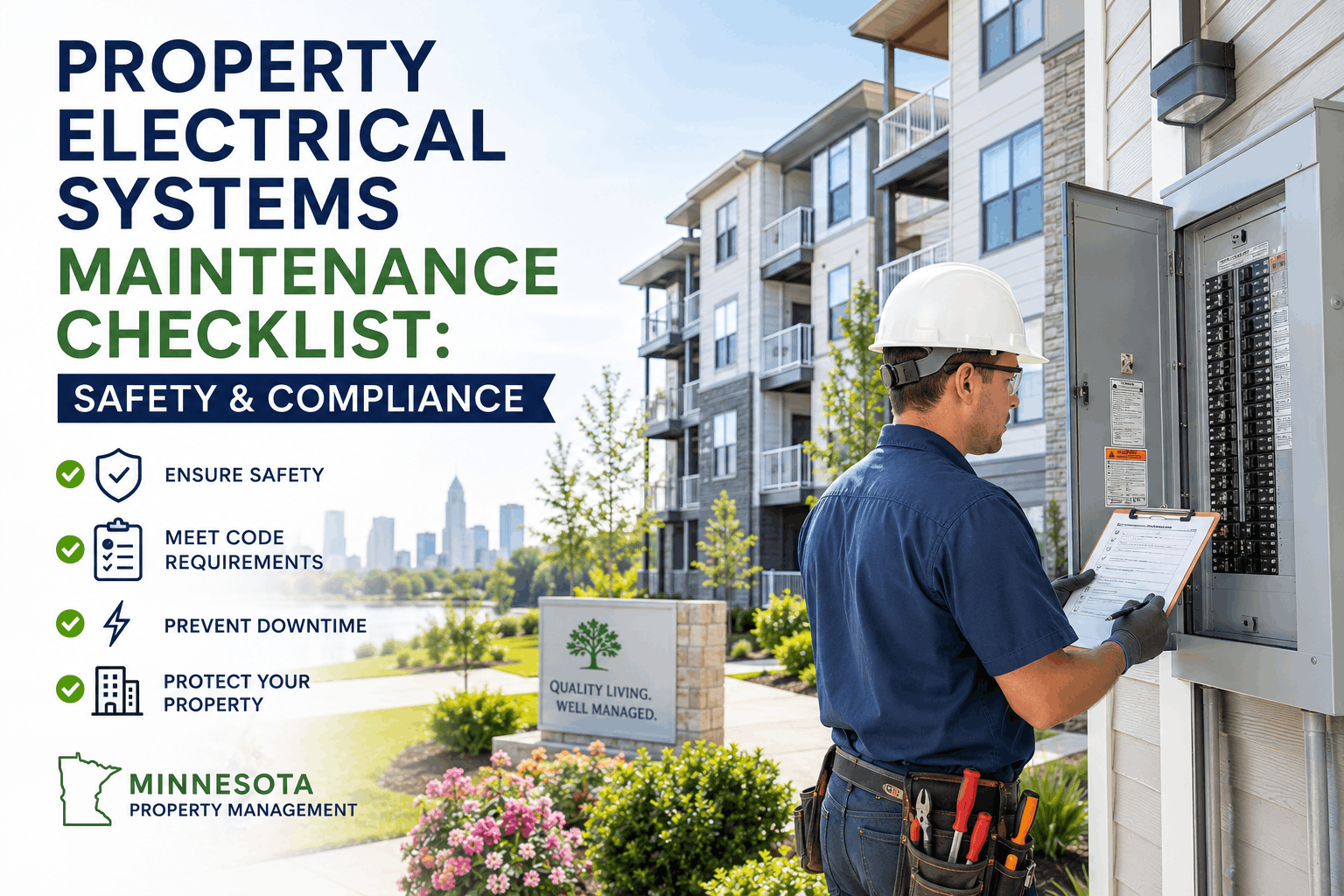
Electrical panels are the distribution backbone of every commercial building, routing power from utility service entrances through main distribution panels, sub-panels, and branch circuits to every outlet, HVAC unit, lighting system, and life safety device in the facility. A typical 100,000 sqft commercial property contains 15–30 electrical panels handling 400–2,000 amp services, with thousands of individual connections that expand and contract with every load cycle. When connections loosen, breakers degrade, or conductors overheat, the consequences range from nuisance trips that disrupt tenant operations to arc flash events that cause catastrophic fires, equipment destruction, and life-threatening injuries. NFPA 70B reports that 25% of all commercial building fires originate in electrical distribution equipment—making panel inspections not just a maintenance best practice but a fundamental life safety obligation. Yet most commercial properties perform electrical panel inspections only when problems are already visible, missing the thermal signatures and connection degradation that precede 90% of electrical failures by weeks or months. Sign up free on OxMaint.
The financial exposure from neglected electrical panels extends far beyond repair costs. A single arc flash event in a commercial building averages $2–$8 million in combined property damage, medical costs, legal liability, and business interruption losses. Even without catastrophic failure, degraded electrical connections waste 3–8% of total building energy through resistive heating at loose terminations—an invisible cost that compounds across every panel in the facility. Properties implementing structured digital inspection programs with infrared thermography and torque verification report 70–85% fewer electrical emergencies, 15–25% reduction in unexplained energy consumption, and complete OSHA/NFPA compliance documentation that reduces insurance premiums by 10–20%. Book a demo to see how OxMaint automates.
What if your electrical panels could warn you before a connection fails? Stop waiting for breaker trips and arc flash events—start preventing them with structured thermal and mechanical inspections.
Thermal Cycling Stress
Daily load fluctuations cause connections to expand and contract thousands of times annually, gradually loosening lugs, bus bar bolts, and breaker stabs—the #1 cause of electrical fires.
Code Compliance Complexity
NFPA 70E, NFPA 70B, OSHA 1910.303, and local AHJ requirements create overlapping compliance obligations requiring documented inspection programs and arc flash studies.
Hidden Degradation
80% of electrical failures develop invisibly behind closed panel covers—loose connections, corroded bus bars, and degraded insulation detectable only through IR thermography and torque testing.
Arc Flash Exposure
NFPA 70E requires arc flash risk assessments for all panels >208V. Average arc flash incident costs $2–$8M in combined damages, medical expenses, and liability—prevention is critical.
Bus Bar Connections
IR thermography, torque verification
Temp rise >30°F above ambient, discoloration
2–8 weeks
Circuit Breakers
IR scan, trip testing, contact resistance
Hot spots, sluggish trip, resistance drift >20%
4–16 weeks
Wire Terminations
IR thermography, torque audit
Temp differential >15°F between phases, loose lugs
2–12 weeks
Conductor Insulation
Megohmmeter testing, visual inspection
Insulation resistance <100 MΩ, cracking, discoloration
12–52 weeks
Grounding System
Ground resistance testing, visual bond inspection
Ground resistance >5Ω, loose bonding jumpers
8–24 weeks
Surge Protection
LED indicator check, diagnostic readout
Fault indicator lit, joule rating depleted
Immediate
Panel Enclosure
Visual inspection, NEMA rating verification
Corrosion, missing knockouts, pest intrusion, moisture
4–24 weeks
Critical · Score 9–10
Immediate De-Energization Required
Active arcing, burning smell, melted conductors, exposed energized parts, bus bar temp >180°F, compromised arc flash boundary. Lock out immediately—do not re-energize until repaired and re-inspected.
High · Score 7–8
Repair Within 48 Hours
Connections >50°F above ambient, breakers failing trip test, phase imbalance >10%, evidence of past arcing (carbon deposits), missing panel covers exposing live parts during normal access.
Moderate · Score 4–6
Schedule Within 2 Weeks
Connections 30–50°F above ambient, minor corrosion on bus bars, outdated arc flash labels, loose but not critical terminations, panel directory inaccuracies.
Low · Score 1–3
Next Quarterly Service
Cosmetic enclosure issues, minor labeling updates, housekeeping around panels, spare breaker inventory replenishment, documentation updates.
Reactive Approach
Average Cost Per Panel/Year$3,500+
Emergency Callouts4–8/year per facility
Unplanned Outages12–36 hrs/year
Tenant Disruption RateHigh · 3+ incidents/yr
Arc Flash RiskUnmonitored
NFPA/OSHA ComplianceGaps likely
Preventive Digital Approach
Average Cost Per Panel/Year$1,200
Emergency Callouts0–1/year per facility
Unplanned Outages< 2 hrs/year
Tenant Disruption RateNear zero
Arc Flash RiskContinuously monitored
NFPA/OSHA ComplianceAutomated, complete
Cost impact: A 200,000 sqft commercial property with 25 electrical panels saves $40,000–$65,000 annually through preventive inspection programs—before accounting for avoided arc flash liability ($2–$8M per incident) and insurance premium reductions (10–20%). Start your digital inspection program free with OxMaint.
Arc Flash Study
NFPA 70E
5-Year Update
Complete arc flash risk assessment with incident energy calculations, PPE requirements, and approach boundaries for every panel.
IR Thermography
Annual
Loaded Scan
Full infrared survey of all panels under load, documenting thermal anomalies with calibrated images and severity classifications.
Breaker Testing
3-Year Cycle
NFPA 70B
Trip testing, contact resistance measurement, and insulation resistance verification for all protective devices per NFPA 70B intervals.
Preventive Maintenance
Quarterly
Annual
Complete PM checklist execution with torque verification, visual inspection, photo documentation, and deficiency tracking per panel.
QR Panel Identification
Scan panel QR code to load asset data, arc flash labels, previous inspection results, and the correct checklist template.
Guided Safety Checklist
Step-by-step PPE verification, lockout/tagout confirmation, and inspection prompts with pass/fail criteria for each component.
IR Image Capture
Attach calibrated thermal images directly to inspection points with severity classification and temperature annotations.
Auto Work Order Generation
Failed items instantly generate prioritized work orders with risk scores, photos, and vendor assignment for immediate scheduling.
Panel Inspection Compliance
> 95%
Scheduled inspections completed on time across all panels
Thermal Anomaly Rate
< 3%
Percentage of connections showing elevated temperatures
Emergency Outage Rate
< 1/yr
Unplanned power interruptions per facility per year
Deficiency Close Rate
> 90%
Findings resolved within target timeframe by risk level
01
Panel Inventory & Labeling
Catalog all panels with voltage, amperage, manufacturer, age, and location. Install QR codes and verify arc flash labels are current.
02
Baseline IR Survey
Conduct initial infrared thermography scan of all panels under load to identify existing thermal anomalies and deferred maintenance.
03
Checklist Configuration
Build panel-specific inspection templates in OxMaint with frequency rules, PPE requirements, and pass/fail thresholds per component.
04
Team Training & PPE
Train technicians on NFPA 70E safety procedures, IR camera operation, torque verification tools, and mobile inspection workflows.
05
Workflow Automation
Activate automated scheduling, mobile dispatch, photo documentation requirements, and compliance report generation in OxMaint.
06
Performance Optimization
Review KPI dashboards quarterly, refine inspection frequencies based on anomaly trends, update arc flash studies as system changes occur.
Current State Costs
Emergency electrical service calls$28,000/yr
Unplanned tenant outage costs$18,000/yr
Equipment damage from failures$12,000/yr
Energy waste (loose connections)$8,500/yr
Insurance premium surcharge$6,000/yr
Total annual cost$72,500
Preventive Inspection Results
Annual IR survey + PM program$8,500/yr
Planned outage costs (scheduled)$3,000/yr
Equipment damage (near zero)$1,500/yr
Energy waste (connections tight)$2,000/yr
Insurance premium (discount)$3,600/yr
Total annual cost$18,600
$53,900
Annual savings per property
< 3 mo
Payback period on inspection investment
Stop waiting for electrical failures to disrupt your tenants and endanger your team. Start predicting problems before they become emergencies.
Frequently Asked Questions
How often should electrical panels in commercial buildings be inspected?
NFPA 70B recommends annual infrared thermography surveys for all electrical panels, with quarterly visual inspections of critical panels (main switchgear, emergency distribution, life safety panels). Breaker trip testing should be performed on a 3-year cycle for molded case breakers and annually for low-voltage power circuit breakers. Torque verification on all terminations should coincide with the annual IR survey. High-criticality panels serving data centers, hospitals, or continuous process loads should receive semi-annual IR surveys and monthly visual inspections. Sign up on OxMaint to automate your panel inspection schedule.
What are the most common electrical panel inspection findings?
The five most frequent findings are: loose wire terminations creating hot spots (found in 40–60% of panels not recently maintained), breakers that fail to trip within specification (15–25% of breakers over 10 years old), evidence of moisture or pest intrusion through open knockouts or failed seals, outdated or missing arc flash labels (extremely common—found in 70%+ of facilities without formal programs), and panel directory inaccuracies that make safe lockout/tagout procedures unreliable. All are preventable and correctable through structured inspection programs.
Is infrared thermography required for electrical panel inspections?
While not explicitly mandated by code for all facilities, NFPA 70B Section 11.17 strongly recommends annual infrared surveys as a fundamental component of electrical preventive maintenance. Many insurance carriers require annual IR surveys as a condition of coverage, and OSHA considers failure to perform thermal scanning a potential violation of the General Duty Clause when thermal anomalies contribute to incidents. Practically speaking, IR thermography is the only non-invasive method to detect loose connections, overloaded circuits, and failing breakers before they cause fires or outages—making it essential for any serious inspection program.
What safety precautions are required during electrical panel inspections?
NFPA 70E requires a formal arc flash risk assessment before any interaction with energized electrical equipment. Technicians must wear arc-rated PPE appropriate to the incident energy level of each panel (determined by the arc flash study), maintain safe approach boundaries, and follow lockout/tagout procedures for any work requiring contact with energized parts. IR surveys can be conducted through closed panel covers with IR-transparent viewing windows, significantly reducing exposure risk. All PPE requirements and safety procedures should be embedded in the digital inspection checklist so technicians cannot skip safety verification steps.
How does OxMaint help manage electrical panel inspections?
OxMaint provides complete electrical panel lifecycle management: QR-coded panel identification, automated inspection scheduling by panel criticality and regulatory requirements, mobile checklists with PPE verification prompts and safety gate steps, IR image attachment and thermal anomaly trending, torque value logging with historical comparison, automatic work order generation for failed inspection items with risk-scored prioritization, arc flash label tracking with expiration alerts, NFPA 70B compliance report generation, and portfolio-wide dashboards showing anomaly rates, compliance percentages, and cost trends across all buildings. Try OxMaint free to streamline your electrical safety compliance.