How to Handle Maintenance for Historic Properties with CMMS
By Alex Jordan on June 25, 2026
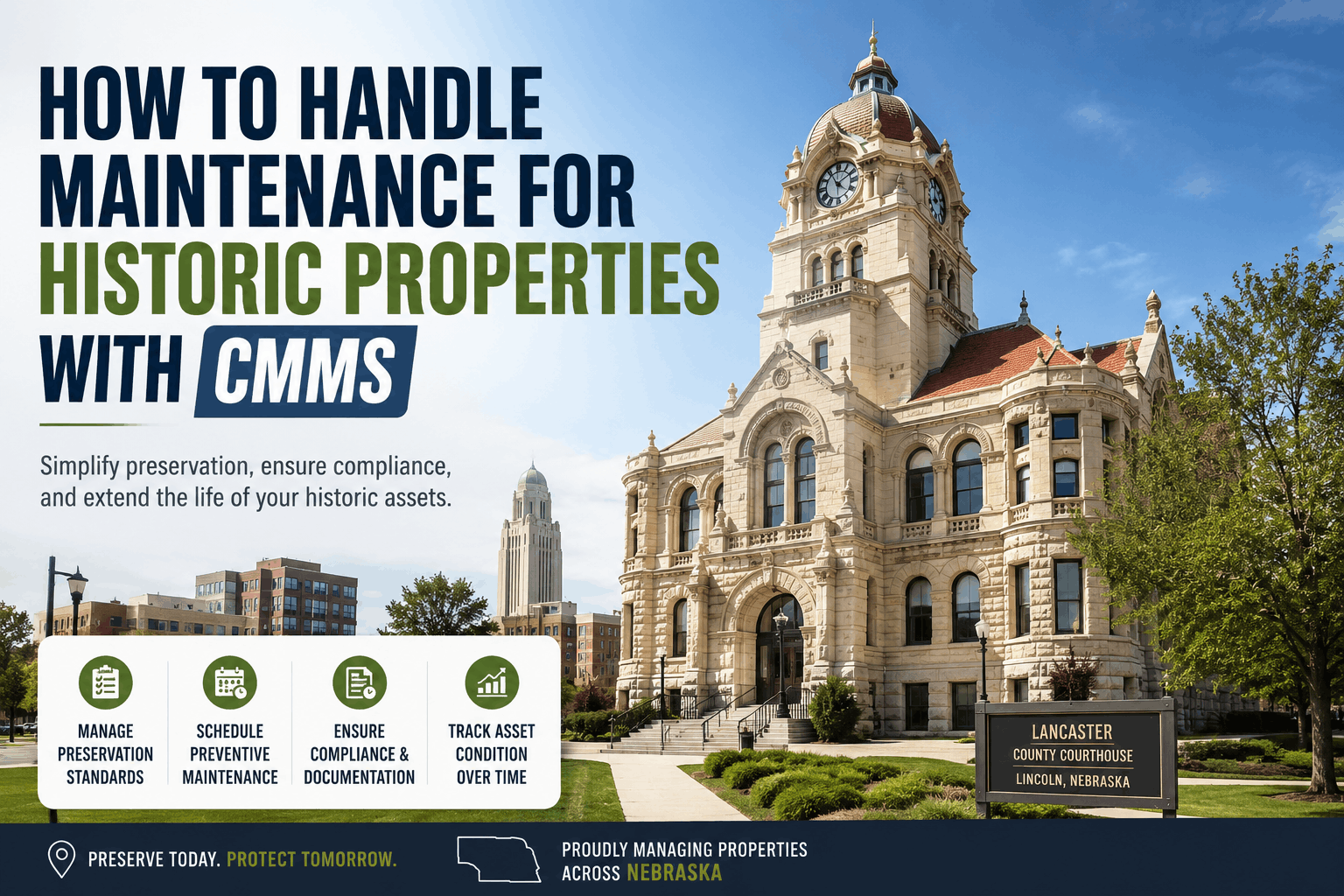
When a 19th-century county courthouse's aging boiler system ruptured during a winter storm, it wasn't just a plumbing emergency — it was a heritage disaster. The water damage destroyed original plasterwork and warped century-old heart pine flooring, leading to a $2.4 million restoration project that took the facility offline for 14 months. Many government buildings and historic landmarks across the USA are protected under federal preservation laws including Section 106 of the National Historic Preservation Act, which requires every maintenance decision to align with Secretary of Interior Standards. Traditional facility management tools treat a 150-year-old marble facade the same as modern concrete, often leading to inappropriate repairs that violate preservation codes and trigger federal compliance violations. OxMaint's historic building CMMS integrates specialized maintenance protocols, preservation-approved vendor networks, and automated Section 106 compliance workflows — ensuring every repair respects architectural integrity while meeting modern safety codes. Schedule a historic property preservation consultation, or start managing historic assets free.
OxMaint's preservation CMMS routes all maintenance on historic assets through preservation officer approval, ensures repairs comply with Secretary of Interior Standards, coordinates with Section 106 review processes, and documents work completion for federal compliance — preventing inappropriate repairs that damage heritage value and trigger costly violations.
estimated deferred maintenance backlog across U.S. historic civic buildings and federal landmarks
62%
of emergency repairs at historic sites caused by deferred maintenance and lack of condition monitoring
Section 106
National Historic Preservation Act requires federal agencies account for effects of maintenance on heritage assets
$2.4M
emergency restoration cost at county courthouse from single boiler failure — preventable with CMMS monitoring
Zero
Compliance violations at agencies deploying Section 106-aware CMMS — compared to 23% violation rates across agencies managing historic assets through traditional spreadsheet-based approaches. The federal government requires proof that every maintenance decision on historic properties was evaluated for compliance with Secretary of Interior Standards. OxMaint automates this evaluation, routing all historic asset work orders through preservation officers for approval before execution, with documented decisions stored for audit defense.
Five Preservation Compliance Requirements That Standard CMMS Tools Cannot Address
1. Section 106 Compliance Workflows — Federal Preservation Review
Section 106 of the National Historic Preservation Act requires federal agencies to evaluate effects of their undertakings on historic properties. OxMaint establishes mandatory routing: any work order for a tagged historic asset is automatically routed to your designated preservation officer for review before work can begin. The platform logs the approval, prescribed methods, and photographic proof of completion — creating audit-ready compliance documentation.
2. Secretary of Interior Standards Alignment — Preservation-Approved Methods
The Secretary of Interior Standards govern how historic materials should be treated, what repair methods are acceptable, and which materials are prohibited. OxMaint stores preservation standards by building component — historic windows, original masonry, period plasterwork. When repairs are needed, the system recommends preservation-compliant methods, preventing damage from inappropriate modern replacements.
3. Specialized Vendor Networks — Only Qualified Historic Preservation Contractors
GSA and federal agencies require that only qualified, trained, and experienced vendors perform restoration work on historic properties. OxMaint maintains vendor qualification records — certifications, experience portfolios, past preservation projects — and routes historic asset work only to pre-approved preservation specialists. Emergency repairs automatically flag vendors for preservation qualification verification.
4. Material & Method Documentation — Historic Materials Library
Historic properties often use materials no longer manufactured — original plaster specifications, specialized masonry mixes, period hardware. OxMaint stores historical material specifications and sourcing information, enabling preservation-accurate replacement when repairs become necessary. When preservationists approve repairs, they specify exact materials and methods — preventing improvisation that damages heritage value.
5. Asset Condition Trending — Predictive Historic Building Maintenance
Historic buildings deteriorate differently than modern ones. Original masonry mortar fails in specific patterns. Historic roof systems have unique failure modes. OxMaint tracks condition trends over years — allowing preservation teams to identify deterioration patterns before emergencies occur. Preventive maintenance on historic assets extends lifespan, reduces emergency repairs, and preserves architectural integrity.
Why Standard Facility Management Tools Fail Historic Properties
Preserve Historic Assets Properly. Every Repair Compliant. Every Decision Documented.
Deploy historic preservation CMMS that routes all maintenance through preservation officer review, ensures repairs align with Secretary of Interior Standards, coordinates with Section 106 processes, and documents compliance automatically — protecting heritage assets and eliminating federal violations.
Every historic building component is tagged in OxMaint with its age, original specifications, condition, and preservation status. Secretary of Interior Standards are stored by component type, enabling preservation-compliant repair specifications when work becomes necessary.
Preservation Officer Approval Routing
When maintenance is needed on a historic asset, the work order automatically routes to the designated preservation officer. No work can begin until the officer approves the proposed methods and materials, ensuring every repair complies with preservation standards.
Qualified Vendor Dispatch Only
OxMaint routes historic asset work only to pre-approved preservation specialists. Vendor qualifications are verified before dispatch, preventing unqualified contractors from executing repairs that could damage heritage value.
Completion Documentation & Section 106 Logging
Upon completion, work is documented with photos, method verification, and materials used. OxMaint logs all historic asset work for Section 106 compliance audit trails, creating the federal compliance evidence your agency requires.
How does OxMaint help agencies comply with Section 106 of the National Historic Preservation Act?
OxMaint routes all historic asset work orders through preservation officer approval before execution. The system logs every decision, approved methods, and photographic completion evidence — creating the contemporaneous compliance documentation federal agencies require for Section 106 audit defense.
Can OxMaint store Secretary of Interior Standards and ensure repairs comply with them?
Yes — OxMaint stores standards by component type and automatically recommends preservation-compliant repair methods. When preservation officers approve repairs, they ensure the prescribed methods align with Secretary of Interior Standards.
What happens if a contractor tries to perform work on a historic asset without preservation officer approval?
OxMaint prevents dispatch until preservation officer approval is documented. Emergency repairs automatically trigger expedited officer review, but no work begins without compliance verification — eliminating inappropriate repairs that damage heritage assets.
Does OxMaint track vendor qualifications for historic preservation contractors?
OxMaint maintains vendor qualification records including certifications, experience portfolios, and past preservation projects. Historic asset work is routed only to pre-approved preservation specialists meeting federal qualification standards.
Can OxMaint help prevent emergency repairs on historic buildings through predictive maintenance?
Yes — OxMaint tracks condition trends of historic components over years, identifying deterioration patterns before emergencies occur. Preventive maintenance schedules extend asset lifespan, reduce emergency repair costs, and preserve architectural integrity.
"Before OxMaint, we were managing historic courthouse maintenance with spreadsheets and prayer. A contractor performed work that violated preservation standards, and we had no documentation to defend our decision. Now every historic asset repair goes through preservation officer review and we have complete audit trails proving compliance with every federal requirement."
— Federal Facilities Director, Historic Courthouse, Northeast USA
OxMaint's historic building CMMS automates preservation compliance, routes work through officer approval, enforces Secretary of Interior Standards, and documents everything for federal audit defense. Inappropriate repairs that damage heritage value are prevented automatically — ensuring your historic properties remain preserved for future generations.
Historic properties demand specialized maintenance that balances preservation with modern safety codes. OxMaint ensures every repair complies with Section 106, Secretary of Interior Standards, and federal compliance requirements — automatically documenting decisions and protecting heritage assets for generations to come.



.png)


