HVAC systems are the single largest driver of reactive maintenance spend in commercial properties — accounting for 84% of emergency repair budgets globally. Yet most property teams still operate without a structured HVAC maintenance schedule, reacting to failures that cost 4.8x more than planned interventions and disrupt tenants for days at a time. The difference between a building that runs efficiently and one that hemorrhages budget on emergency HVAC calls comes down to one thing: a documented, automated preventive maintenance program. Book a demo to see how Oxmaint automates your entire HVAC maintenance schedule and eliminates emergency callouts across your portfolio.
84%
Of total reactive maintenance budget consumed by HVAC and central plant failures across commercial properties
30%
Average reduction in HVAC energy consumption achieved through structured preventive maintenance programs
4.8x
Higher cost per emergency HVAC repair vs. a planned preventive maintenance intervention on the same asset
20–40%
Additional useful life gained from HVAC equipment maintained on a structured schedule vs. run to failure
Oxmaint HVAC Compliance Coverage by Region
Commercial HVAC maintenance requirements are mandated differently across every operating region. Oxmaint maps your HVAC asset register directly to applicable inspection frameworks, auto-schedules compliance tasks, and generates audit-ready records — so your team never misses a required service or inspection deadline.
| Region |
HVAC Frameworks |
Oxmaint Coverage |
| USA |
ASHRAE 180, OSHA, EPA 608, NFPA 90A |
Auto-scheduled filter, refrigerant, and duct inspections with audit records |
| UK |
Building Safety Act, F-Gas Regulations, CIBSE TM44 |
Mandatory AC inspection scheduling and certificate tracking |
| UAE |
Civil Defence, Estidama Pearl Rating, DEWA standards |
Cooling efficiency monitoring aligned with Pearl Rating requirements |
| Australia |
NCC Section J, AS/NZS 3666, AIRAH DA19 |
Climate-adjusted seasonal PM intervals for high-load environments |
| Germany |
DIN EN 15780, VDI 6022, EnEV, BetrSichV |
DIN-mandated hygiene inspection intervals mapped into PM engine |
| Canada |
CSA C22.1, ASHRAE 62.1, National Building Code |
Freeze-thaw adjusted heating and cooling PM scheduling |
Your HVAC Assets Have Regional Requirements. Oxmaint Handles Every One.
Oxmaint generates HVAC compliance calendars, auto-schedules every inspection and service interval, and produces audit-ready documentation across all six regions — so your portfolio stays compliant without manual tracking.
What Is Commercial HVAC Preventive Maintenance?
Commercial HVAC preventive maintenance is the practice of scheduling inspections, servicing, and component replacements at defined intervals — before equipment fails. It is fundamentally different from reactive maintenance, where teams wait for a breakdown and then dispatch emergency technicians at 1.5–2.5x standard labor rates. Walk through your current HVAC PM coverage with our team and identify exactly where your emergency spend is coming from.
Preventive HVAC Maintenance
Scheduled servicing performed at fixed intervals or based on runtime and condition data. Includes filter changes, coil cleaning, belt inspections, refrigerant checks, and control calibration — before any failure occurs.
Reactive HVAC Maintenance
Unplanned repairs triggered by equipment failure. Includes emergency compressor replacements, refrigerant loss events, and full system shutdowns. Costs 4.8x more per event and causes 3x more tenant disruption than planned work.
HVAC PM Compliance Rate
The percentage of scheduled HVAC tasks completed on time. Industry benchmark is 90%+. Properties below 70% PM compliance on HVAC experience 2.4x more emergency callouts and consume 38% more energy than maintained systems.
Condition-Based HVAC Service
Maintenance intervals driven by real sensor data — temperature differentials, airflow rates, refrigerant pressure — rather than fixed calendar dates. Eliminates 20–30% of unnecessary tasks while catching degrading components earlier.
The Real Cost of Neglecting HVAC Maintenance
The direct repair bill is only part of what reactive HVAC management costs. The hidden multipliers — energy waste, tenant disruption, shortened equipment life, and compliance citations — compound the damage across every property in your portfolio. Book a 30-minute portfolio review and we will calculate the true cost of your current HVAC maintenance approach across your specific properties.
01
Emergency Labor Premiums
After-hours and weekend HVAC callouts carry 1.5–2.5x labor rate premiums. A $400 planned compressor service becomes a $1,400 emergency dispatch. Across a 20-building portfolio, this premium alone accounts for $60,000–$120,000 in avoidable annual spend.
02
Compounding Equipment Failures
A dirty condenser coil causes compressor overheating, leading to refrigerant loss and complete system failure — a cascade that a $180 quarterly PM inspection would have prevented. 42% of major HVAC failures originate from components a basic PM cycle would have flagged within weeks.
03
Energy Waste at Scale
Poorly maintained HVAC systems consume 25–40% more energy than serviced equivalents. Clogged filters alone increase energy draw by 15%. Across a commercial portfolio, unmaintained HVAC adds $18,000–$45,000 in preventable annual energy costs per building.
04
Shortened Equipment Lifespan
HVAC units rated for 15–20 years last 9–12 years under reactive management. Each premature replacement costs $15,000–$80,000 per unit depending on system size. Across a portfolio, accelerated HVAC replacement compresses CapEx budgets and creates unplanned capital calls.
Reactive HVAC Management Is the Most Expensive Strategy You Can Run.
Oxmaint gives property teams the HVAC scheduling engine, asset tracking, and compliance automation to shift from emergency callouts to planned, budgeted preventive maintenance across every building in the portfolio.
How Oxmaint Structures Your HVAC Maintenance Program
An effective commercial HVAC maintenance program is not a spreadsheet of reminders — it is a live scheduling engine tied to real asset data, technician workflows, and compliance calendars. Oxmaint provides the complete infrastructure to run it across every property in your portfolio. See the full HVAC scheduling workflow live and bring your current asset list to the session for a custom setup walkthrough.
01
Register Every HVAC Asset with Condition Scoring
Every unit, AHU, chiller, cooling tower, and VAV box is logged with manufacturer data, installation date, rated useful life, and a current condition score. The asset registry feeds every PM schedule, compliance calendar, and CapEx forecast from a single source of truth. Most teams complete initial HVAC registration within 2–3 days.
02
Set Maintenance Intervals by Asset Type and Season
Define PM intervals based on manufacturer recommendations, regional climate requirements, and asset condition data. Monthly filter changes, quarterly coil inspections, semi-annual refrigerant checks, and annual full system tune-ups are all scheduled automatically — with seasonal adjustments built in for heating and cooling changeover periods.
03
Auto-Generate Work Orders and Track Completion
Oxmaint generates HVAC work orders on schedule, assigns them to certified technicians, and tracks every task through to completion. Every work order captures labor hours, parts used, refrigerant quantities, and technician notes — creating the full service history regulators and auditors require. PM compliance is measured in real time.
04
Connect Compliance Deadlines and CapEx Forecasting
Mandatory HVAC inspection deadlines — refrigerant log submissions, air quality certificates, energy efficiency reports — map directly to your PM schedule and generate audit-ready documentation automatically. Rolling 5–10 year CapEx forecasts update from real condition data, so replacement planning is driven by evidence, not guesswork.
What Oxmaint Delivers for HVAC Management
Every Oxmaint feature is built around a specific HVAC operational outcome. Here is what each core capability delivers for commercial property teams running structured HVAC programs. Get a live walkthrough of each feature and see exactly how it maps to your current HVAC workflow and team structure.
A
HVAC Asset Registry
Full inventory of every HVAC unit with condition scores, install dates, rated life, and complete service history. Feeds all PM schedules and CapEx models. Eliminates duplicate callouts by 38%.
S
Automated PM Scheduling
Auto-generates monthly, quarterly, and annual HVAC work orders on schedule. Assigns technicians and tracks completion. Raises PM compliance to 80%+ within 60–90 days of going live.
W
Work Order Tracking
Captures labor, parts, refrigerant logs, and contractor costs per task. Full HVAC service history per unit always accessible. Cuts technician travel time by 38% with pre-assigned, pre-diagnosed tasks.
C
Compliance Automation
HVAC inspection deadlines tied to asset records. Refrigerant logs, air quality certificates, and energy reports generated automatically. Reduces regulatory findings by 40% across all regions.
E
Energy Performance Tracking
Tracks energy draw per unit against baseline after each PM cycle. Identifies underperforming assets consuming 25%+ above rated load. Flags for early intervention before full failure occurs.
X
CapEx Forecasting
5–10 year HVAC replacement models built from real condition data. Extends useful life by 3–5 years on maintained units. Eliminates surprise capital calls at board and investor level.
Reactive vs. Preventive HVAC Maintenance: Side by Side
The performance gap between reactive and preventive HVAC management compounds across every operational and financial metric. These outcomes reflect real data from commercial property portfolios after implementing structured Oxmaint HVAC programs. Benchmark your current HVAC maintenance ratio against these outcomes in a no-obligation 30-minute session with our team.
| Factor |
Reactive HVAC Management |
Preventive with Oxmaint |
| Cost Per Event |
4.8x higher. Emergency dispatch at $1,400–$3,500. After-hours labor at 1.5–2.5x standard rates. |
Planned service at standard rates. Average HVAC PM task costs $180–$450 with pre-ordered parts. |
| Energy Consumption |
Unmaintained HVAC consumes 25–40% more energy. Clogged filters add 15% to energy draw per unit. |
Up to 30% energy reduction after consistent PM. Filter and coil maintenance restores rated efficiency. |
| Equipment Lifespan |
Units rated for 15–20 years last 9–12 years. Each premature replacement costs $15,000–$80,000. |
Assets reach or exceed rated lifespan. Condition scoring extends replacement timelines by 3–5 years. |
| Tenant Disruption |
Unscheduled outages lasting hours or days. Tenants with 3+ disruptions annually are 2.4x more likely not to renew. |
Scheduled work with advance notice. System outages reduced by 45%. Tenant disruption minimized. |
| Compliance Risk |
No inspection trail. Refrigerant logs missing. Citations average $12,000–$18,000. 60% fail at least one annual audit. |
Auto-generated refrigerant logs and compliance records. Audit-ready documentation always current. 40% fewer findings. |
| Budget Predictability |
Emergency spend spikes unpredictably. HVAC budget variance averages 28% annually. Reserves depleted before year end. |
Forecasted HVAC spend from PM schedules and condition data. Budget variance under 8% annually. |
HVAC Reactive Spend by System Component
Within HVAC, emergency spend is not distributed equally. Compressors, refrigerant systems, and air handling units account for the majority of unplanned costs — and all three are directly preventable through scheduled maintenance. Prioritize these components first when building your HVAC PM schedule.
Compressors and Refrigerant Systems88%
Air Handling Units and Coils74%
Chillers and Cooling Towers65%
Filters, Belts, and Ductwork54%
Controls and Building Automation43%
Boilers and Heating Systems31%
Percentage of total HVAC reactive maintenance budget consumed by each component type — higher percentage indicates greater emergency spend concentration and stronger PM ROI potential
Compressors and Refrigerant Systems Account for 88% of HVAC Emergency Spend. Start There.
Oxmaint's HVAC PM scheduling engine lets you target your highest-cost components first and expand coverage as your team builds capacity. Most portfolios see measurable cost reduction within the first 30 days.
HVAC Maintenance Investment Analysis: Costs vs. Returns
The ROI on structured HVAC preventive maintenance is among the strongest of any building system investment. Even partial coverage on your highest-risk components delivers payback within weeks, not years. Request a custom HVAC ROI projection for your portfolio size and equipment mix in a no-obligation 30-minute session.
| Solution |
Cost |
Annual Savings |
Payback |
| HVAC PM Scheduling (CMMS) |
$1,200 / building |
$48,000 avoided
emergency repairs |
Under 2 weeks |
| Filter and Coil PM Program |
$600 / building |
$22,000 energy and
repair cost reduction |
Under 2 weeks |
| IoT Sensor Monitoring |
$2,400 / building |
$52,000 prevented
failures and energy |
Under 4 weeks |
| Refrigerant Compliance Automation |
$1,100 / building |
$22,000 citation
avoidance and labor |
Under 3 weeks |
| CapEx Forecasting per Portfolio |
$800 / portfolio |
$35,000 deferred
replacement costs |
Under 3 weeks |
| Full HVAC PM and IoT Platform |
$8,500 / building |
$143,000 per
building annually |
Under 6 months |
Complete IoT implementation delivers 3.2x ROI within 18 months, with most solutions paying for themselves in under 6 months.
Investment Reality: Full IoT deployment costs average $8,500 per building but returns $143,000 annually. The 3.2x ROI makes preventive HVAC investment essential for competitive commercial operations.
The ROI of Preventive HVAC Maintenance
30%
Average HVAC energy cost reduction achieved through structured preventive maintenance and filter programs
45%
Fewer HVAC emergency work orders within 12 months of implementing a structured PM scheduling program
3.2x
ROI within 18 months of deploying a full HVAC preventive maintenance and IoT monitoring platform
20–40%
Additional HVAC equipment lifespan when units are maintained on schedule vs. operated to failure
Frequently Asked Questions
How often should commercial HVAC systems be serviced?
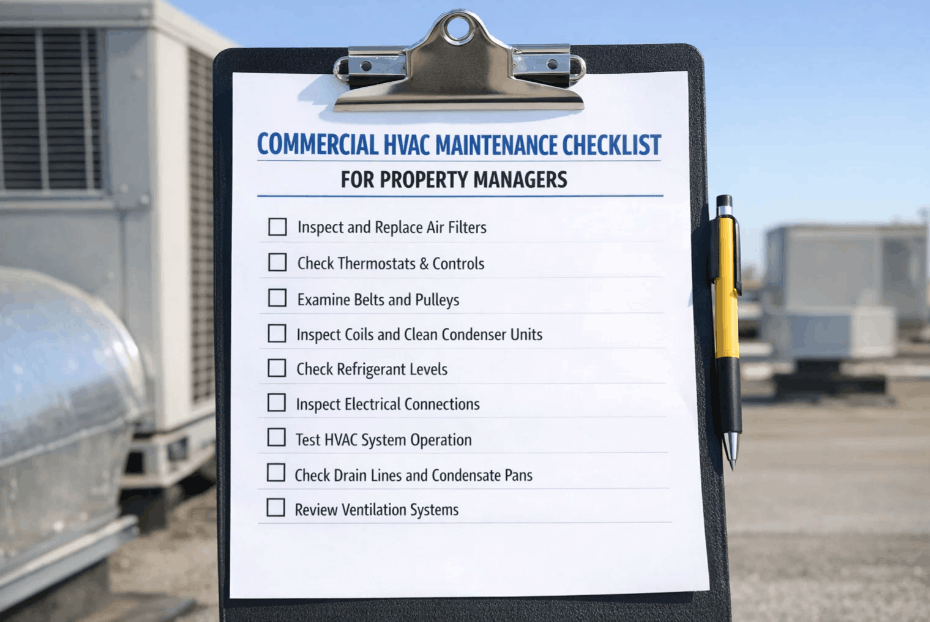
Filters should be inspected monthly and replaced every 1–3 months depending on usage and air quality requirements. Coils, belts, and refrigerant levels require quarterly checks. Full system tune-ups and compliance inspections are typically annual. High-load commercial environments require more frequent intervals.
Book a session to build a tailored HVAC schedule for your asset mix.
What compliance frameworks govern commercial HVAC maintenance globally?
Requirements vary by region: ASHRAE 180 and EPA 608 in the USA, CIBSE TM44 and F-Gas Regulations in the UK, DIN EN 15780 and VDI 6022 in Germany, AS/NZS 3666 in Australia, Civil Defence codes in the UAE, and CSA C22.1 in Canada. Oxmaint maps to all of these automatically.
How much can preventive HVAC maintenance reduce energy costs?
Structured HVAC PM programs reduce energy consumption by up to 30% on average. Clogged filters alone increase energy draw by 15% per unit. Coil fouling adds a further 10–20%. Consistent PM restores rated efficiency and eliminates this chronic energy waste at scale across a portfolio.
What is the optimal ratio of preventive to reactive HVAC maintenance?
The industry benchmark is 80% preventive to 20% reactive. Most commercial teams operate at the inverse, with reactive work dominating schedules. Properties running 80%+ PM compliance on HVAC experience 45% fewer emergency callouts and 18–24% lower total HVAC spend within 12 months.
How quickly can an HVAC PM program be implemented across a portfolio?
Most teams complete their HVAC asset registry and first PM schedules within the first week using Oxmaint. Full implementation with compliance calendars and automated work orders typically takes 2–3 weeks. 80%+ PM compliance on HVAC is typically reached within 60–90 days of going live.
What HVAC data should be captured in every work order?
Every HVAC work order should record filter condition and replacement date, refrigerant type and quantity added, supply and return air temperatures, belt tension and condition, coil cleanliness rating, control setpoints verified, and technician certification number. Oxmaint captures all of these fields automatically as part of each PM task.
Every Dollar Spent on HVAC Preventive Maintenance Saves $4.80 in Emergency Repairs.
Oxmaint gives commercial property teams automated HVAC PM scheduling, asset condition scoring, full work order history, compliance calendar automation, and portfolio-level CapEx forecasting — all in one platform, live in days, with no implementation fees.
Automated HVAC PM scheduling per asset
Condition-based service intervals
Full work order history and cost tracking
Rolling 5–10 year CapEx forecasting




.png)

