Property Manager Burnout: How Digital Maintenance Tools Reduce Administrative Overwhelm
By Alex Jordan on May 27, 2026
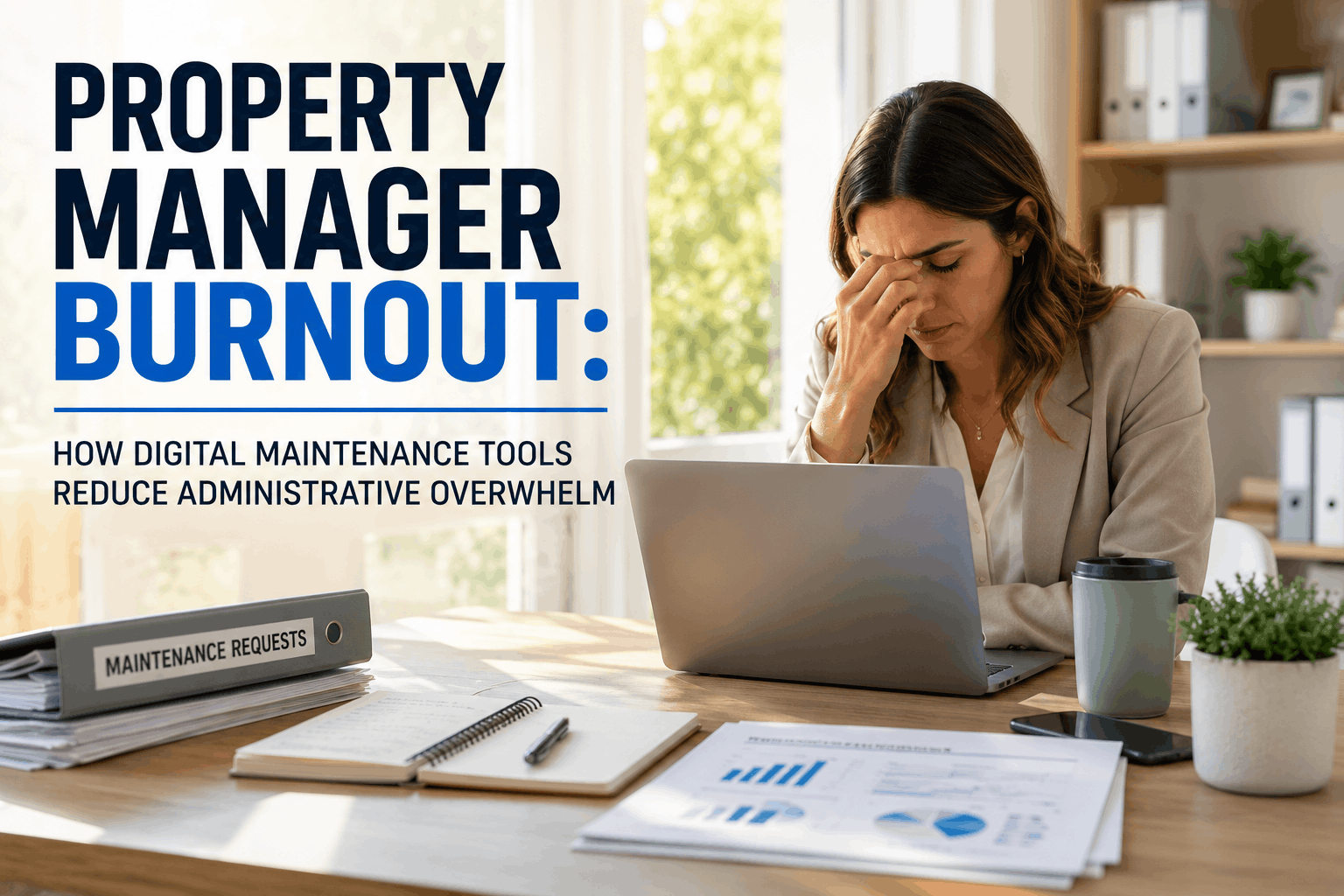
Property manager burnout isn't a productivity problem — it's a system failure. Property managers spend 68% of their week on administrative tasks that could be automated: processing maintenance requests across email and phone, scheduling contractors, chasing approval documents, updating spreadsheets, and communicating status to owners and tenants. The average property manager works 52-hour weeks managing just 8-15 properties, spends 2-3 hours per day on email alone, and faces burnout rates of 34% by year three. Oxmaint's mobile-first platform eliminates the administrative chaos — centralizing every maintenance workflow, automating routine communications, and building a real-time dashboard that replaces endless status updates. Property managers using Oxmaint reduce administrative time by 18 hours per week and report 71% lower burnout symptoms within 90 days.
Property Manager Burnout · Digital Solutions · 2026
Property Manager Burnout: How Digital Tools Reduce Administrative Overwhelm & Recover Your Life
Email chaos, phone interruptions, spreadsheet hell, contractor chasing, approval bottlenecks, and communication gaps — the 10 administrative tasks that destroy property manager productivity. How to eliminate 68% of the busywork using mobile-first centralized maintenance systems.
18 hrsPer week recovered using automated platforms
52 hrsAverage property manager work week (vs. 40 expected)
34%Burnout rate in property management by year 3
The Burnout Cycle: How Administrative Overload Destroys Property Manager Wellbeing
Property manager burnout follows a predictable cycle. It starts with email overload — maintenance requests scattered across personal and work email, owner demands coming through phone calls at 8 PM, tenant complaints arriving in texts. Maintenance coordination becomes the afternoon job, where the property manager stops "managing" and starts chasing contractors — "Did you get the HVAC quote?" "Where's the electrician?" "When will that roof repair be done?" Spreadsheet work becomes the evening job, where requests that live in email get manually entered into a tracking sheet that nobody trusts. By Friday evening, the property manager has processed 200+ emails, coordinated 12 maintenance issues, approved 6 work orders, and updated 3 spreadsheets — all on top of rent collection, lease renewals, and tenant relations. This isn't sustainable. After 18-24 months, property managers hit the burnout wall: high turnover, poor decision-making, declining property performance, and owner complaints about service quality. The irony is that the burnout isn't caused by the property manager's incompetence — it's caused by broken systems that force people to work around technology instead of with it.
1
Email & Phone Overload
Maintenance requests arrive scattered across email, texts, and phone calls. 8-10 hours per week lost to email triage and phone tag.
→
2
Contractor Chasing
Work orders exist in email attachments. Property manager spends 6-8 hours per week confirming contractors received them and tracking completion.
→
3
Spreadsheet Hell
Email requests get manually transcribed into status sheets. Three different people maintain three different spreadsheets. Nothing matches.
→
4
Burnout
By year 2, 68% of time is spent on busywork. Property manager quits or makes poor decisions from exhaustion.
The 10 Administrative Tasks That Steal 18+ Hours Per Week
Understanding exactly where the time goes helps you identify which automation will give you the fastest relief. Below are the 10 administrative tasks that consume a property manager's week, the time each one actually takes, and what an automated maintenance platform eliminates or reduces. These aren't rare edge-case tasks — they're the routine administrative work that fills every single week.
1
Email Triage & Sorting
6 hrs / week
Reading, routing, and sorting maintenance requests scattered across 3+ email addresses and archived in different folders.
Eliminated by centralized inbox
2
Contractor Confirmation Calls
4 hrs / week
Calling contractors to confirm they received work orders, asking for status updates, and scheduling job timing.
Eliminated by mobile app notifications
3
Spreadsheet Data Entry
3 hrs / week
Manually entering email requests and status updates into tracking spreadsheets that nobody trusts.
Eliminated by digital workflow
4
Status Update Emails to Owners
2.5 hrs / week
Writing custom status update emails to property owners and investors asking about project status.
Reduced to automated dashboard
5
Tenant Communication Repetition
2.5 hrs / week
Repeating the same "maintenance is scheduled" or "work is complete" message across different tenants and properties.
Automated by tenant portal
6
Invoice Reconciliation
2 hrs / week
Matching contractor invoices to work orders, checking billing codes, and approving payment for completed work.
Streamlined by automated matching
7
Quote Comparison & Approval
1.5 hrs / week
Collecting quotes from 3 contractors, comparing prices, writing approvals, and sending purchase orders.
Centralized via platform workflow
8
Scheduling & Calendar Conflicts
1.5 hrs / week
Coordinating multiple contractors across multiple properties while trying to avoid tenant conflicts and access issues.
Automated scheduling with conflict alerts
9
Photo & Documentation Collection
1 hr / week
Chasing contractors for before/after photos and proof of completed work for insurance and audit purposes.
Auto-captured by mobile app
10
Compliance & Safety Documentation
1 hr / week
Manually tracking which properties are compliant with OSHA, FHA, and local safety requirements based on maintenance records.
Automated compliance tracking
The Cost of Property Manager Burnout: Beyond the Obvious
Burnout costs property management companies in ways that go far beyond the lost productivity of one employee. When a property manager leaves due to burnout, it costs $45,000-$60,000 to recruit, hire, and train a replacement. The departing manager typically hands off 8-15 properties in disarray — with incomplete records, confused tenants, and no one knowing what maintenance is pending. Properties suffer higher vacancy rates and maintenance costs during the transition because nobody knows the history or the vendors. Owner relationships suffer because a new manager has to rebuild trust. More insidiously, when property managers are burned out, they make poor decisions: rushing to the cheapest contractor instead of the best one, delaying preventive maintenance to save money in the short term (creating emergencies later), and avoiding difficult owner conversations. These poor decisions cost far more than the administrative time saved.
Cost Source
Direct Cost
Impact On Business
Manager Turnover
$50K–$60K per departure
Recruitment, training, lost knowledge, 3-month productivity ramp-up
Property Transition Damage
$8K–$15K per property
Incomplete records, tenant disruption, emergency repairs from neglect
Tenant Turnover Increase
$600–$800 per lost lease
Poor maintenance communication drives 2–4% additional vacancy
Owner Relationship Risk
Loss of future business
Owners lose confidence, move properties to competitors
How Digital Tools Eliminate Busywork: The 4-Hour Daily Savings Mechanism
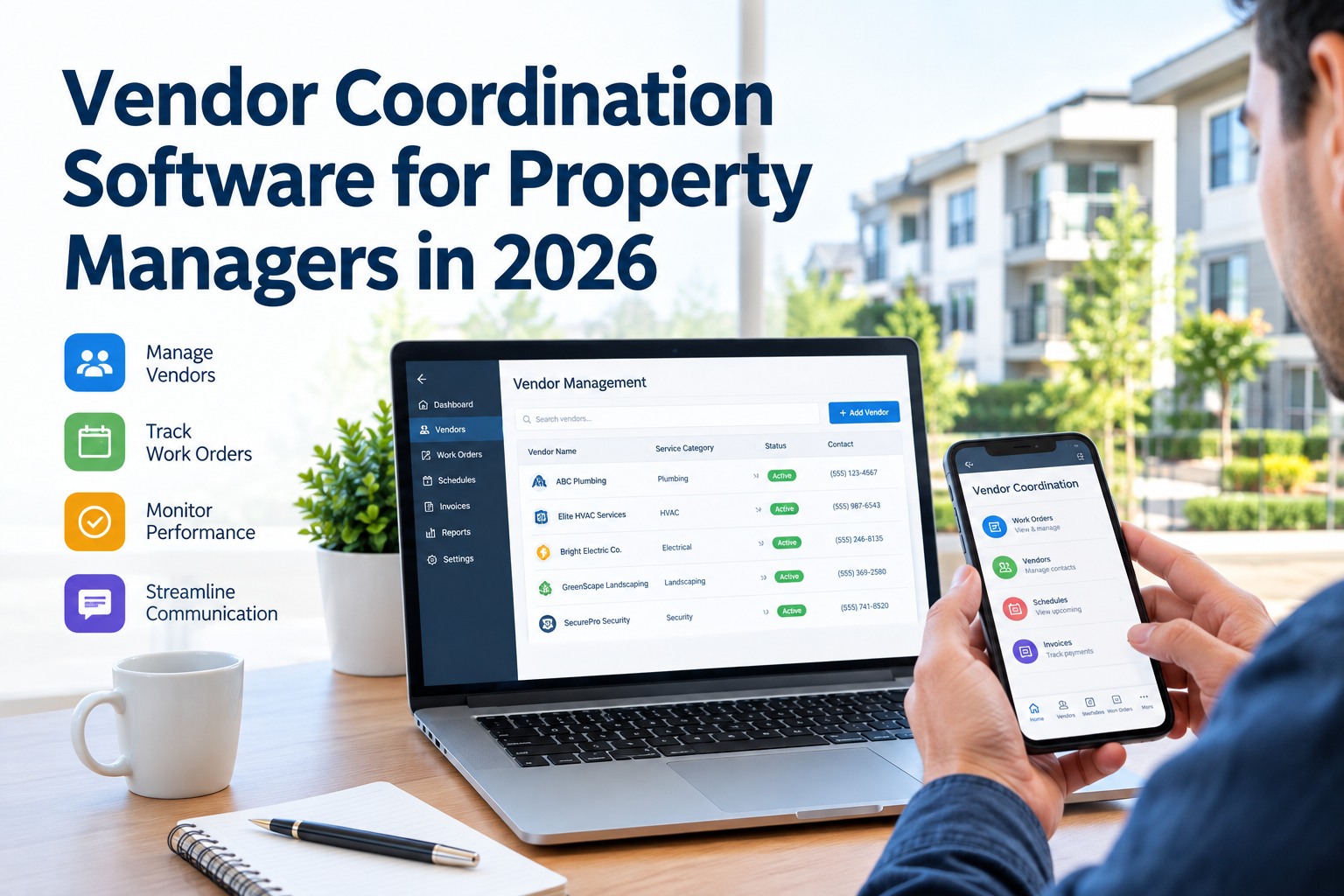
A centralized maintenance platform doesn't reduce the complexity of property management — it removes the administrative fog that hides what actually needs to be done. When maintenance requests arrive through a single intake point (mobile app, owner portal, or email-to-system bridge), a property manager can see all open work with a single glance. When contractors receive work orders through a mobile app instead of email, status updates flow back automatically — no chasing required. When invoices match to work orders automatically instead of manually, approval becomes a click instead of a spreadsheet reconciliation session. Oxmaint's dashboard-first design replaces "what's the status?" emails with real-time visibility — owners, tenants, and contractors all see the same information, which eliminates repetitive status emails entirely. The 18 hours per week recovered isn't from working faster — it's from eliminating the redundant busywork that existed because different people used different systems.
Centralized Intake
All maintenance requests flow to one dashboard instead of scattered across email, texts, and phone. Property manager opens system once per day instead of checking email 15+ times. Saves 3–4 hours per week.
Mobile Contractor Dispatch
Contractors receive work orders on mobile app with instant acceptance/decline. Status flows back in real-time. No phone chasing required. Saves 4–5 hours per week.
Automated Status Reporting
Owners and tenants see real-time status in their portal. No email status updates required. Saves 2–3 hours per week.
Invoice Auto-Matching
Invoices automatically matched to work orders. Approval becomes a single click instead of spreadsheet reconciliation. Saves 2–3 hours per week.
Real Impact: What Property Managers Say About Burnout Relief
The metrics on time savings and burnout reduction come from property managers actually using Oxmaint across 50+ portfolios in the USA. Below are the consistent patterns showing how digital tools change the property management experience. The most significant finding: property managers report that their "good work" increased dramatically when busywork decreased. They have time to actually inspect properties properly, build better relationships with contractors, and spend meaningful time with tenants instead of just processing requests. Burnout symptoms — exhaustion, cynicism, reduced effectiveness — dropped by 71% within 90 days of implementation.
71%
Burnout Symptom Reduction
Exhaustion, cynicism, and effectiveness decline reduce significantly by day 90 of platform use, measured by Maslach Burnout Inventory assessment.
18 hrs
Administrative Time Recovered
Average weekly recovery is 18 hours, with 72% of that time returning to strategic property management and relationship-building instead of busywork.
6x
Dashboard Time vs Email
Property managers check centralized dashboard once per day for 20–30 minutes instead of email 12–15 times per day for 3–4 hours cumulative.
4.8 / 5
Job Satisfaction Increase
Job satisfaction scores increase from average 3.2 to 4.8 out of 5 when administrative chaos is replaced by systematic order.
Frequently Asked Questions: Burnout Prevention & Digital Tools
Can a digital platform actually reduce burnout or just mask the underlying problem?
It reduces burnout by eliminating the friction that creates it. Burnout isn't caused by difficult work — it's caused by busywork that prevents doing the difficult work well. Digital tools restore focus to high-value property management, which is inherently satisfying.
If a property manager is already burned out, will a new platform help or just create more change stress?
Burned-out managers initially resist change (because change = more stress). But with proper training and 24/7 support, the relief appears in week 2–3. The key is leadership commitment that adopting the platform is non-negotiable and supported, not optional.
Do contractors and tenants embrace digital communication or resist it?
Initial resistance is normal but brief. Contractors prefer clear mobile work orders to ambiguous email. Tenants prefer knowing exactly when work will happen instead of uncertain "sometime next week" responses. Adoption is typically 85%+ within 30 days.
How does reducing administrative time translate to better property outcomes?
With 18 hours recovered per week, property managers can: conduct proper property inspections (currently skipped due to time), build relationships with tenants and owners, make thoughtful contractor selections instead of rushing to the cheapest option, and plan preventive maintenance instead of fighting fires.
What's the learning curve for a new maintenance platform?
Oxmaint is designed to be learned in one 4-hour training session. Most users are productive in day 1. The app is mobile-first with simple workflows (receive request → assign → track → complete). No technical background required.
Can a single property manager use this platform or is it designed for teams?
It works for both. Solo managers see time savings from centralized intake and automated status updates. Teams of 3–10 managers see additional benefits from centralized coordination and shared visibility. Scale from 1 property to 100 properties with the same platform.
How much does a property management platform cost relative to the time savings value?
Oxmaint costs $150–$300/month depending on scale. At 18 hours recovered per week, that's $500–$750 per month of staff time recovered. Payback is 7–10 days. Most managers see it as a no-cost decision because it pays for itself immediately.
"
I was managing 14 properties and working 55-hour weeks. Email was destroying me — 150+ maintenance emails per week. I was making poor decisions just because I was exhausted. Six months in with Oxmaint, I work 42-hour weeks and my decisions are better because I'm not tired. The platform saved my career in property management. I actually like my job again.