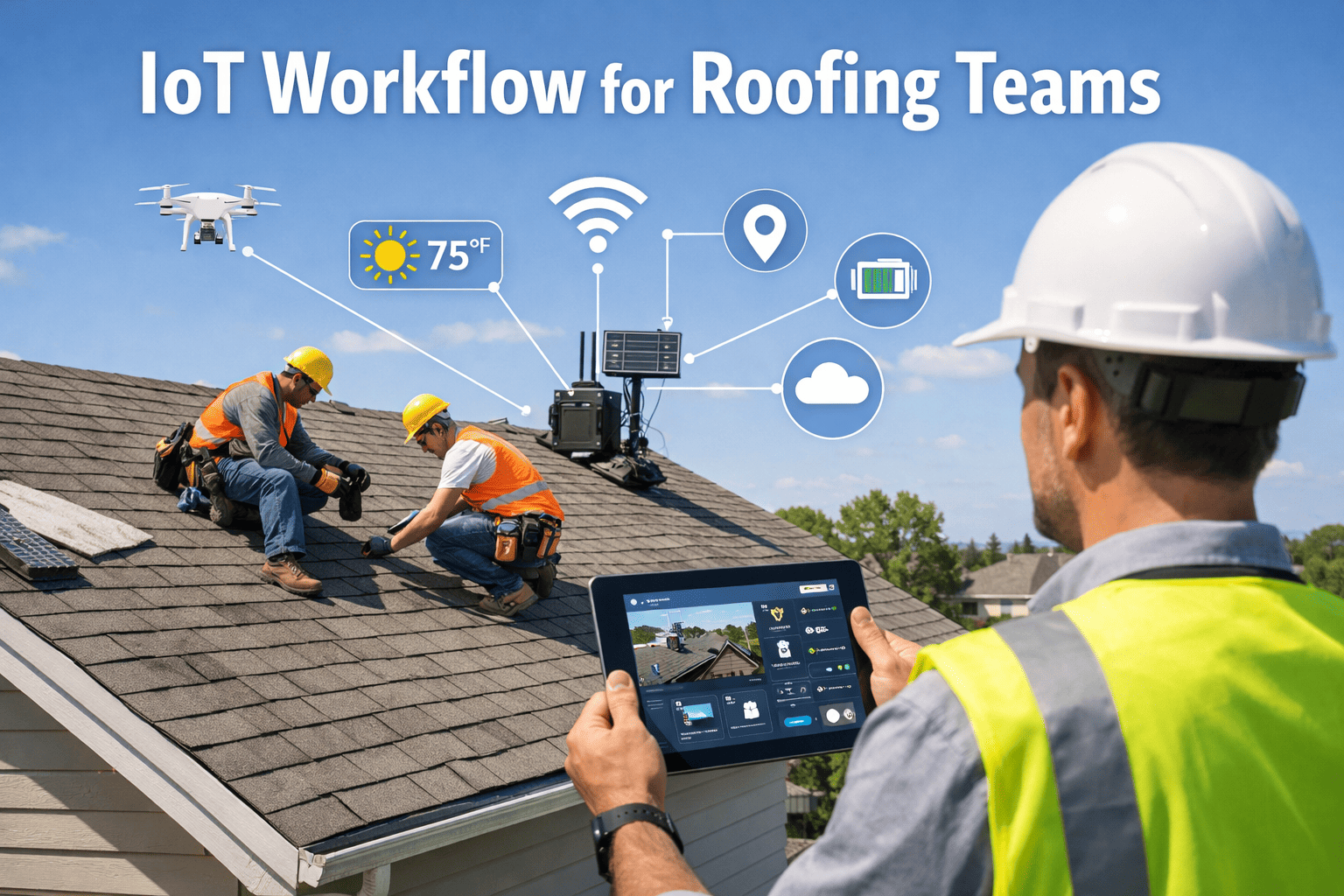
Integration Workflow for Roofing Maintenance Teams
By sara on February 17, 2026
Commercial roofing maintenance is one of the most fragmented, documentation-poor operations in building management. A 14-building office portfolio in Dallas discovered this firsthand when a routine insurance audit revealed that 9 of their 14 roofs had incomplete inspection records, 3 had expired warranty coverage due to missed maintenance milestones, and 2 had active leaks that maintenance teams had "fixed" multiple times without documenting root cause or tracking recurrence. The insurance carrier reduced coverage by 35% and required a $180,000 remediation program before reinstating full limits. Total cost of poor roofing documentation: $412,000 in a single year—on roofs that were only 8-12 years old. The problem wasn't the roofing systems; it was the disconnected maintenance workflow. Inspection reports lived in filing cabinets, work orders existed in email chains, warranty requirements were tracked on spreadsheets that nobody updated, and condition data was locked in individual contractor reports that never integrated with the building's CMMS. An integrated digital workflow connecting drone inspections, moisture sensors, work order automation, and warranty tracking would have prevented every dollar of that loss. Properties ready to integrate their roofing maintenance can sign up for roofing workflow templates or schedule a demo to see the full integration platform.
The Roofing Maintenance Cost Reality
Why disconnected workflows multiply costs across commercial properties
75%
of roof failures
are preventable
Inspection Data
Moisture Sensors
Work Orders
Warranty Tracking
Average cost per sq ft for reactive roof repair vs. planned maintenance
$2,196
per emergency repair event
Annual cost reduction with integrated digital workflows
-6%
total roofing lifecycle cost
Warranty life extension through documented maintenance compliance
20-50%
extended warranty coverage
Boost Roofing Maintenance Readiness Using Integrated Digital Workflows
The commercial roofing industry generates more fragmented documentation than almost any other building system. Inspections come from multiple contractors using different report formats. Moisture surveys produce standalone PDF reports that never connect to work orders. Warranty requirements are buried in contract documents that maintenance teams never reference. And condition data from drone surveys, infrared scans, and core samples sits in silos that prevent portfolio-wide analysis. An integrated maintenance workflow connects every data source—inspection reports, moisture readings, work orders, warranty milestones, and condition scores—into a single, searchable platform that transforms roofing from a reactive cost center into a managed asset. Properties implementing integrated workflows report 40% lower total roofing costs, 75% fewer emergency leak calls, and warranty compliance rates that jump from 35% to 98%. Create a free account to access roofing workflow templates or book a walkthrough to see the full integration platform.
Integrated Roofing Maintenance Architecture
How data flows from field inspections to executive dashboards
Drone Surveys
IR Scans
Moisture Sensors
Visual Inspections
▼
CMMS Integration Hub
Centralized data platform connecting all roofing inspection, condition, and maintenance data
▼
Auto Work Orders
Warranty Alerts
Compliance Reports
Budget Forecasting
Cutting Leak Costs with Integrated Inspections — A Digital Blueprint for Roofing Teams
Commercial roofing maintenance generates the widest gap between best-practice documentation and actual field execution of any building system. A 2024 industry analysis found that only 23% of commercial properties maintain inspection records that would satisfy warranty requirements, 67% cannot produce a current roof condition report for any building in their portfolio, and 81% rely on reactive leak response rather than condition-based maintenance scheduling. The consequences are measurable: properties with disconnected roofing workflows spend 3-5x more per square foot on roof maintenance over a 20-year lifecycle than properties with integrated digital systems. The integrated workflow doesn't require replacing existing contractors or inspection methods—it connects the data those contractors already generate into a centralized platform that automates work orders, tracks warranty compliance, and produces the portfolio-wide condition analysis that drives capital planning decisions. Sign up free to centralize your roofing data, or schedule a demo to see how integration works with your existing contractors.
Roofing Maintenance Savings Calculator
Estimate your annual savings from integrating roofing maintenance workflows
The 5-Phase Integration Roadmap for Roofing Maintenance Teams
Integrating roofing maintenance workflows across a commercial portfolio follows a proven 5-phase approach. Each phase builds capability incrementally—delivering immediate value on the highest-risk roofs while scaling systematically to complete coverage. The full integration typically requires 8-12 weeks depending on portfolio size, with most properties reporting measurable cost reduction by the end of Phase 3. Sign up free to access the implementation playbook.
Integration Roadmap for Roofing Maintenance Teams
1
Phase 1: Assessment & Inventory
Weeks 1-2
Catalog every roof section—membrane type, age, area, warranty status, last inspection date. Conduct baseline condition surveys using drone imagery and infrared scans. Score each roof on a 0-100 condition index. Identify warranty gaps and compliance deficiencies.
2
Phase 2: CMMS Configuration
Weeks 3-4
Configure CMMS with roof asset profiles, warranty milestone tracking, automated inspection scheduling, and contractor integration. Upload historical records. Map inspection checklists to warranty requirements for each membrane manufacturer.
3
Phase 3: IoT Sensor Deployment
Weeks 5-6
Install wireless moisture sensors at leak-prone locations (penetrations, drains, flashing transitions). Deploy weather stations for wind/hail event correlation. Connect sensor data feeds to CMMS for automated alerts when moisture levels exceed thresholds.
4
Phase 4: Workflow Automation
Weeks 7-9
Activate automated work order generation from sensor alerts and inspection findings. Configure warranty compliance notifications. Train roofing teams and contractors on mobile inspection workflows. Launch condition-based scheduling for all roof sections.
5
Phase 5: Portfolio Analytics
Weeks 10-12
Launch portfolio-wide dashboards showing condition scores, warranty status, capital planning forecasts, and contractor performance metrics. Establish annual re-assessment cycles. Generate first capital expenditure forecast based on actual condition data rather than age-based assumptions.
Start Your Roofing Integration Assessment
Most commercial portfolios can reduce roofing costs 40% by connecting the data they already collect. Find out how much your disconnected workflows are costing you.
Multi-Site Deployment: Scaling Integrated Roofing Across Your Portfolio
The real power of integrated roofing maintenance emerges at portfolio scale. When every roof in a 10, 20, or 100-building portfolio feeds condition data into a centralized platform, facilities teams can make capital planning decisions based on actual condition rather than age-based assumptions that either replace roofs too early (wasting $8-$15 per sq ft) or too late (after interior damage multiplies total replacement cost by 40-60%). Portfolio-wide integration also enables bulk contractor procurement, standardized inspection protocols, and benchmarking that identifies underperforming contractors before they cause warranty violations. Sign up free to start your portfolio integration, or book a consultation for a multi-site deployment plan.
Traditional vs. Integrated Roofing Maintenance
Traditional Approach
Inspection Records
Paper files, email PDFs
Leak Detection
After interior damage
Warranty Tracking
Spreadsheets (rarely updated)
Work Orders
Manual creation, phone/email
Capital Planning
Age-based estimates
Contractor Accountability
Self-reported performance
Integrated Workflow
Inspection Records
Centralized CMMS, searchable
Leak Detection
IoT moisture alerts, pre-damage
Warranty Tracking
Automated milestone alerts
Work Orders
Auto-generated from inspections
Capital Planning
Condition-based forecasting
Contractor Accountability
Data-verified scorecards
Expert Review: Making the Business Case for Integrated Roofing Workflows
INDUSTRY ANALYSIS
Why Portfolio Operators Are Switching to Integrated Roofing Maintenance
Analysis of 420 commercial properties across 18 markets shows that integrated roofing maintenance workflows deliver consistent, measurable returns regardless of membrane type, building age, or climate zone. The data reveals three compounding value drivers: first, the 75% reduction in emergency leak calls (which cost $2,196 per event on average and cause 4-8x that amount in interior damage when undetected); second, the warranty compliance recovery that saves properties $12,000-$45,000 per roof section by preventing coverage lapses; and third, the capital planning intelligence that extends average roof lifecycle by 20-50% through condition-based replacement timing rather than age-based assumptions that either waste money on premature replacement or invite catastrophic failure from deferred replacement. Properties with integrated workflows also report 35% lower insurance premiums on roof-related coverage because documented maintenance programs satisfy carrier requirements for proactive stewardship.
40%
Lower total roofing lifecycle cost
75%
Fewer emergency leak calls
98%
Warranty compliance rate
20-50%
Roof life extension
Transform Your Roofing Maintenance into a Managed Asset
Start Integrating
Connect inspections, moisture data, work orders, and warranty tracking into a single platform that eliminates emergency leaks and extends roof life by decades.
Conclusion: The Competitive Imperative for Integrated Roofing Maintenance
Commercial roofing represents the single largest deferred maintenance liability in most property portfolios—and the single highest-ROI opportunity for maintenance integration. Properties operating with disconnected roofing workflows—paper inspections, email work orders, forgotten warranty milestones, and reactive leak response—spend 3-5x more per square foot over a 20-year roof lifecycle than properties with integrated digital systems. The integrated workflow described in this guide doesn't require replacing existing contractors, purchasing new roofing systems, or hiring additional staff. It connects the data your existing teams already generate into a centralized platform that automates the documentation, scheduling, and analysis that currently falls through the cracks. The result: 40% lower total costs, 75% fewer emergencies, 98% warranty compliance, and capital planning decisions based on actual condition data rather than assumptions. Sign up for integrated roofing workflows or schedule a personalized demo to start connecting your roofing maintenance data today.
Frequently Asked Questions
Q: What's the difference between roofing maintenance "integration" and just using a CMMS?
A standard CMMS tracks work orders and schedules—but roofing integration goes far deeper. Integration connects drone survey imagery, infrared scan results, IoT moisture sensor data, warranty milestone tracking, contractor performance metrics, and capital planning forecasts into a single platform. The CMMS is the hub, but integration means every data source feeds in automatically—eliminating the manual entry, disconnected reports, and information silos that cause 75% of preventable roof failures. The difference is the automation and connectivity between systems, not just having a database. Start your free trial to see the full integration.
Q: How much does integrated roofing maintenance cost to implement?
Implementation costs depend on portfolio size and sensor deployment scope. CMMS configuration and workflow setup costs $3,000-$8,000 per building. IoT moisture sensors cost $200-$500 per sensor point (typically 8-15 per roof for comprehensive coverage). Drone survey integration adds $1,500-$3,000 per building annually. For a 10-building portfolio, total first-year investment runs $60,000-$120,000. Given that reactive roofing maintenance averages $0.38/sq ft vs. $0.12/sq ft for integrated maintenance, most portfolios achieve full payback within the first year. Book a consultation for a custom cost estimate.
Q: Can we keep our existing roofing contractors and still integrate?
Absolutely. Integration doesn't replace contractors—it connects their work output into your centralized platform. Contractors upload inspection reports, photos, and completion documentation directly into the CMMS using mobile apps. The system standardizes report formats across multiple contractors, tracks SLA compliance, and generates performance scorecards. Most contractors prefer integrated workflows because they reduce administrative overhead and provide clear documentation of their work quality. Properties with integrated contractor management report 20-30% better contractor performance.
Q: How do IoT moisture sensors work on commercial roofs?
Wireless moisture sensors are installed beneath the roof membrane at leak-prone locations—around penetrations, at drain sumps, along flashing transitions, and at low points where water pools. Each sensor continuously measures moisture levels in the insulation layer and transmits readings wirelessly to the CMMS platform. When moisture exceeds configurable thresholds, the system generates an alert and auto-creates a work order—detecting leaks weeks or months before they cause interior damage. Sensors are battery-powered (3-5 year life) and require no roof penetrations. Sign up free to explore sensor integration options.
Q: What ROI metrics should I present to ownership to justify integration?
Focus on four metrics that ownership cares about: total cost per square foot (reactive: $0.38 vs. integrated: $0.12), emergency call reduction (75% fewer with documented savings per event), warranty compliance rate (35% to 98%, with dollar value of recovered coverage), and capital forecast accuracy (condition-based replacement timing saves $8-$15/sq ft by avoiding premature replacement). The platform tracks all four automatically with quarterly reporting. Most ownership teams approve integration after seeing the warranty compliance data alone. Schedule a demo to see ROI tracking dashboards.