September 18, 2025. A severe thunderstorm hits a massive logistics center. Roof Drain 4 is clogged with autumn leaves. Water pools—weight increases by 5.2 lbs per square foot for every inch of accumulation. The structure groans. The scupper is blocked by a bird's nest. Suddenly, the steel bar joist shears. 4,000 square feet of roof collapses onto the sorting line below. Operations halt for 6 weeks. $3.2 million in lost revenue and structural repairs. The facility manager had a visual inspection scheduled for next month. The water weight was invisible until gravity won.
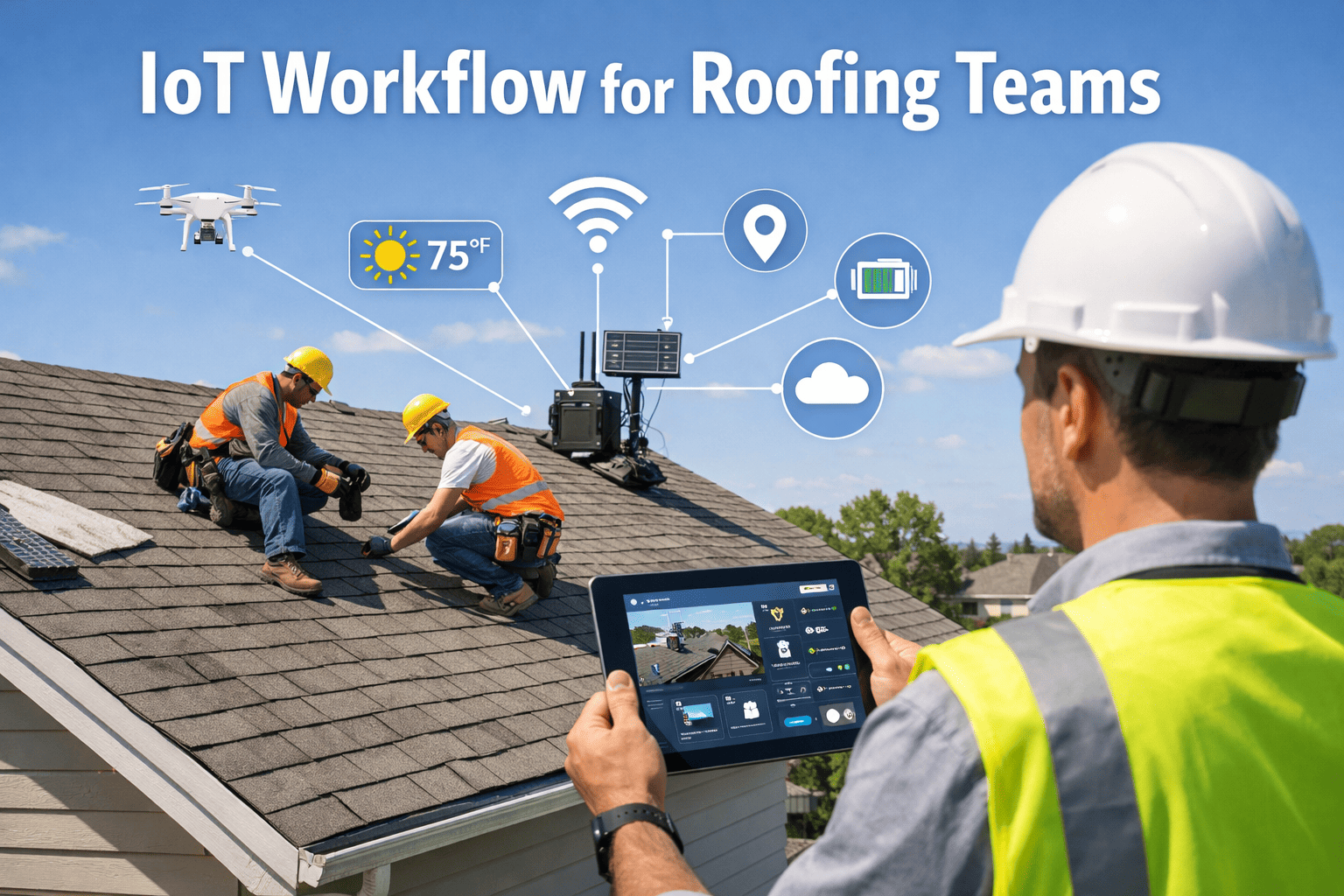
That gap between a clear drain and a structural collapse is where assets are lost. The RoofSense IoT Workflow monitors ponding water depth, drain flow rates, membrane moisture saturation, structural strain, and thermal efficiency continuously—not annually, not quarterly, but every minute. When a drain clogs or insulation gets wet, the workflow triggers an automated ticket, dispatches a roofer to the exact GPS coordinate, and prevents the catastrophe. Upgrade your roofing teams to a data-driven workflow today.
Why Annual Roof Walks Aren't Enough
Roofs fail slowly, then all at once. An annual walk-through is a snapshot. A dropped tool punctures a membrane today; rain enters tomorrow. Saturated insulation destroys R-value silently for months. By the time a brown stain appears on the ceiling tiles below, the deck is already rusted through and the warranty is voided.
The RoofSense workflow fills these gaps with grid-edge intelligence. Schedule a demo to see how we digitize your roof assets.
What the IoT Workflow Monitors
Six critical health indicators. Solar-powered wireless nodes. The workflow builds a moisture profile for every roof section, understanding exactly where leaks start before they penetrate the building envelope. Start free to connect your first building.
Ponding Detection
Instantly flags drains that fail to clear water 48 hours after rain, preventing structural overload.
Moisture Intrusion
Sensors embedded under the membrane detect the first drop of water entering the insulation layer.
Structural Strain
Strain gauges on bar joists warn of dangerous loads from heavy snow or excessive water pooling.
Thermal Efficiency
Identifies areas where wet insulation is acting as a thermal bridge, skyrocketing energy costs.
Wind Uplift
Monitors wind forces at corners and perimeters to predict blow-off risks during hurricane seasons.
Access & Traffic
Tracks when HVAC techs or vendors are on the roof, correlating damage to specific site visits.
Stop Leaks Before They Drip.
Join 450+ facility teams using RoofSense to extend roof life and prevent inventory damage. Get full access today.
ROI: IoT Monitoring vs Reactive Patching
Calculate your savings from deploying intelligent roof sensors across a typical 100,000 sq ft industrial portfolio.
Ready for a Watertight Future?
Book a quick demo to see how IoT roof sensors eliminate ponding risks and cut capital expenditures — or start free today.
Who Uses This IoT Workflow
Every building owner who realizes the roof is their most expensive asset to replace and the biggest liability to operations.
Roof Systems Supported
The sensor platform is compatible with every major commercial roofing system. Start free to map your portfolio.
Your Roof Deserves Better Than a Yearly Walk-Through
Join facilities achieving 100% drainage efficiency with the RoofSense predictive workflow.


