
Taking on a new property — whether through acquisition, portfolio expansion, or management transfer — without a structured maintenance assessment exposes you to hidden costs, deferred liability, and asset degradation that compounds over time. A thorough onboarding maintenance assessment establishes a verified baseline condition across all building systems, infrastructure components, and critical assets before you assume operational responsibility. This checklist equips property managers, facility directors, and asset management teams with a rigorous, audit-ready framework for evaluating every maintenance dimension of an incoming property — from structural integrity and MEP systems to documentation gaps and vendor contract continuity.
1. Structural and Building Envelope Assessment
The building envelope — roof, walls, foundations, windows, and exterior doors — represents your first line of defense against environmental damage and the most expensive category of deferred maintenance to remediate. A detailed structural walkthrough at onboarding captures deficiencies before they become your liability and provides the documented evidence needed to negotiate corrective obligations with the previous owner or management entity. Explore OxMaint's asset tracking tools.
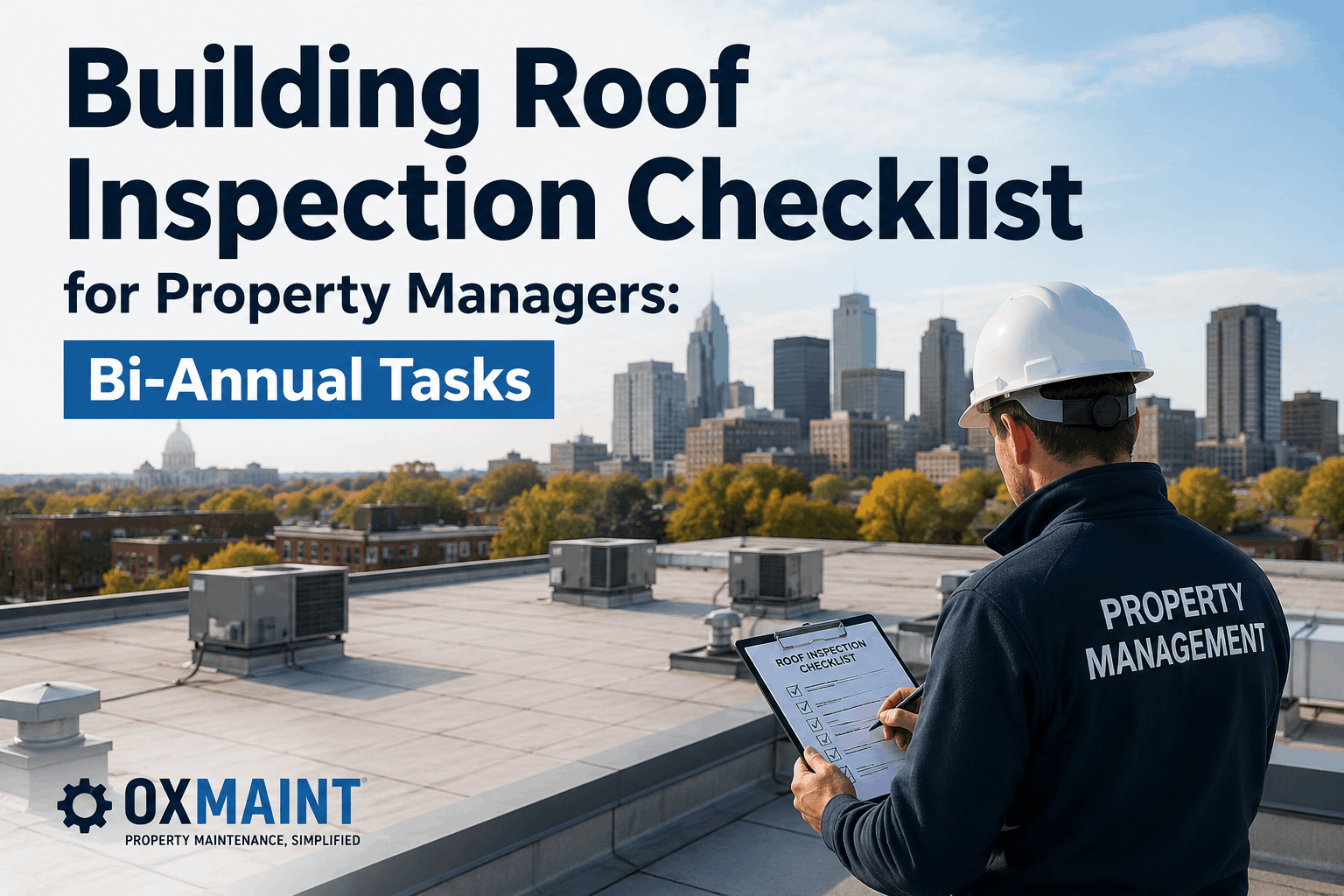
Conduct a Full Roof Condition Inspection
Assess roof membrane integrity, flashing condition, drainage outlets, parapet walls, and any penetration seals for HVAC or utility lines. Document all visible defects with photographs, note remaining estimated service life, and flag areas requiring immediate remediation versus scheduled replacement.
Inspect Foundation and Structural Framing
Examine exposed foundation sections, basement walls, structural columns, and load-bearing elements for cracking, settlement evidence, efflorescence, or water intrusion staining. Note any areas requiring a licensed structural engineer assessment and document findings in the onboarding baseline report.
Evaluate Exterior Cladding, Windows, and Glazing
Inspect exterior wall cladding, masonry, sealant joints, window frames, glazing seals, and door systems for deterioration, air infiltration gaps, or water penetration evidence. Confirm that window hardware operates correctly and that fire-rated assemblies retain their integrity.
Assess Parking Structures, Driveways, and Hard Landscaping
Document the condition of paved surfaces, parking deck membranes, curbs, drainage channels, and retaining walls. Note surface cracking, spalling, trip hazards, or expansion joint failures that represent near-term safety or liability concerns requiring corrective action.
2. Mechanical, Electrical, and Plumbing (MEP) Systems Evaluation
MEP systems represent the operational core of any property and typically account for the largest share of ongoing maintenance expenditure. Incomplete or missing service records, deferred equipment maintenance, and aging infrastructure with undocumented modification history are among the most common — and costly — surprises in new property onboarding. A systematic MEP assessment at intake establishes verified operational status and informs your first-year capital planning cycle.
Inventory and Assess HVAC Equipment Condition
Document make, model, serial number, installation date, and operational status of all air handling units, chillers, boilers, cooling towers, fan coil units, and rooftop units. Obtain or request the last three years of service records and note any equipment operating outside manufacturer performance parameters.
Evaluate Electrical Distribution Systems and Panels
Inspect main switchgear, distribution panels, emergency generator, transfer switch, and UPS systems for condition, labeling accuracy, and code compliance. Verify that circuit directories are current, breakers operate correctly, and that no unauthorized modifications have been made to the electrical distribution network.
Assess Plumbing Infrastructure and Domestic Water Systems
Document pipe material types, domestic hot water heater condition and age, booster pump status, backflow preventers, and visible plumbing fixture condition throughout the property. Note any evidence of leaks, pipe corrosion, water hammer, or pressure irregularities that warrant immediate investigation.
Test and Document Building Automation System Functionality
Verify that the building automation or energy management system is operational, that point mapping is accurate, and that scheduled programs reflect current occupancy patterns. Confirm control sequences for HVAC, lighting, and access are functioning as intended and that alarm setpoints are appropriately configured.
Inspect Vertical Transportation Equipment
Confirm elevator and escalator certification currency, retrieve the most recent inspection reports from the relevant authority having jurisdiction, and document outstanding violations or deferred maintenance items. Verify that maintenance contracts are active and transferable to the new management entity.
3. Life Safety and Fire Protection Systems Verification
Life safety system deficiencies carry regulatory, legal, and ethical consequences that no property manager can afford to inherit undocumented. Confirming the inspection status, operational condition, and code compliance of all fire protection and emergency systems at onboarding is a non-negotiable due diligence requirement — and a prerequisite for obtaining or maintaining property insurance coverage.
Verify Fire Sprinkler System Inspection Currency
Obtain the most recent annual and five-year fire sprinkler inspection reports. Confirm all deficiencies identified in prior inspections have been corrected, that impairments are properly managed with active impairment permits, and that the next scheduled inspection is calendared and contracted.
Test Fire Alarm and Detection System Components
Confirm fire alarm panel operational status, retrieve the last full system test report, and document any devices in trouble or supervisory status. Verify that monitoring service contracts are current, that the monitoring provider has the current contact list for the new management team, and that pull stations, strobes, and horns are all functional.
Inspect Emergency Lighting and Exit Signage
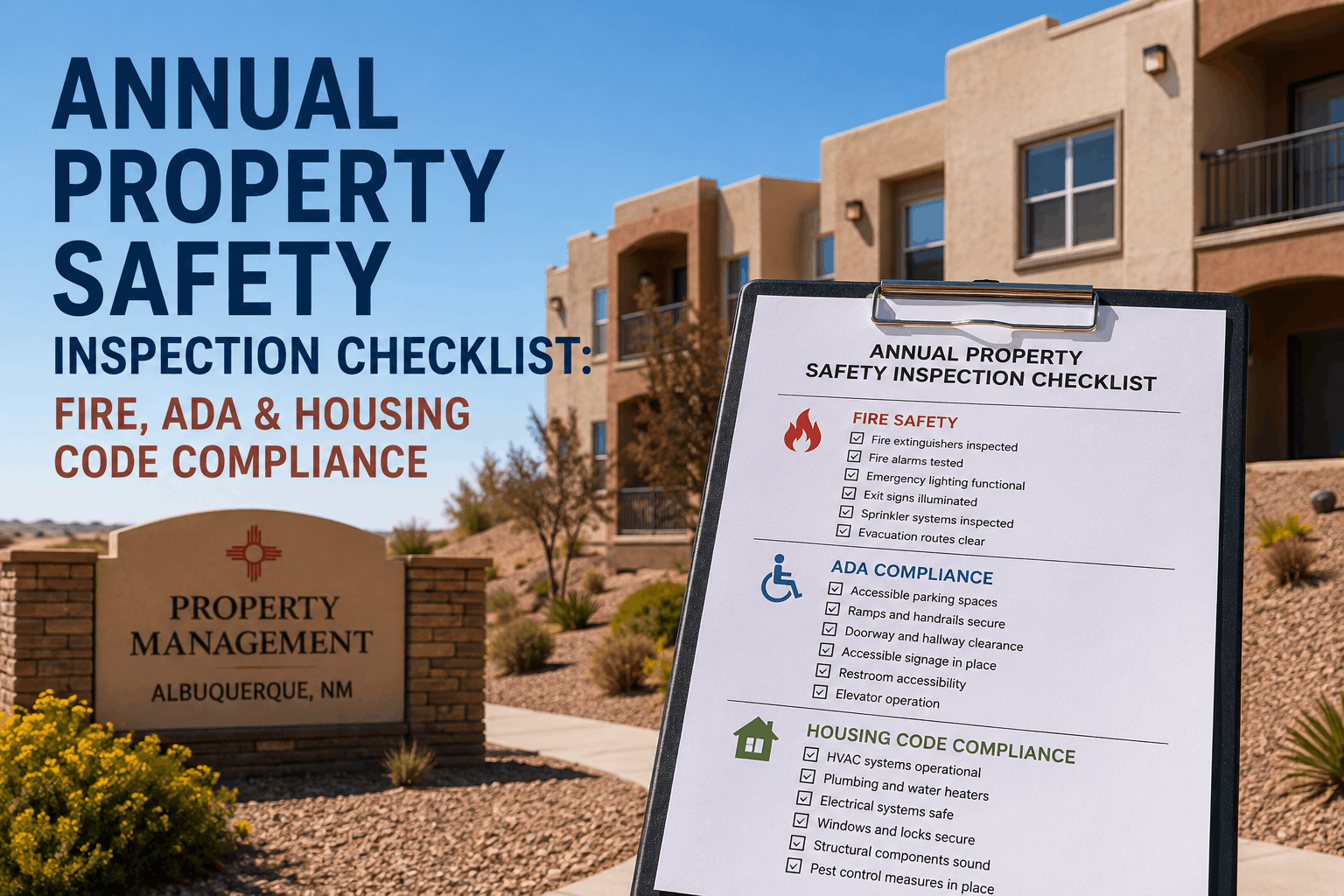
Walk all egress paths to verify that emergency lighting fixtures and illuminated exit signs are operational, that battery backup systems are functional, and that the required monthly and annual testing logs are available. Replace or schedule repair for any failed units before assuming occupancy responsibility.
Confirm Fire Extinguisher Inspection and Placement Records
Audit portable fire extinguisher placement against required coverage maps, confirm that all units have current annual inspection tags, and verify that any units showing deficiencies on service tags were replaced or recharged. Document extinguisher inventory by type, location, and next required service date.
4. Asset Inventory and Documentation Baseline
An accurate, complete asset inventory is the foundation of every maintenance planning, budgeting, and compliance function you will perform from onboarding forward. Properties that transfer without comprehensive asset registers force new managers into reactive discovery — identifying equipment only when it fails, rather than proactively planning its maintenance and replacement. Learn how OxMaint simplifies asset register management and makes building a verified asset inventory at intake the single highest-return investment in your onboarding process.
Build a Complete Equipment Asset Register
Enumerate all maintainable assets including HVAC units, pumps, electrical gear, elevators, plumbing fixtures, and building automation controllers. Record manufacturer, model, serial number, install date, warranty expiry, and physical location for each asset as a prerequisite for building a defensible maintenance program.
Collect and Organize As-Built Drawings and O&M Manuals
Request all available architectural, structural, mechanical, electrical, and plumbing as-built drawings from the prior owner or manager. Collect operation and maintenance manuals for all major equipment. Document and flag any gaps in drawing or manual coverage that will require field verification or engineer engagement.
Retrieve Warranty Documentation for Active Coverage Items
Identify all equipment and building components with active manufacturer or installer warranties. Document warranty terms, expiry dates, covered components, and the required maintenance conditions for warranty validity. Confirm that any actions taken during the onboarding period do not inadvertently void active warranty coverage.
Compile Permits, Certificates of Occupancy, and Compliance Records
Gather building permits for recent renovation work, Certificates of Occupancy, elevator operating licenses, boiler certificates, and any regulatory compliance letters. Verify that all required certificates are current and that no open permit or violation notices are outstanding with the local authority having jurisdiction.
5. Vendor Contracts and Service Agreement Continuity
Existing service contracts for cleaning, landscaping, pest control, elevator maintenance, and HVAC preventive maintenance often contain assignment restrictions, termination notice requirements, or auto-renewal clauses that create financial exposure if not reviewed at onboarding. A proactive contract audit in the first days of property intake prevents inherited obligations from creating budget surprises in the first operational quarter.
Audit All Active Vendor and Service Contracts
Compile a complete list of all active third-party service agreements including HVAC maintenance, janitorial, landscaping, pest control, elevator service, fire protection, security monitoring, and waste removal. Document contract term, renewal date, notice requirements, and assignability status for each agreement.
Assess Vendor Performance Against Service Level Agreements
Review service logs, completion records, and any available performance data for each incumbent vendor. Interview the outgoing property manager or maintenance lead to identify any vendors with a history of non-performance, disputes, or recurring service failures that should be evaluated for replacement at the earliest contract exit point.
Identify Service Gaps and Coverage Deficiencies
Compare your asset inventory against the scope of existing service contracts to identify any maintainable equipment operating without a current preventive maintenance agreement. Building systems that fall outside existing contract scope — particularly life safety, HVAC, and vertical transportation — must be brought under contract before the onboarding period closes.
Verify Insurance Certificates for All Active Contractors
Confirm that all incumbent vendors and service contractors carry current general liability, workers' compensation, and any specialty insurance required by your property management standards or owner requirements. Flag expired or insufficient coverage immediately and require updated certificates before allowing continued site access.
6. Deferred Maintenance Identification and Capital Planning
Deferred maintenance inherited at property onboarding without a clear inventory and cost estimate is one of the primary drivers of budget overrun in the first year of property management. A structured deferred maintenance assessment — classified by urgency, estimated cost, and impact on building systems — gives ownership and asset management stakeholders the data needed to establish realistic capital reserves and prioritize corrective investment from day one.
Compile a Prioritized Deferred Maintenance Register
Consolidate all deficiencies identified across structural, MEP, life safety, and exterior assessments into a single ranked register. Classify each item as immediate (safety or code-required), near-term (within 12 months), or planned (within the capital plan cycle), and assign preliminary cost estimates for each category.
Estimate Remaining Useful Life for Major Building Systems
Based on asset age, condition assessment findings, and manufacturer data, document the estimated remaining useful life for roof systems, HVAC equipment, elevators, electrical switchgear, and domestic water heating. Use this data to build a 5-year capital expenditure forecast aligned to realistic replacement intervals.
Establish a Preventive Maintenance Schedule from Baseline Data
Using the completed asset inventory and equipment documentation, build or import a preventive maintenance schedule covering all major assets at manufacturer-recommended frequencies. Assign responsibility for each recurring task and confirm that your work order management system is configured to issue scheduled maintenance work orders from the first day of operational control.
Document Onboarding Assessment Findings in a Baseline Report
Compile all assessment findings, asset records, photographs, deferred maintenance items, and contract reviews into a formal property onboarding baseline report. Distribute to ownership, asset management, and operations stakeholders and retain as the authoritative reference document for the property's maintenance history going forward.
Frequently Asked Questions
Below are the most common questions property managers and asset management teams ask about new property onboarding maintenance assessments and due diligence requirements.
A structured evaluation of a property's physical condition, building systems, asset inventory, and maintenance obligations conducted at acquisition or management transfer. It should ideally be completed during due diligence — at minimum within the first 30 days of assuming operational control to avoid inheriting undocumented liabilities.
Request as-built drawings, equipment O&M manuals, the last three years of service records, active vendor contracts, Certificate of Occupancy, life safety inspection reports, utility billing history, open work orders, and insurance certificates for all active contractors. Document any gaps in the onboarding baseline report.
Classify items into three tiers: Immediate (safety risks or code violations — fix within days), Near-term (system reliability issues — address within 12 months), and Planned (manageable deterioration within the capital cycle). Assign cost estimates and responsible parties for each tier and report to ownership.
A Property Condition Assessment (PCA) is a formal third-party report for lenders or investors focused on 10-year capital forecasting. A maintenance onboarding assessment is an operational document for the incoming management team covering asset inventory, contract status, and corrective action priorities needed from day one.
Platforms like OxMaint provide a centralized system to capture asset data, build preventive maintenance schedules, and issue corrective work orders from day one. They replace scattered spreadsheets with a single retrievable baseline record that supports compliance reporting and capital forecasting throughout the property lifecycle.


-and-use-it-for-maintenance-planning.png)
