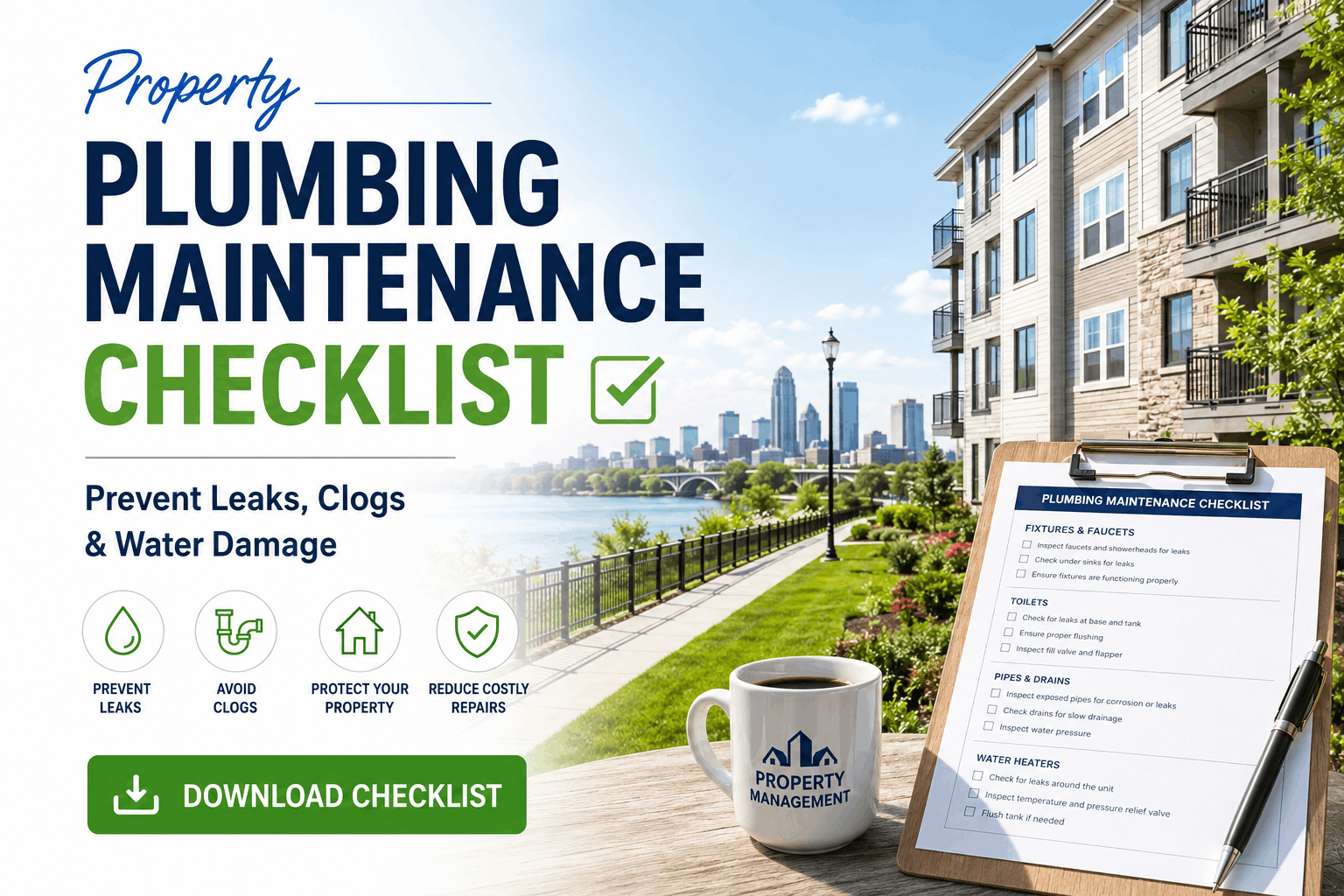
Plumbing System Maintenance Checklist for Multi-Family Properties
By Josh Turley on March 24, 2026
Multi-family properties face unique plumbing challenges — dozens of units sharing water lines, drains, and fixtures that operate around the clock. Without a structured maintenance plan, minor issues escalate into costly emergency repairs, tenant complaints, and water damage claims. A comprehensive plumbing system maintenance checklist gives property managers a repeatable system to catch problems early, extend system lifespan, and maintain habitability standards across every unit. Book a Demo to see how OxMaint helps you manage it all in one place.
OxMaint: Preventive Maintenance Scheduling for Property Teams
Automate plumbing inspection schedules, assign work orders to the right technician, and generate audit-ready maintenance records — all from one mobile-friendly platform built for multi-family operations.
Why Plumbing Maintenance Is Critical in Multi-Family Buildings
In apartment complexes and multi-family properties, a single plumbing failure doesn't affect one household — it can disrupt entire floors, contaminate shared water supplies, and create liability exposure across multiple units. Proactive inspections reduce emergency plumbing calls, lower water utility costs, and protect the structural integrity of the building. Regulatory requirements in many jurisdictions also mandate documented proof of routine plumbing upkeep for property licensing and insurance compliance.
30%
of water loss attributed to undetected leaks in multi-unit buildings
2–4×
higher emergency repair cost vs. scheduled preventive maintenance
$11K+
average insurance claim cost from water damage per incident
85%
of plumbing failures preventable with routine inspection programs
Daily & Weekly Plumbing Checks
These quick inspections keep your team aware of early warning signs. Daily and weekly checks are typically performed by on-site maintenance staff and require minimal equipment. Book a Demo to digitize and auto-schedule these recurring inspection rounds.
Daily & Weekly — Routine Plumbing Inspection
Monthly Plumbing Maintenance Checklist
Monthly inspections target systems that require closer examination than daily walkthroughs provide. These tasks help identify wear patterns, component degradation, and code compliance issues before they become emergency repairs. Book a Demo to access pre-built monthly plumbing checklist templates designed for multi-family properties.
Monthly — In-Depth System Inspection
Quarterly Plumbing Inspection Checklist
Quarterly inspections go beyond daily and monthly checks — targeting system-level performance, hidden wear, and compliance-critical components. These tasks should be scheduled with licensed technicians and coordinated with building access windows to minimize tenant disruption.
Quarterly — System-Level Inspection
Seasonal Winterization Plumbing Checklist
Cold weather creates serious plumbing risk in multi-family buildings — frozen pipes, burst supply lines, and failed outdoor fixtures can cause extensive water damage across multiple units within hours. A structured winterization checklist completed before the first freeze protects the entire building from cold-season plumbing failures.
Seasonal — Winter Preparation Checklist
Unit-Level Plumbing Inspection Checklist
Individual unit inspections are often overlooked in multi-family maintenance programs, yet tenant-side plumbing issues generate the majority of maintenance requests. A structured unit turn or annual inspection captures these issues proactively.
Kitchen & Laundry
Kitchen faucet aerator flow and condition check
Dishwasher supply line and drain hose condition inspection
Garbage disposal seal and drainage verification
Washing machine supply hose age and burst risk assessment
Laundry drain standpipe height and overflow clearance check
Under-sink shut-off valve accessibility and operation confirmation
Bathroom
Toilet base seal and wax ring integrity check for floor staining
Shower valve cartridge condition and temperature limit stop position
Bathtub and shower caulk seal integrity along all grout and tile joints
Bathroom exhaust fan operation to prevent moisture and mold conditions
Supply angle stop valve condition under toilet and at vanity
Showerhead flow rate and mineral deposit buildup inspection
Critical Control Points: High-Risk Plumbing Failure Areas
Multi-family buildings have specific plumbing components that carry disproportionate failure risk due to age, shared load, or hidden installation. Prioritize these areas in every inspection cycle.
System Component
Failure Risk
Inspection Frequency
Key Inspection Focus
Braided Supply Lines
High — age-related burst failure
Annual replacement at 5–7 years
Corrosion at fittings, mesh deterioration, kinking
Common Plumbing Failure Patterns in Multi-Family Properties
Silent Toilet Leaks
Worn flapper valves allow continuous water flow from tank to bowl without visible overflow. A single leaking toilet can waste 200+ gallons per day — multiplied across dozens of units, silent leaks are the single largest driver of unexplained water bill increases.
Test all toilets with dye tablets monthly; replace flappers on a 2-year replacement schedule regardless of visible condition
Washing Machine Hose Failures
Standard rubber washing machine supply hoses degrade from the inside and can fail catastrophically with no visible warning. Hose failures cause some of the most severe water damage events in residential properties — in multi-unit buildings, water travels through floor assemblies affecting multiple units.
Replace all rubber hoses with stainless-braided alternatives; inspect all hose connections annually for bulging or corrosion
Drain Stack Blockages
Shared vertical drain stacks in multi-story buildings accumulate grease, soap, and debris from multiple units simultaneously. Partial blockages restrict flow from upper floors and can cause backflow events that affect lower-unit tenants — a significant liability and habitability concern.
Schedule quarterly drain stack flushing; perform camera inspections annually to catch buildup before emergency snake calls are required
Water Heater Sediment Buildup
In areas with hard water, sediment accumulation at tank bottoms reduces efficiency, increases energy consumption, and significantly shortens heater lifespan. Heavy sediment also insulates the heating element, creating temperature inconsistencies that affect tenant satisfaction and hot water availability across the building.
Flush all water heaters annually; test water hardness and install softeners or scale inhibitors in high-mineral-content supply areas
Documentation Requirements for Multi-Family Plumbing Maintenance
Property managers operating multi-family buildings face documentation requirements from multiple directions — insurance carriers, municipal housing inspectors, and local health departments all expect evidence of systematic plumbing maintenance. Facilities that cannot produce maintenance records during inspections risk code violations, insurance claim denials, and habitability orders.
Inspection Completion Logs
Dated records for every scheduled inspection including technician identity, equipment checked, and findings noted. Required for most municipal housing license renewals.
Retain: 3+ years
Backflow Certification
Annual certified test records from a licensed backflow tester. Most water utilities require submission of test reports; non-compliance can trigger water service suspension.
Retain: 5+ years
Work Order History
Complete repair history for each unit and building system, including contractor invoices, parts replaced, and follow-up verification. Critical for insurance claim defense and habitability disputes.
Retain: Property ownership term
Water Quality Test Results
Annual water quality test reports demonstrating safe delivery conditions, especially important in older buildings with legacy copper or galvanized supply lines.
Retain: 5+ years
Implementing a Digital Plumbing Maintenance Program
Paper-based inspection logs and spreadsheet maintenance trackers consistently fail in multi-family operations — tasks get missed during busy periods, records are lost, and compliance gaps appear only when an inspector requests documentation. A digital maintenance management system built for property operations eliminates these risks by automating scheduling, capturing technician data in real time, and producing inspection histories on demand. Sign up free on OxMaint to start scheduling, assigning, and documenting your entire plumbing maintenance program from a single platform.
When selecting a maintenance platform for multi-family plumbing operations, prioritize mobile accessibility for technicians working in units and mechanical rooms, photo documentation capability for leak findings and fixture conditions, automated work order creation from failed inspection items, tenant-facing request portals that feed directly into maintenance queues, and report generation that satisfies insurance and municipal documentation requirements.
OxMaint: The Plumbing Maintenance Platform for Property Teams
Schedule recurring plumbing inspections, track corrective actions, and generate compliance-ready documentation — all from one platform your maintenance team can use on any device, anywhere in the building.
How often should plumbing be inspected in a multi-family property?
Multi-family properties benefit from a tiered inspection schedule: daily or weekly walkthroughs of common area and mechanical room plumbing, monthly unit-level checks, quarterly drain and water quality assessments, and annual licensed plumber inspections of the full system. The exact frequency depends on building age, local water conditions, and the number of units — older buildings with original plumbing require more frequent attention.
What are the most common plumbing issues in apartment buildings?
The most frequent issues in multi-family properties are silent toilet leaks from worn flappers, drain stack blockages from accumulated grease and debris, washing machine supply hose failures, water heater sediment buildup reducing hot water availability, and slow leaks at aging shutoff valve connections. Addressing these proactively through a structured checklist program eliminates the majority of emergency plumbing calls.
Is a backflow preventer inspection legally required for apartment buildings?
In most jurisdictions, yes. Backflow prevention devices on buildings connected to public water supplies must be tested annually by a certified tester, and test reports must be submitted to the local water utility. Non-compliance can result in water service termination. Property managers should maintain copies of all backflow test reports for a minimum of five years as evidence of compliance.
How can property managers reduce water costs through plumbing maintenance?
The highest-impact water cost reduction measures are systematic toilet flapper replacement programs, washing machine hose upgrades to flow-restricted models, showerhead aerator installation across all units, prompt repair of any identified dripping faucets or running toilets, and regular water meter audits to catch hidden leaks early. These measures typically reduce water consumption by 15–30% in properties that previously lacked a structured program.
What documentation should be kept for plumbing maintenance in rental properties?
Property managers should retain inspection completion logs with dated technician entries, licensed contractor invoices for all repair and service work, backflow prevention certification records, water quality test reports, work order histories by unit and building system, and any correspondence related to tenant-reported plumbing issues. Digital platforms like Book a Demo to see how OxMaint automatically archives these records with timestamps and technician data, making audit responses straightforward.